
In this article, we provide a comprehensive analysis of the current status, application scenarios, key technologies, and future trends of long endurance reconnaissance/strike unmanned aerial vehicles (UAVs) from a global perspective, with a special emphasis on the evolving role and contributions of China drone technology. Drawing from recent conflicts, military exercises, and technological advancements, we examine how various nations, including the United States, Israel, Turkey, and Russia, have developed and utilized these UAVs. The lessons learned from these experiences directly inform the strategic direction of China drone development, which aims to integrate advanced survivability, multi-domain operations, and intelligent autonomy. Our discussion is structured around four pillars: platform evolution, real-world applications, enabling technologies, and future trajectories. Throughout the text, we incorporate quantitative tables and mathematical formulations to summarize performance metrics, propulsion dynamics, and communication link budgets, all of which are critical for understanding the capabilities of modern China drone systems. The ultimate goal is to present a holistic view that helps guide the next generation of China drone designs toward greater battlefield effectiveness and technological leadership.
1. Introduction and Historical Context
The concept of long endurance reconnaissance/strike UAVs emerged in the 1970s, with early programs such as the US Teal Rain project leading to prototypes like the Albatross and Amber. Over the decades, these platforms evolved from pure intelligence, surveillance, and reconnaissance (ISR) roles into armed systems capable of precision strikes. The operational debut of armed UAVs occurred in 2001 when an MQ-1 Predator launched an AGM-114 Hellfire missile in Afghanistan, marking a paradigm shift in warfare. Today, nations worldwide have developed indigenous variants, and China drone manufacturers have rapidly caught up, fielding systems such as the Caihong (Rainbow) series and GJ-11 stealth UAVs. Our analysis focuses on the core characteristics that define these platforms: endurance exceeding 20 hours, payload capacities from 150 kg to over 2000 kg, and integration of ISR, communication relay, and strike capabilities. We note that China drone systems, in particular, emphasize modular open architectures and cost-effectiveness, which align with modern multi-domain operational concepts.
To provide a quantitative foundation, we summarize key technical parameters of representative long endurance recon/strike UAVs from major producing countries in the following table. This dataset includes the China drone representative model (Caihong CH-5), which has been widely exported and deployed in various theaters.
| UAV Model | Country | Wingspan (m) | Max Takeoff Weight (kg) | Max Payload (kg) | Ceiling (m) | Max Endurance (h) | Max Speed (km/h) | Engine Type |
|---|---|---|---|---|---|---|---|---|
| MQ-9A Reaper | USA | 20 | 4763 | 1361 (external) | 15240 | 27 | 444.5 | Turboprop (TPE331-10) |
| RQ-170 Sentinel | USA | ~20 | ~4000 | ~900 | 15000 | ~20 | ~400 | Turbofan |
| Heron TP | Israel | 26 | 5670 | 2700 | 13716 | 30 | 407 | Turboprop |
| Akinci | Turkey | 20 | 6000 | 1350 | 13752 | 24 | 361 | Turboprop (x2) |
| Orion E | Russia | 16 | 1150 | 250 | 7500 | 30 | >200 | Piston |
| Caihong CH-5 | China | 21 | 3300 | 1000+ | 9000 | 30+ | 220 | Heavy-fuel piston |
| GJ-11 Sharp Sword | China | ~12 | ~5000 | ~2000 (internal) | 12000 | ~20 | Mach 0.8 | Turbofan (stealth) |
As the table illustrates, China drone like the CH-5 offers a competitive balance of endurance, payload, and cost, making it a preferred choice for many export customers. The integration of such systems into operational doctrines is now a focal point of our research.
A key performance metric for any UAV is its endurance, which can be modeled using the Breguet range equation adapted for propeller-driven or turbine-powered aircraft. For a typical turboprop UAV like the MQ-9, the endurance $E$ can be expressed as:
$$ E = \frac{1}{c} \cdot \frac{L}{D} \cdot \ln\left(\frac{W_{initial}}{W_{final}}\right) $$
where $c$ is the specific fuel consumption, $L/D$ is the lift-to-drag ratio, and $W_{initial}$ and $W_{final}$ are the takeoff and landing weights, respectively. For China drone systems employing heavy-fuel piston engines, the specific fuel consumption is typically higher, but the lower cost per flight hour compensates. This trade-off is critical in mission planning for sustained ISR operations.
2. Application in Regional Conflicts and Exercises
Long endurance recon/strike UAVs have been instrumental in asymmetric conflicts and modern warfare. The United States deployed MQ-1 and MQ-9 extensively in Iraq, Afghanistan, and Yemen for counterterrorism strikes and battlefield surveillance. Notably, in 2020, an MQ-9 was used to assassinate Qasem Soleimani in Baghdad, demonstrating the platform’s precision strike capability. However, recent losses of MQ-9s in Yemen (at least four since 2019) highlight the growing threat from improvised air defenses, a challenge that also confronts China drone operators in contested environments.
Israeli systems, such as the Heron and Hermes 900, have been used in operations like Cast Lead (2008) and Protective Edge (2014). The Hermes 900, which entered service after 2015, has been shot down by Hezbollah in 2024, underscoring the need for enhanced survivability. Turkey’s Bayraktar TB2 gained fame in Libya, Syria, and most notably in the 2020 Nagorno-Karabakh conflict, where it destroyed hundreds of Armenian armored vehicles. In the ongoing Russia-Ukraine war, TB2s were initially effective but later neutralized after Russia established layered air defenses. This experience directly influences China drone tactics: Chinese manufacturers now emphasize electronic warfare suites, low-observability, and stand-off weapons to maintain operational relevance in high-intensity conflicts.
Russia’s Orion UAV has been used in Syria for testing and later in Ukraine, where six were lost. Despite its limited payload, Orion provided real-time ISR and conducted precision strikes. From a China drone perspective, the lesson is clear: platform survivability cannot rely solely on altitude and speed; integrated self-protection systems (e.g., radar warning receivers, directed energy defenses) are essential.
Experimental exercises further illustrate the evolving roles of these UAVs. The US Army’s Gray Eagle 25M, equipped with the Eagle Eye radar, successfully detected and tracked small drones, demonstrating counter-UAS capability. In 2023, an MQ-9A landed on a highway and later on a dirt strip, validating Agile Combat Employment (ACE) concepts. The Mojave variant, with its short takeoff and landing (STOL) capability, operated from the HMS Prince of Wales carrier in 2023. Such innovations are being closely studied by China drone developers to enable basing from austere runways and warships.
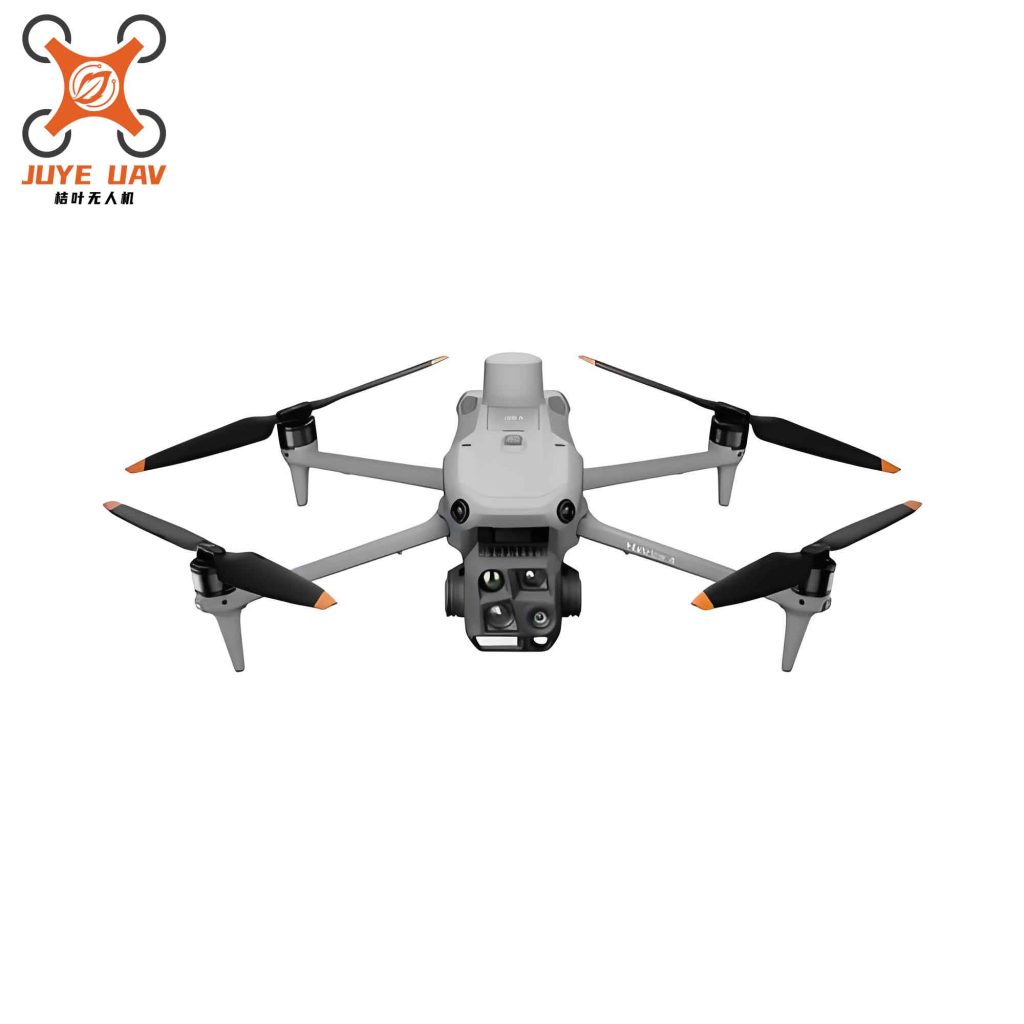
The figure above illustrates a conceptual China drone multi-domain configuration, integrating various mission pods and air-launched effects. This modular approach is central to our vision for next-generation platforms.
3. Key Enabling Technologies for China Drone Systems
The technological backbone of long endurance recon/strike UAVs encompasses navigation, communication, payload integration, and command & control. For China drone platforms, these technologies are being advanced through focused research and development programs.
3.1 Navigation and Positioning in Denied Environments
Reliance on GPS is a vulnerability that adversaries exploit. The US DARPA programs like STOIC and A-PhI aim to develop chip-scale atomic clocks and photonic inertial navigation systems that can sustain GPS-quality timing and positioning for extended periods. For China drone systems, alternative PNT solutions such as quantum-based inertial sensors and celestial navigation are under development. A typical navigation error budget can be described by:
$$ \sigma_{pos}(t) = \sigma_{INS}(t) + \sqrt{ \left( \sigma_{GPS,0} \right)^2 + \left( \lambda_{bias} t \right)^2 } $$
where $\sigma_{INS}(t)$ is the inertial drift, $\sigma_{GPS,0}$ is the initial GPS accuracy, and $\lambda_{bias}$ is the clock drift rate. Reducing $\lambda_{bias}$ is a major goal for China drone navigation systems to enable operations in highly contested electromagnetic environments.
3.2 Laser Communication for Low-Probability-of-Intercept Links
The General Atomics LAC-12 laser terminal, capable of 1 Gbps data rates, is now being flight-tested. This technology provides jam-resistant, high-bandwidth links between UAVs and satellites. For China drone communication architectures, we are developing compact laser terminals (mass <20 kg) that can be integrated into standard payload bays. The link budget for a free-space optical communication system can be expressed as:
$$ P_{rx} = P_{tx} \cdot \eta_{tx} \cdot \eta_{rx} \cdot \left(\frac{D_{rx}}{R \cdot \theta_{div}}\right)^2 \cdot 10^{-0.1\cdot A_{atm}} $$
where $P_{tx}$ is transmitted power, $\eta$ are optical efficiencies, $D_{rx}$ is receiver aperture diameter, $R$ is range, $\theta_{div}$ is beam divergence, and $A_{atm}$ is atmospheric attenuation. For China drone applications, ensuring closed-loop pointing and tracking under turbulence is a critical technical challenge.
3.3 Air-Launched Effects (ALE) and Distributed Sensing
The US Army’s ALE concept, exemplified by the Sparrowhawk (air-launched from MQ-9) and the LongShot (carrying air-to-air missiles), enables mothership UAVs to extend their reach and suppress enemy air defenses. China drone programs are pursuing analogous systems, such as the “Feihong” series of loitering munitions that can be released from larger UAVs like the CH-5. The kinematic advantage of ALE can be quantified by considering the range extension $\Delta R$:
$$ \Delta R = \left( \frac{E_{ALE}}{D_{ALE}} \right) \cdot \left( \frac{L}{D} \right)_{ALE} \cdot \ln\left(\frac{W_{ALE,0}}{W_{ALE,f}}\right) $$
where $E_{ALE}$ is specific energy of the ALE, $D_{ALE}$ is its drag, and weight terms represent its fuel fraction. For China drone mothership platforms, carrying two to four such ALEs can triple the effective strike radius while keeping the mothership out of direct engagement.
3.4 Manned-Unmanned Teaming (MUM-T)
US programs like Skyborg and ACE demonstrate the potential of AI-driven loyal wingmen operating alongside manned fighters. For China drone systems, MUM-T is a key capability in the “aerospace integrated combat” concept. The communication delay and data fusion latency $\tau$ must satisfy:
$$ \tau_{total} = \tau_{link} + \tau_{processing} + \tau_{decision} \leq \tau_{max} $$
where $\tau_{max}$ is typically < 100 ms for cooperative engagement. China drone command and control systems are being designed with edge computing nodes to minimize onboard processing time, enabling real-time collaborative targeting.
3.5 Command and Control (C2) System Architecture
General Atomics’ Integrated Intelligence Center uses the MMC controller to manage multiple UAVs simultaneously, while Israel’s MOIC centralizes mission planning, execution, and ISR product generation. For China drone operations, we are adopting an open-architecture C2 framework based on STANAG 4586 to ensure interoperability with allied systems. The number of UAVs that a single operator can effectively control is given by:
$$ N_{max} = \frac{K_{autonomy}}{H_{operator}} \cdot \left( \frac{T_{au}}{T_{reaction}} \right) $$
where $K_{autonomy}$ is the autonomy level (0–1), $H_{operator}$ is the human workload per UAV, $T_{au}$ is pilot attention span, and $T_{reaction}$ is required reaction time. By increasing autonomy to 0.5–0.7, China drone teams can supervise 4–6 platforms per operator, matching US capabilities.
4. Future Trends and the China Drone Roadmap
The future of long endurance recon/strike UAVs will be shaped by four overarching requirements: survivability, mission versatility, operations in limited conditions, and intelligent command. For China drone developers, we foresee the following concrete trends:
- Survivability enhancement: Stealth shaping, active defense systems (e.g., laser turrets, decoys), and network-based electronic attack. Our next-generation China drone will feature radar cross-section below 0.01 m² and an integrated electronic warfare suite.
- Multi-domain mission capability: Integration of ISR, electronic warfare, anti-submarine warfare, and even air-to-air combat roles. For example, the CH-7 stealth UAV is being developed to carry internal payloads for penetrating denied airspace.
- Operations from austere bases: STOL variants like the Mojave are increasingly relevant for China drone deployments from damaged runways, highways, or amphibious assault ships.
- Higher autonomy and AI: Implementation of deep reinforcement learning for tactical decision-making, enabling China drone swarms to execute coordinated saturation attacks without constant human intervention.
- Open architecture and rapid upgrade cycles: Using standardized payload interfaces (e.g., NATO-style 1553 bus or modern open communication standards) to quickly integrate new sensors and weapons as they mature.
To summarize the anticipated performance improvements, we present a comparative table of China drone capabilities across generations (current vs. planned 2030).
| Attribute | Current (e.g., CH-5) | Next-Generation (2030, e.g., CH-7) |
|---|---|---|
| Maximum Endurance | 30 h | 40 h+ |
| Max Payload | 1000 kg | 2000 kg (internal) |
| Radar Cross Section | >1 m² | <0.001 m² (stealth) |
| Communications | SatCom (delay ~250 ms) | Laser Com + 5G NTN (delay <10 ms) |
| Autonomy Level | 4 (human-in-the-loop) | 7 (on-loop for mission |
| Collaboration | Single operator per UAV | 1 operator supervising 6–8 UAVs |
| Air-Launched Effects | External guided bombs | Internal ALE (e.g., 4–6 loitering munitions) |
| Operational Flexibility | Paved runways only | STOL from dirt strips, carriers |
The evolution of China drone systems is guided by the principle of “practical, intelligent, open, standardized.” This aligns with the US DoD Unmanned Systems Integrated Roadmap 2017-2042, which emphasizes cybersecurity, interoperability, autonomy, and human-machine collaboration. For example, the cybersecurity framework for China drone datalinks will implement multi-layer encryption and quantum key distribution to counter EW attacks. The progression of autonomy levels follows a logarithmic scale:
$$ A(t) = A_0 + \alpha \log_{10}(1 + \beta t) $$
where $A_0$ is baseline autonomy, $\alpha$ and $\beta$ are technology-specific constants, and $t$ is time in years. For China drone programs, $\alpha$ is estimated at 0.4 per decade, implying that by 2030 autonomy will double relative to 2020 levels.
Moreover, our analysis of air-to-ground strike effectiveness for China drone weapon systems can be modeled using the probability of kill $P_k$ as a function of weapon CEP (circular error probable) and target hardness:
$$ P_k = \exp\left( – \frac{CEP^2}{2 \sigma_{aim}^2} \right) \cdot \left( 1 – \exp\left(- \frac{\Delta V^2}{2 V_{leth}^2}\right) \right) $$
where $\sigma_{aim}$ is targeting error, $\Delta V$ is impact velocity, and $V_{leth}$ is lethal velocity. Future China drone munitions will leverage terminal guidance to reduce CEP below 1 m, ensuring a high single-shot kill probability.
In conclusion, the global landscape of long endurance recon/strike UAVs is rapidly evolving, and China drone technology is at the forefront of this transformation. By integrating insights from recent conflicts, embracing open architectures, and investing in artificial intelligence, we aim to deliver platforms that not only match but exceed the capabilities of the current generation of US, Israeli, Turkish, and Russian systems. Our vision for the next decade includes autonomous China drone swarms capable of independent multi-domain operations, fully integrated into joint force architectures. The journey from today’s workhorse UAVs to tomorrow’s intelligent combat aircraft is driven by continuous innovation and a steadfast commitment to operational excellence.