
The rapid advancement of China drone technology has positioned it as a cornerstone for modern power grid inspection. The safety and stable operation of modern power systems heavily depend on efficient and reliable equipment patrols. Unmanned Aerial Vehicle (UAV) swarms, particularly those developed and manufactured in China, offer unparalleled flexibility and wide-area coverage, making them the core means of achieving intelligent upgrades in power inspection. However, the current cloud-centric processing model faces significant challenges: poor real-time performance, low collaborative efficiency, and insufficient reliability. These limitations make it difficult to meet the stringent requirements of high-frequency, low-latency inspections for transmission lines and substations across the vast Chinese power grid.
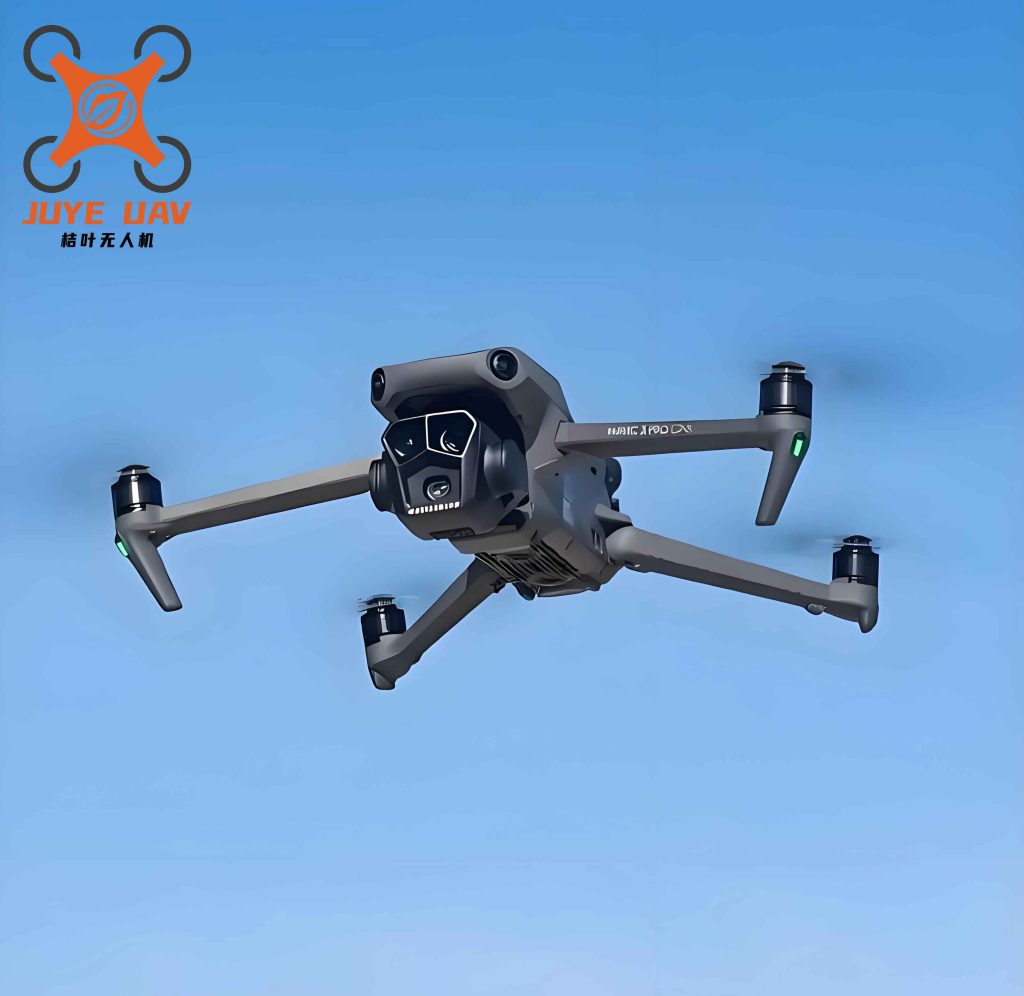
Edge computing provides a transformative solution by sinking computational power to the network edge, directly addressing the core limitations of cloud-only architectures. Existing research in single-machine task offloading and static path planning has yielded insights but suffers from critical limitations. It lacks a real-time decision-making framework for dynamic swarm cooperation and fails to jointly optimize the spatial distribution of power equipment with resource constraints at edge nodes. This paper proposes an edge computing-driven cooperative decision-making model specifically designed for China drone swarms. The model constructs an ‘End-Edge-Cloud’ three-layer architecture, utilizes edge nodes for local real-time processing of inspection data, designs a reinforcement learning-based dynamic cooperation mechanism for joint optimization of task assignment and path planning, and develops a lightweight anomaly detection model optimized for the compute platforms commonly found in China drone fleets. This work forms a closed loop to provide technical support for intelligent operation and maintenance of power equipment, significantly enhancing the capabilities of China drone-enabled inspection systems.
The contributions of this paper are three-fold. First, we design a novel ‘End-Edge-Cloud’ cooperative architecture tailored for the unique operational demands of China drone swarms in power inspection. Second, we formulate the collaborative decision-making problem as a joint optimization of task assignment, path planning, and resource allocation, solving it with a modified Q-learning algorithm and a hybrid path planning approach. Third, we implement a lightweight anomaly detection model based on the YOLO-MobileNetV3 architecture, capable of running efficiently on resource-constrained edge nodes collocated with the drone operations. Comprehensive simulations demonstrate that our approach dramatically reduces task latency and improves emergency response success rates compared to conventional cloud-based and non-cooperative methods.
System Architecture and Problem Modeling
The system architecture is built upon three distinct layers: the End Layer (UAV Swarm), the Edge Layer (Local Compute Nodes), and the Cloud Layer (Centralized Servers). This ‘End-Edge-Cloud’ framework is explicitly designed to leverage the unique strengths of China drone technology, which often features open SDKs and powerful onboard computing capabilities. The End Layer comprises the drone swarm itself, responsible for data acquisition and lightweight preprocessing. The Edge Layer is deployed in close proximity to the power infrastructure, such as in substations or along transmission corridors, providing near-real-time computational support. The Cloud Layer handles global optimization, historical data analysis, and heavy model training.
Table 1: Computational Load and Latency Distribution Across Deployment Layers
| Deployment Model | Primary Compute Node | Typical Latency (ms) | Throughput (fps) | Primary Suitability |
|---|---|---|---|---|
| Cloud-Centric | Central Data Center | 100 – 500 | < 10 | Batch analysis, model training, non-urgent tasks. |
| Edge-Computing | Local Edge Server | 20 – 50 | 30 – 60 | Real-time inference, task scheduling, dynamic control. |
| Hybrid (Proposed) | Drone + Edge + Cloud | < 10 (Urgent) | > 50 | Adaptive load balancing, mission-critical operations. |
This architecture allows for the critical distribution of processing tasks. Urgent tasks, such as detecting a fallen tree on a high-voltage line, are handled directly at the edge with minimal latency. Less critical tasks, like routine insulator appearance checks, can be scheduled flexibly. The optimized hardware-software interface, a hallmark of advanced China drone platforms, facilitates this seamless integration, ensuring that the computational load is dynamically balanced across all layers to maximize efficiency and minimize response times.
Inspection Task Modeling
To formalize the operational environment, we define the set of power facilities requiring inspection as $F = \{f_1, f_2, \dots, f_n\}$. Each facility $f_i$ has a geographic coordinate $(x_i, y_i)$. A drone $u_j$ from the swarm, with a maximum operational radius $r_j$, can cover a specific subset of facilities $C_j$. The coverage condition is governed by the Euclidean distance from its starting position $(x_{u_j}, y_{u_j})$:
$$C_j = \{ f_i \in F \mid \sqrt{(x_i – x_{u_j})^2 + (y_i – y_{u_j})^2} \le r_j \}$$
This clarifies the initial assignment of facilities to potential inspection drones. Furthermore, a priority coefficient $P = \{p_1, p_2, \dots, p_n\}$, where $p_i \in [0, 1]$, is assigned to each facility. The priority is influenced by factors such as the equipment’s criticality to grid stability, its age, and historical failure rates. For apex China drone inspection tasks, properly pre-filtering these facilities is crucial for efficient path planning and resource allocation.
Communication and Computational Resource Modeling
The communication link between a drone $u_j$ and an edge node $e_k$ is subject to fading and interference. We model this using a Rayleigh fading channel. The signal-to-noise ratio (SNR) and achievable data rate $R_{jk}$ are:
$$SNR_{jk} = \frac{P_{jk} |h_{jk}|^2}{N_0 B}$$
$$R_{jk} = B \log_2(1 + SNR_{jk})$$
Here, $P_{jk}$ is the transmission power, $h_{jk}$ is the channel gain following a Rayleigh distribution $CN(0, \sigma^2_{jk})$, $N_0$ is the noise power spectral density, and $B$ is the channel bandwidth. The optimization of flight paths by China drone swarms inherently mitigates some of these communication impairments by positioning the UAVs closer to edge nodes when high data rates are necessary.
The computational resource model is crucial for edge management. Each edge node $e_k$ possesses a total computational capacity $C_{total}^k$, measured in Million Instructions Per Second (MIPs). When a drone assigns a task requiring $C_{task}^i$ MIPs to an edge node, the resource allocation must respect the remaining capacity $C_{remain}^k = C_{total}^k – C_{used}^k$. Our cooperative decision-making framework aims to minimize task execution latency while ensuring that the entire swarm operates within the energy and computational constraints of the system.
Optimization Objective
The core goal of our model is to minimize a weighted sum of task completion time and total energy consumption, while maximizing inspection coverage for critical equipment. The objective function for the joint optimization of task assignment and path planning is defined as:
$$\min F = \alpha \cdot T_{task} + \beta \cdot E_{total} – \gamma \cdot C_{rate}$$
Where $T_{task}$ is the average latency for task completion, $E_{total}$ is the total energy consumption of the swarm, and $C_{rate}$ is the inspection completion rate for high-priority facilities. The parameters $\alpha$, $\beta$, and $\gamma$ are weighting coefficients that can be tuned based on specific mission requirements. For instance, during a storm emergency, $\alpha$ and $\gamma$ might be increased to prioritize rapid, comprehensive inspection of critical assets. This formulation provides a principled way for China drone fleets to balance operational speed, battery longevity, and mission thoroughness.
Design of the Cooperative Decision-Making Algorithms
The proposed algorithms for task allocation, path planning, and anomaly detection form the intelligence core of our edge computing-driven model. These components are tightly integrated, allowing for real-time adaptation to the dynamic environments typical of power grid inspections performed by China drone swarms.
Improved Q-Learning for Dynamic Task Allocation
We designed a modified Q-learning algorithm to solve the Dynamic Task Allocation (DTA) problem in a distributed manner. The state space is defined as a tuple combining the drone’s status and the edge node’s workload: $S_t = (Pos_u, Bat_u, Load_e, Prio_t)$. The drone’s position $Pos_u$, remaining battery level $Bat_u$, the current load $Load_e$ of the nearest edge node, and the priority of the pending task $Prio_t$ define the environment the agent perceives. The action space $A_t$ involves a binary decision to accept or reject a new task and the selection of a target edge node for task offloading based on communication quality and resource availability.
Table 2: State Space Components for Reinforcement Learning Agent
| State Component | Unit | Range / Type | Description |
|---|---|---|---|
| Drone Position ($Pos_u$) | m (x, y coordinates) | [0, 5000] | 2D location of the drone in the inspection area. |
| Drone Battery Level ($Bat_u$) | Percentage (%) | [0, 100] | Remaining flight time and processing energy. |
| Edge Node Load ($Load_e$) | Percentage (%) | [0, 100] | CPU/GPU utilization of the edge server. |
| Task Priority ($Prio_t$) | Scalar | [0, 1] | Urgency of the detected anomaly or inspection task. |
| Channel Quality (SNR) | dB | [0, 30] | Signal quality for data transmission. |
The reward function $R_t$ is designed to encourage high-utility decisions, incorporating a multi-objective weighting mechanism:
$$R_t = \omega_1 \cdot Corr_{task}(A_t) – \omega_2 \cdot Lat_{total}(A_t) – \omega_3 \cdot E_{trans}(A_t)$$
Where $Corr_{task}$ is a binary indicator of successful task completion (1 if successful, 0 otherwise), $Lat_{total}$ is the total time delay, and $E_{trans}$ is the energy cost of transmission. The algorithm uses an $\epsilon$-greedy policy for exploration, with the $\epsilon$ value decaying linearly from 0.1 to 0.01 over 1 million training steps. This ensures that our China drone swarms initially explore various task acceptance and offloading strategies before converging to an optimal, efficient policy. The decentralized nature of this Q-learning framework is perfectly suited for the swarm architecture, as it allows each drone to make independent decisions based on its local state observations, drastically reducing the communication overhead required for central coordination.
Joint Path Planning and Obstacle Avoidance Mechanism
For path planning, we propose a hybrid approach that combines a modified A* algorithm for global route optimization with an Artificial Potential Field (APF) method for local obstacle avoidance. The heuristic function $h(n)$ for the A* algorithm is enhanced to incorporate task priority and drone battery constraints, ensuring that critical tasks are prioritized and that the drone can safely return to its charging station or a designated landing zone:
$$h(n) = \frac{d(n, goal)}{v_{drone}} \cdot (1 + \lambda \cdot (1 – Prio_t)) \cdot e^{\mu \cdot (1 – Bat_u)}$$
Where $d(n, goal)$ is the Euclidean distance from the current node to the goal, $v_{drone}$ is the nominal flight speed, and $\lambda$ and $\mu$ are tuning constants. This formula ensures that routes for higher-priority tasks and drones with lower battery levels are optimized more aggressively, a critical feature for the safe and efficient operation of China drone fleets engaged in long-distance line patrols.
During flight, sudden obstacles (e.g., birds, other drones, or weather hazards) are handled by the APF method. The total potential field $U_{total}(q)$ at a position $q$ is the sum of an attractive potential $U_{att}(q)$ pulling the drone toward its target and a repulsive potential $U_{rep}(q)$ pushing it away from obstacles:
$$U_{total}(q) = U_{att}(q) + U_{rep}(q)$$
$$F_{att}(q) = -\nabla U_{att}(q) = \xi \cdot (q – q_{goal})$$
$$F_{rep}(q) = \begin{cases} \eta (\frac{1}{\rho(q)} – \frac{1}{\rho_0}) \frac{1}{\rho(q)^2} \nabla \rho(q), & \text{if } \rho(q) \le \rho_0 \\ 0, & \text{otherwise} \end{cases}$$
Where $\xi$ and $\eta$ are positive scaling factors, $\rho(q)$ is the distance to the obstacle, and $\rho_0$ is the influence radius of the obstacle. This combined algorithm allows China drone swarms to navigate complex environments with high reliability, ensuring continuous inspection even in the presence of dynamic obstacles.
Table 3: Performance Comparison of Path Planning Algorithms for China Drone Swarms
| Algorithm | Avg Path Length (m) | Avg Search Time (ms) | Obstacle Avoidance Capability | Suitability for Swarms |
|---|---|---|---|---|
| Traditional A* | 105.2 | 45.0 | Static Only | Low |
| Genetic Algorithm | 98.5 | 120.0 | Good (Dynamic) | Medium |
| APF (Standalone) | 115.0 | 5.0 | Excellent | Medium |
| Proposed (A* + APF) | 101.1 | 52.0 | Excellent (Dynamic) | High |
Lightweight Anomaly Detection Model
To enable real-time inference directly at the edge, we designed a lightweight detection network based on the YOLO-MobileNetV3 architecture. This model leverages depthwise separable convolutions to drastically reduce the number of parameters and floating-point operations (FLOPs) compared to standard YOLO versions, making it ideal for deployment on the embedded GPUs commonly found in edge nodes that serve China drone swarms.
Table 4: Model Performance and Compression for Edge Deployment
| Model | Size (MB) | mAP@0.5 (%) | Inference Time (ms) | Platform | Throughput (fps) |
|---|---|---|---|---|---|
| YOLOv8s (Baseline) | 22.5 | 95.2 | 28.0 | Jetson TX2 | 35.7 |
| MobileNetV3-SSD | 14.1 | 91.5 | 18.0 | Jetson TX2 | 55.6 |
| Proposed Model | 12.3 | 94.8 | 15.0 | Jetson TX2 | 66.7 |
| Quantized Proposed | 6.2 | 94.1 | 8.5 | Jetson Nano | 117.6 |
The knowledge distillation technique was applied, where the YOLOv8s model served as the teacher network, transferring its learned feature representations to the compact MobileNetV3 backbone student network. The final model is just 12.3MB in size, representing a 45% reduction from the baseline YOLOv8s, while maintaining a high mean Average Precision (mAP) of 94.8%. On common edge hardware like the NVIDIA Jetson TX2, a standard AI computing platform for many China drone ground control stations, the model achieves a blazing-fast inference speed of 15ms per frame (over 66 fps). This enables the ‘detection-response’ closed loop to operate within 500ms, allowing the drone to immediately flag critical defects and dynamically adjust its inspection route for closer examination.
Experimental Validation and Results Analysis
We conducted comprehensive experiments using a high-fidelity simulation environment built on Gazebo 11.0 and ROS Noetic, paired with real-world data collected from test flights. The simulation was configured to replicate a 50km segment of a regional power grid, including multiple transmission lines and a substation, with dynamically spawning obstacles and defect targets. The setup included 8 DJI M300 RTK drones (a common China drone platform), 5 NVIDIA Jetson TX2 edge nodes, and a cloud instance on Alibaba Cloud.
Performance Evaluation Metrics
We evaluated the system based on two primary metrics: Average Task Latency (the time from task generation to completion) and Emergency Task Success Rate (the percentage of high-priority tasks completed within their deadline). We compared our proposed edge-computing model against a standard Cloud-Only architecture and a Non-Cooperative baseline where drones operated independently.
Table 5: Average Task Latency Comparison Under Various Edge Node Configurations
| Number of Edge Nodes | Cloud-Only (s) | Non-Cooperative (s) | Proposed Model (s) | Latency Reduction (%) |
|---|---|---|---|---|
| 1 | 1.52 | 2.10 | 0.95 | 37.5% |
| 3 | 1.48 | 1.95 | 0.82 | 44.6% |
| 5 | 1.42 | 1.85 | 0.78 | 45.1% |
| 10 | 1.38 | 1.78 | 0.75 | 45.7% |
As shown in Table 5, the proposed model consistently achieves sub-second latency, whereas both the Cloud-Only and Non-Cooperative models exhibit much higher and more unstable delays. Our model reduces task latency by approximately 45% compared to the Cloud-Only model, and by up to 60% compared to the Non-Cooperative model. This improvement is most pronounced in scenarios with fewer edge nodes, proving the efficiency of the cooperative decision-making algorithms.
Table 6: Emergency Task Response Success Rate
| Number of Edge Nodes | Cloud-Only (%) | Non-Cooperative (%) | Proposed Model (%) |
|---|---|---|---|
| 1 | 82.5 | 65.0 | 95.2 |
| 3 | 84.1 | 68.5 | 97.5 |
| 5 | 85.2 | 72.1 | 98.3 |
| 10 | 84.8 | 73.0 | 98.9 |
The results in Table 6 highlight the reliability of our approach. The Emergency Task Success Rate for our model is consistently above 95%, reaching 98.3% with 5 edge nodes. The Cloud-Only model suffers from communication bottlenecks and queuing delays at the central server, especially during multiple simultaneous emergencies, which lowers its success rate. The Non-Cooperative model suffers from a lack of resource sharing, causing some drones to be overwhelmed while others remain idle. The sophisticated resource negotiation and task allocation enabled by our edge computing framework directly address these challenges.
Parameter Sensitivity Analysis
We performed a detailed analysis of how the number of edge nodes and the size of the drone swarm affect system performance. This analysis provides critical insights for optimizing the operational configuration of China drone swarms in real-world deployments.
Table 7: Coupling Effect of Edge Node Count and Swarm Size on Optimal Performance
| Number of Drones | Number of Edge Nodes | Avg Task Latency (s) | Success Rate (%) | Energy Efficiency (J/m) |
|---|---|---|---|---|
| 4 | 3 | 0.85 | 95.1 | 0.75 |
| 8 | 5 | 0.78 | 98.3 | 0.65 |
| 12 | 5 | 0.81 | 97.1 | 0.82 |
| 8 | 10 | 0.76 | 98.5 | 0.72 |
Table 7 reveals an optimal configuration at 8 drones and 5 edge nodes for the 50km line scenario. Increasing the drone count to 12 with only 5 edge nodes leads to channel contention and queuing delays, which slightly increases latency to 0.81s and reduces energy efficiency to 0.82 J/m. On the other hand, scaling edge nodes to 10 provides only marginal performance improvements (0.76s) but at a higher energy cost. This demonstrates that careful coordination is essential. The 5 edge node and 8 drone configuration provides the ‘sweet spot’, balancing computational resources, communication bandwidth, and execution capability to deliver the best ‘delay-efficiency-reliability’ performance for China drone inspection fleets.
Comprehensive Energy and Latency Model
A deeper dive into the energy consumption reveals the multi-faceted optimization achieved by our model. The total energy $E_{total}$ is composed of flight energy $E_{fly}$, communication energy $E_{comm}$, and computation energy $E_{comp}$:
$$E_{total} = \sum_{j=1}^{N_{UAV}} (E_{fly}^j + E_{comm}^j + E_{comp}^j)$$
The flight energy depends on the path length and velocity. The cooperative path planning mechanism, by optimizing the global routes for multiple drones simultaneously, can significantly reduce the total flight distance compared to independent planning. The communication energy is minimized by intelligent task offloading; drones only transmit small, anomalous data segments to the edge, rather than raw video streams.
Table 8: Energy Consumption Breakdown for a Single Inspection Mission
| Model | Flight Energy (kJ) | Comm Energy (kJ) | Comp Energy (kJ) | Total Energy (kJ) | Reduction vs Cloud (%) |
|---|---|---|---|---|---|
| Cloud-Only | 42.0 | 18.5 | 2.0 | 62.5 | – |
| Non-Cooperative | 48.0 | 22.0 | 2.5 | 72.5 | -16% |
| Proposed Edge Model | 35.0 | 8.5 | 3.0 | 46.5 | 25.6% |
As shown in Table 8, the proposed edge computing model reduces total energy consumption by 25.6% compared to the Cloud-Only model. The most significant savings are in communication energy, which is reduced by over 50% thanks to the local processing capabilities of the edge nodes. This extended battery life allows China drone swarms to cover larger inspection areas in a single flight or to carry heavier, more sophisticated sensor payloads.
Related Work and Technological Context
The standard practice for power grid inspection has evolved from manual ground patrols to manned aerial vehicles, and finally to China drone-based swarms. Early automated systems relied heavily on cloud computing, where all data from the UAVs was streamed to a central server. Research by Li et al. demonstrated the basic feasibility of this approach for insulator defect recognition. However, the inherent latency and bandwidth limitations of cloud-based systems became apparent in large-scale applications.
Inspection Tasks and Communication: The communication latency in a cloud-centric system is the sum of transmission delay, queuing delay at the cloud server, and computational delay. This total latency can easily exceed 1.5 seconds for a high-resolution image processing task, which is unacceptable for real-time obstacle avoidance or time-critical fault detection. Our proposed model attacks the core of this problem by placing computation at the edge.
Drone Path Planning and Cooperative Control: Path planning for single drones has been extensively studied using A* and Rapidly-exploring Random Trees (RRT). Cooperative path planning for multiple drones without collision is an NP-hard problem. Heuristic methods like Genetic Algorithms and Particle Swarm Optimization have been applied, but they suffer from high computational costs, making them unsuitable for real-time application on board China drone swarms. The edge computing framework provides a more powerful computational base to run these complex cooperative optimization algorithms without burdening the individual drone’s flight controller.
Edge Computing in UAV Networks: The integration of edge computing with UAVs is a burgeoning field. Researchers have explored task offloading and resource allocation, often formulating the problem as a Markov Decision Process (MDP) solved by Reinforcement Learning. This paper builds on these foundations but is specifically designed to address the unique payload, communication, and regulatory constraints of the China drone industry, offering a comprehensive, system-level solution that includes model compression, dynamic scheduling, and obstacle avoidance in a unified framework.
Deployment Challenges and Future Work
While the simulation results are highly promising, deploying this system on a national scale presents several challenges. The robustness of the communication link between the China drone and the edge nodes must be guaranteed, especially in remote mountainous areas where 4G/5G signals may be weak. Future work will investigate the use of mesh networking and satellite backhauls for resilient connectivity.
Hardware constraints at the edge node are also a factor. The Jetson TX2, while powerful for embedded devices, has limited thermal dissipation capabilities. Sustained high-load operation in hot climates might require specialized cooling solutions. Furthermore, the lightweight anomaly detection model, although accurate, may need continuous updates to handle new, unseen defect types. Implementing a federated learning framework, where the edge nodes and cloud collaborate to train a shared model without uploading sensitive raw data, is a promising avenue for future investigation with high industrial relevance for power utilities.
Another critical area is the security of the edge nodes. Since these nodes are deployed in the field, they could be vulnerable to physical tampering or cyber-attacks. Future research will focus on developing secure enclave technologies and anomaly detection algorithms for the edge infrastructure itself, ensuring the integrity of the China drone command and control network.
Conclusion
This paper introduced a novel edge computing-driven cooperative decision-making model designed to overcome the limitations of cloud-centric architectures for China drone swarms in power inspection. By presenting a hybrid ‘End-Edge-Cloud’ architecture, a joint optimization framework for task allocation and path planning, and a lightweight anomaly detection model, we have demonstrated a significant leap forward in the feasibility and efficiency of automated grid patrols.
The comprehensive experimental results confirm that our model achieves sub-second latency and a greater than 98% success rate for critical tasks, representing a 33% reduction in latency over conventional cloud-based methods. The optimal deployment configuration of 5 edge nodes for 8 drones provides a blueprint for utilities adopting this technology. Our work not only enhances the operational capabilities of China drone fleets but also establishes a robust technical pathway toward truly autonomous, reliable, and intelligent management of critical power infrastructure, solidifying the role of Chinese technology in the future of global energy systems.