
The Digital Elevation Model (DEM) stands as the cornerstone for the digital representation of terrain, finding critical applications in land-use planning, hydraulic engineering, disaster assessment, and environmental monitoring. The fidelity of these models directly dictates the reliability of downstream analyses and decision-making processes. Traditional methodologies for DEM generation, such as ground-based topographic surveys and manned aerial photogrammetry, are often hampered by inefficiency, incomplete coverage in complex landscapes, and inherent difficulties in capturing data under dense vegetation or in hazardous areas. These limitations increasingly fall short of modern demands for rapid, high-precision, and comprehensive terrain modeling. The integration of Light Detection and Ranging (LiDAR) technology with unmanned drone platforms presents a transformative solution. By merging the operational flexibility of unmanned drones with the direct, precise ranging capabilities of LiDAR, this synergy enables the efficient acquisition of highly accurate three-dimensional point cloud data, forming an ideal foundation for high-fidelity DEM construction. This article explores the foundational principles, procedural workflows, and optimization strategies for employing unmanned drone LiDAR technology in the production of high-precision DEMs.
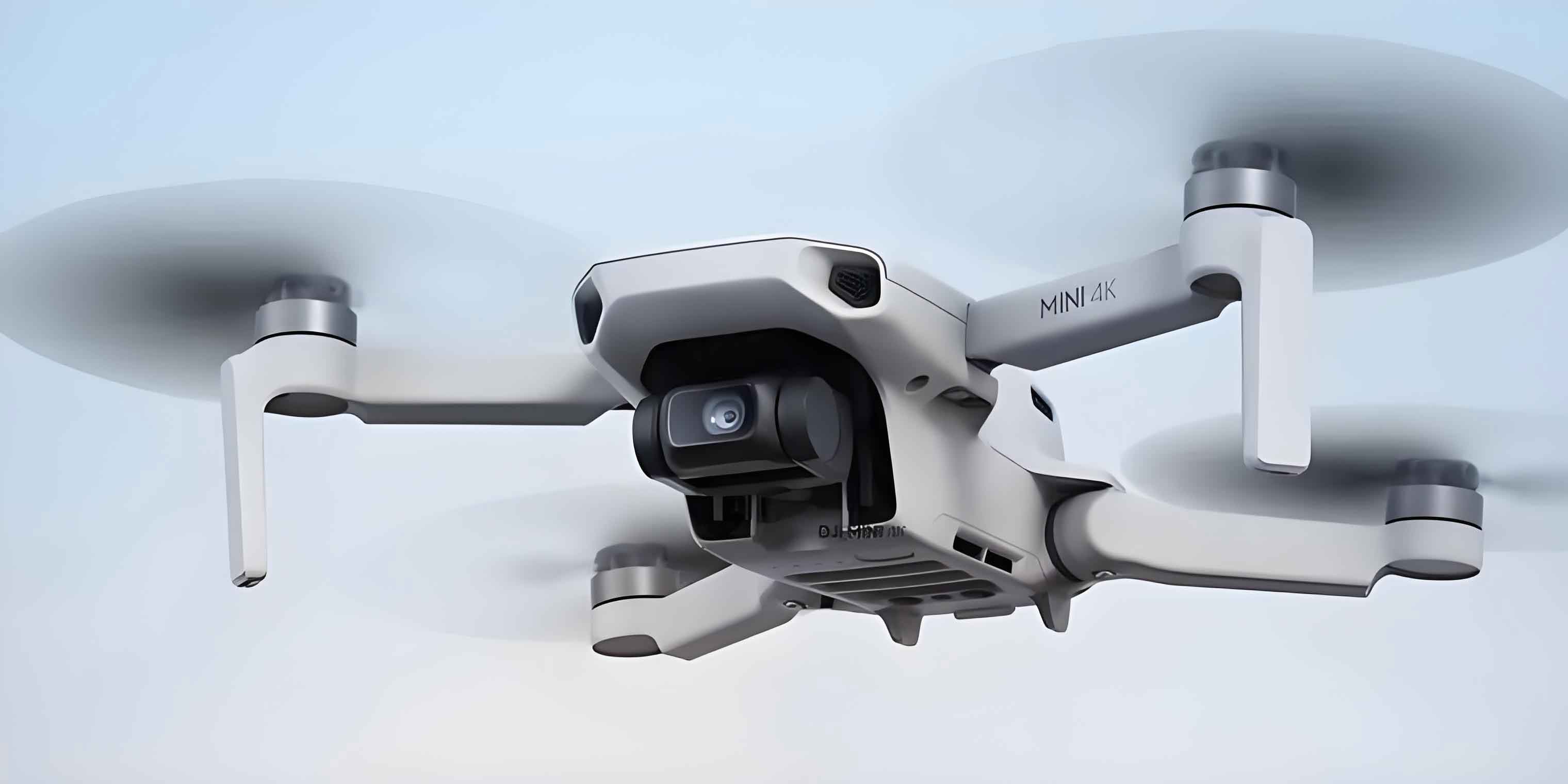
At its core, unmanned drone LiDAR operates on the principle of direct georeferencing through integrated laser ranging and positional/orientation sensors. The fundamental equation governing the distance measurement for a single laser pulse is derived from the time-of-flight principle:
$$ R = \frac{c \cdot \Delta t}{2} $$
where \( R \) is the slant range distance to the target, \( c \) is the speed of light, and \( \Delta t \) is the measured round-trip time of the laser pulse. This raw distance is then transformed into a precise 3D coordinate in a global reference frame. The position of the unmanned drone at the moment of pulse emission is determined by an onboard Global Navigation Satellite System (GNSS) receiver. The orientation (roll, pitch, yaw) of the sensor is measured by an Inertial Measurement Unit (IMU). The coordinates of each laser return point \( P_{target}(X, Y, Z) \) are calculated using the following rigid body transformation:
$$ P_{target} = P_{drone} + R_{IMU} \cdot (R_{sensor} \cdot r + \Delta_{lever}) $$
Here, \( P_{drone} \) is the GNSS-derived position of the drone, \( R_{IMU} \) is the rotation matrix from the IMU defining the drone’s attitude, \( R_{sensor} \) is the boresight alignment matrix of the LiDAR sensor relative to the IMU, \( r \) is the laser range vector in the sensor’s coordinate system, and \( \Delta_{lever} \) is the lever arm offset between the GNSS antenna phase center and the sensor’s origin. This direct georeferencing mechanism bypasses the need for complex image matching required in photogrammetry, allowing for the generation of a dense, accurate “point cloud” even in areas with low texture or repetitive patterns.
The generation logic of the point cloud is intrinsically linked to DEM quality. As the unmanned drone follows a pre-planned flight path, the LiDAR scanner emits pulses at a high frequency (e.g., 100-2000 kHz), creating a swath of measurement points on the ground. The resulting point density \( \rho \) is a function of several flight and sensor parameters:
$$ \rho \approx \frac{PRF \cdot \text{Overlap}}{V_{g} \cdot S_{s}} $$
where \( PRF \) is the laser pulse repetition frequency, \( V_{g} \) is the ground speed of the unmanned drone, \( S_{s} \) is the scan line spacing on the ground, and the overlap factor accounts for redundancy from adjacent flight lines. A higher point density is crucial for capturing fine-grained terrain features like gullies, ridges, and breaklines, which are essential for a high-precision DEM.
The performance advantages of unmanned drone LiDAR for DEM production are multifaceted and significant compared to traditional techniques, as summarized in the table below.
| Aspect | Traditional Surveying/Ground Methods | Manned Aerial Photogrammetry | Unmanned Drone LiDAR |
|---|---|---|---|
| Data Acquisition Speed | Very Slow (point-by-point) | Moderate (area-based, but requires processing) | Very Fast (direct 3D point collection over large areas) |
| Terrain Penetration Capability | Good (direct ground contact) | Poor (cannot see under vegetation canopy) | Excellent (can penetrate vegetation gaps to ground) |
| Operational Flexibility & Accessibility | Low (difficult in hazardous/steep terrain) | Moderate (requires airspace clearance, airport) | Very High (launch from anywhere, fly low and agile) |
| Weather Dependency | Moderate (affected by rain, fog) | High (requires clear visibility and good lighting) | Moderate to Low (can operate in cloudy conditions, low light) |
| Primary Data Output | Sparse 3D points, cross-sections | 2D imagery requiring 3D reconstruction | Dense, directly georeferenced 3D point cloud |
| Automation Level | Low (high manual effort) | Medium (automated processing possible) | High (automated flight and direct data capture) |
The environmental adaptability of the unmanned drone LiDAR system further broadens its application scope. The active laser sensing modality minimizes dependence on ambient light, enabling surveys during overcast conditions or in shaded areas where photogrammetry would fail. While operations are still curtailed by heavy rain or thick fog, the operational window is substantially wider. The small size and agility of the unmanned drone platform allow it to navigate tight spaces such as urban canyons, deep river valleys, or complex industrial sites, collecting data from perspectives inaccessible to larger manned aircraft.
Optimized Workflow for High-Precision DEM Generation
The production of a high-quality DEM from unmanned drone LiDAR data is a multi-stage process, where optimization at each step is paramount to achieving the final accuracy goal.
1. Data Acquisition and Mission Planning Optimization
Pre-flight planning is the first critical step. The flight parameters must be meticulously designed to meet the specified DEM accuracy and point density requirements. Key parameters include flying altitude (\(H\)), flight line spacing (\(D\)), and overlap between adjacent swaths. The ground sampling distance (\(GSD_{point}\)) is approximated by:
$$ GSD_{point} \approx \frac{H \cdot \theta}{N} $$
where \( \theta \) is the scanner’s field of view and \( N \) is the number of points per scan line. For high-precision DEMs, a lower \(GSD_{point}\) (higher density) is required, often achieved by lower flight altitude or higher pulse rate. Flight line overlap (typically >60% side lap) ensures complete coverage and provides redundant measurements for enhancing accuracy. The following table provides a guideline for parameter selection based on desired DEM quality:
| Target DEM Application/Class | Recommended Point Density (pts/m²) | Typical Flight AGL | Required Overlap (Side Lap) |
|---|---|---|---|
| Regional topographic mapping | 2 – 10 | 150 – 400 m | 30% – 50% |
| High-resolution engineering, flood modeling | 10 – 50 | 80 – 150 m | 60% – 80% |
| Very high-resolution (corridor mapping, mining) | 50 – 200+ | 50 – 100 m | 70% – 90% |
Pre- and post-flight system calibration is non-negotiable. This includes boresight calibration (aligning the LiDAR sensor’s coordinate system with the IMU’s) and lever arm measurement. The use of Ground Control Points (GCPs), surveyed with high-precision GNSS (e.g., RTK or PPK), remains a crucial practice. While direct georeferencing is powerful, GCPs serve to correct for residual systematic errors in the trajectory solution, providing an absolute accuracy check and refinement. They should be strategically placed in open, stable areas across the survey site, including the perimeter and areas of significant relief change.
2. Core Data Processing Pipeline
The raw data from the unmanned drone LiDAR mission consists of a massive, unorganized point cloud. Transforming this into a clean “bare-earth” DEM involves several key processing stages.
a) Point Cloud Preprocessing: The initial step involves cleaning and classifying the point cloud. Noise filtering removes erroneous points caused by system noise, atmospheric interference, or birds. The most critical task is point classification, typically performed using algorithms like Cloth Simulation Filter (CSF) or proprietary routines within software like TerraSolid. Points are labeled into classes such as ground, vegetation (low, medium, high), building, water, and noise. The accurate isolation of ground points is the direct input for DEM generation. The classification logic often relies on iterative triangulation, slope thresholds, and return characteristics (e.g., first, last, only).
| Point Class | Description | Role in DEM Generation |
|---|---|---|
| Ground | Points identified as the topographic earth surface. | Primary input data. Used directly in interpolation. |
| Low/Medium/High Vegetation | Points reflected from plant canopy at different heights. | Excluded. Their removal is key to creating a Digital Terrain Model (DTM). |
| Building | Points on man-made structures. | Excluded. Must be removed to avoid artificial elevation artifacts. |
| Water | Points on water bodies (often absorbed or specular). | May be classified and treated separately, often flattened or hydro-conditioned. |
b) DEM Interpolation and Raster Generation: Once a clean set of ground points is obtained, they are interpolated onto a regular grid. The choice of grid cell size (\( \Delta x, \Delta y \)) defines the spatial resolution of the final DEM. Common interpolation algorithms include:
- Inverse Distance Weighting (IDW): $$ Z_0 = \frac{\sum_{i=1}^{n} \frac{Z_i}{d_i^p}}{\sum_{i=1}^{n} \frac{1}{d_i^p}} $$ where \( Z_0 \) is the interpolated elevation, \( Z_i \) are nearby known ground point elevations, \( d_i \) are their distances to the grid cell center, and \( p \) is a power parameter.
- Triangulated Irregular Network (TIN) to Raster: Ground points are connected into a network of non-overlapping triangles, and the elevation of a grid cell is derived from the plane of the triangle it falls within.
- Kriging: A geostatistical method that uses spatial autocorrelation (variogram) to provide a best linear unbiased estimate, often yielding smooth and statistically optimal results: $$ Z_0 = \sum_{i=1}^{n} \lambda_i Z_i $$ where the weights \( \lambda_i \) are determined by solving a system of equations based on the variogram model.
c) Refinement and Hydro-flattening: The initial raster DEM often requires refinement. This includes edge smoothing, the removal of interpolation artifacts in areas with sudden data voids, and, crucially, hydro-flattening. Hydro-flattening is the process of enforcing a uniform elevation on water bodies (rivers, lakes) based on the classified water points or ancillary data, ensuring hydrologically correct flow patterns in subsequent analysis.
3. Quality Assurance and Accuracy Control
Rigorous accuracy assessment is fundamental. A multi-tiered validation strategy should be employed:
- Internal Consistency Check: Compare elevations along overlapping flight line strips. The root mean square error (RMSE) of the differences should be within sensor specifications.
- External Accuracy Assessment: Use independent check points (distinct from GCPs used in processing) surveyed with high-accuracy methods. Calculate the vertical RMSE: $$ RMSE_{Z} = \sqrt{ \frac{ \sum_{i=1}^{n} (Z_{DEM,i} – Z_{check,i})^2 }{ n } } $$
- Qualitative Visual Inspection: Generate shaded relief models or 3D visualizations to identify any obvious artifacts, unnatural spikes, or pits that indicate processing errors.
Error sources are systematically addressed. Systematic vertical offset is corrected using GCPs. Blunders from residual non-ground points are manually edited. Areas of poor data density may require a targeted re-survey with the unmanned drone. A comprehensive quality report should accompany the final DEM product, documenting all parameters, processing steps, and accuracy metrics.
| Quality Metric | Description | Typical Target for High-Precision DEM |
|---|---|---|
| Vertical RMSE | Root Mean Square Error in elevation against check points. | 5 – 15 cm, depending on project specs and land cover. |
| Point Density (Ground) | Number of classified ground points per square meter. | > 10 pts/m², often 20-50 pts/m² for high-res projects. |
| Data Void Percentage | Percentage of raster cells with no interpolatable data. | < 0.1% in non-water areas. |
| Hydrologic Correctness | Visual and analytical check for correct water flow direction. | No sinks or barriers in stream channels; flat water surfaces. |
Conclusion
The fusion of LiDAR technology with unmanned drone platforms has irrevocably altered the landscape of high-precision topographic data acquisition and DEM generation. The unmanned drone serves as a highly adaptable and efficient carrier for the LiDAR sensor, enabling rapid deployment and data collection in environments ranging from dense forests to complex urban settings. The direct measurement principle of LiDAR, providing accurate 3D coordinates independent of external lighting, addresses fundamental weaknesses of photogrammetric techniques. By adhering to a rigorous workflow—encompassing meticulous mission planning for the unmanned drone, robust point cloud processing and classification, careful interpolation, and stringent accuracy validation—this technology enables the production of DEMs with unparalleled detail and vertical accuracy. As sensor miniaturization, automation software, and processing algorithms continue to advance, unmanned drone LiDAR is poised to become the standard tool for a vast array of applications requiring precise digital terrain models, from infrastructure design and resource management to climate change adaptation and scientific research. The future will likely see even greater integration with multispectral sensors and real-time processing, further solidifying the role of the unmanned drone as an indispensable platform for geospatial data science.