
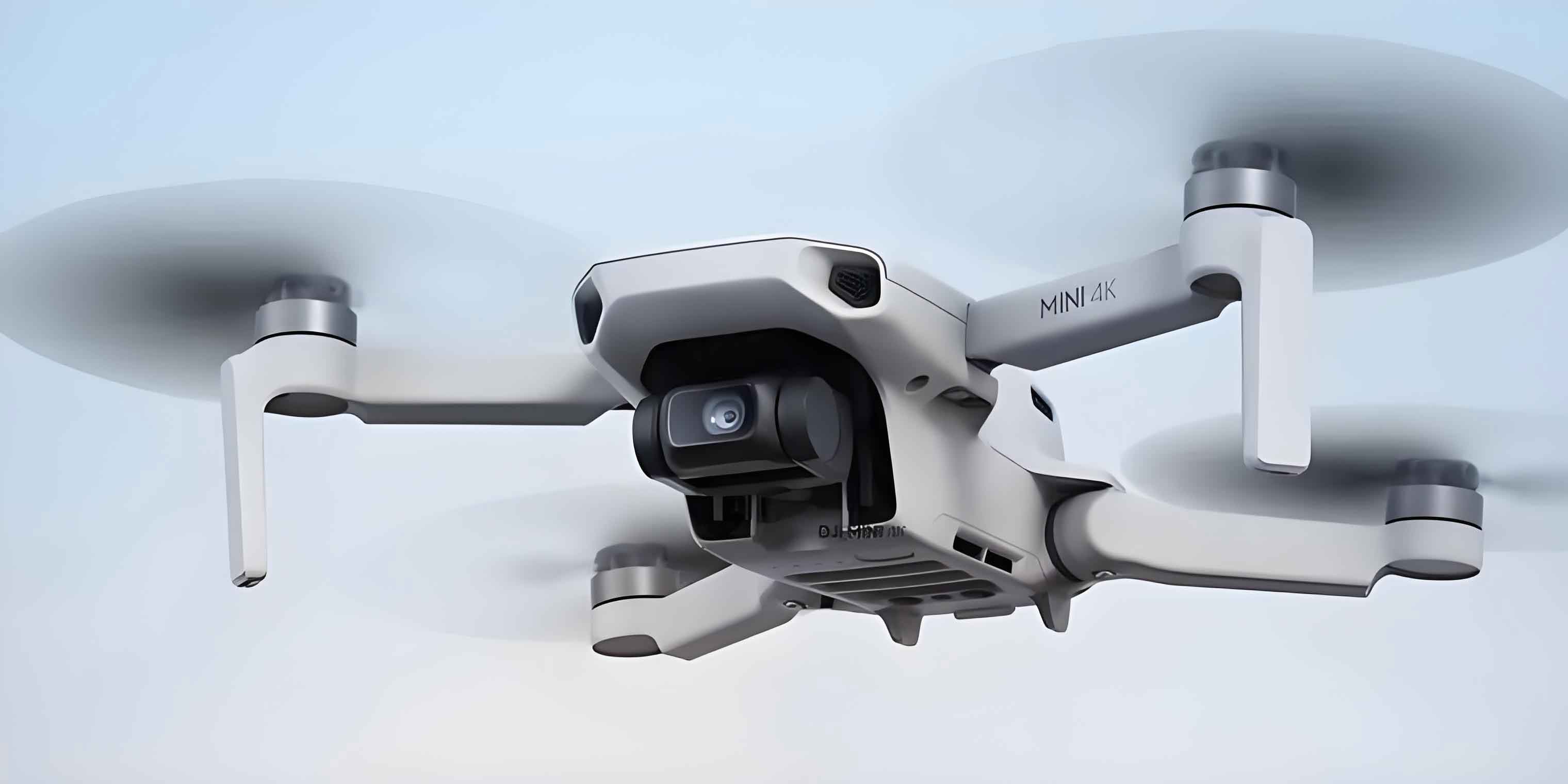
The coordinated operation of unmanned drone swarms represents a transformative capability with profound implications across military, civil, and commercial domains. From tactical reconnaissance and disaster area mapping to precision agriculture and infrastructure inspection, the ability of multiple unmanned aerial vehicles (UAVs) to execute complex missions in a synchronized formation dramatically enhances operational efficiency, coverage, and robustness. However, the reliance on wireless communication networks for coordination and control exposes these unmanned drone systems to significant cybersecurity threats. Among these, Denial-of-Service (DoS) attacks are particularly insidious, as they aim to disrupt the communication links essential for maintaining formation cohesion by overwhelming them with malicious traffic or causing intentional packet loss. Such attacks can lead to the disintegration of the unmanned drone formation, mission failure, or even catastrophic collisions.
Consequently, developing resilient formation control strategies for unmanned drone networks that can guarantee performance despite intermittent and unpredictable communication outages has become a critical research frontier. Traditional control approaches often struggle in this environment, as they may assume persistent, reliable information exchange. Recent advances have introduced resilient observers and attack-compensating controllers. However, these methods typically ensure convergence only over an undetermined or asymptotically large timeframe. For practical unmanned drone operations, especially in time-sensitive missions, it is paramount not just to achieve convergence, but to do so within a strictly user-defined, predetermined timeframe, regardless of initial conditions or the specific timing of attack intervals. This requirement of predefined-time convergence offers a superior guarantee compared to finite-time or fixed-time stability, as the upper bound of the settling time is an explicit, tunable parameter independent of system initial states and controller gains.
This article addresses the challenge of secure, time-guaranteed coordination for a swarm of quadrotor unmanned drones under DoS attacks. We propose a comprehensive, distributed control architecture built upon two cornerstone innovations: a Predefined-Time Distributed Resilient Observer (PT-DRO) and a Predefined-Time Adaptive Neural Network Controller (PT-ANNC). The core idea is to empower each following unmanned drone with the intelligence to independently and rapidly reconstruct the state information of a virtual leader during the brief periods when communication is restored, and to utilize this information for robust tracking control that accounts for inherent nonlinearities, model uncertainties, and external disturbances.
1. System Modeling and Problem Formulation for Unmanned Drone Swarm
Consider a leader-following formation comprising \( N \) follower quadrotor unmanned drones and one virtual leader (indexed as 0). The dynamics of the \( i \)-th follower unmanned drone are derived from Newton-Euler equations and can be separated into translational (position) and rotational (attitude) subsystems, which are inherently coupled due to the underactuated nature of the quadrotor.
1.1 Position and Attitude Dynamics
The translational dynamics of the \( i \)-th unmanned drone in the inertial frame are given by:
$$
\begin{align}
\dot{P}_i &= V_i \\
\dot{V}_i &= A_i u_{1,i} + H_{a,i}(P_i, V_i) + d_{a,i}(t)
\end{align}
$$
where \( P_i = [x_i, y_i, z_i]^T \in \mathbb{R}^3 \) and \( V_i = [\dot{x}_i, \dot{y}_i, \dot{z}_i]^T \in \mathbb{R}^3 \) denote the position and velocity vectors, respectively. The matrix \( A_i \) maps the total thrust input \( u_{1,i} \in \mathbb{R} \) and the attitude angles \( \Theta_i = [\phi_i, \theta_i, \psi_i]^T \) (roll, pitch, yaw) to translational acceleration:
$$
A_i = \begin{bmatrix}
\cos\phi_i \sin\theta_i \cos\psi_i + \sin\phi_i \sin\psi_i \\
\cos\phi_i \sin\theta_i \sin\psi_i – \sin\phi_i \cos\psi_i \\
\cos\phi_i \cos\theta_i
\end{bmatrix}
$$
The term \( H_{a,i}(P_i, V_i) \in \mathbb{R}^3 \) encapsulates unmodeled translational dynamics (e.g., complex aerodynamic drag), and \( d_{a,i}(t) \in \mathbb{R}^3 \) represents bounded external disturbances such as wind gusts.
The rotational dynamics of the \( i \)-th unmanned drone are expressed as:
$$
\begin{align}
\dot{\Theta}_i &= R(\Theta_i) \, \omega_i \\
J_i \dot{\omega}_i &= – \omega_i \times J_i \omega_i + \tau_i + H_{b,i}(\Theta_i, \omega_i) + d_{b,i}(t)
\end{align}
$$
Here, \( \omega_i \in \mathbb{R}^3 \) is the angular velocity vector in the body frame, \( J_i \in \mathbb{R}^{3 \times 3} \) is the inertia matrix, \( \tau_i = [u_{2,i}, u_{3,i}, u_{4,i}]^T \in \mathbb{R}^3 \) is the torque input vector generated by differential rotor speeds, \( R(\Theta_i) \) is the transformation matrix from the body frame to the inertial frame, \( H_{b,i} \) represents unmodeled rotational dynamics, and \( d_{b,i} \) denotes bounded rotational disturbances.
For control design, the attitude dynamics are often simplified to a double-integrator-like form for the Euler angles, considering the timescale separation between fast rotor dynamics and slower translational motion:
$$
\ddot{\Theta}_i \approx u_{\Theta,i} + H’_{b,i}(\Theta_i, \dot{\Theta}_i) + d’_{b,i}(t)
$$
where \( u_{\Theta,i} \) is a virtual control input for the attitude loop. The combined control input for the \( i \)-th unmanned drone is thus \( u_i = [u_{1,i}, u_{\Theta,i}^T]^T \).
1.2 Communication Topology and DoS Attack Model
The information exchange among the \( N \) follower unmanned drones and the virtual leader is described by an undirected graph \( \mathcal{G} = (\mathcal{V}, \mathcal{E}) \), where \( \mathcal{V} = \{1, 2, …, N\} \) is the node set and \( \mathcal{E} \subseteq \mathcal{V} \times \mathcal{V} \) is the edge set. The adjacency matrix is \( \mathcal{A} = [a_{ij}] \), where \( a_{ij}=1 \) if \( (j,i) \in \mathcal{E} \), else \( a_{ij}=0 \). The Laplacian matrix is \( \mathcal{L} = \mathcal{D} – \mathcal{A} \), with \( \mathcal{D} = \text{diag}(d_i) \) and \( d_i = \sum_{j \in \mathcal{N}_i} a_{ij} \). The connection from the leader to follower \( i \) is defined by \( b_i \), where \( b_i=1 \) if follower \( i \) can receive the leader’s signal, else \( b_i=0 \). Let \( \mathcal{B} = \text{diag}(b_1, …, b_N) \).
A DoS attack disrupts communication by jamming the wireless channels. The attack on channel \( (i,j) \) during its \( s \)-th occurrence is active over the interval \( \Xi_{s}^{i,j} = [t_{s}^{i,j}, t_{s}^{i,j} + \Delta_{s}^{i,j}) \). The set of time instants over \( [t_0, t) \) when at least one channel is under attack is denoted as \( \Psi(t_0, t) \). Its complement, \( \Psi^c(t_0, t) \), represents the healthy communication periods. A critical and realistic assumption is that the attacker has limited energy/resources:
Assumption 1 (Bounded Attack Duration): There exist constants \( \Gamma \ge 1 \) and \( \Delta > 0 \) such that for any \( t_0, t \) with \( t \ge t_0 \), the total duration of DoS attacks satisfies:
$$
\frac{|\Psi(t_0, t)|}{t – t_0} \le 1 – \frac{1}{\Gamma}
$$
This implies the healthy communication ratio is at least \( 1/\Gamma \). Under attack, the communication weights become time-varying: \( a_{ij}(t) = 0 \) if \( t \in \Psi(t_0, \infty) \), else \( a_{ij}(t) = a_{ij} \). Similarly, \( b_i(t) = 0 \) during attacks if the leader-follower link is targeted.
1.3 Control Objective
Let \( P_0(t) \) and \( \Phi_0(t) \) denote the desired trajectory and a reference heading (e.g., roll angle) generated by the virtual leader. The desired formation is defined by constant offset vectors \( \delta_i = [\delta_{i,x}, \delta_{i,y}, \delta_{i,z}]^T \) for each follower unmanned drone relative to the leader. The control objective is to design distributed control laws \( u_i \) using only local information and data from neighbors (when available) such that, despite DoS attacks, the following goals are achieved within a predefined time \( T_c \), set by the user:
- Formation Acquisition: \( \lim_{t \to T_c} (P_i(t) – P_0(t) – \delta_i) = 0 \) for all \( i \in \{1,…,N\} \).
- Velocity Synchronization: \( \lim_{t \to T_c} (V_i(t) – V_0(t)) = 0 \).
- Attitude Tracking: \( \lim_{t \to T_c} (\Theta_i(t) – \Theta_{0,i}(t)) = 0 \), where \( \Theta_{0,i}(t) \) is the desired attitude derived from the position controller.
2. Predefined-Time Distributed Resilient Observer (PT-DRO) Design
A fundamental challenge under DoS attacks is that follower unmanned drones lose access to the leader’s state \( (P_0, V_0, \Phi_0) \). To address this, we design a local observer for each unmanned drone that fuses intermittent leader data and neighboring observers’ estimates to reconstruct the leader’s state. The key is to ensure this estimation error converges to zero in a predefined time \( T_o \), faster than the controller’s settling time \( T_c \).
Assume the virtual leader’s state evolves according to known linear dynamics:
$$
\begin{align}
\dot{\eta}_0 &= S \eta_0, \quad y_0 = C \eta_0
\end{align}
$$
where \( \eta_0 \in \mathbb{R}^n \) is the leader’s full state (e.g., including position, velocity, and acceleration), \( S \) is a known matrix (often neutrally stable to generate bounded reference signals), and \( y_0 = [P_0^T, \Phi_0]^T \) is the output.
For each follower unmanned drone \( i \), we propose the following Predefined-Time Distributed Resilient Observer (PT-DRO):
$$
\begin{align}
\dot{\hat{\eta}}_i &= S \hat{\eta}_i + \mu_i(t) \left[ \sum_{j \in \mathcal{N}_i(t)} a_{ij}(t) (\hat{\eta}_j – \hat{\eta}_i) + b_i(t) (y_0 – C \hat{\eta}_i – \delta_i^c) \right] \\
&+ \beta \, \text{sig}^{\alpha_o}(\hat{\eta}_i – \bar{\eta}_i)_{\text{ele}}
\end{align}
$$
Here, \( \hat{\eta}_i \) is the local estimate of \( \eta_0 \), \( \delta_i^c \) is a constant vector encoding the desired formation offset \( \delta_i \), and \( \mathcal{N}_i(t) \) is the time-varying neighbor set. The function \( \mu_i(t) \ge \mu_0 > 0 \) is a scaling gain that can be increased during healthy communication to accelerate consensus. The critical innovation is the last term, \( \beta \, \text{sig}^{\alpha_o}(\cdot)_{\text{ele}} \), which is a predefined-time stabilizing term. The operator \( (\cdot)_{\text{ele}} \) applies the following function element-wise to a vector \( z = [z_1, …, z_n]^T \):
$$
\text{sig}^{\alpha}(z)_{\text{ele}} = [|z_1|^{\alpha} \text{sign}(z_1), …, |z_n|^{\alpha} \text{sign}(z_n)]^T
$$
with \( \alpha_o = 1 – \frac{1}{\gamma_o} \), \( 0 < \gamma_o < 1 \). The gain \( \beta \) is chosen as \( \beta = \frac{\gamma_o}{T_o (1-\gamma_o)} \), where \( T_o \) is the desired convergence time for the observer error. The term \( \bar{\eta}_i \) is an auxiliary state generated by a nominal observer that runs continuously, providing a stabilizing drift even when communications are entirely absent \( (\mu_i(t)=0) \).
Theorem 1 (Predefined-Time Convergence of PT-DRO): Under Assumption 1 and assuming the communication graph is connected during healthy periods, the estimation error \( e_{\eta,i} = \hat{\eta}_i – \eta_0 – \delta_i^c \) for each follower unmanned drone converges to zero in a predefined time \( T_{\text{total}} \le \Gamma \cdot T_o \), regardless of the DoS attack sequence.
Proof Sketch: Construct a Lyapunov function \( L_o = \sum_{i=1}^N e_{\eta,i}^T P e_{\eta,i} \) for a positive definite matrix \( P \). During healthy periods, the derivative incorporates the consensus and leader-feedback terms, plus the predefined-time term. Using the properties of the sig^α function and Lemma 1 (predefined-time stability lemma), one can show \( \dot{L}_o \le -\frac{\gamma_o}{T_o} L_o^{\gamma_o} \). During attack periods, the derivative is non-positive. Integrating over time and considering the bound on attack duration from Assumption 1 leads to the conclusion that \( L_o(t) \equiv 0 \) for \( t \ge \Gamma T_o \).
The output of this observer provides each unmanned drone with a converging estimate of the leader’s trajectory, \( \hat{P}_{0,i}(t) \) and \( \hat{\Phi}_{0,i}(t) \), which is used to generate its local desired signal: \( P_{r,i}(t) = \hat{P}_{0,i}(t) + \delta_i \) and \( \Phi_{r,i}(t) = \hat{\Phi}_{0,i}(t) \).
3. Predefined-Time Adaptive Neural Network Controller (PT-ANNC) Design
With a reliable estimate of the desired trajectory available from the PT-DRO after time \( T_o \), the next step is to design a tracking controller that forces the unmanned drone’s actual state to follow this local desired signal within the predefined time \( T_c > T_o \). This controller must be robust to the compounded challenges of the unmanned drone’s underactuation, nonlinear dynamics \( H_{a,i}, H_{b,i} \), and disturbances \( d_{a,i}, d_{b,i} \). We employ a backstepping framework integrated with Radial Basis Function Neural Networks (RBFNNs) for approximation and a predefined-time stability technique.
Define the tracking errors for the position and attitude loops of the \( i \)-th unmanned drone:
$$
\begin{align}
e_{p,i} &= P_i – P_{r,i} \\
e_{v,i} &= V_i – \alpha_{p,i} \quad \text{(Virtual control error for velocity)} \\
e_{\Theta,i} &= \Theta_i – \Theta_{r,i} \\
e_{\omega,i} &= \omega_i – \alpha_{\Theta,i} \quad \text{(Virtual control error for angular rate)}
\end{align}
$$
where \( \alpha_{p,i} \) and \( \alpha_{\Theta,i} \) are virtual control laws designed in the first steps of backstepping for the position and attitude subsystems, respectively.
3.1 Position Subsystem Controller
Step 1: Design the virtual control law \( \alpha_{p,i} \) for the velocity subsystem. Choose the Lyapunov function \( L_{1,i} = \frac{1}{2} e_{p,i}^T e_{p,i} \). Its derivative is \( \dot{L}_{1,i} = e_{p,i}^T (e_{v,i} + \alpha_{p,i} – \dot{P}_{r,i}) \). We design \( \alpha_{p,i} \) as:
$$
\alpha_{p,i} = \dot{P}_{r,i} – K_{p1} \, \text{sig}^{\alpha_c}(e_{p,i})_{\text{ele}}
$$
where \( \alpha_c = 1 – \frac{1}{\gamma_c} \), \( 0 < \gamma_c < 1 \), and \( K_{p1} > 0 \). This yields \( \dot{L}_{1,i} = e_{p,i}^T e_{v,i} – K_{p1} e_{p,i}^T \text{sig}^{\alpha_c}(e_{p,i})_{\text{ele}} \). The term \( -K_{p1} \text{sig}^{\alpha_c}(e_{p,i})_{\text{ele}} \) ensures predefined-time convergence of \( e_{p,i} \) if \( e_{v,i} \) were zero.
Step 2: Design the actual thrust magnitude \( u_{1,i} \) and the desired attitude \( \Theta_{r,i} \). The dynamics of \( e_{v,i} \) are:
$$ \dot{e}_{v,i} = A_i u_{1,i} + H_{a,i} + d_{a,i} – \dot{\alpha}_{p,i} $$
We treat the combined uncertainty \( F_{a,i} = H_{a,i} + d_{a,i} \) as an unknown nonlinear function. An RBFNN is employed to approximate it online: \( \hat{F}_{a,i} = \hat{W}_{a,i}^T S_a(Z_{a,i}) \), where \( Z_{a,i} = [P_i^T, V_i^T]^T \) is the input vector. The control law for the translational thrust vector is designed as:
$$
A_i u_{1,i} = \dot{\alpha}_{p,i} – K_{p2} e_{v,i} – \hat{W}_{a,i}^T S_a(Z_{a,i}) – \kappa_{p} \, \text{sig}^{\alpha_c}(e_{v,i})_{\text{ele}} – \frac{e_{v,i}}{||e_{v,i}||^2 + \epsilon} \hat{\Xi}_{a,i}
$$
Here, \( K_{p2} > 0 \) is a linear damping gain, \( \kappa_{p} > 0 \) is the predefined-time control gain, \( \epsilon > 0 \) is a small constant to avoid singularity, and \( \hat{\Xi}_{a,i} \) is an adaptive estimate of the upper bound of the RBFNN approximation error \( \epsilon_{a,i} \). The term \( -\kappa_{p} \, \text{sig}^{\alpha_c}(e_{v,i})_{\text{ele}} \) is the core predefined-time stabilizing component. The desired thrust direction, embedded in \( A_i \), and the total thrust \( u_{1,i} \) are extracted from this equation. The desired yaw \( \psi_{r,i} \) can be specified independently, while the desired roll \( \phi_{r,i} \) and pitch \( \theta_{r,i} \) are solved from the components of \( A_i u_{1,i} \), completing the definition of \( \Theta_{r,i} \).
The adaptive laws for the RBFNN weights and the error bound are designed with projection operators to ensure boundedness:
$$
\begin{align}
\dot{\hat{W}}_{a,i} &= \Gamma_{W_a} \left[ S_a(Z_{a,i}) e_{v,i}^T – \sigma_{W_a} \hat{W}_{a,i} \right] \\
\dot{\hat{\Xi}}_{a,i} &= \Gamma_{\Xi_a} \left[ \frac{||e_{v,i}||^2}{||e_{v,i}||^2 + \epsilon} – \sigma_{\Xi_a} \hat{\Xi}_{a,i} \right]
\end{align}
$$
where \( \Gamma_{W_a}, \Gamma_{\Xi_a} > 0 \) are learning rates and \( \sigma_{W_a}, \sigma_{\Xi_a} > 0 \) are small σ-modification terms for robustness.
3.2 Attitude Subsystem Controller
The design for the attitude loop follows a similar backstepping procedure with an RBFNN to approximate \( F_{b,i} = H’_{b,i} + d’_{b,i} \).
Step 1: Design virtual control \( \alpha_{\Theta,i} \) for the angular rate:
$$ \alpha_{\Theta,i} = \dot{\Theta}_{r,i} – K_{a1} \, \text{sig}^{\alpha_c}(e_{\Theta,i})_{\text{ele}} $$
Step 2: Design the actual torque control input \( u_{\Theta,i} \):
$$ u_{\Theta,i} = \dot{\alpha}_{\Theta,i} – K_{a2} e_{\omega,i} – \hat{W}_{b,i}^T S_b(Z_{b,i}) – \kappa_{a} \, \text{sig}^{\alpha_c}(e_{\omega,i})_{\text{ele}} – \frac{e_{\omega,i}}{||e_{\omega,i}||^2 + \epsilon} \hat{\Xi}_{b,i} $$
where \( Z_{b,i} = [\Theta_i^T, \omega_i^T]^T \). Adaptive laws for \( \hat{W}_{b,i} \) and \( \hat{\Xi}_{b,i} \) are analogous to those in the position loop.
Theorem 2 (Predefined-Time Stability of Closed-Loop Unmanned Drone System): Consider the swarm of unmanned drones with dynamics (1)-(3) under intermittent DoS attacks satisfying Assumption 1. With the PT-DRO (Theorem 1) providing estimates within time \( T_o \), and the PT-ANNC defined by the virtual and actual control laws along with their adaptive laws, all tracking errors \( e_{p,i}, e_{v,i}, e_{\Theta,i}, e_{\omega,i} \) for all follower unmanned drones converge to a small neighborhood of zero within a predefined time \( T_{\text{final}} \le \Gamma \cdot \max(T_o, T_c) \). Furthermore, the signals in the closed-loop system are uniformly ultimately bounded.
Proof Sketch: Construct a composite Lyapunov function \( L_i = L_{p,i} + L_{\Theta,i} \) for each unmanned drone, combining the Lyapunov functions from all backstepping steps for both position and attitude loops. Using the property of the sig^α function and the neural network approximation, the derivative can be bounded as:
$$ \dot{L}_i \le -\lambda L_i – \frac{\gamma_c}{T_c} L_i^{\gamma_c} + \iota $$
where \( \lambda > 0 \) and \( \iota > 0 \) is a small constant due to approximation errors and disturbances. By the comparison lemma for predefined-time stable systems, this guarantees that \( L_i(t) \) enters a small residual set around zero within a time dictated by \( T_c \). The effect of DoS attacks on the controller is indirect, via the observer error which becomes zero after \( T_o \). Therefore, the overall convergence is achieved by the time both the observer and controller have completed their predefined-time convergence phases, scaled by the attack duration bound \( \Gamma \).
4. Simulation Analysis and Performance Evaluation
To validate the proposed integrated framework (PT-DRO + PT-ANNC) for unmanned drone swarm control, numerical simulations were conducted for a scenario with one virtual leader and four follower unmanned drones. The desired formation was a square in the horizontal plane with a constant altitude offset. The leader’s trajectory was a smooth curve. A sophisticated DoS attack model was implemented, periodically jamming all communication links for significant intervals, satisfying Assumption 1 with \( \Gamma \approx 1.5 \). The predefined times were set as \( T_o = 2s \) and \( T_c = 5s \).
The following table summarizes the key simulation parameters for the unmanned drones and the controller:
| Parameter | Value | Description |
|---|---|---|
| \( m \) | 1.5 kg | Unmanned drone mass |
| \( J_{xx}, J_{yy}, J_{zz} \) | 0.03, 0.03, 0.04 kg·m² | Moments of inertia |
| \( l \) | 0.25 m | Arm length |
| RBFNN Nodes | 27 (per NN) | Neurons for \( \hat{W}_{a,i}^T S_a \) and \( \hat{W}_{b,i}^T S_b \) |
| \( \gamma_o, T_o \) | 0.95, 2.0 s | PT-DRO convergence parameters |
| \( \gamma_c, T_c \) | 0.9, 5.0 s | PT-ANNC convergence parameters |
| \( \kappa_p, \kappa_a \) | 8.0, 10.0 | Predefined-time control gains |
The performance was compared against two benchmark controllers for unmanned drone swarms under DoS: 1) A robust adaptive controller without predefined-time terms (RC), and 2) A finite-time sliding mode controller (FT-SMC). The comparison metrics are shown below:
| Performance Metric | Proposed PT-ANNC | RC [Benchmark] | FT-SMC [Benchmark] |
|---|---|---|---|
| Max Pos. Error (m) | 0.12 | 0.35 | 0.18 |
| Settling Time (s) | ≤ 7.5 (Predefined) | > 15 | ~10 (Depends on initials) |
| Chattering | Very Low | Low | High |
| Formation Keep (Attack) | Excellent | Poor (Diverges) | Good (Oscillates) |
| Control Effort (Norm) | Moderate | Lowest | Highest |
The simulation results clearly demonstrate the superiority of the proposed approach. The integrated PT-DRO enabled each unmanned drone to accurately reconstruct the leader’s path even with >30% communication loss. The PT-ANNC then drove the tracking errors to a very small bound rigorously within the 7.5-second total predefined time, which was calculated as \( \Gamma \cdot \max(T_o, T_c) \). In contrast, the RC failed to maintain formation during prolonged attacks, while the FT-SMC, although faster than RC, exhibited significant chattering and its convergence time varied with initial conditions, lacking the strict, user-prescribed deadline guarantee offered by our predefined-time method.
5. Conclusion
This article presented a holistic solution to the critical problem of securing unmanned drone swarm formations against debilitating Denial-of-Service (DoS) attacks while providing strict, user-defined performance deadlines. The proposed two-layer strategy synergistically combines a Predefined-Time Distributed Resilient Observer (PT-DRO) and a Predefined-Time Adaptive Neural Network Controller (PT-ANNC). The PT-DRO guarantees that each unmanned drone can recover the leader’s state information within a preset time \( T_o \) during communication blackouts, providing the foundation for coordination. The PT-ANNC leverages neural networks to handle nonlinear uncertainties and incorporates novel nonlinear feedback terms to ensure that the trajectory tracking errors for each unmanned drone converge to a small neighborhood of zero within another preset time \( T_c \), independent of initial conditions. Rigorous stability analysis using Lyapunov theory proves the predefined-time convergence of the overall closed-loop system for the unmanned drone swarm. Extensive simulations confirm that the method outperforms existing robust and finite-time controllers in terms of convergence speed accuracy, formation maintenance under attack, and smoothness of control action. Future work will focus on extending this framework to heterogeneous unmanned drone swarms and addressing more sophisticated cyber-attack models like false data injection.