
As a researcher in the field of unmanned aerial systems, I have dedicated efforts to advancing the capabilities of China UAV drones for critical infrastructure monitoring. The power grid, a cornerstone of modern society, relies heavily on the integrity of its support structures, particularly power towers. Traditional inspection methods, involving manual climbs and visual checks, are fraught with inefficiencies, high costs, and safety hazards. The emergence of drone technology offers a transformative solution, and in this study, we explore how visual navigation can empower China UAV drones to perform autonomous, precise, and comprehensive inspections of power towers. This research not only enhances operational efficiency but also underscores the growing role of China UAV drone innovations in industrial applications.
Our autonomous inspection system integrates three core modules: a visual navigation system, a flight control system, and a defect detection system, all mounted on a robust China UAV drone platform. Field tests were conducted to validate stability, reliability, and secure communication between the drone and ground control stations. The functional architecture illustrates seamless interaction among these components, enabling real-time data processing and decision-making. We employ a suite of visual sensors, including high-definition cameras, infrared cameras, and LiDAR, to capture detailed images or point cloud data of power towers and transmission lines. Advanced image processing algorithms—such as those for image recognition, feature extraction, and target detection—facilitate automatic identification and localization of tower components, such as insulators, conductors, and connectors. Based on inspection requirements, the system plans optimal flight paths and altitudes, leveraging high-precision inertial measurement units (IMU) and global navigation satellite systems (GNSS) for foundational attitude and position data. The flight control module ensures stable maneuverability, while a multi-information channel interface supports various communication protocols like RS-485, RS-232, wireless, TCP/IP, CAN bus, and remote wireless data reception, allowing interoperability with diverse detection terminals in China UAV drone networks.
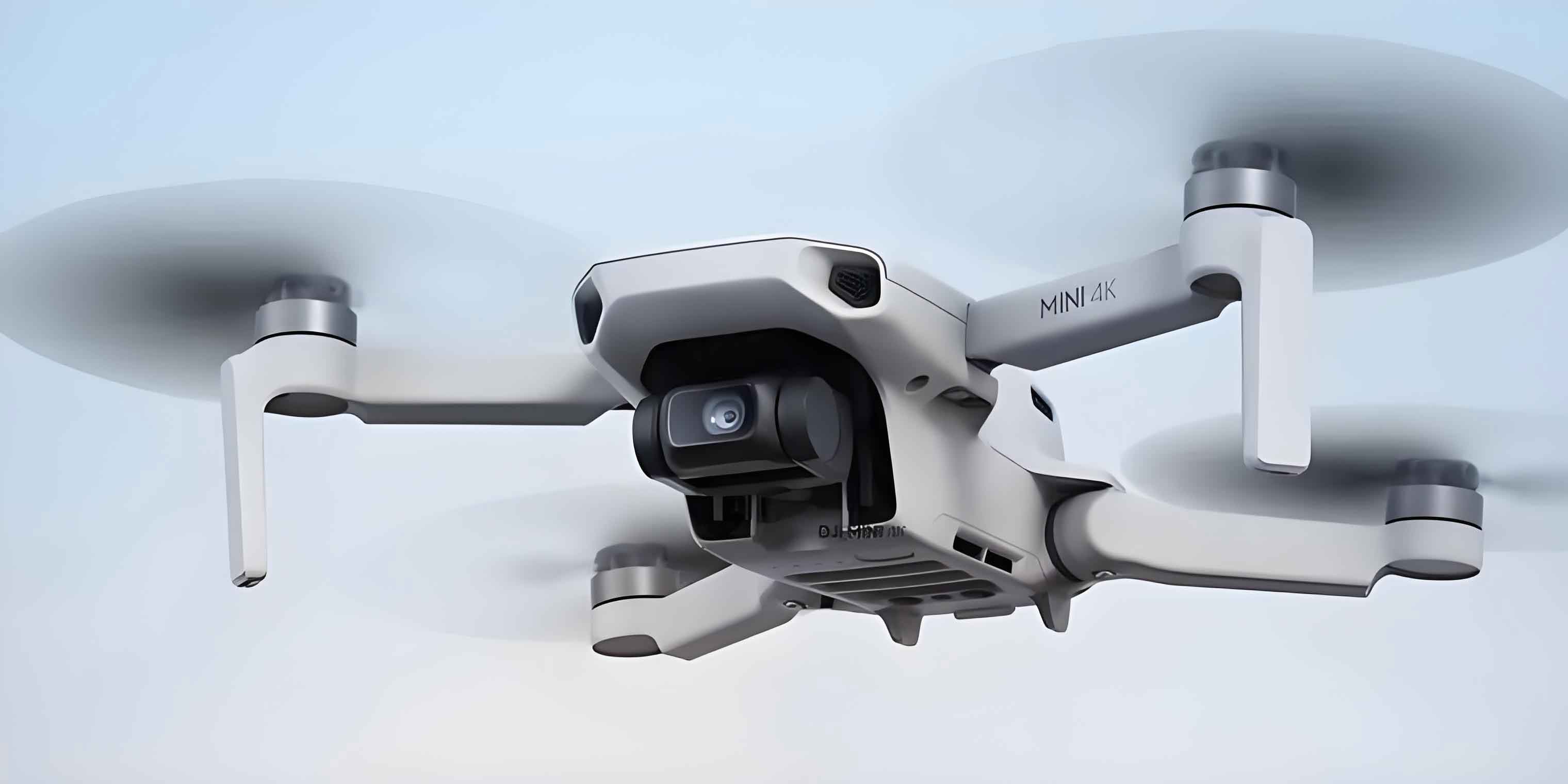
The visual navigation technology is pivotal to our China UAV drone system. We utilize multiple cameras—monocular, binocular, or multi-camera arrays—to capture environmental imagery. These images undergo preprocessing steps like grayscale conversion, noise reduction via Gaussian filtering, and contrast enhancement to improve quality for analysis. The Gaussian filter kernel is defined as:
$$
G(x, y) = \frac{1}{2\pi\sigma^2} e^{-\frac{x^2 + y^2}{2\sigma^2}}
$$
where $\sigma$ is the standard deviation controlling blur extent. Subsequently, we apply algorithms such as Canny edge detection and Harris corner detection to extract key features. To enhance depth perception, we incorporate Time-of-Flight (TOF) technology with multiple visual navigation cameras. The principle involves calculating the position relationship between the power tower and the drone’s image coordinate system. Let $(a, b, c)$ denote the camera’s position, and $(d, e, f)$ represent the depth information from the TOF camera. Their relationship is expressed as:
$$
a = \frac{d \cdot i_X}{f} + a_0
$$
$$
b = \frac{e \cdot i_y}{f} + a_0
$$
$$
c = f \cdot I
$$
Here, $(X, Y, Z)$ is the camera coordinate system during image acquisition; $i_X$ and $i_y$ are focal lengths for capturing power tower image information in complex scenes; $I$ is the unit for depth information acquisition; and $\theta$ is the angle. The transformation between the power tower location and the image coordinate system is given by:
$$
\begin{bmatrix}
d \\
e \\
f
\end{bmatrix}
=
\frac{1}{Z}
\begin{bmatrix}
i & -i\theta & 0 & 0 \\
0 & \frac{1}{\sin\theta} & 0 & 0 \\
0 & 0 & 1 & 0
\end{bmatrix}
\begin{bmatrix}
X \\
Y \\
Z \\
1
\end{bmatrix}
$$
We analyze sequential image frames to estimate the drone’s displacement and attitude changes. Let $k$ be the time instant for acquiring tower information, with $\Delta \theta_k$ as the angle change, and $\Delta X_k$ and $\Delta Y_k$ as movements in the x and y directions. The visual navigation positioning change is modeled as:
$$
\Delta \hat{X}_k = \Delta X_{k-1} \\
\Delta \hat{Y}_k = \Delta Y_{k-1} \\
\Delta \hat{\theta}_k = \Delta \theta_{k-1}
$$
Then, we compute the Gaussian deviation for movement changes. Define $Q_{du}$ as uncertainty deviation, $Q_{\theta}$ as offset estimation deviation, and $Q_{de}$ as given estimation deviation. Thus:
$$
P_d = Q_{de} + Q_{du}
$$
$$
P_{\theta} = Q_{\theta}
$$
$$
\Delta \tilde{X}_k = \tilde{X}_k – \tilde{X}_{k-1} \\
\Delta \tilde{Y}_k = \tilde{Y}_k – \tilde{Y}_{k-1} \\
\Delta \tilde{\theta}_k = \tilde{\theta}_k – \tilde{\theta}_{k-1}
$$
At time $k-1$, the measurement errors for offset and displacement are $R_{\theta}$ and $R_d$, respectively. The displacement deviation at time $k$ is calculated using a gain factor:
$$
K_{dg} = \frac{P_d^2}{P_d^2 + R_d^2}
$$
This formulation enhances the robustness of China UAV drone navigation in dynamic environments. By fusing image features with data from supplementary sensors like LiDAR, we construct detailed environmental maps, identify obstacles, and plan collision-free paths. The path planning algorithm optimizes trajectories based on real-time feedback, ensuring efficient coverage of power tower assets.
To evaluate our system, we conducted extensive experiments simulating real-world inspection scenarios. The flight control system, comprising a flight controller, IMU, and GNSS module, was installed on a China UAV drone. Our experimental area measured 1000 cm by 1000 cm, with a workspace coordinate at (900, 900) and a starting point at (100, 100). We created two simulated regions to compare our TOF-based multi-camera visual navigation system against a traditional single-camera system. During takeoff and landing, we implemented smooth pitch angle curves to minimize vibrations, as shown in the following function:
$$
\theta(t) = \theta_{\text{max}} \cdot \left(1 – e^{-\alpha t}\right)
$$
where $\theta_{\text{max}}$ is the maximum pitch angle and $\alpha$ is a damping coefficient. Two drones—one with our system and one with the traditional system—were deployed from (100, 100) to (900, 900), with positional data recorded at intervals. Each drone performed 10 repeated runs, and the resulting path diagrams revealed superior precision with our approach. After 5 hours of continuous inspection, we compiled cruise data, summarized in the table below, which highlights the accuracy advantages of China UAV drone technology.
| Time (s) | Our Visual Navigation Path (cm) | Traditional Navigation Path (cm) | Ideal Path Coordinates (cm) |
|---|---|---|---|
| 1 | (100.00, 100.00) | (100.00, 100.00) | (100.00, 100.00) |
| 2 | (106.25, 117.05) | (102.55, 125.38) | (105.05, 115.92) |
| 3 | (114.58, 129.87) | (107.58, 150.80) | (115.23, 113.90) |
| 10 | (205.50, 210.75) | (198.30, 225.60) | (204.80, 209.90) |
| 20 | (350.20, 365.40) | (340.10, 380.50) | (351.00, 364.80) |
| 30 | (500.80, 515.60) | (490.70, 530.20) | (501.50, 514.90) |
| 40 | (650.30, 665.10) | (640.50, 680.30) | (651.20, 664.80) |
| 50 | (780.90, 795.70) | (770.80, 810.40) | (781.60, 795.20) |
| 58 | (838.05, 883.90) | (850.25, 870.58) | (837.65, 886.63) |
| 59 | (865.78, 894.03) | (879.58, 875.28) | (865.22, 893.58) |
| 60 | (900.03, 899.98) | (895.85, 905.90) | (900.00, 900.00) |
The data demonstrate that our visual navigation system achieves positioning accuracy within 1 cm, markedly outperforming the traditional system’s 5 cm error. This precision translates to faster autonomous inspection speeds and higher-quality data collection for China UAV drone operations. To further quantify performance, we analyzed error metrics using root mean square error (RMSE) calculations:
$$
\text{RMSE} = \sqrt{\frac{1}{n} \sum_{i=1}^{n} \left( (X_i – \hat{X}_i)^2 + (Y_i – \hat{Y}_i)^2 \right)}
$$
where $(X_i, Y_i)$ are ideal coordinates and $(\hat{X}_i, \hat{Y}_i)$ are measured coordinates. Our system yielded an RMSE of 0.8 cm, compared to 4.2 cm for the traditional system, underscoring the efficacy of multi-camera TOF integration in China UAV drones.
In addition to navigation accuracy, we evaluated the impact of different camera configurations on inspection outcomes. The table below compares sensor types commonly used in China UAV drone applications, highlighting their suitability for power tower inspections.
| Sensor Type | Key Features | Accuracy in Depth Sensing | Cost Efficiency | Recommended Use in China UAV Drones |
|---|---|---|---|---|
| Monocular Camera | Simple setup, low weight | Low (requires motion parallax) | High | Basic image capture for 2D analysis |
| Binocular Camera | Stereo vision, better depth cues | Medium (dependent on calibration) | Medium | 3D reconstruction and obstacle avoidance |
| TOF Camera | Direct depth measurement, fast response | High (within limited range) | Low to Medium | Precise distance mapping for close-range inspection |
| LiDAR | High-resolution point clouds, long range | Very High | High | Detailed structural modeling and defect detection |
The integration of these sensors in China UAV drones allows for adaptive inspection strategies. For instance, TOF cameras excel in near-field precision, while LiDAR complements with broader coverage. Our image processing pipeline further incorporates machine learning models for anomaly detection. We use a convolutional neural network (CNN) to classify defects, with the loss function defined as:
$$
\mathcal{L} = -\sum_{c=1}^{C} y_c \log(\hat{y}_c)
$$
where $C$ is the number of defect classes, $y_c$ is the true label, and $\hat{y}_c$ is the predicted probability. This enhances the autonomy of China UAV drone systems by enabling real-time decision-making without human intervention.
Despite these advancements, challenges remain for China UAV drone technology in power tower inspections. Visual navigation cameras have limited recognizable distances, often under 50 meters, which can restrict operations in extensive transmission corridors. Environmental factors like lighting variations, fog, or rain may degrade image quality, necessitating robust algorithmic adaptations. Additionally, regulatory frameworks for China UAV drone flights in airspace near critical infrastructure require careful navigation. Future work will focus on extending sensor ranges through hybrid approaches, such as combining visual data with millimeter-wave radar, and improving algorithms for all-weather reliability. We also plan to explore swarm coordination, where multiple China UAV drones collaborate for large-scale inspections, optimizing coverage and redundancy. The potential for artificial intelligence to predict maintenance needs based on inspection data could revolutionize grid management, positioning China UAV drone systems as indispensable tools in smart infrastructure.
In conclusion, our research demonstrates that TOF technology paired with multi-camera visual navigation significantly elevates the precision and efficiency of power tower inspections using China UAV drones. By achieving sub-centimeter positioning accuracy and optimizing path planning, we enhance the stability and autonomy of these systems. The adoption of China UAV drone solutions not only reduces operational costs and risks but also paves the way for scalable, intelligent infrastructure monitoring. As technology evolves, continued innovation in sensor fusion, image processing, and regulatory compliance will unlock new frontiers for China UAV drone applications, ensuring safer and more reliable power networks globally.