
In recent years, police drones have become indispensable tools for law enforcement due to their cost-effectiveness, maneuverability, and operational stability. These unmanned aerial vehicles (UAVs) enhance public safety operations through aerial surveillance, patrols, and search missions. As high-tech assets driving modern policing, developing specialized talent for police drone operations has emerged as a critical priority. This research investigates competency requirements through literature analysis, interviews, and surveys involving 62 students and multiple law enforcement agencies.
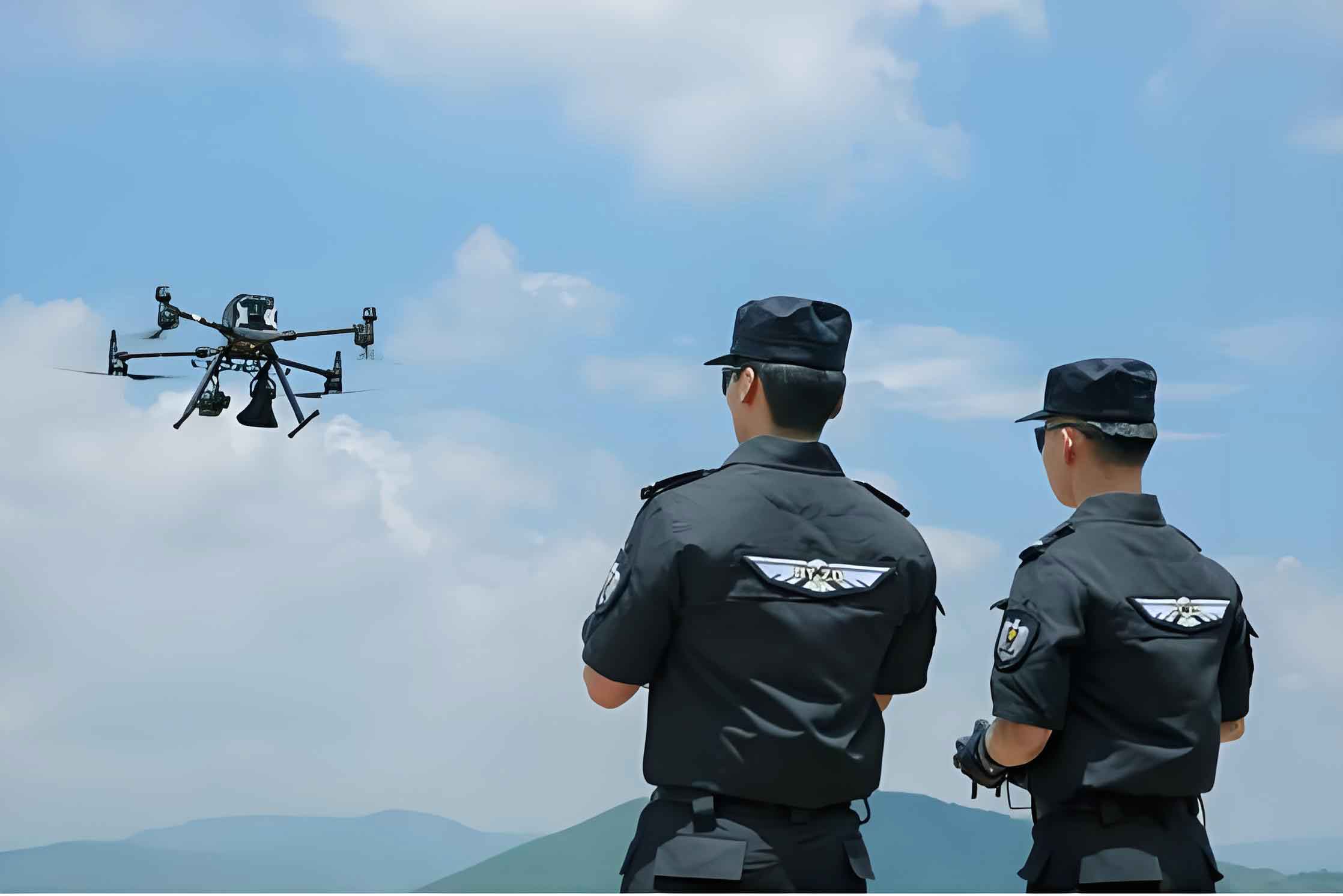
Police UAV deployment has established three primary operational advantages:
| Operational Impact | Implementation Examples | Effectiveness Metrics |
|---|---|---|
| Enhanced Policing Efficiency | Real-time suspect tracking, traffic management | Response time reduction up to 60% |
| Public Safety Assurance | Hazard detection, emergency response | Accident prevention rate increase: 35% |
| Technological Innovation | Advanced payload integration, swarm systems | Annual capability growth: 22% |
Operational efficiency gains follow the model:
$$ \Delta E = \frac{t_{traditional} – t_{UAV}}{t_{traditional}} \times 100\% $$
Where \( \Delta E \) represents efficiency improvement percentage, \( t_{traditional} \) is traditional method time, and \( t_{UAV} \) is police drone-assisted operation time.
Despite advancements, critical integration barriers persist. Technical interoperability limitations prevent full operational utilization, with only 30% of collected drone data currently integrated into analysis systems. Standardization gaps create operational bottlenecks:
$$ \text{Operational Gap} = \frac{C_{max} – C_{utilized}}{C_{max}} $$
Where \( C_{max} \) is maximum technical capability and \( C_{utilized} \) is field-deployed functionality.
| Systemic Challenge | Current Status | Impact Level |
|---|---|---|
| Technical Integration | Limited backend system compatibility | High (78% agencies affected) |
| Personnel Capability | Only 42% operators trained in payload operations | Critical |
| Data Security | Encryption implementation below 40% | Severe |
Talent development faces structural constraints. Police drone units remain underdeveloped, with 65% established within the past five years. Educational institutions show significant gaps:
| Training Aspect | Deficiency Area | Improvement Priority |
|---|---|---|
| Academic Programs | Only 26/35 police academies offer UAV courses | High |
| Skill Development | 70% training focuses only on basic flight skills | Urgent |
| Leadership Development | UAV command training available in <15% agencies | Critical |
Student surveys reveal strong preference (79%) for applied learning over technical theory. Operational needs analysis identifies diverse departmental requirements:
| Department | Primary UAV Application | Required Competency |
|---|---|---|
| SWAT Units | Tactical reconnaissance, threat assessment | Multi-drone coordination |
| Traffic Police | Accident reconstruction, violation documentation | Photogrammetry processing |
| Counter-Terrorism | Hostage situation monitoring, anti-drone measures | RF detection expertise |
| Border Patrol | Illegal activity surveillance, contraband tracking | Long-endurance operations |
Police drone competency comprises three interconnected domains:
$$ C_{UAV} = \alpha K + \beta S + \gamma A $$
Where \( C_{UAV} \) represents comprehensive police UAV competency, \( K \) signifies knowledge foundations (\( \alpha = 0.4 \)), \( S \) denotes operational skills (\( \beta = 0.4 \)), and \( A \) indicates professional attitudes (\( \gamma = 0.2 \)).
Knowledge requirements encompass legal frameworks (covering 85% of relevant aviation regulations), technical systems (including payload specifications and limitations), and tactical deployment principles. The technical knowledge base follows:
$$ K_{tech} = \sum_{i=1}^{n} (P_i \times A_i) $$
Where \( P_i \) represents system component proficiency and \( A_i \) denotes application awareness.
Operational capabilities extend beyond basic flight control to encompass mission-specific competencies:
- Payload operation mastery (thermal, LIDAR, multispectral)
- Swarm coordination for large-scale operations
- Data security protocols implementation
- Emergency response procedures
Professional attitude development prioritizes four pillars: ethical awareness (emphasizing privacy protection protocols), legal compliance (100% adherence to surveillance regulations), innovation mindset, and collaborative approach. The attitude matrix follows:
$$ A = \begin{bmatrix} Ethics & Compliance \\ Innovation & Collaboration \end{bmatrix} $$
Implementation recommendations include establishing standardized certification frameworks across three tiers (Operator, Technician, Commander), developing scenario-based training modules covering 95% of common police drone applications, and creating cross-departmental knowledge sharing platforms. Curriculum should balance components as:
| Curriculum Area | Recommended Allocation | Delivery Format |
|---|---|---|
| Legal & Ethical Foundations | 25% | Case studies |
| Technical Systems | 30% | Hands-on labs |
| Tactical Applications | 35% | Scenario training |
| Leadership Development | 10% | Command simulations |
Future development requires continuous capability enhancement through regular technology updates (biannual), advanced certification programs, and establishing specialized police drone research centers. Effectiveness measurement should employ:
$$ E_t = \frac{\sum M_{success}}{\sum M_{attempted}} \times C_{factor} $$
Where \( E_t \) is training effectiveness, \( M_{success} \) represents successful mission applications, \( M_{attempted} \) indicates total deployment attempts, and \( C_{factor} \) is complexity adjustment coefficient.
As police UAV technology evolves toward greater autonomy and specialized payload integration, talent development must maintain alignment with operational requirements through adaptive training frameworks, ensuring law enforcement agencies fully leverage aerial capabilities for public safety enhancement.