
Power line inspections face significant challenges from electromagnetic interference (up to 60 dB near substations), complex target features (small-diameter transmission lines against cluttered backgrounds), and long-distance coverage requirements (up to 15 km). Conventional drone technology relying solely on visual systems suffers from feature recognition failures during nighttime or foggy conditions, while GPS-dependent systems exhibit vulnerability to signal occlusion. To address these limitations, we develop an integrated “optical-sensor” hardware architecture combined with Beidou satellite-based enhancement technology for robust Unmanned Aerial Vehicle offset control.
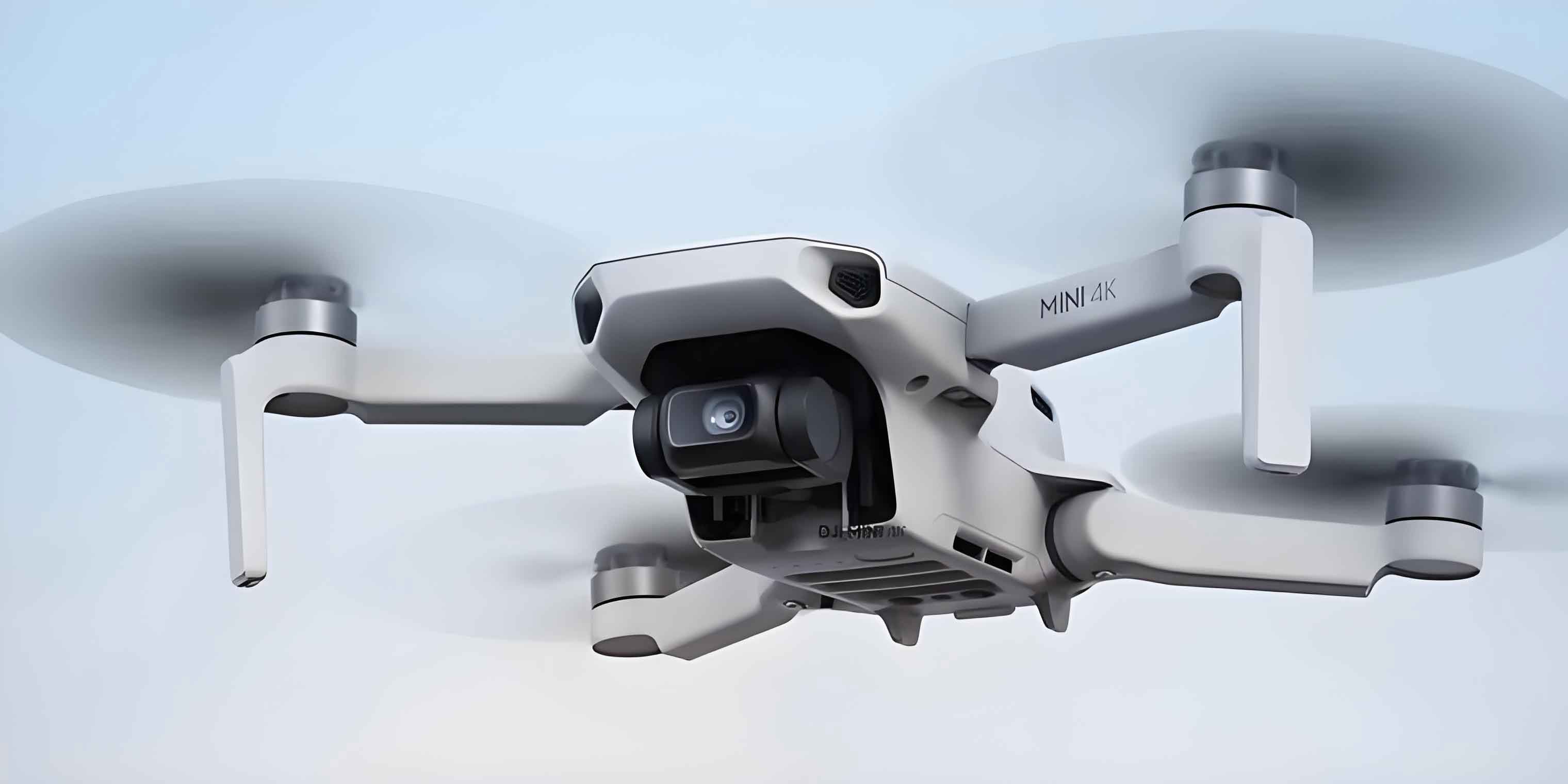
Hardware Architecture for UAV Image Acquisition
The multi-rotor drone inspection system integrates the following components:
| Component | Specifications | Function |
|---|---|---|
| Sony FCB-EV9500M Camera | 4.17MP, 30x optical zoom, Mipi interface | High-resolution imaging with anti-shake/noise reduction |
| LED Module | 5mm diameter, 2.0V forward voltage, 30°–60° viewing angle | Low-light compensation and status indication |
| u-blox ZED-F9P RTK GPS | Centimeter-level positioning | Geospatial referencing |
| Wind Speed Sensor | ±(0.3+0.03V) m/s accuracy, 0–75 m/s range | Environmental monitoring |
| BME280 Weather Sensor | –40°C to +85°C, 0–100% RH | Atmospheric parameter acquisition |
| Data Control Platform | Real-time processing | Sensor fusion and decision-making |
Beidou Satellite-Based Enhancement System
Ground signal towers extend communication range while Beidou’s space-ground framework provides dual-layer positioning:
$$ \text{Ground Positioning Accuracy} = \frac{C}{\sin(\epsilon)} \times \delta_{atm} + \beta_{multipath} $$
Where \(C\) denotes signal propagation speed, \(\epsilon\) elevation angle, \(\delta_{atm}\) atmospheric delay error, and \(\beta_{multipath}\) multipath interference coefficient. The coverage inspection program framework includes:
- Flight control motherboard for real-time navigation
- Memory motherboard for data buffering
- Data acquisition motherboard for sensor synchronization
Convolutional Neural Network for Target Recognition
Image preprocessing and feature extraction overcome environmental noise in power facility imagery. The convolutional feature mapping is expressed as:
$$ \Psi_i = f(\mathbf{W} \otimes H_i + b) $$
$$ H_i^{\text{sub}} = \text{subs}(H_{i-1}) $$
Where \(f\) denotes the ReLU activation function, \(\mathbf{W}\) convolutional kernel weights, \(H_i\) feature maps at layer \(i\), and \(b\) bias term. Pixel residual correction enhances target recognition:
$$ Y(i) = \eta \left( \gamma – \frac{\mathbf{W}}{||\mathbf{W}||_2} \cdot b \right) $$
Here, \(\eta\) adjusts the correction coefficient and \(\gamma\) controls residual intensity.
Multi-Rotor UAV Offset Control Algorithm
Drone dynamics modeling incorporates Euler angles and spatial coordinates for attitude estimation:
$$ \mathbf{E} = \frac{R(\Theta)}{m} (\mathbf{F}_p – \mathbf{F}_a – \mathbf{G}) $$
Where \(R(\Theta)\) represents rotation matrix, \(m\) UAV mass, \(\mathbf{F}_p\) and \(\mathbf{F}_a\) position-specific forces, and \(\mathbf{G}\) gravitational vector. The pose relationship between transmission towers and drones is calculated using:
$$ \alpha = \tan^{-1}\left(\frac{d_{BC}}{d_{OC}}\right), \quad \beta = 90^\circ – \alpha – \theta $$
Horizontal and vertical offsets are compensated through:
$$ \Delta x = L \cos\beta, \quad \Delta y = L \sin\beta $$
$$ \text{where } L = d_{OD} \tan\alpha + d_{BD} $$
Performance Validation
Experimental results demonstrate the system’s superiority under diverse operational conditions:
Inspection Accuracy Comparison (%)
| Component | Sunny Day | Rainy Night |
|---|---|---|
| Lightning Rod | 99.87 | 90.12 |
| Tower Frame | 99.23 | 92.31 |
| Conductor | 98.00 | 94.11 |
| Insulator String | 96.31 | 86.35 |
| Suspension Clamp | 98.44 | 89.74 |
| Average | 95.341 | 90.526 |
Operational Performance Metrics
| Metric | Value |
|---|---|
| Task Completion Time | < 15 ms @ 5km range |
| Integrity Risk | 5 × 10⁻⁹ |
| Max. Wind Resistance | 8 m/s (0.49m offset) |
| Hovering Precision | ±0.8m |
This drone technology achieves 95.341% average inspection accuracy across scenarios, demonstrating effective offset control through synergistic Beidou-intelligent vision integration. The Unmanned Aerial Vehicle platform maintains positional stability within 0.49m deviation under 8 m/s crosswinds, confirming its practical utility in critical power infrastructure monitoring.