
As I delve into the evolution of high-performance complex products, the story of China’s drone industry stands out as a compelling narrative of rapid technological catch-up. The global economic restructuring and revolutionary advances in information technology have positioned unmanned aerial vehicles (UAVs) not merely as tools but as pivotal forces shaping future socio-economic and national security landscapes. From a position of relative latency, the China drone sector has, in under two decades, shattered critical technological barriers and secured a formidable stance in the global export market. This article, from my research perspective, aims to dissect this journey, articulating how China’s drone ecosystem achieved a transition from being a follower to a parallel runner through the paradigm of forward development.
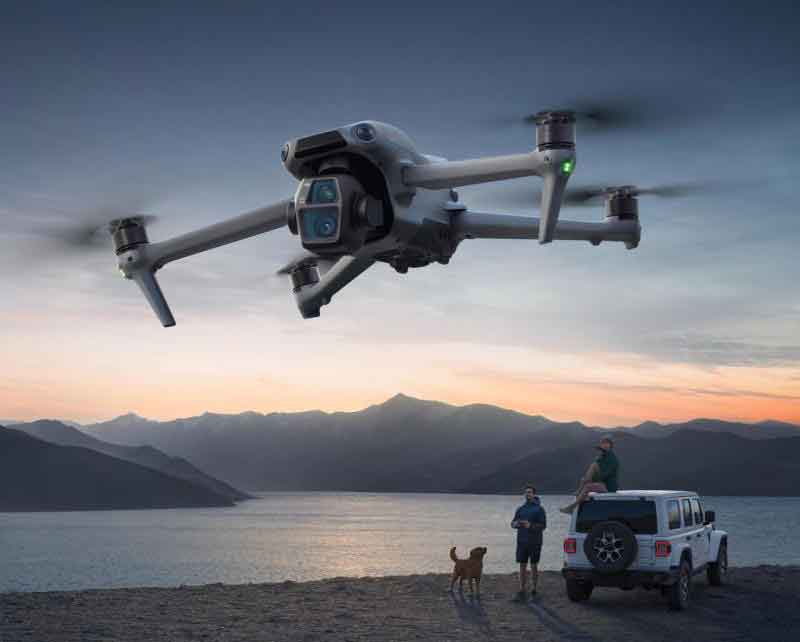
The conceptual roots of drones trace back to the 1920s, but it is in the last century that they evolved from reconnaissance assets to multi-role, integrated surveillance-and-strike platforms. Nations like the United States and Israel, recognizing their strategic value, dominated early development. In contrast, China’s foray into drone research began in the 1950s, with substantive military experimentation only in the 1980s. By the late 20th century, a significant capability gap persisted. The trajectory of the China drone industry can be segmented into three phases: an initial phase of technology acquisition through imports, a subsequent but limited phase of reverse-engineering and modification, and finally, the decisive phase of indigenous forward development initiated in the 21st century. This final phase catalyzed the technological leap, enabling China drone models to compete shoulder-to-shoulder with global leaders in international markets.
The manifestation of this leap is evident in three landmark China drone programs, each epitomizing a facet of the跨越. The progression is not linear but synergistic, where technological mastery and market acumen fed into each other. To systematically capture this, I will employ analytical frameworks, comparative tables, and conceptual models throughout the discussion.
The Embodiment of the Technological Leap: Three Pillars of China Drone Advancement
The leap from follower to parallel runner is concretized through product lineages. The success of specific China drone families provides tangible evidence of breached technological frontiers and elevated global standing.
| Drone Model/Program | Core Technological Achievement | Market Impact & Distinction | Primary Development Approach |
|---|---|---|---|
| Changying (Long Eagle) | Breakthrough in long-endurance (40+ hours) flight; high-altitude, long-range capabilities; over 50% new development rate. | Established China as the third nation with indigenous long-endurance HALE UAV tech; laid foundation for core component localization. | Pure forward development from top-level design; national project led by academia-industry consortium. |
| CH (Rainbow) | Development of a full-spectrum product family (small to large); high cost-performance ratio; integrated surveillance-strike capability. | First and largest volume China drone export; dominant player in global military trade for medium-altitude drones; rapid product iteration based on user feedback. | Forward development guided by iterative market application; “research-production-delivery” parallel model. |
| YL (Wing Loong) | High payload flexibility and modularity; dual-use (military-civil) architecture; system-of-systems approach. | Narrowed the military export market share gap with the US; pioneered significant civil applications (e.g., emergency communication, logistics). | Platform-based forward development; user-co-design for payload extensibility. |
This table summarizes the pivotal roles played by these China drone series. The underlying technological progress can be modeled as a function of cumulative R&D investment and market-derived learning. One can conceptualize the technology capability accumulation for the China drone industry as:
$$ C_t = C_0 + \alpha \int_{0}^{t} R(\tau)d\tau + \beta \int_{0}^{t} M(\tau) \cdot L(\tau) d\tau $$
Where:
$C_t$ is the technological capability at time $t$,
$C_0$ is the initial capability base,
$R(\tau)$ represents R&D investment intensity,
$M(\tau)$ represents market engagement (e.g., exports, domestic applications),
$L(\tau)$ is the learning rate from market feedback,
and $\alpha$, $\beta$ are efficiency coefficients specific to the industry’s innovation system.
For the China drone sector, the coefficients $\alpha$ and $\beta$ were significantly amplified during the forward development phase, enabling a steeper ascent in $C_t$.
Deconstructing the Leap: The Mechanism of Forward Development
The transition from reverse engineering to forward development is the crucible in which the China drone industry’s leap was forged. Forward development—designing a product from first principles and top-level requirements—is fraught with high thresholds, massive investment, and substantial risk. It demands a complete talent portfolio, significant time (5-10 years for complex products), and the courage to venture into unproven design territories without a reference “redline” to trace. Yet, this was the path chosen to break technological blockades. My analysis identifies three interconnected strategies that Chinese developers employed to overcome these hurdles and maximize the value of forward development.
1. Top-Level Design Breakthrough: The Case of the Changying Drone
The inception of the Changying program around 2000 was a state-mandated response to the “stranglehold” on critical drone technologies. The goal was an indigenous “medium-altitude, long-endurance, long-range” China drone. The project, won by a leading university consortium, embodied a “new type of whole-nation system” that marshaled over 60 partner units. The success was not merely in mastering isolated technologies but in the systems integration capability crystallized in the top-level design. The requirement for 40-hour endurance necessitated holistic innovation:
- Aerodynamic Design: Optimizing the lift-to-drag ratio ($L/D$) to minimize fuel consumption. $$ \text{Endurance} \propto \frac{(L/D)}{SFC} $$ where $SFC$ is the specific fuel consumption of the engine.
- Avionics and Control: Pioneering digital flight control and management systems to reduce weight and enhance reliability.
The program’s new development rate exceeding 50% (compared to an industry norm of below 30% for new航空 platforms) underscores its pure forward development nature. Key enablers here were: a complete, cross-disciplinary talent pool rooted in academic research; a culture of theoretical deduction and experimental validation; and the coordinating power of the state-led consortium to manage high risk and investment. This formed the initial “cold start” for core China drone technology.
2. Market-Feedback-Driven Iteration: The Trajectory of the Rainbow Drone
If Changying provided the technological kernel, the Rainbow series demonstrated how a China drone program could achieve market-driven scaling and product family expansion. Developed by an institute with core competence in aerodynamics, Rainbow adhered to forward development but followed a distinct “research-while-producing-while-delivering” model. Its first export in 2003 marked a turning point for China drone exports. Subsequent engagements, particularly with Global South partners, generated continuous user feedback loops. This feedback directly informed performance optimizations in endurance, payload, and user interface (e.g., intuitive “game-like” control stations).
The process can be described by an iterative design cycle:
$$ P_{n+1} = P_n + \gamma \cdot \sum_{i=1}^{k} F_i(P_n, M_i) $$
Where $P_n$ is the product specification in iteration $n$, $F_i$ is the feedback function from market segment $i$, $M_i$ represents the specific demands of that segment, and $\gamma$ is the assimilation coefficient determined by the developer’s agile development capacity.
The “small core, large collaboration” supply chain model supported this. By keeping core systems stable while allowing peripheral subsystems to be open and adaptable, the Rainbow China drone family could rapidly iterate and diversify its product spectrum, effectively responding to heterogeneous market demands.
| Development Phase | Key Market Feedback Source | Resultant Product Enhancement | Outcome on China Drone Export |
|---|---|---|---|
| Early Export (2003-2010) | Initial foreign military users (e.g., Pakistan) | Improved reliability, basic surveillance-strike integration, cost optimization. | Market entry & credibility establishment. |
| Growth & Diversification (2010-2020) | Expanded user base across multiple regions; participation in joint exercises. | Development of larger platforms (e.g., CH-5), enhanced payload variety, electronic warfare capabilities. | Rise to top tier of global military UAV exporters. |
| System Maturity (2020-Present) | Domestic civil requirements, international demand for networked systems. | Development of maritime variants, swarm coordination features, civil derivative models. | Solidified market share and expanded into dual-use domains. |
3. Platformization for Heterogeneous Markets: The Strategy of the Wing Loong Drone
The third strategic pillar involves transcending single-product competition to address systemic, heterogeneous market needs through platform-based forward development. The Wing Loong series, developed by an aviation industry group, operationalized the philosophy of “one platform, multiple variants, serving military and civil markets.” This approach is fundamentally rooted in understanding the interaction between technology and market: technology enables market options, but market needs dictate technological prioritization.
The core technical strategy here is maximizing payload and system architecture modularity. During the forward design phase, the platform is engineered for high extensibility. For instance, the design of the data bus, power supply, and mechanical interfaces follows open standards, allowing a wide array of payloads—synthetic aperture radar (SAR), electronic intelligence (ELINT) suites, communication relays, or precision munitions—to be integrated. This satisfies diverse requirements from different international military clients and domestic civil agencies.
The economic and strategic advantage is captured in a platform efficiency model. Let $N$ be the number of distinct market segments, and $C_{dev}$ be the development cost. For a traditional reverse-engineering or bespoke design approach, the total cost scales poorly: $$ C_{total} \approx \sum_{i=1}^{N} C_{dev,i} \quad \text{(High cost)} $$ In contrast, a platform-based forward development approach for China drone families incurs a high initial fixed cost $C_{platform}$ but low marginal variant cost $c_{var}$: $$ C_{total} = C_{platform} + \sum_{i=1}^{N} c_{var,i}, \quad \text{where } c_{var,i} \ll C_{dev,i} $$ This yields significant economies of scale and scope, a key factor behind the Wing Loong’s competitive pricing (reportedly one-fifth of comparable U.S. systems) without sacrificing capability.
Critical success factors included a “user-participatory design” mindset, a focus on distinctive rather than all-encompassing capabilities to avoid the “bullwhip effect” in over-engineering, and vigilant cost management throughout the product lifecycle to maintain international cost competitiveness for China drone products.
Synthesis and Implications: The Forward Development Framework for Technological Catch-up
Reflecting on this journey, the ascent of the China drone industry from follower to parallel runner is not a serendipitous event but a replicable model underpinned by deliberate forward development. My analysis yields a tripartite framework that synthesizes the lessons learned.
First, Top-Down Technological Cold Start. Breakthroughs in “chokepoint” technologies require initiating forward development from a clean-sheet top-level design. This phase relies less on incremental improvement and more on fundamental theoretical work and密集 experimental validation. The state plays an indispensable role as an innovation orchestrator and risk absorber in this phase. Academic institutions contribute deep theoretical knowledge and a culture of rigorous testing. The formula for success in this phase is: $$ \text{Core Tech Breakthrough} = f(\text{State Orchestration}, \text{Academic R&D}, \text{Systems Integration}) $$ This phase built the essential technological foundation for the entire China drone ecosystem.
Second, Market-Embedded Iterative Refinement. Forward development must be intrinsically linked to the market. The product is the embodiment of technology, and the market is the ultimate validator. Seizing the window of opportunity provided by global demand—especially from emerging markets—and establishing fast feedback loops are critical for product spectrum iteration and refinement. This transforms the forward development process from a purely technical exercise into a market-responsive one. The key dynamic is: $$ \frac{d(\text{Product Fitness})}{dt} \propto \text{Intensity of Market Feedback} \times \text{Organizational Learning Agility} $$ The Rainbow China drone story exemplifies this, where exports were not just a revenue stream but a vital source of R&D direction.
Third, Platform-Centric Scalability for Market Diversity. To sustainably serve heterogeneous global and domestic markets, forward development must evolve from designing products to designing platforms, modules, and standardized components. This platformization strategy drastically reduces development cost and time for new variants while enhancing supply chain synergy. The strategic outcome is a matrix of capabilities: $$ \text{Market Coverage Matrix} = \begin{bmatrix} Platform_1 & Platform_2 & \dots & Platform_m \end{bmatrix} \times \begin{bmatrix} Module_A \\ Module_B \\ \vdots \\ Module_n \end{bmatrix} $$ Each cell $(Platform_i, Module_j)$ represents a unique product variant tailored for a specific market need. This is the essence of the Wing Loong strategy and represents the maturation of the China drone industry’s innovation model. It ensures that technology development remains aligned with a diverse and evolving market landscape, securing long-term competitiveness.
In conclusion, the trajectory of the China drone industry offers profound insights into latecomer innovation in high-tech complex systems. The journey from importing and reverse-engineering to leading in forward development for both military and civil domains underscores a strategic paradigm. It is a testament to how targeted state support, deep academic-industrial collaboration, relentless market engagement, and a steadfast commitment to indigenous design can converge to enable a technological leap. The China drone sector’s story is one of transforming constraints into catalysts, ultimately achieving a position where it no longer follows but runs in parallel, shaping the global future of unmanned aviation.