
The cultivation of strategic emerging industries is a pivotal pathway for advancing supply-side structural reform and achieving high-quality economic development. However, the nascent nature of such sectors often means they evolve in a policy vacuum during their formative years, relying predominantly on market forces. This dynamic presents a critical question: in the absence of direct governmental support, what market-based factors determine the trajectory of an emerging industry? My investigation focuses on the remarkable rise of China’s civilian drone industry, a quintessential example of market-driven growth. I argue that the local industrial ecosystem, specifically the foundation of upstream supplier industries, serves as a fundamental catalyst. It not only attracts the entry of drone manufacturing firms but also, through vertical quality spillovers, facilitates industrial upgrading from low-value consumer applications to high-value industrial applications.
This analysis is timely, as enhancing the modernization of industrial and supply chains is a central task for developing a modern industrial system. The core mechanism I explore aligns with the policy directive of “closely following the industrial chain and supply chain to deploy the innovation chain.” By examining the China drone industry’s early growth phase before substantive industrial policies took effect, I provide micro-level empirical evidence on how market environments, embodied by upstream linkages, orchestrate industrial development and upgrading.
The rise of the China drone market is a compelling story of organic, market-led expansion. From 2014 to 2019, the number of registered drone manufacturing, sales, and service enterprises in China grew from under 10,000 to over 43,000, representing an average annual growth rate of 30%. The market scale for civilian drones expanded rapidly. Internationally, China’s drone exports surged, with the number of units skyrocketing from 170,000 in 2014 to 4.87 million in 2018, solidifying its global market share. Concurrently, innovation intensity, measured by patent applications, exploded from 197 in 2010 to over 15,600 in 2018. This growth occurred against a backdrop of limited, primarily guidance-oriented policy support until 2017, when drones were formally included in the “Strategic Emerging Industry Key Products and Services Guidance Catalogue.”
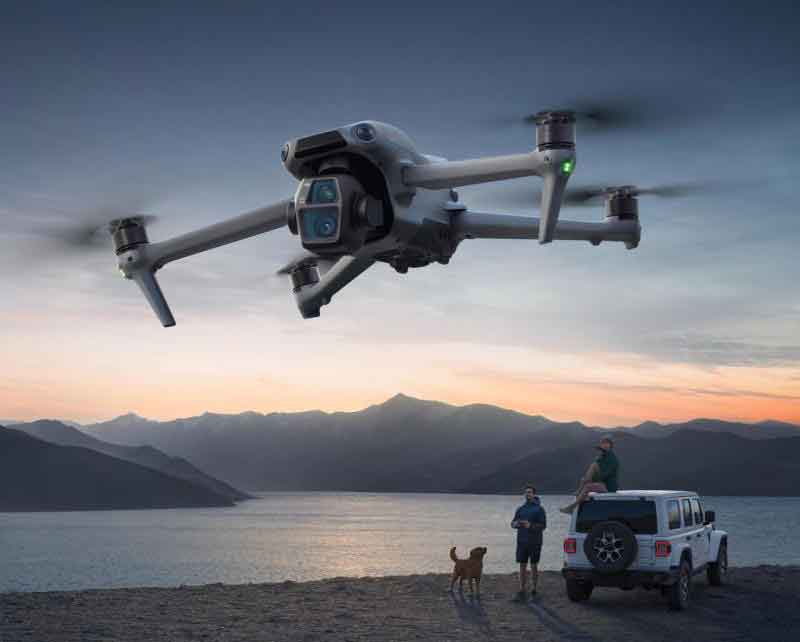
The industry exhibits a clear dichotomy between consumer-grade and industrial-grade drones, which forms the basis for my analysis of industrial upgrading. Consumer-grade drones, primarily used for personal photography and recreation, are characterized by short flight times, low payloads, and relatively low price points. Industrial-grade drones, employed in sectors like precision agriculture, infrastructure inspection, public safety, and surveying, demand higher customization, longer endurance, greater payload capacity, specialized equipment, and robustness in harsh environments, commanding significantly higher prices. The transition from producing the former to mastering the latter represents a clear trajectory of moving up the value chain—a definitive marker of industrial upgrading within the China drone sector.
Data and Empirical Strategy
My analysis leverages a novel dataset constructed from the National Administration for Market Regulation’s business registration records from 2014 to 2019. This comprehensive database includes information on all registered enterprises in China, such as scope of business, registration date, and location. I identify drone-related firms by scanning the business scope for the keyword “drone” or “UAV,” and subsequently filter for manufacturing entities, excluding pure sales and service companies. The final sample comprises approximately 15,000 drone manufacturing enterprises by the end of 2019. The dependent variable for entry is the annual count of newly registered drone manufacturers at the prefecture-city level.
The core explanatory variable is the local upstream industrial base. Drawing from industry reports and supply chain databases, I identify five key upstream sectors for drone manufacturing: electronic speed controllers, brushless micro-motors, digital cameras, airframe structural components, and batteries. I then use business scope keywords to identify firms in these upstream sectors from the same registration database. The upstream industrial base is conceptualized in two parts, accounting for geographic decay in transaction costs:
1. Intra-city Upstream Base ($$upstream\_I_{ct}$$): Measures the supplier presence within the same city.
2. Inter-city Upstream Access ($$upstream\_O_{ct}$$): Measures the weighted access to suppliers in other cities, discounted by distance.
The formal construction is as follows. Let $$Y_{ct}$$ be the number of upstream firms in city $$c$$ in year $$t$$, and $$Y_{CHINA,t}$$ be the national total. Let $$\phi_{ct} = Y_{ct} / Y_{CHINA,t}$$. The internal distance of a city is approximated as $$D_{cc} = \sqrt{Area_c / \pi}$$. The distance between city $$c$$ and city $$l$$ is $$D_{lc}$$.
$$upstream\_I_{ct} = \ln\left(\frac{\phi_{ct}}{D_{cc}}\right)$$
$$upstream\_O_{ct} = \ln\left(\sum_{l \neq c}^{C} \frac{\phi_{lt}}{D_{lc}}\right)$$
To examine industrial upgrading, I define industrial-grade drone manufacturers by further filtering the drone firm sample for business scopes containing keywords like “plant protection,” “patrol,” “mapping,” “police,” and “firefighting.” The dependent variable becomes the annual count of new industrial-grade drone firms in a city. Crucially, I augment the upstream base measure to account for supplier quality. Let $$P_{ct}$$ be the number of upstream firms in city $$c$$ that have ever filed a patent by year $$t$$, and $$P_{CHINA,t}$$ be the national total. Define $$\xi_{ct} = P_{ct} / P_{CHINA,t}$$. The quality-adjusted upstream measures are:
$$upstream\_quality\_I_{ct} = \ln\left(\frac{\phi_{ct} \cdot \xi_{ct}}{D_{cc}}\right)$$
$$upstream\_quality\_O_{ct} = \ln\left(\sum_{l \neq c}^{C} \frac{\phi_{lt} \cdot \xi_{lt}}{D_{lc}}\right)$$
The baseline empirical model for firm entry is specified as:
$$\ln(Entry_{ct}+1) = \alpha_1 upstream\_I_{c,t-1} + \alpha_2 upstream\_O_{c,t-1} + \alpha_3 \mathbf{X}_{c,t-1} + \lambda_c + \sigma_t + \varepsilon_{ct}$$
For industrial upgrading, the model is:
$$\ln(Upgrade_{ct}+1) = \beta_1 upstream\_quality\_I_{c,t-1} + \beta_2 upstream\_quality\_O_{c,t-1} + \beta_3 \mathbf{X}_{c,t-1} + \lambda_c + \sigma_t + \varepsilon_{ct}$$
Here, $$\mathbf{X}_{c,t-1}$$ is a vector of lagged city-level control variables including GDP, industrial structure, road infrastructure, government S&T expenditure, national high-tech zone output, and provincial-level government procurement demand for drones. $$\lambda_c$$ and $$\sigma_t$$ denote city and year fixed effects, respectively. Standard errors are clustered at the city level.
To address endogeneity concerns—such as reverse causality where drone firm entry could stimulate upstream development—I employ a Bartik-style instrumental variable (IV) approach. The instrument for a city’s upstream base is constructed using the initial (2013) composition of its upstream industries and the subsequent national growth rates of those industries, excluding the city’s own contribution (a leave-one-out estimator).
| Variable | Definition | Mean | Std. Dev. |
|---|---|---|---|
| ln(Entry+1) | Log of new drone firms (count+1) | 1.601 | 0.901 |
| ln(Upgrade+1) | Log of new industrial-grade firms (count+1) | 0.281 | 0.559 |
| upstream_I | Log intra-city upstream base | -10.32 | 1.284 |
| upstream_quality_I | Log quality-adjusted intra-city upstream base | -15.59 | 2.268 |
Findings and Analysis
Upstream Base Drives Firm Entry
The baseline results provide strong evidence that a local upstream supplier base is a magnet for new China drone manufacturers. As shown in Table 1, the coefficient for the intra-city upstream base ($$upstream\_I$$) is consistently positive and statistically significant across specifications. Economically, a 1% increase in the local upstream industrial base is associated with approximately a 0.31% increase in the entry of drone manufacturing firms the following year. In contrast, the coefficient for inter-city upstream access ($$upstream\_O$$) is statistically insignificant. This indicates that the supply chain for the China drone industry is highly localized, likely due to the need for close collaboration, rapid prototyping, and reduced transaction costs in this fast-evolving, innovation-intensive sector. The dominance of local linkages underscores the importance of clustered industrial ecosystems for nascent industries.
| Dependent Variable: ln(New Drone Firms +1) | (1) | (2) | (3) |
|---|---|---|---|
| upstream_I (t-1) | 0.333** (0.152) | 0.324** (0.152) | 0.310** (0.152) |
| upstream_O (t-1) | 0.510 (0.623) | 0.430 (0.618) | |
| City Controls | No | No | Yes |
| City & Year FE | Yes | Yes | Yes |
| Observations | 1058 | 1058 | 1058 |
| R-squared | 0.831 | 0.831 | 0.833 |
Quality Spillovers Foster Industrial Upgrading
The analysis of industrial upgrading yields a more nuanced insight. The simple count-based upstream base shows a significant effect when industrial-grade firms are defined by business scope. However, when using a stricter definition based on patent applications—a more reliable indicator of substantive industrial-grade R&D and production—the significance disappears. This suggests that mere supplier presence is insufficient. Instead, it is the presence of high-quality suppliers that fosters upgrading within the China drone industry.
As presented in Table 2, when employing the quality-adjusted upstream base measure ($$upstream\_quality\_I$$), the coefficient is positive and significant for both definitions of upgrading. A 1% increase in the quality-adjusted local upstream base leads to about a 0.10%-0.17% increase in new industrial-grade drone firms. This result underscores the mechanism of vertical quality spillovers: upstream suppliers with stronger innovation capabilities (proxied by patents) provide higher-quality, more sophisticated, or more reliable components (e.g., longer-life batteries, more precise motors, better sensors). This, in turn, enables downstream China drone manufacturers to overcome technical barriers and develop the advanced, reliable, and application-specific drones required for industrial markets. The pathway for the China drone sector to climb the value chain is thus critically dependent on the innovative capacity of its local supply chain.
| Dependent Variable | ln(New Ind.-Grade Firms by Scope +1) | ln(New Ind.-Grade Firms by Patent +1) | |||
|---|---|---|---|---|---|
| (1) | (2) | (3) | (4) | ||
| upstream_quality_I (t-1) | 0.171** (0.076) | 0.174** (0.077) | 0.122** (0.048) | 0.103** (0.049) | |
| upstream_quality_O (t-1) | -0.236 (0.416) | -0.260 (0.432) | -0.203 (0.262) | -0.269 (0.246) | |
| City Controls | No | Yes | No | Yes | |
| Observations | 721 | 721 | 721 | 721 | |
| R-squared | 0.798 | 0.800 | 0.731 | 0.736 | |
Robustness and Heterogeneity
The core findings are robust to a battery of tests. A placebo test using the local semiconductor chip industry—a critical but almost entirely imported component for China drone manufacturers—as a false “upstream base” shows no significant effect on drone firm entry or patent-based upgrading. This confirms that the results are driven by locally relevant and accessible supplier industries, not by generic industrial prowess. The IV estimations using the Bartik instrument further alleviate endogeneity concerns, confirming the causal interpretation that a stronger upstream base facilitates downstream entry and upgrading in the China drone ecosystem.
The effectiveness of the upstream base is not uniform; it is mediated by the local institutional environment. Heterogeneity analysis reveals that the positive effect of the quality-adjusted upstream base on China drone industrial upgrading is significantly stronger in regions with higher degrees of marketization (measured by the share of non-state economy) and higher government efficiency. This interaction highlights that a capable upstream supply chain operates most effectively within a supportive institutional framework characterized by market competition and effective governance.
Corroborative Evidence from Market Performance
Further analysis of firm-level market performance substantiates the positive influence of the upstream base. I find that a stronger quality-adjusted upstream base is associated with a greater number of drone firms engaging in high-skill talent recruitment (particularly for positions requiring education beyond a bachelor’s degree), securing external financing, and winning government procurement contracts. These findings move beyond mere business registrations to capture real economic activities, indicating that the upstream ecosystem not only attracts firms to register but also supports their substantive operations, innovation, and market competitiveness within the China drone landscape.
| Dependent Variable (ln(Count+1)) | High-Skill Hiring Firms | Firms Securing Financing | Firms Winning Gov. Contracts |
|---|---|---|---|
| (1) | (2) | (3) | |
| upstream_quality_I (t-1) | 0.154* (0.083) | 0.115** (0.057) | 0.128* (0.078) |
| Controls & Fixed Effects | Yes | Yes | Yes |
| Observations | 496 | 660 | 669 |
| R-squared | 0.676 | 0.836 | 0.789 |
Conclusion
This investigation into the early development of the China drone industry elucidates a powerful market-driven mechanism for nurturing emerging sectors. In the absence of direct and substantial industrial policy, the local foundation of upstream supplier industries played a decisive role. It acted as a gravitational force attracting new entrepreneurial ventures into drone manufacturing. More importantly, it functioned as a ladder for industrial upgrading: the innovative capacity embedded within the upstream supply chain generated vertical quality spillovers, enabling downstream firms to transition from standardized consumer-grade products to sophisticated, high-value industrial-grade applications. This upgrading process is central to the evolution and enhanced competitiveness of the China drone sector.
The policy implications are clear and significant. For governments aiming to cultivate future-oriented industries, especially in their embryonic stages, fostering a robust and innovative local supply chain ecosystem can be as crucial as providing direct subsidies or tax breaks to final product manufacturers. The lesson from the China drone experience is that industrial policy should adopt a holistic “chain” perspective. This involves creating a market-oriented, rule-based institutional environment that encourages innovation across the entire value chain—from core components to final assembly and application development. By doing so, policy can effectively “deploy the innovation chain along the industrial chain,” allowing market forces and inter-firm linkages, like the vertical catalyst identified here, to drive organic growth and sustainable upgrading in emerging industries.