
In recent years, the rapid advancement of UAV (Unmanned Aerial Vehicle) technology has profoundly transformed the field of modern surveying and mapping, particularly in China. As an efficient, low-cost, and high-precision data acquisition method, UAV aerial surveying has become a vital approach in测绘 production. The application of China UAV drone systems in land remediation, urban construction, power inspection, and disaster relief has surged, highlighting their promising development prospects. However, with the growing demand, challenges such as fragmented systems, data silos, and manual coordination have emerged, hindering the automation, intelligence, and standardization of the entire aerial survey process. Most existing research focuses on isolated sub-processes, lacking a comprehensive system that integrates the entire workflow. Therefore, this paper addresses this gap by designing and implementing a WebGIS-based production assistant system for UAV aerial survey projects in China. The system aims to provide a unified platform for task planning, data processing, storage, and visualization, thereby enhancing efficiency and promoting规范化 production. From my perspective as a designer, this system leverages cutting-edge technologies to support the booming China UAV drone industry, ensuring seamless operations from start to finish.
The core of this system revolves around the “UAV Aerial Survey One Map” concept, integrating WebGIS, spatial databases, tile map services, multi-source data fusion, and automated processing. These technologies enable visual assistance and management throughout the project lifecycle. Below, I detail the key technologies, emphasizing their role in advancing China UAV drone applications.
WebGIS technology forms the foundation for visual management, serving as the primary支撑 for spatial information expression and interaction. The system adopts a B/S architecture with front-end and back-end separation, utilizing ArcGIS API for JavaScript to render 2D maps, enable map operations, and support spatial feature queries. This allows users to intuitively view飞行 areas, sensitive zones, ground control points, and orthophoto results in a web browser, spatially contextualizing data. For instance, the spatial visualization of China UAV drone flight paths can be represented using vector layers, with interactive tools for zooming and panning. The performance of map rendering can be quantified through a formula for loading time: $$ T = \frac{D}{B} + C $$ where \( T \) is the total loading time, \( D \) is the data size, \( B \) is the bandwidth, and \( C \) is the client processing constant. This ensures efficient display even with large datasets common in China UAV drone surveys.
Spatial database and data management technologies are implemented using PostgreSQL with the PostGIS extension. PostGIS supports spatial indexing, queries, and analysis for vector data, facilitating efficient management of aerial coverage boundaries and digital orthophoto extents. A unified numbering scheme for aerial ranges establishes关联 mechanisms, seamlessly linking attribute and spatial data. This underpins the visualization of航测成果. Additionally, project IDs and data types enable规范化 management and rapid data定位. To illustrate, the spatial query efficiency can be enhanced with an index structure formula: $$ I = \log_n(N) $$ where \( I \) is the index depth, \( n \) is the node fan-out, and \( N \) is the total number of spatial objects. This is crucial for handling the vast data generated by China UAV drone operations.
Multi-source spatial data fusion technology integrates vector and raster layers involved in UAV aerial survey production. This includes coordinate system transformation, data fusion, and overlay rendering. For example, vector data like flight ranges and sensitive areas are rendered via Feature layers on the web, while raster layers such as DOM (Digital Orthophoto Map) and DEM (Digital Elevation Model) are loaded using tile map services (e.g., Tile). This improves map response speed and system负载 capacity. The fusion process can be modeled using a weighted overlay formula: $$ F = \sum_{i=1}^{n} w_i \cdot L_i $$ where \( F \) is the fused output, \( w_i \) is the weight for layer \( i \), and \( L_i \) is the layer data. This ensures that China UAV drone data from diverse sources is harmonized for accurate analysis.
Map tile slicing and rapid loading technology address challenges with海量 files, such as大量原始照片 and超大影像成果 (e.g., files larger than 1GB). By preprocessing data into standard tiles and deploying them on a map server, users load only relevant tiles, significantly enhancing browsing performance. The tile generation process involves a geometric partitioning formula: $$ T(x,y,z) = \text{slice}(D, x, y, z) $$ where \( T \) is the tile at coordinates \( (x,y) \) and zoom level \( z \), and \( D \) is the原始 dataset. This technology is essential for managing the high-resolution outputs from China UAV drone surveys, enabling quick access even on low-bandwidth networks.
One Map integration and attribute-map linkage technology construct the UAV Aerial Survey One Map, providing intuitive展示 and decision support. Through attribute-map联动, clicking on map elements triggers updates in project information panels, allowing检索 based on spatial location. Users can select an aerial survey range on the map to quickly view associated attributes like project name, flight time, and成果状态. This enhances管理直观性 and efficiency. The linkage can be expressed as a function: $$ A = f(S) $$ where \( A \) is the attribute data and \( S \) is the spatial selection. This feature is pivotal for streamlining workflows in China UAV drone projects, reducing time spent on data retrieval.
Dynamic update and permission control technology support the实时更新 of航测成果 and secure access. After new data is入库, the system automatically generates tiles for orthophotos, and upon quality检查, updates the One Map. An RBAC (Role-Based Access Control) mechanism授权 users to specific project data or sensitive information, ensuring security and controllability. The permission model can be summarized with a formula: $$ P = R \cap U $$ where \( P \) is the permission set, \( R \) is the role privileges, and \( U \) is the user assignment. This safeguards data integrity in collaborative China UAV drone environments.
| Technology | Function | Benefit for China UAV Drone Applications | Mathematical Basis |
|---|---|---|---|
| WebGIS | Map rendering and interaction | Enables real-time visualization of flight paths and成果 | $$ R = \frac{V}{t} $$ (Rendering rate) |
| Spatial Database | Data storage and querying | Supports efficient management of large-scale survey data | $$ Q = \sigma_{spatial}(D) $$ (Spatial query) |
| Data Fusion | Integration of multi-source layers | Enhances accuracy in complex terrains | $$ F = \alpha V + \beta R $$ (Fusion equation) |
| Tile Slicing | Fast map loading | Reduces latency for high-resolution影像 | $$ L = \frac{N}{k} $$ (Load optimization) |
| One Map Linkage | Attribute-spatial synchronization | Improves project monitoring and decision-making | $$ \Delta A \leftrightarrow \Delta S $$ (Linkage dynamic) |
| Permission Control | Secure data access | Protects sensitive information in multi-user setups | $$ A_{grant} = \sum roles $$ (Access sum) |
To address the practical challenges in UAV aerial survey production, the system is designed around the entire business process, covering task reception, execution, processing, and成果 submission. This ensures可视化, process-driven, and automated management. Based on the workflow analysis, the functional requirements are categorized into several areas, as summarized in the table below. These requirements directly support the efficiency of China UAV drone operations, from planning to delivery.
| Stage | Functional Requirement | Description | Key Metrics for China UAV Drone Projects |
|---|---|---|---|
| Pre-survey | Project Information Management | Create, edit, query, and archive projects; track status and manage range lines | Project count: \( N_p \), Accuracy: \( \epsilon < 0.1 \) m |
| Pre-survey | Historical成果 Query | Browse basemaps, existing成果, and sensitive zones for route planning reference | Query time: \( T_q < 2 \) seconds |
| Pre-survey | Flight Route Design | Plan flight paths using interactive map tools; display routes as layers | Route length: \( L_r \), Coverage: \( A_c \) km² |
| Mid-survey | Coordinate Management | Batch import POS data; perform coordinate system conversion for internal processing | Conversion error: \( \delta < 0.05 \) m |
| Post-survey | Data成果入库 | Upload, review, and archive DOM, DEM, raw photos, and POS data | Storage volume: \( V_s \) TB, Processing speed: \( S_p \) GB/hour |
| Post-survey | Map Tile Management | Slice large影像成果; dynamically update tiles in the One Map | Tile generation rate: \( G_t \) tiles/minute |
| Visualization | One Map展示 | Integrate flight ranges, sensitive areas, obstacles, DOM, and control points; support layer overlay and query | Visualization latency: \( T_v < 1 \) second |
The system design and implementation focus on achieving full-process visualization, workflow automation, and management for UAV aerial survey projects. Adopting a B/S architecture with front-end and back-end separation, it combines modern WebGIS, spatial databases, and automated processing technologies, centered on the “UAV Aerial Survey One Map” concept. This provides a unified platform for project organization and成果 service, tailored to the needs of China UAV drone applications.
The overall system architecture is structured into four layers: application layer, service layer, data layer, and infrastructure layer. This hierarchical design ensures modularity and scalability. The application layer, built with Vue 3 and Element Plus, delivers user interfaces and integrates ArcGIS API for JavaScript for map visualization and interaction, enabling functions like route design and layer control. The service layer, based on Spring Boot, offers core services such as user management, project handling,成果 processing, coordinate conversion, and permission control via RESTful APIs. ArcGIS Server publishes map services for DOM, DEM, and vector layers, supporting tile slicing, layer overlay, and spatial queries. The data layer uses PostgreSQL with PostGIS for structured and spatial data, and MongoDB for document-based and unstructured成果 data. The infrastructure layer provides computational resources, runtime environments, middleware, and security mechanisms—for example, Nginx as a reverse proxy, OAuth2.0 with JWT for authentication, and IP whitelisting for access control. This architecture robustly supports the high demands of China UAV drone survey projects, ensuring stability and efficiency.
Database design is crucial for logical data organization, serving as the foundation for data retrieval, processing, and storage. Given the diverse data types across aerial survey stages, the system employs a融合 approach combining relational and spatial databases, aligned with the structured, temporal, and spatial characteristics of the业务. Key entity tables are designed to encapsulate project information, user details, spatial extents, and operational logs. For instance, the spatial data management leverages PostGIS for efficient querying, with spatial indexing optimized using the formula: $$ \text{Index Efficiency} = 1 – \frac{\text{Scan Time}}{\text{Total Time}} $$ This ensures quick access to China UAV drone survey data. The main tables and their functions are summarized in the following table, highlighting their roles in streamlining workflows.
| Table Name | Function Description | Key Fields (Examples) | Relevance to China UAV Drone Data |
|---|---|---|---|
| sys_user | Stores user基本信息 like name, password, and validity period; part of RBAC model with roles and menus | user_id, username, role_id | Manages access for survey teams across regions |
| wrj_project_info | Records project information entered by operators: project code, name, client, status, etc. | project_id, name, status, location | Tracks numerous China UAV drone projects simultaneously |
| wrj_project_type | Defines project types, including type name, code, and category | type_id, type_name, category | Classifies surveys for urban planning or disaster relief |
| wrj_extent_line | Stores attributes and spatial data for each aerial range: geometry, range ID, flight time, height, resolution | extent_id, geometry, flight_height | Central to spatial analysis for China UAV drone coverage |
| wrj_operation_log | Logs time-consuming operations in projects: operation type, status, time, and personnel | log_id, operation_type, timestamp | Audits system use in high-stakes China UAV drone operations |
The functional design of the system is modularized to cater to different production stages and operational needs. It comprises four main modules: UAV Aerial Survey One Map Module, Aerial Survey Project Management Module, Coordinate Management Module, and System Management Module. Each module addresses specific aspects of the workflow, enhancing usability and efficiency for China UAV drone practitioners. The One Map module provides a unified spatial view with interactive tools; the Project Management module handles task scheduling and data归档; the Coordinate Management module automates POS data processing; and the System Management module ensures security and maintenance. This structure aligns with the goal of end-to-end automation, reducing manual intervention in complex China UAV drone surveys.
The integration of these modules is facilitated by algorithms for data processing. For example, coordinate conversion for POS data uses a transformation formula: $$ \begin{bmatrix} X \\ Y \\ Z \end{bmatrix} = \mathbf{R} \cdot \begin{bmatrix} x \\ y \\ z \end{bmatrix} + \mathbf{T} $$ where \( \mathbf{R} \) is the rotation matrix and \( \mathbf{T} \) is the translation vector, ensuring accuracy in georeferencing China UAV drone imagery. Similarly, for tile updates, a dynamic refresh algorithm is applied: $$ \text{Update Cycle} = \frac{\text{Data Inflow Rate}}{\text{Processing Capacity}} $$ This keeps the One Map current with new survey results.
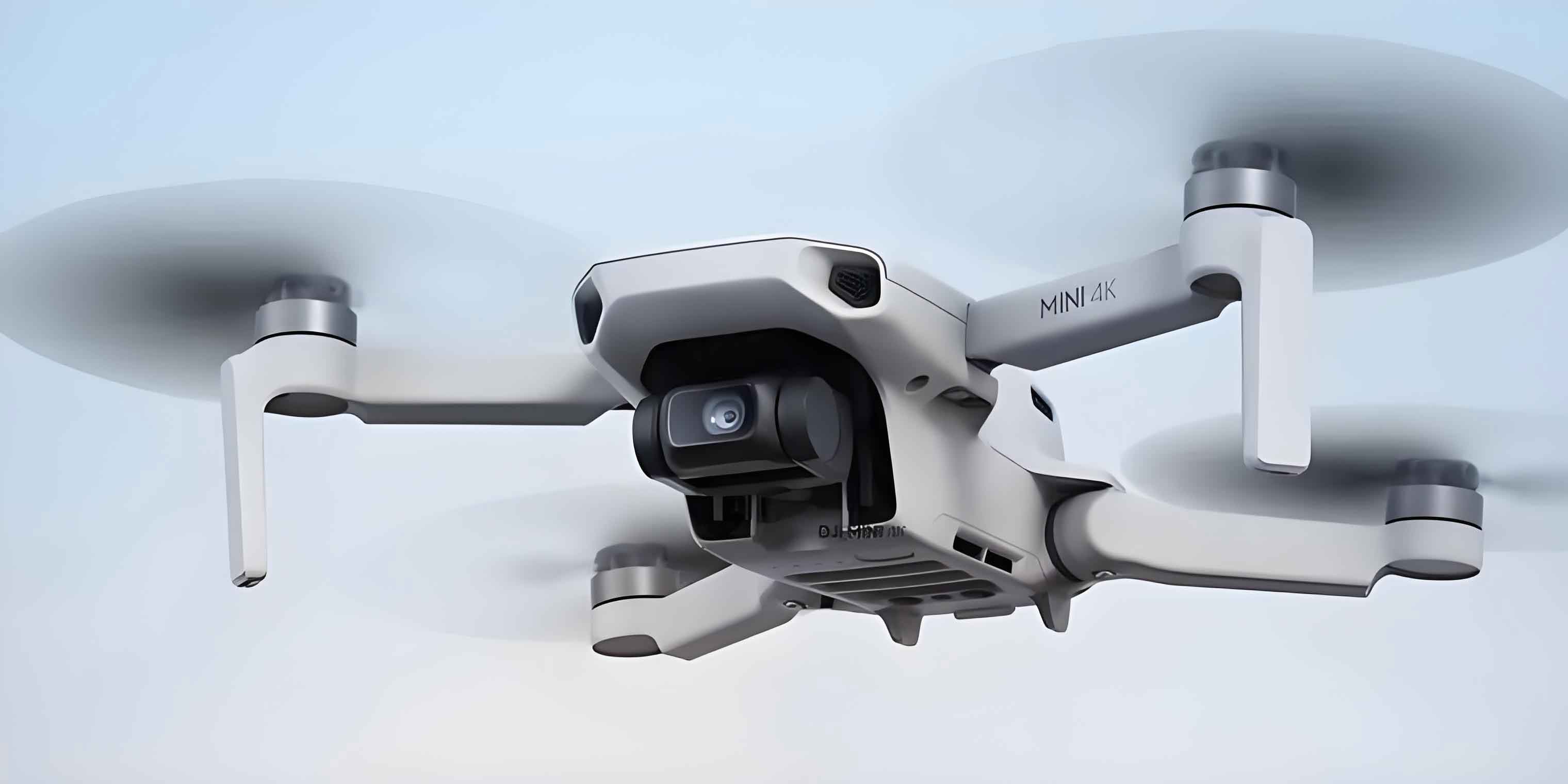
In conclusion, this system represents a significant step forward in UAV aerial survey production, particularly for the rapidly growing China UAV drone sector. By combining modern web technologies (Vue 3 and Element Plus), geographic information visualization (ArcGIS API for JavaScript), high-performance back-end frameworks (Spring Boot), and hybrid storage solutions (PostgreSQL with PostGIS and MongoDB), it establishes a full-process support platform with One Map visualization, task workflow management, data standardization, and成果 sharing. The system assists in every stage—from pre-survey planning and route design to mid-survey POS processing and post-survey成果入库 and展示—strengthening the integration of spatial and attribute data through map-attribute linkage, layer overlay, and spatial queries. This significantly enhances data visualization capabilities and project execution efficiency. Moreover, mechanisms like map tile slicing and dynamic layer loading enable rapid browsing and interaction with large-scale航测成果, supporting concurrent management of multiple projects. Features such as permission control, logging, and dynamic updates improve system security and maintainability. Compared to traditional aerial survey tools, this system offers greater integration, smoother workflows, and superior capabilities in visual interaction, spatial analysis, and成果 management. It effectively lowers the technical barrier for operators and increases the utility of aerial survey outcomes, promising broad application prospects in China UAV drone domains like自然资源 management, emergency response, and urban construction. Future work may involve incorporating AI for automated feature extraction and real-time monitoring, further solidifying its role in the evolution of smart surveying in China.