
From my vantage point as an observer and analyst of technological integration into public spectacle, the rise of the drone light show represents one of the most captivating mergers of art and engineering in recent years. Having witnessed the gradual phasing out of traditional fireworks due to environmental and safety concerns, I have seen firsthand how fleets of illuminated drones have ascended to fill the night sky with dynamic, programmable artistry. This “high-tech firework feast” has become a staple for national celebrations, corporate events, and cultural festivals. However, the very factors that contribute to its wonder—its scale, technological complexity, and operation within shared public spaces—are also the source of its most significant vulnerabilities. The industry’s explosive growth has, at times, outpaced the establishment of robust safety frameworks, leading to incidents of swarm disarray, mid-air collisions, or ground impacts. Therefore, strengthening the safety management ecosystem for drone light show operations is not merely an administrative task; it is a critical imperative for ensuring public safety and sustaining the industry’s social license to operate.
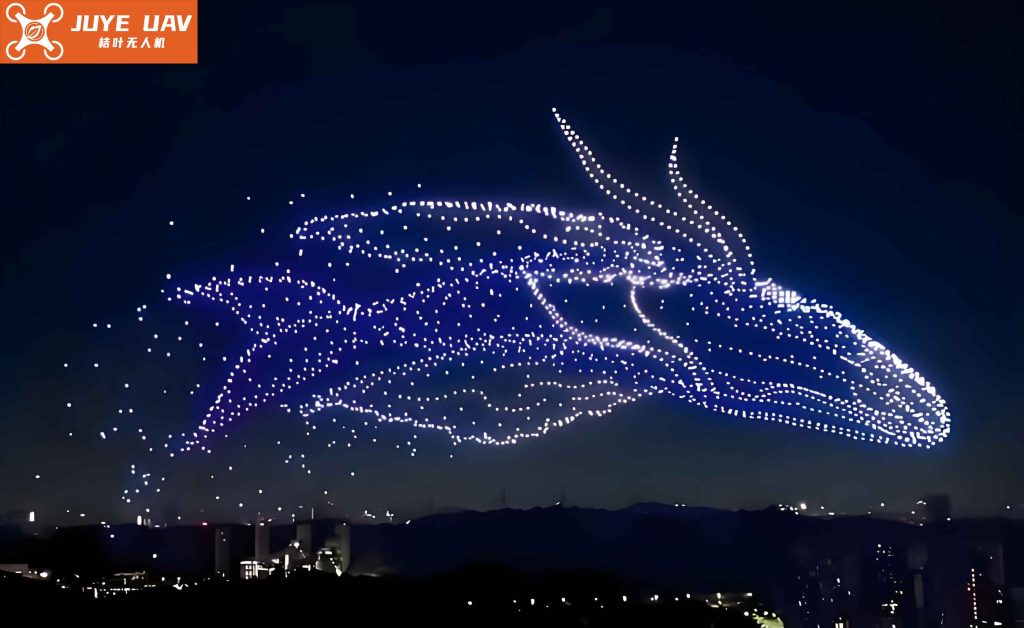
The performance of a drone light show is a precarious ballet dependent on the flawless interaction of hardware, software, human skill, and the environment. Any weakness in this chain can precipitate a failure, transforming a spectacle into a hazard. A comprehensive risk analysis reveals several layered vulnerabilities that must be addressed.
Firstly, the integrity of the drone units themselves is paramount. In a competitive market, some operators may prioritize cost over capability, deploying drones with minimal functionality—basic flight control and LED lighting—while omitting critical safety features. The absence of effective perception and obstacle avoidance sensors is a primary technical flaw. This creates a high-risk environment where intra-swarm collisions or impacts with unexpected obstacles become statistically probable, especially during complex maneuvers or in response to sudden environmental changes.
Secondly, the regulatory and operational management framework for authorizing and overseeing these shows often lacks sophistication. Faced with a surge in flight plan applications, authorities frequently struggle with accurate risk assessment due to insufficient data on fleet technical attributes, operator team competency, and hyper-local real-time meteorological conditions. Furthermore, the post-incident phase is critically hampered by a lack of effective forensic溯源 technology. The small size and low-altitude operation of drone light show aircraft render traditional aviation monitoring tools like primary radar largely ineffective. There is a pronounced gap in urban, networked low-altitude monitoring infrastructure capable of providing seamless surveillance.
Thirdly, while swarm control algorithms for entertainment have achieved notable success, the underlying technology remains an area of active development. Emerging cooperative control paradigms, though promising, may harbor unforeseen stability issues under edge-case scenarios, such as severe signal degradation or the sudden loss of multiple nodes within the swarm.
Finally, and perhaps most insidiously, is the vulnerability of the radio frequency spectrum upon which every drone light show utterly depends. The operational frequency suite is complex and mission-critical:
| System Function | Typical Frequency Bands Used | Potential Impact of Interference |
|---|---|---|
| Global Navigation Satellite System (GNSS) Reception | GPS L1 (1575.42 MHz), L2 (1227.60 MHz); BeiDou B1 (1561.098 MHz) | Loss of positioning, leading to swarm drift or disintegration. |
| Command & Control / Telemetry Data Link | 433 MHz ISM band; WiFi 2.4GHz (2400-2483.5 MHz) & 5.8GHz (5725-5850 MHz) | Loss of control link, causing drones to enter failsafe mode (e.g., hover, land, or return) unpredictably. |
| Precision RTK Correction Data | UHF bands (e.g., 410-430 MHz, 902-928 MHz) or cellular data links. | Degradation from centimeter-level to meter-level positioning accuracy, increasing collision risk in dense formations. |
The system’s reliability can be modeled as a chain dependent on its weakest link. If we represent the probability of successful operation for each independent critical frequency subsystem (GNSS, C2, RTK) as $P_{gnss}$, $P_{c2}$, and $P_{rtk}$ respectively, the overall probability of a frequency-stable show, $P_{stable}$, can be approximated by:
$$ P_{stable} \approx P_{gnss} \cdot P_{c2} \cdot P_{rtk} $$
Given that each $P$ value is less than 1, the cumulative probability highlights the multiplicative nature of the risk. Interference on any one band—whether from unauthorized transmitters, crowded spectrum, or incidental emissions—can cascade into a complete system failure, risking property damage and personal injury.
To mitigate these risks and foster a safe environment for the proliferation of drone light show events, a multi-phased, holistic management strategy is essential. This strategy must envelop the entire operational lifecycle: pre-flight, in-flight, and post-flight.
Phase 1: Pre-Flight – Governance, Training, and Planning
The foundation of safety is laid long before the first drone takes off. The current regulatory landscape, while evolving, is fragmented. In my analysis, establishing a clear, authoritative legal framework is the first step. This involves enacting specialized national legislation for civil drones, moving beyond provisional departmental rules. This law must clearly define oversight bodies to eliminate “multi-headed yet ineffective” management. It should also establish stringent standards for the entire product lifecycle: manufacturing (with mandatory safety features like geo-fencing and basic sense-and-avoid), sales, and operational use. The legal consequences for violations, especially those leading to incidents, must be substantial enough to compel compliance.
Concurrently, a mandatory, standardized training and certification regime for drone light show pilots and operations managers is needed. Furthermore, the flight plan approval process must transition from a simple notification system to a dynamic risk assessment platform. Operators should be required to submit detailed technical data, team credentials, and contingency plans, which authorities can evaluate using standardized risk matrices.
| Pre-Flight Action Item | Key Components | Expected Outcome |
|---|---|---|
| Legal Framework Enhancement | Enact national UAV law; Clarify regulatory authority; Define manufacturing & operational standards; Set punitive penalties. | Unified, enforceable rules providing legal certainty and a strong deterrent against negligence. |
| Operational Training & Certification | Standardized curricula for swarm operation, emergency procedures, RF awareness, and airspace law; Practical exams; Recurrent training. | A skilled, knowledgeable, and accountable workforce. |
| Intelligent Flight Planning & Approval | Digital submission portal integrating drone specs, pilot info, 3D flight path, and weather data; AI-powered risk scoring model. | Data-driven authorization, automatic conflict detection with other airspace users, and optimized, safer show designs. |
Phase 2: In-Flight – Coordinated Monitoring and Dynamic Intervention
During the drone light show, real-time situational awareness and the capacity for swift intervention are critical. I advocate for a layered, “defense-in-depth” approach to airspace security during these events.
1. Unified Traffic Management (UTM) for Shows: Aviation authorities should leverage or establish UTM service suppliers specifically for managing controlled drone operations. This system would integrate live telemetry from the performing swarm with airspace data, temporary flight restriction (TFR) perimeters, and real-time positioning of other air vehicles. It would enable dynamic geofencing and provide controllers with a common operational picture. The system should include remote “kill switch” or emergency landing protocol activation capabilities for the entire swarm.
2. Proactive Radio Frequency Coordination: Show operators must be required to collaborate closely with local radio regulatory agencies. By sharing detailed schedules and technical parameters of their radio equipment well in advance, agencies can conduct pre-event spectrum surveys of the performance area. This allows for the identification of potential interfering sources and the reservation or protection of necessary frequency bands, significantly mitigating RF-based risks.
3. Deploying Layered Detection and Mitigation: A physical security perimeter should be established around the drone light show venue, conceptualized as concentric zones: an outer Warning Zone for early detection, a middle Denial Zone for active interdiction of unauthorized drones, and an inner Protection Zone safeguarding the performing swarm itself. This is enabled by a suite of technologies:
| Technology Layer | Function | Application in Show Safety |
|---|---|---|
| RF Sensors & Direction Finders | Detect and locate drone control & video signals. | Identify unauthorized (“rogue”) drones intruding into the protected airspace. |
| Primary Surveillance Radar (PSR) | Detect objects via radio wave reflection. | Track all moving objects in low-altitude airspace, including drones without active RF emission. |
| Electro-Optical/Infrared (EO/IR) | Visual confirmation and tracking. | Provide positive visual identification of targets detected by RF or radar. |
| Neutralization Systems | Disrupt drone command, GNSS, or induce landing. | Used in the Denial Zone to safely intercept and neutralize identified rogue drones. |
The effective detection range $R_{detect}$ of a system against a small drone is a function of the drone’s Radar Cross Section (RCS, $\sigma$) and the sensor’s performance. A simplified radar range equation illustrates the challenge:
$$ R_{detect} = \sqrt[4]{\frac{P_t G_t G_r \lambda^2 \sigma}{(4\pi)^3 P_{min}} } $$
where $P_t$ is transmit power, $G$ are antenna gains, $\lambda$ is wavelength, and $P_{min}$ is minimum detectable signal. The very small $\sigma$ of a drone requires powerful and sensitive, often multi-modal, systems for reliable coverage.
4. Onboard Intelligence: Beyond external measures, the performing drones themselves must be equipped with increasingly sophisticated automation safety features. Modern automatic obstacle avoidance systems, often using visual or infrared sensors, can act as a last line of defense. Their decision logic can be modeled as a real-time path planning optimization, seeking to minimize a cost function $C$ that weights deviation from the planned trajectory $\Delta p$, proximity to obstacles $d_{obs}$, and energy consumption $E$:
$$ C = \alpha \|\Delta p\|^2 + \beta \sum \frac{1}{{d_{obs}}^2} + \gamma E $$
where $\alpha, \beta, \gamma$ are weighting coefficients. This allows individual drones to execute minor evasive maneuvers if an unexpected obstacle (like a rogue drone or bird) appears, thereby enhancing the resilience of the entire drone light show.
Phase 3: Post-Flight – Accountability, Service, and Forensic Analysis
Safety management does not conclude when the drones land. A robust post-event phase is vital for accountability, continuous improvement, and service recovery.
The cornerstone of accountability is traceability. Effective responsibility assignment requires the ability to trace every drone back to its manufacturer, owner, operator, and its precise flight path. Mandatory remote identification (Remote ID), effectively a digital license plate broadcast by the drone during flight, is a non-negotiable requirement for any drone light show fleet. This, coupled with a stringent pre-show registration process where each drone’s unique identifier is logged with authorities, creates an auditable trail.
To institutionalize this, a national unified drone monitoring and certification platform is necessary. Regulations should mandate that manufacturers embed compliant Remote ID and, potentially, designated “law enforcement interaction” protocols (like a secure command channel for authorized forced landing) into the firmware of drones intended for swarm use. This provides the technological basis for the “three-track”溯源 (manufacturing, ownership, operation) needed after any incident.
Furthermore, post-show analysis is a critical tool. Downloading and analyzing flight logs from every drone in the swarm can reveal near-misses, control link glitches, or battery performance anomalies that went unnoticed during the show. This data feeds into a safety management system (SMS) for the operator, enabling continuous learning and risk reduction for future performances.
| Post-Flight Focus Area | Mechanisms & Tools | Purpose & Benefit |
|---|---|---|
| Accountability & Traceability | Mandatory Remote ID (ASTM/ISO standards); Centralized registration database; Embedded law enforcement interaction protocols. | Enables precise identification of involved parties post-incident; Deters malicious or negligent use; Aids in accident investigation. |
| Forensic Analysis & Learning | Automated flight log aggregation and analysis; Safety Management System (SMS) implementation for operators. | Transforms operational data into safety intelligence; Identifies latent system failures or procedural weaknesses. |
| Insurance & Liability Frameworks | Development of specialized insurance products for drone swarm operations; Clear legal precedents on liability. | Provides financial protection and risk distribution; Clarifies consequences, encouraging higher safety investments. |
In conclusion, the breathtaking art of the drone light show carries with it a profound responsibility. The path forward, from my perspective, is not to stifle innovation with overbearing regulation, but to construct an intelligent, adaptive, and comprehensive safety ecosystem. This ecosystem must be built on a solid legal foundation, empowered by advanced technology for monitoring and intervention, and cemented by a culture of traceability and continuous learning. By integrating rigorous pre-flight governance, real-time multi-layered in-flight protection, and thorough post-flight accountability, we can ensure that the symphony of light in our skies remains a secure and sustainable marvel for years to come. The goal is clear: to make every drone light show not only spectacular but also exemplarily safe.