
Camera drones have revolutionized television production by offering unprecedented aerial perspectives at accessible costs. The 2015 consumer drone market explosion, led by companies like DJI, Zero Tech, and Yuneec, introduced mature camera UAV technology that rapidly permeated mainstream media. Television networks quickly adopted these tools, with CCTV integrating aerial footage into news broadcasts and entertainment shows like “Divas Hit the Road” and “Keep Running” featuring dedicated drone shots. This marked the dawn of the camera drone era in broadcasting.
Following two years of exponential growth, modern camera drones now embody intelligent, lightweight, and professional characteristics. Their operational simplicity enables “fly-out-of-the-box” usability, while delivering increasingly superior imaging quality at diminishing costs. This synergy of high mobility and cinematic capabilities creates ideal conditions for television applications – particularly in news reporting, disaster coverage, traffic monitoring, documentary production, and advertising.
Defining Small Camera Drones
Small camera UAVs refer to quadcopters under 5kg weight with under 700mm wheelbase, capable of carrying gimbal-mounted cameras. Unlike early professional rigs requiring six/eight rotors, specialized operators, and heavy cinema cameras, modern iterations democratize aerial cinematography through technological convergence.
Core Characteristics
Lightweight and Compact
Portability defines modern camera drones, enabling single-operator deployment. Rapid assembly facilitates immediate deployment at target locations, as shown in comparative specifications:
| Model | Weight (with battery/propellers) | Wheelbase |
|---|---|---|
| Phantom 4 Pro | 1388g | 350mm |
| Mavic Pro | 743g | 335mm |
| Inspire 2 | 4000g | 605mm |
Flight Performance
Brushless DC motors paired with carbon-fiber propellers deliver exceptional maneuverability. Maximum velocity vectors demonstrate their kinematic range:
$$ v_{max} = \sqrt{v_x^2 + v_y^2 + v_z^2} $$
where $v_x$, $v_y$, $v_z$ represent velocity components.
| Model | Max Ascent Speed | Max Descent Speed | Max Horizontal Speed |
|---|---|---|---|
| Phantom 4 Pro | Sport: 6m/s Positioning: 5m/s |
Sport: 4m/s Positioning: 3m/s |
Sport: 72km/h Attitude: 58km/h Positioning: 50km/h |
| Mavic Pro | Sport: 5m/s P/A Mode: 5m/s |
3m/s | 65km/h |
| Inspire 2 | S Mode: 6m/s | Vertical: 4m/s Diagonal: 4-9m/s |
94km/h (26m/s in Sport) |
Operational Reliability
Multi-sensor fusion ensures flight stability through:
$$ \text{Stability Index} = k_1(\text{GNSS}) + k_2(\text{IMU}) + k_3(\text{Vision}) $$
where GNSS denotes satellite positioning (GPS/GLONASS), IMU represents inertial measurements, and Vision indicates optical flow data.
| Model | Max Service Ceiling | Max Wind Resistance | Operating Temperature | Obstacle Avoidance |
|---|---|---|---|---|
| Phantom 4 Pro | 6000m | 10m/s | 0°C to 40°C | Forward/Rear/Downward Vision |
| Mavic Pro | 5000m | 10m/s | 0°C to 40°C | Forward/Downward Vision |
| Inspire 2 | 5000m | 10m/s | -20°C to 40°C | Omnidirectional |
Endurance Optimization
Lithium battery performance follows the energy-density relationship:
$$ t = \frac{E_b \cdot \eta}{P_{total}} $$
where $t$ = flight time, $E_b$ = battery energy, $\eta$ = efficiency, $P_{total}$ = total power consumption.
| Model | Battery Capacity | Max Flight Time |
|---|---|---|
| Phantom 4 Pro | 6000mAh LiPo | 30 minutes |
| Mavic Pro | 3830mAh LiPo | 21 minutes (15% reserve) |
| Inspire 2 | 4280mAh x 2 | 27 minutes |
Imaging Capabilities
Camera UAVs distinguish themselves from recreational drones through integrated imaging systems. Key parameters include sensor size and resolution:
$$ \text{Pixel Quality} \propto \frac{\text{Sensor Area}}{\text{Pixel Count}} $$
| Model | CMOS Size | Effective Pixels | Max Video Resolution |
|---|---|---|---|
| Phantom 4 Pro | 1-inch | 12MP | C4K: 4096×2160 24/25/30p @100Mbps |
| Mavic Pro | 1/2.3-inch | 20MP | C4K: 4096×2160 24p |
| Inspire 2 (X7) | Super 35mm | 24MP | 6K: 6016×3200 @24-30p, 12-bit |
Intelligent Functions
Subject Tracking
Computer vision enables automatic tracking of diverse targets (people, vehicles, vessels). The tracking algorithm maintains optimal distance while adapting to terrain:
$$ \Delta d = k_p \cdot e(t) + k_d \cdot \frac{de}{dt} $$
where $\Delta d$ = distance adjustment, $e(t)$ = position error.
Obstacle Avoidance
Multi-sensor networks (vision, ultrasonic, infrared) create 3D environment maps. The collision prevention system triggers when:
$$ \frac{d}{v} < t_{reaction} $$
where $d$ = obstacle distance, $v$ = approach velocity.
Automated Return
Fail-safe protocols activate during signal loss or critical battery levels:
$$ R_{home} = \int_{t_0}^{t} \vec{v}_{gps} dt + \vec{p}_{home} $$
where $\vec{v}_{gps}$ = GPS velocity vector, $\vec{p}_{home}$ = home coordinates.
Television Applications
News Gathering
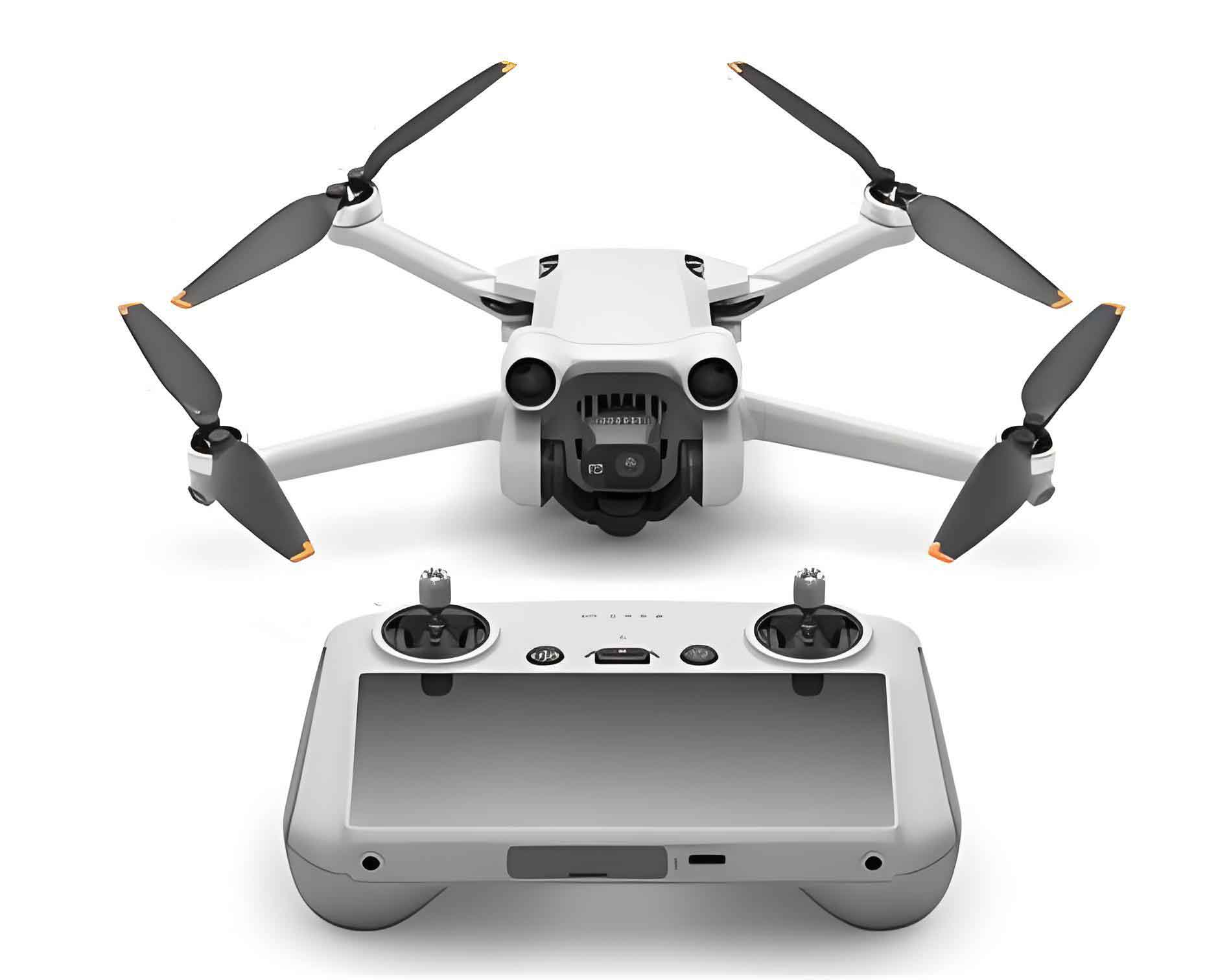
Compact camera UAVs like DJI Mavic (734g, folding design) provide immediate aerial perspectives at breaking news scenes. Their 7km transmission range and 21-minute endurance overcome geographical barriers, delivering unique vantage points inaccessible to ground crews.
Live Event Coverage
Camera UAVs like Phantom 4 Pro deliver HD signals directly to production trucks, replacing helicopters for events like marathons, cycling races, and cultural festivals. The combination of 30-minute endurance, 4K capture, and obstacle avoidance enables dynamic multi-angle coverage.
Documentary Production
High-end camera UAVs such as Inspire 2 with Zenmuse X7 cameras capture cinematic 6K footage for nature documentaries and cultural programs. The dual-battery, dual-controller design ensures operational redundancy during complex shoots.
Conclusion
Camera UAVs represent a transformative technology for television production, offering cost-effective aerial perspectives that enhance storytelling capabilities. While technological advancements continue to improve camera drone performance, operational expertise remains crucial for maximizing their potential. Strategic implementation across news, live events, and documentary formats will enable broadcasters to develop distinctive aerial-focused content genres. As camera UAV technology matures, television professionals possess unprecedented opportunities to redefine visual narrative through intelligent aerial cinematography.