
The proliferation of affordable, user-friendly camera drones has revolutionized aerial imaging across industries. This technological shift creates compelling opportunities for higher education institutions to integrate camera UAV (Unmanned Aerial Vehicle) operation into curricula. We recognize that establishing robust elective courses requires addressing both theoretical foundations and practical implementation. The necessity stems from three core areas:
- Professional Alignment: Camera drones enhance capabilities across diverse fields like environmental monitoring, infrastructure inspection, media production, and agriculture. Integrating camera UAV skills directly supports discipline-specific competencies and employability.
- Artistic and Technical Synthesis: Operating a camera drone demands an intersection of technical precision (aerodynamics, robotics) and aesthetic judgment (composition, lighting). This cultivates both scientific literacy and artistic sensibility.
- Campus Engagement: Students proficient in camera drone operation can document campus events, create promotional content, and enrich institutional storytelling through unique aerial perspectives.
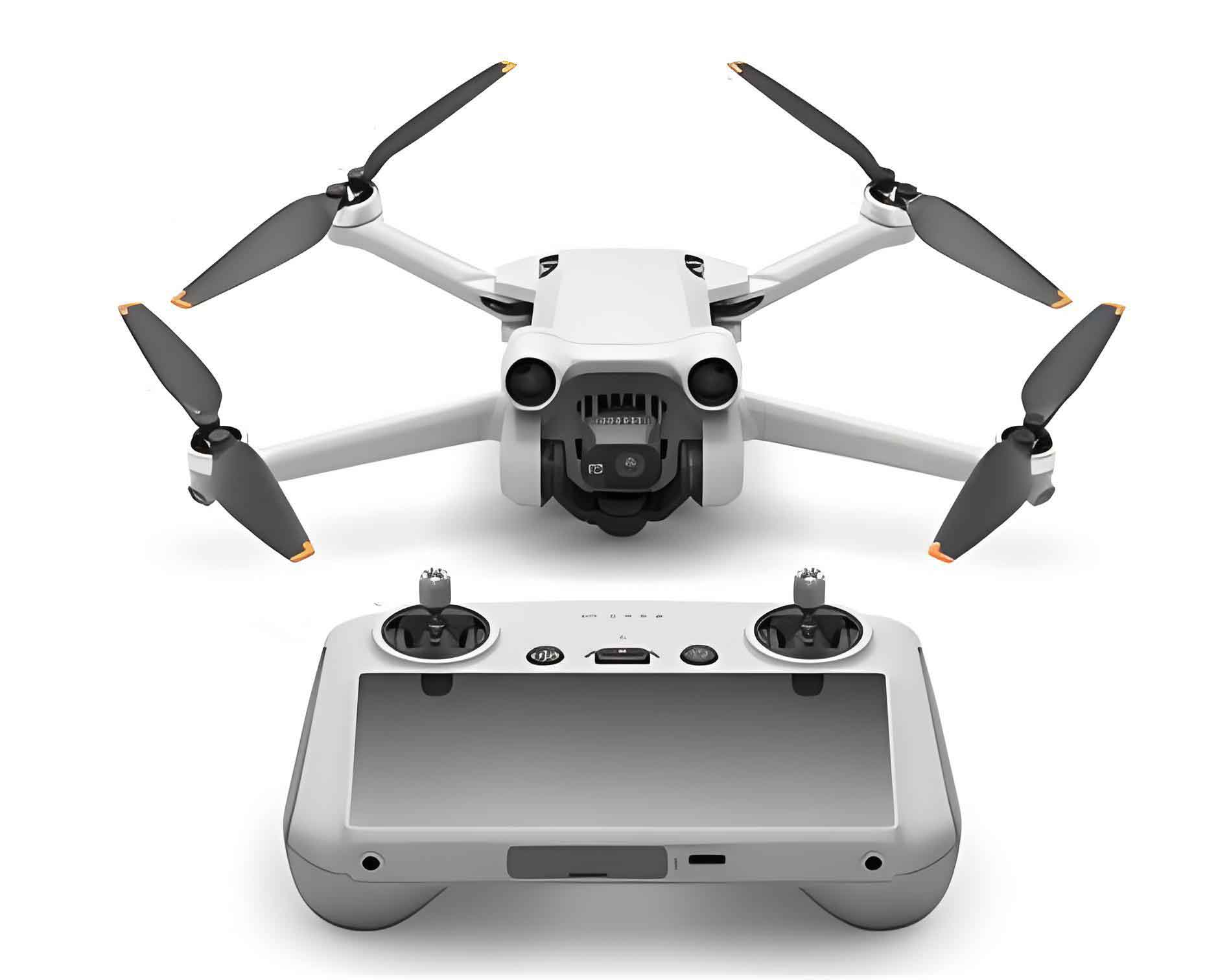
The theoretical module establishes essential knowledge through four structured components:
| Module | Core Content | Key Formulas/Principles |
|---|---|---|
| Photographic Fundamentals | Composition (Rule of Thirds, Leading Lines), Lighting Dynamics, Color Theory, Exposure Triangle (Aperture, Shutter Speed, ISO) | Exposure Value (EV): $$EV = \log_2 \left( \frac{N^2}{t} \right)$$ where \(N\) is f-number, \(t\) is exposure time. |
| Camera Drone Architecture | Quadcopter Dynamics, Gimbal Stabilization, Sensor Systems (GPS, IMU), Battery/Power Management | Thrust per rotor: $$T = \frac{1}{2} \rho C_T A \Omega^2 r^2$$ where \(\rho\) = air density, \(C_T\) = thrust coefficient, \(A\) = rotor area, \(\Omega\) = angular velocity, \(r\) = rotor radius. |
| Regulatory Compliance | Airspace Classification, Licensing (FAA Part 107/EASA A1-A3), Privacy Laws, Insurance Requirements | Micro-drone classification: $$\text{Takeoff weight} \leq 7\text{kg}, \quad \text{Visual Line of Sight} \leq 500\text{m}, \quad \text{Altitude} \leq 120\text{m}$$ |
| Aerial Cinematography Analysis | Shot Sequencing, Movement Patterns (Orbit, Reveal, Tracking), Narrative Integration of Aerial Footage | Motion blur control: $$\text{Shutter Speed} \approx \frac{1}{2 \times \text{Frame Rate}}$$ |
Practical implementation presents distinct challenges requiring systematic solutions:
| Criterion | DJI Mavic 3 | DJI Air 3 | Autel Evo Lite+ |
|---|---|---|---|
| Takeoff Weight | 895g | 720g | 835g |
| Max Flight Time | 46 min | 46 min | 40 min |
| Obstacle Sensing | Omnidirectional | Forward/Rear/Down | Forward/Down |
| Wind Resistance | 12 m/s | 10.7 m/s | 8.5 m/s |
| Relative Cost | $$ \text{High} \, (\geq \$2000) $$ | $$ \text{Medium} \, (\approx \$1100) $$ | $$ \text{Medium} \, (\approx \$1000) $$ |
Outdoor flight operations demand rigorous protocols:
- Location Protocol: Prioritize open campus areas (athletic fields, plazas). Verify airspace restrictions via tools like B4UFLY or national UTM systems. Maintain minimum distances:
$$D_{\text{min}} = \max(30\text{m}, \, 2 \times \text{Drone Size}) \quad \text{from people/structures}$$ - Temporal Optimization: Conduct flights during “Golden Hour” (1 hour post-sunrise/pre-sunset) for optimal lighting. Avoid night operations without explicit training and waivers.
- Weather Mitigation: Cancel operations if wind exceeds 50% of drone rating or precipitation risk exists. Wind limit:
$$V_{\text{wind}} \leq 0.5 \times V_{\text{drone-max}}$$ - Battery Management: Calculate safe flight duration:
$$t_{\text{safe}} = 0.7 \times t_{\text{max}} – \frac{\text{Return Distance}}{\text{Average Speed}}$$
Initiate return at 30% capacity. - Safety Framework: Implement pre-flight checklists, geofencing, and visual observers. Emergency response protocols must include motor cut-off procedures and first-aid readiness.
Post-production workflows transform raw footage into polished outputs while developing student competencies:
- Image Processing: Utilize Adobe Lightroom for color grading and lens correction. Key adjustments involve dynamic range optimization:
$$\Delta \text{DR} = \log_2(\text{Raw Bit Depth}) – \log_2(\text{Display Bit Depth})$$ - Video Editing: Employ DaVinci Resolve/Premiere Pro for sequencing, stabilization (using warp stabilizers), and LUT application. Motion smoothing often requires frame interpolation:
$$V_{\text{output}} = \frac{\sum_{i=1}^{n} w_i V_i}{\sum_{i=1}^{n} w_i} \quad \text{where } w_i \text{ are temporal weights}$$ - Multimedia Integration: Combine aerial footage with ground shots, data overlays, and sound design for comprehensive storytelling across web/social platforms.
Continuous course evolution is critical. Camera UAV technology advances rapidly – newer models feature enhanced obstacle avoidance ($O_{\text{score}} = \sum \text{sensor coverage} \times \text{processing speed}$), automated flight modes, and AI-assisted cinematography. Similarly, regulations evolve; instructors must track updates from aviation authorities. Crucially, artistic development remains an iterative process transcending single courses. We integrate longitudinal portfolio development where students refine aerial narratives across semesters. This camera drone program ultimately creates versatile graduates capable of merging technical operation with creative vision across emerging applications – from precision agriculture monitoring using multispectral camera UAVs to cinematic content creation pushing visual boundaries.