
The evolving threat landscape presented by unmanned aerial vehicle (UAV) swarms necessitates a paradigm shift in defensive strategies. Traditional air defense systems, optimized for larger, faster, and fewer targets, are increasingly challenged by the low cost, high quantity, and intelligent协同 of modern UAV swarms. These swarms can execute complex missions such as saturation attacks, distributed electronic warfare, and coordinated reconnaissance, posing a severe threat to critical assets and airspace security. In this context, effective anti-UAV operations fundamentally depend on superior situation awareness—the ability to detect, track, identify, and comprehend the swarm’s behavior and intent well before it reaches its target. This paper, from a research perspective, delves into the core strategies for achieving this crucial situational understanding, focusing on integrated multi-domain detection and hierarchical multi-source information fusion for robust anti-UAV swarm awareness.
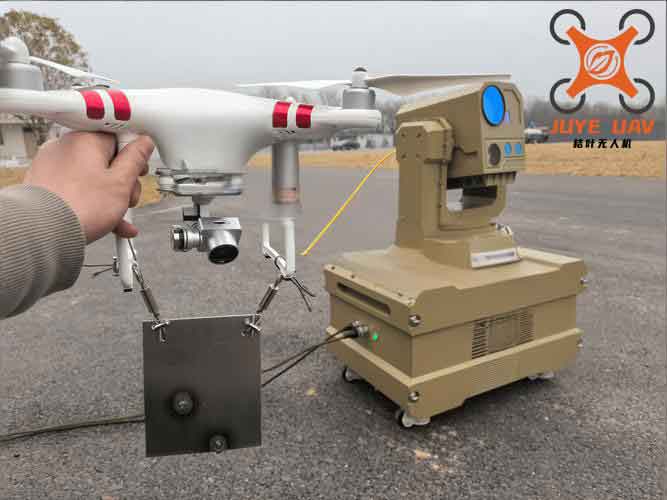
The cornerstone of any anti-UAV system is a resilient and layered detection network. No single sensor technology provides a complete solution against diverse swarm tactics operating in complex environments. Therefore, a joint multi-domain detection architecture is imperative. This involves the synergistic deployment of various sensor modalities, each with complementary strengths and weaknesses, to create a seamless surveillance blanket. Key detection methods and their characteristics are summarized in the table below.
| Detection Modality | Key Technologies & Feasibility | Characteristics for Anti-UAV Swarm |
|---|---|---|
| Radar Detection | Advanced systems like AESA, low-altitude gap-filler radars, and passive coherent location radars improve resolution. Micro-Doppler feature extraction and bird-discrimination algorithms are crucial for distinguishing drones from clutter. | Long detection range, high precision, all-weather capability. Effective against RF-silent drones. Challenges include low RCS and dense clutter. |
| Radio Frequency (RF) Sensing | Detection and direction-finding of UAV telemetry and video downlink signals. Utilizes spectral fingerprinting and database matching for classification. | Passive operation, good for cueing. Ineffective against drones operating in complete RF silence. |
| Electro-Optical/Infrared (EO/IR) | Combination of visible-light, infrared, and laser (LiDAR) sensors. Multi-spectral and polarization techniques enhance discrimination. | High resolution, visual confirmation, strong anti-jamming. Poor performance in adverse weather, limited range, and lacks inherent ranging (except LiDAR). |
| Acoustic Detection | Capture and analysis of unique acoustic signatures using array of microphones and acoustic fingerprinting. | Passive and low-cost. Very short effective range, highly susceptible to environmental noise. |
The proposed joint detection strategy advocates for a “far-near combination, high-low搭配, and echelon deployment” model. Long-range surveillance radars form the outer layer, providing early warning. Mid-layer coverage is achieved with a mix of medium-range radars and RF sensors. The inner layer, protecting high-value points, employs dense networks of short-range radars, EO/IR systems, and acoustic sensors. Furthermore, mobile ground stations and airborne platforms carrying sensor payloads can create dynamic, reconfigurable detection grids that adapt to the swarm’s movement, enhancing the resilience and coverage of the overall anti-UAV network.
Raw data from this heterogeneous sensor network must be fused into a coherent operational picture. A hierarchical fusion structure is well-suited for this complex task. At the first level, data from individual or co-located sensors undergoes primary fusion for object localization, tracking, and basic classification. These results are then fed into a higher-level fusion center, which correlates tracks from all domains, performs advanced identity and behavior analysis, and ultimately assesses the swarm’s intent and threat level. This structure efficiently manages data volume and complexity. The core technical challenges within this fusion process lie in Group Target Tracking and Swarm Intent Recognition.
Tracking a UAV swarm is a specialized subset of multi-target tracking (MTT). The challenge varies significantly based on the swarm’s density relative to sensor resolution. We classify the tracking scenarios as follows:
| Scenario | Type | Characteristics |
|---|---|---|
| 1 | Global Dense Group Tracking | All swarm members are too close for the sensor to resolve individually. |
| 2 | Local Dense + Global Sparse MTT | The swarm splits into functional sub-swarms (e.g., scout, attack). Internally, sub-swarms are dense, but their centroids are widely spaced. |
| 3 | Local Dense + Local Sparse MTT | Post-engagement, the threat is a mix of unresolved sub-groups and individual, resolved UAVs. |
| 4 | Global Sparse MTT | All swarm members are sufficiently spaced to be tracked as individual targets. |
Scenarios 2 and 3 are most operationally relevant. For sparse tracking (individuals or group centroids), traditional MTT algorithms like Global Nearest Neighbor (GNN) or Multi-Hypothesis Tracking (MHT) followed by Kalman filtering are applicable. The primary challenge is Dense Group Target Tracking, where multiple targets generate merged measurements. The processing framework involves several key steps:
- Group Detection/Measurement Partitioning: Clustering measurements believed to originate from the same group. A common distance-based gating rule for two measurements $$z_k^1$$ and $$z_k^2$$ is:
$$(z_k^1 – z_k^2)^T R_k^{-1} (z_k^1 – z_k^2) < \delta_{P_G}$$
where $$R_k$$ is the measurement noise covariance and $$\delta_{P_G}$$ is a threshold. More advanced methods include Expectation-Maximization (EM) partitioning for extended targets. - Group Splitting/Merging Detection: Identifying when groups divide or combine. Evolution Graph models are commonly used, where nodes represent targets and edges represent spatial relationships. A split is declared when the Mahalanobis distance between sub-clusters exceeds a threshold.
- Extended State Estimation: Estimating not just the group centroid $$X_k$$ but also its spatial extent $$X_k^{ext}$$. The Random Matrix model is prevalent, representing the extent as an ellipse. The state is jointly estimated using a Bayesian filter:
$$p_k(X_k, X_k^{ext} | Z^{1:k})$$
where $$Z^{1:k}$$ is the sequence of measurements. - Data Association & Filtering: Associating partitioned measurements to group states and updating the state estimate. While MHT can be used, Random Finite Set (RFS) based filters are increasingly favored as they avoid explicit association. Key RFS filters for group tracking include:
- Probability Hypothesis Density (PHD) Filter: Propagates the first-order moment of the multi-target state. Lower complexity but higher variance in cardinality estimate.
- Cardinalized PHD (CPHD) Filter: Propagates both the PHD and the cardinality distribution, improving count estimation at higher computational cost.
- Generalized Labeled Multi-Bernoulli (GLMB) Filter: Maintains target labels, enabling track continuity—essential for understanding swarm behavior over time.
The prediction and update steps for a Bayesian group filter generally follow:
$$p_{k|k-1}(X_k, X_k^{ext} | Z^{1:k-1}) = \int f_{k|k-1}(X_k, X_k^{ext} | \zeta) p_{k-1}(\zeta | Z^{1:k-1}) d\zeta$$
$$p_k(X_k, X_k^{ext} | Z^{1:k}) = \frac{g_k(Z_k | X_k, X_k^{ext}) p_{k|k-1}(X_k, X_k^{ext} | Z^{1:k-1})}{\int g_k(Z_k | \zeta) p_{k|k-1}(\zeta | Z^{1:k-1}) d\zeta}$$
where $$f_{k|k-1}$$ is the state transition density and $$g_k$$ is the measurement likelihood.
Beyond kinematic tracking, inferring the swarm’s intent is critical for proactive anti-UAV measures. Intent recognition translates observed low-level states into high-level mission objectives. We propose a Hierarchical Bayesian Network (HBN) approach for this task. The model operates on three levels:
- Behavior Feature Inference: The observed kinematic state $$S_k$$ (position, velocity, formation) and emitter state $$E_k$$ of a sub-swarm are used to infer its instantaneous behavior $$B_i$$ (e.g., high-altitude cruise, low-altitude dash, radar emission). The emitter state space can be defined as:
| Feature | Type | State Space |
|---|---|---|
| Radar Emission | Discrete | {ON, OFF} |
| Jamming Emission | Discrete | {ON, OFF} |
| Weapon Release | Discrete | {TRUE, FALSE} |
| RF Silence | Discrete | {TRUE, FALSE} |
- Sub-Swarm Intent Recognition: A sequence of observed behaviors over time $$B_i^{1:T}$$ is used to infer the sub-swarm’s intent $$I_i$$ (e.g., Reconnaissance, Attack, Electronic Attack, Feint). Assuming conditional independence of behaviors given the intent, Bayes’ rule is applied:
$$P(I_i = w | B_i^{1:T}) = \frac{P(B_i^{1:T} | I_i = w) P(I_i = w)}{\sum_{j=1}^{N} [P(B_i^{1:T} | I_i = j) P(I_i = j)]}$$
where $$P(B_i^{1:T} | I_i = w) = \prod_{k=1}^{T} P(B_i^k | I_i = w)$$. The likelihoods $$P(B_i^k | I_i = w)$$ and priors $$P(I_i = w)$$ are learned from training data (historical patterns, expert rules, simulation). - Overall Swarm Intent Synthesis: The inferred intents of all detected sub-swarms $$\{I_1, I_2, …, I_n\}$$ are fused to deduce the overall swarm intent $$I_{swarm}$$ (e.g., Saturation Attack, Distributed Suppression of Air Defenses). This involves higher-level tactical reasoning, potentially modeled as another Bayesian network where:
$$P(I_{swarm}) = P(I_1, I_2, …, I_n) = P(I_1) \prod_{i=2}^{n} P(I_i | I_{i-1}, I_{swarm})$$
The conditional probabilities $$P(I_i | I_{i-1}, I_{swarm})$$ encode knowledge of common tactical compositions of UAV swarms.
The proposed situation awareness framework—integrating joint multi-domain detection, sophisticated dense group tracking, and hierarchical intent recognition—forms a robust foundation for effective anti-UAV swarm operations. It addresses the critical “observe” and “orient” phases of the OODA loop, providing decision-makers with the timely and comprehensible information needed to deploy kinetic or non-kinetic countermeasures effectively. Future research will focus on validating this strategy through high-fidelity simulation and real-world data experimentation. Furthermore, the integration of Large Language Models (LLMs) promises to revolutionize situation awareness by enabling advanced event extraction, pattern recognition across unstructured data, and probabilistic reasoning about complex swarm tactics, ultimately leading to more intelligent and autonomous anti-UAV defense systems.