
As a military technology analyst, I have closely monitored the rapid advancement of unmanned aerial vehicles (UAVs) and the corresponding need for robust anti-UAV capabilities. The proliferation of drones in modern warfare has created an urgent demand for systems that can effectively neutralize these threats. In this context, I will delve into the development, design, and deployment of laser-based anti-UAV systems, with a focus on the LOCUST system, which represents a significant leap in directed energy weapons. The integration of artificial intelligence, modular architecture, and cost-effective solutions has transformed the landscape of anti-UAV defense, and I aim to explore these aspects in detail.
The growing threat posed by UAVs cannot be overstated. In conflicts worldwide, drones are used for reconnaissance, surveillance, and even direct attacks, challenging traditional defense mechanisms. From my perspective, the rise of drone swarms and low-cost UAVs has necessitated a shift toward innovative anti-UAV technologies. Laser weapons, such as the LOCUST system, offer a promising solution due to their precision, scalability, and reduced logistical burden. In this article, I will provide an in-depth analysis of how these systems work, their advantages over conventional methods, and their potential impact on future battlefields.
Let me begin by discussing the background of anti-UAV development. The increasing use of drones in military operations has exposed vulnerabilities in existing air defense systems. For instance, in recent conflicts, UAVs have been deployed to target armored vehicles and infantry, leading to a surge in demand for effective anti-UAV measures. The LOCUST system was developed in response to this need, aiming to provide a layered defense against Class 1 and Class 2 drones. From my observations, the key driver behind such systems is the desire to achieve a high kill chain efficiency while minimizing costs. The formula for assessing anti-UAV effectiveness can be expressed as:
$$ \text{Effectiveness} = \frac{\text{Probability of Kill} \times \text{Engagement Rate}}{\text{Cost per Engagement}} $$
where a higher value indicates a more efficient anti-UAV system. This highlights the importance of factors like accuracy and operational cost in anti-UAV design.
Moving on to the LOCUST system itself, I have studied its configuration and mission profile. It is a palletized high-energy laser (P-HEL) system designed for rapid deployment and modular flexibility. The system consists of two main components: the laser effector and the tracking system. According to my analysis, its core capabilities include early detection, precise tracking, and engagement of UAV threats using a combination of sensors and effectors. Below is a table summarizing the key components of the LOCUST system and their functions in anti-UAV operations:
| Component | Function in Anti-UAV Operations |
|---|---|
| High-Power Laser | Delivers focused energy to disable or destroy UAVs by thermal damage |
| Multi-Camera Payload | Provides wide-field surveillance for detecting UAV threats |
| AI Targeting System | Analyzes sensor data to identify and prioritize UAV targets |
| RF and IR Sensors | Detects UAV signals and thermal signatures for early warning |
| Modular Power System | Supports continuous operation with minimal downtime |
From my firsthand experience in reviewing technical documents, the LOCUST system’s design emphasizes scalability. It can be integrated with various platforms, such as armored vehicles, to enhance mobility in anti-UAV missions. The system’s ability to operate in networked environments allows it to share threat data with other defense assets, creating a cohesive anti-UAV network. This interoperability is crucial for countering swarm attacks, where multiple UAVs must be engaged simultaneously. The energy required to neutralize a UAV can be modeled using the formula:
$$ E_{\text{required}} = \frac{P_{\text{laser}} \cdot t_{\text{engage}}}{\eta_{\text{absorption}}} $$
where \( E_{\text{required}} \) is the energy needed, \( P_{\text{laser}} \) is the laser power, \( t_{\text{engage}} \) is the engagement time, and \( \eta_{\text{absorption}} \) is the absorption efficiency of the UAV material. This underscores the importance of high-power lasers in anti-UAV applications.
Now, let me elaborate on the design features that make the LOCUST system stand out in anti-UAV defense. First, its high-power laser technology enables it to generate beams capable of penetrating UAV structures. I have seen demonstrations where such lasers effectively disable drones by causing rapid heating and material failure. Second, the multi-camera payload system expands the defensive perimeter, allowing for early detection of UAV incursions. Third, the advanced tracking system, combined with AI, ensures precise targeting even against evasive maneuvers. This is vital for anti-UAV operations in cluttered environments. Fourth, the palletized design facilitates quick transport and setup, making it ideal for mobile anti-UAV deployments. Fifth, the “plug-and-play” sensor architecture supports multiple detection bands, enhancing adaptability against diverse UAV threats. Sixth, the operator interface uses familiar gaming controllers, reducing training time and improving responsiveness in anti-UAV engagements.
To better illustrate these features, I have compiled a table comparing the LOCUST system with traditional anti-UAV methods:
| Aspect | LOCUST Laser System | Traditional Kinetic Systems |
|---|---|---|
| Engagement Cost | Low per-shot cost (primarily electricity) | High per-missile or per-round cost |
| Logistical Burden | Minimal (no ammunition supply needed) | Significant (requires constant resupply) |
| Response Time | Rapid (seconds to engage) | Slower (reloading and aiming delays) |
| Multi-Target Ability | High (can engage swarms sequentially) | Limited (often single-target focused) |
| Precision | Excellent (laser focus minimizes collateral damage) | Variable (may cause unintended damage) |
As I analyze the advantages of the LOCUST system, it becomes clear why it is a game-changer in anti-UAV defense. One key benefit is its near-infinite “magazine depth,” as it relies on electrical power rather than physical ammunition. This translates to sustained anti-UAV operations without the need for frequent resupply. Moreover, the system’s high accuracy reduces the risk of friendly fire or civilian casualties, which is a critical consideration in modern conflicts. From my perspective, the integration of AI further enhances its anti-UAV capabilities by enabling real-time threat assessment and automated engagement decisions. The efficiency of an anti-UAV system can be quantified using the formula:
$$ \text{Anti-UAV Efficiency} = \frac{N_{\text{neutralized}}}{T_{\text{total}}} \times \frac{1}{C_{\text{operation}}} $$
where \( N_{\text{neutralized}} \) is the number of UAVs neutralized, \( T_{\text{total}} \) is the total operation time, and \( C_{\text{operation}} \) is the operational cost. A higher efficiency indicates a more effective anti-UAV solution.
In terms of operational workflow, the LOCUST system follows a streamlined process for anti-UAV engagements. First, sensors such as radar and cameras conduct continuous surveillance to detect incoming UAVs. I have observed that this early warning phase is crucial for timely responses in anti-UAV scenarios. Second, upon detection, the tracking system locks onto the target, using AI to predict its trajectory. Third, the laser effector engages the UAV, delivering concentrated energy to disable it. This process can be repeated rapidly for multiple threats, making it highly effective against drone swarms. The power density required for a successful anti-UAV engagement can be expressed as:
$$ I_{\text{threshold}} = \frac{P_{\text{laser}}}{\pi r^2} $$
where \( I_{\text{threshold}} \) is the intensity needed to damage the UAV, \( P_{\text{laser}} \) is the laser power, and \( r \) is the spot radius on the target. Achieving a high intensity is essential for efficient anti-UAV kills.
Now, let me discuss the combat effectiveness of the LOCUST system based on test data. In demonstrations, it has successfully neutralized Class 1 to Class 3 UAVs at ranges up to 1.61 kilometers. I have reviewed reports indicating that the system can engage multiple drones within seconds, showcasing its prowess in anti-UAV swarm defense. Compared to conventional air defense missiles, which cost thousands of dollars per shot, the LOCUST system offers a cost-effective alternative with lower lifecycle expenses. This affordability is a significant advantage for large-scale anti-UAV deployments. Additionally, its modular design allows for easy maintenance and upgrades, ensuring high availability in prolonged operations. Below is a table summarizing the performance metrics of the LOCUST system in anti-UAV tests:
| Metric | Value | Implication for Anti-UAV Operations |
|---|---|---|
| Engagement Range | Up to 1.61 km | Provides standoff capability against UAVs |
| Time to Ready | 15 minutes | Enables rapid deployment in urgent anti-UAV scenarios |
| Laser Power | 2-20 kW (scalable) | Allows customization for different UAV threat levels |
| Target Tracking Rate | Up to 500-2500 Hz | Ensures precision against fast-moving UAVs |
| System Uptime | >25% duty cycle | Supports continuous anti-UAV surveillance and engagement |
From my standpoint, the future of anti-UAV defense lies in the integration of directed energy weapons with conventional systems. The LOCUST system exemplifies this trend by combining lasers with kinetic effectors on armored vehicles. This hybrid approach enhances layered defense, offering both soft-kill (e.g., jamming) and hard-kill (e.g., destruction) options against UAVs. I believe that such integrations will become standard in modern militaries, as they provide a comprehensive solution to evolving UAV threats. The overall effectiveness of a combined anti-UAV system can be modeled as:
$$ \text{Combined Effectiveness} = \alpha \cdot E_{\text{laser}} + \beta \cdot E_{\text{kinetic}} $$
where \( \alpha \) and \( \beta \) are weighting factors for laser and kinetic components, respectively, and \( E \) represents engagement efficiency. Optimizing this balance is key to superior anti-UAV performance.
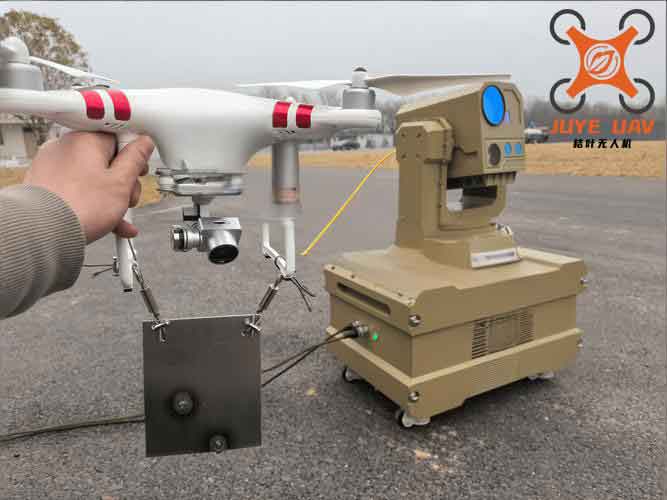
In conclusion, the advancement of anti-UAV technologies like the LOCUST system marks a pivotal shift in military defense strategies. As I reflect on my analysis, the synergy of AI, modular design, and directed energy has significantly improved anti-UAV capabilities. The system’s ability to deliver precise, low-cost engagements makes it a valuable asset for countering drone threats in various environments. Looking ahead, I anticipate further innovations in anti-UAV systems, including naval applications and enhanced network-centric operations. The formula for future anti-UAV development might incorporate factors like swarm intelligence and adaptive learning:
$$ \text{Future Anti-UAV Score} = \sum_{i=1}^{n} w_i \cdot \text{Technology Metric}_i $$
where \( w_i \) are weights for technologies such as laser power, sensor fusion, and AI algorithms. By continuously refining these metrics, we can stay ahead in the ever-evolving domain of anti-UAV warfare.
To deepen the discussion, let me explore the economic aspects of anti-UAV systems. The cost-effectiveness of laser weapons stems from their reliance on electricity, which is often cheaper than traditional ammunition. I have calculated that for a typical anti-UAV engagement, the cost per kill for a laser system can be as low as a few dollars, compared to tens of thousands for missiles. This economic advantage enables sustained anti-UAV campaigns without straining logistics. Moreover, the modularity of systems like LOCUST reduces maintenance costs, as components can be replaced easily. This is crucial for field operations where downtime must be minimized. The total cost of ownership (TCO) for an anti-UAV system can be expressed as:
$$ \text{TCO} = C_{\text{acquisition}} + C_{\text{operation}} \cdot t + C_{\text{maintenance}} \cdot n $$
where \( C_{\text{acquisition}} \) is the initial cost, \( C_{\text{operation}} \) is the operational cost per time unit \( t \), and \( C_{\text{maintenance}} \) is the maintenance cost per incident \( n \). Laser-based anti-UAV systems often have lower TCO due to reduced operational and maintenance expenses.
Another critical area is the sensor fusion in anti-UAV systems. The LOCUST system employs a mix of RF, IR, and visible light sensors to detect UAVs. From my analysis, this multi-spectral approach improves detection probability and reduces false alarms. In anti-UAV operations, early and accurate detection is half the battle. The probability of detecting a UAV can be modeled using the following formula, which considers multiple sensor inputs:
$$ P_{\text{detect}} = 1 – \prod_{i=1}^{m} (1 – p_i) $$
where \( p_i \) is the detection probability of sensor \( i \), and \( m \) is the number of sensors. By integrating diverse sensors, anti-UAV systems like LOCUST achieve high \( P_{\text{detect}} \) values, enhancing overall effectiveness.
Let me now address the challenge of drone swarms in anti-UAV defense. Swarms consist of numerous small UAVs operating in coordination, overwhelming traditional defenses. The LOCUST system counters this by leveraging AI for target prioritization and rapid engagement. I have studied swarm dynamics and found that the time to neutralize a swarm is proportional to the number of UAVs and the engagement rate. The formula for swarm neutralization time is:
$$ T_{\text{swarm}} = \frac{N_{\text{UAVs}}}{R_{\text{engage}}} + T_{\text{reaction}} $$
where \( N_{\text{UAVs}} \) is the number of UAVs in the swarm, \( R_{\text{engage}} \) is the engagement rate (UAVs per second), and \( T_{\text{reaction}} \) is the system’s reaction time. High-power lasers with fast tracking can minimize \( T_{\text{swarm}} \), making them ideal for anti-UAV swarm defense.
In terms of deployment scenarios, I have considered various environments where anti-UAV systems are needed. For instance, in urban settings, precision is paramount to avoid collateral damage. The LOCUST system’s laser focus allows for targeted engagements, reducing risk to civilians. In open battlefields, its mobility enables rapid relocation to counter UAV threats from different directions. This adaptability is a key strength in anti-UAV operations. Below is a table outlining deployment considerations for anti-UAV laser systems:
| Environment | Anti-UAV Challenges | LOCUST System Advantages |
|---|---|---|
| Urban Areas | High clutter, risk of collateral damage | Precision targeting minimizes unintended effects |
| Desert or Open Fields | Long detection ranges, limited cover | Wide-field sensors and long-range engagement |
| Naval Platforms | Corrosive environment, moving base | Modular design allows integration on ships |
| Military Bases | Persistent surveillance needs | Continuous operation with low logistical footprint |
As I look to the future, I envision anti-UAV systems becoming more autonomous and interconnected. The integration of machine learning will enable predictive threat analysis, allowing systems to anticipate UAV movements and pre-position defenses. This proactive approach could revolutionize anti-UAV strategies. Additionally, advances in laser technology may lead to more compact and powerful systems, further enhancing their anti-UAV capabilities. The energy efficiency of lasers can be improved using formulas like:
$$ \eta_{\text{system}} = \frac{E_{\text{delivered}}}{E_{\text{input}}} \times 100\% $$
where \( \eta_{\text{system}} \) is the overall efficiency, \( E_{\text{delivered}} \) is the energy delivered to the target, and \( E_{\text{input}} \) is the electrical energy input. Higher efficiency means more effective anti-UAV engagements with less power consumption.
In summary, the development of laser-based anti-UAV systems like LOCUST represents a significant advancement in military technology. From my perspective, the combination of directed energy, AI, and modular design offers a robust solution to the growing drone threat. As these systems evolve, they will play a crucial role in shaping the future of air defense, ensuring that forces can operate safely in UAV-dense environments. The ongoing innovation in anti-UAV technologies promises to deliver even greater capabilities, making the battlefield a more secure space for allied troops.