
In recent years, the rapid advancement of technology and the improvement of living standards have led to the burgeoning growth of the civilian unmanned aerial vehicle (UAV) market. The increasing sales and widespread application of UAVs cater to diverse needs, providing convenience for work and daily life. However, the security issues associated with UAVs, such as “blind flights” and intrusions into no-fly zones, have become increasingly prominent. UAVs are characterized by low-altitude or ultra-low-altitude flight, slow speeds, and small sizes, making them difficult to detect and track. They are inexpensive, easy to operate, portable, readily available, and can take off suddenly, posing challenges for detection and countermeasures. UAVs can be misused as tools for transporting explosives, dispensing biochemical agents, or disseminating leaflets, thereby seriously threatening the security of major events and critical areas. As these security risks escalate, the demand for anti-UAV systems has grown, necessitating enhanced technical defenses. Radar surveillance technology is a crucial component of these technical defenses, and among various radar systems, the circular array radar has emerged as a key solution for anti-UAV applications.
The development of anti-UAV systems is driven by both market demand and technological progress, leading to a mature theoretical and technical framework. Various anti-UAV systems have been deployed globally, playing a vital role in UAV flight management. This article, from my perspective as a researcher in the field, delves into the intricacies of an anti-UAV system based on circular array radar, emphasizing its design, functionality, and operational efficacy. The circular array radar, with its unique phased-array architecture, offers superior performance in detecting small, low-altitude UAVs compared to traditional mechanically scanned radars. Through this analysis, I aim to provide a detailed overview of how circular array radar enhances anti-UAV capabilities, supported by technical formulas, tables, and system insights.
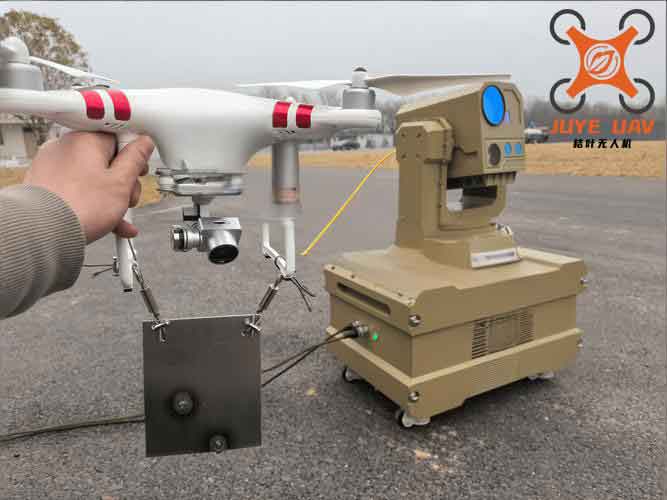
Anti-UAV system technology encompasses detection, tracking, destruction, jamming, and deception. The core of such a system lies in radar detection equipment, which identifies UAVs and other low-altitude targets, transmitting their positional data to a command center. The command center assesses the threat level and directs countermeasure devices to implement actions such as forced landing, jamming, or destruction. For instance, in airport security, this ensures the safety of the airspace. Current detection and tracking primarily rely on ground-based radars targeting micro-consumer UAVs like the DJI Phantom 4 series. The circular array radar, with its circular antenna and electronic scanning in azimuth, offers advantages such as compact size, high integration, and enhanced capability to detect small UAVs. Compared to traditional mechanically scanned radars, it provides higher data rates and enables search-while-track functionality, ensuring stable and precise tracking for anti-UAV operations.
Countermeasure techniques include destruction, jamming, and deception. Based on the actual threat posed by a target, measures such as forced landing, expulsion, net capture, or kinetic destruction are employed to physically neutralize the UAV. The effectiveness of these countermeasures hinges on accurate detection and tracking, which is where circular array radar excels. In my experience, integrating these components into a cohesive system is critical for robust anti-UAV defense.
Technical Foundations of Anti-UAV Systems
The functionality of an anti-UAV system revolves around detecting flying targets, generating positional information (azimuth, range, altitude), and relaying this data to a surveillance and command system. The command system then uses electro-optical devices for precise tracking and identification, enabling countermeasures like warning, directional jamming, spoofing, or striking. Additionally, anti-UAV systems can locate UAVs and their operators, provide video evidence, and support storage and playback. Key characteristics include modular design using mature technologies like small radar, electro-optics, and radio frequency detection, enabling all-round search and tracking with continuous operation. The system offers multi-dimensional monitoring, automatic target positioning, and flexibility in deployment via fixed or mobile setups. Networking capabilities allow for comprehensive coverage across critical areas, with configurable components like radar, electro-optics, and jammers.
To quantify detection performance, the radar range equation is fundamental. For a circular array radar detecting a small UAV, the received power \(P_r\) can be expressed as:
$$P_r = \frac{P_t G_t G_r \lambda^2 \sigma}{(4\pi)^3 R^4 L}$$
where \(P_t\) is the transmitted power, \(G_t\) and \(G_r\) are the transmit and receive antenna gains, \(\lambda\) is the wavelength, \(\sigma\) is the radar cross-section (RCS) of the UAV, \(R\) is the range to the target, and \(L\) represents system losses. For small UAVs, \(\sigma\) is typically very low (e.g., 0.01 m² for a micro-UAV), necessitating high sensitivity in the radar. Circular array radars mitigate this by using high pulse repetition frequencies (PRF) and advanced signal processing.
Another critical aspect is the Doppler effect for velocity measurement. The Doppler frequency shift \(f_d\) is given by:
$$f_d = \frac{2v}{\lambda}$$
where \(v\) is the radial velocity of the target. This allows the radar to distinguish moving UAVs from clutter. Circular array radars employ high-PRF waveforms to enhance Doppler resolution, crucial for tracking slow-moving UAVs in cluttered environments.
| Feature | Circular Array Radar | Traditional Mechanically Scanned Radar |
|---|---|---|
| Scanning Method | Electronic scanning (phased array) | Mechanical rotation |
| Data Rate | High (e.g., 10-30 Hz) | Low (e.g., 1-5 Hz) |
| Target Tracking | Search-while-track, multi-target | Sequential scan, limited tracking |
| Size and Weight | Compact, lightweight | Bulky, heavier |
| Detection Capability for Small UAVs | Excellent (low RCS detection) | Moderate to poor |
| Deployment Flexibility | High (fixed, mobile, networked) | Low to moderate |
System Composition and Working Principle
Based on functional requirements, a typical anti-UAV system comprises radar, radio frequency detection, electro-optical devices, target classification, command system, and countermeasure systems. The circular array radar serves as the cornerstone, providing continuous detection of small UAVs in complex environments. Its working principle involves transmitting signals, receiving echoes, and processing data to extract target information.
The system operates as follows: the circular array radar detects flying targets and sends positional data to the command system. This information guides electro-optical devices to acquire and identify the target via video, assessing threat levels. Radio frequency detection passively monitors UAV communication, control, and GPS signals, fusing data with radar inputs. The command system integrates GPS for geo-referencing, displaying targets on a map. For confirmed threats, countermeasure devices are activated to jam or destroy the UAV. This integrated approach ensures a layered defense for anti-UAV operations.
Anti-UAV System Based on Circular Array Radar
The architecture of an anti-UAV system centered on circular array radar includes the radar itself, electro-optical equipment, a command control system, jamming devices, and GPS. This configuration enables seamless coordination for detection, tracking, and neutralization. The workflow begins with the circular array radar scanning the airspace. Upon detection, it provides real-time coordinates to electro-optical units for visual confirmation. The command system evaluates the threat and, if necessary, issues jamming commands to disrupt UAV control links or GPS, forcing a landing or return.
Circular array radars are characterized by their digital beamforming capabilities, allowing for high-resolution azimuth and elevation estimation. They use high-PRF Doppler processing to detect micro-UAVs in strong clutter, with modes like medium data rate search and high data rate tracking. This ensures both wide-area coverage and precise tracking. Key advantages include high resolution, accuracy, strong tracking ability, and compact design. They operate on low-voltage systems, support multi-platform installation, and feature rapid deployment. The integrated processing modules handle radar control, digital beamforming, anti-jamming, signal processing, and data processing, all networked for easy integration.
From a technical standpoint, the digital beamforming in circular array radar can be modeled as follows. For an array with \(N\) elements, the beamformed output \(y(t)\) for a direction \(\theta\) is:
$$y(t) = \sum_{n=1}^{N} w_n x_n(t) e^{-j 2\pi d_n \sin(\theta) / \lambda}$$
where \(w_n\) are the complex weights for beam steering, \(x_n(t)\) are the received signals at each element, and \(d_n\) is the element spacing. This enables rapid electronic scanning and adaptive nulling against interference, crucial for anti-UAV scenarios where jamming might be present.
| Subsystem | Function | Key Parameters |
|---|---|---|
| Antenna and Feed | Radiates and receives signals | Circular array, T/R modules |
| Transmitter | Generates high-power RF signals | Peak power, PRF, bandwidth |
| Digital Receiver | Downconverts and digitizes echoes | Sampling rate, dynamic range |
| Signal Processing | Pulse compression, MTI, detection | Algorithms for clutter rejection |
| Data Processing | Track formation, filtering | Kalman filters, data fusion |
| Power Supply | Provides operational power | Low-voltage, portable options |
The circular array radar system consists of antenna, feed, transmitter, digital receiver, integrated processing, and power subsystems. Upon power-up, self-tests are conducted, and once operational, the transmitter generates RF signals amplified by power amplifiers and radiated via T/R components through column-fed antennas. Azimuth scanning is achieved through multi-channel switching. In reception, echo signals are amplified, filtered, mixed, and sampled to produce I/Q baseband signals. Digital beamforming then applies pulse compression, moving target indication (MTI), and detection. The resulting plots are processed into tracks, displayed with azimuth, range, and altitude data. This process is continuous, enabling persistent surveillance for anti-UAV missions.
System Deployment Modes
Anti-UAV systems based on circular array radar can be deployed in fixed or mobile configurations. In fixed-station mode, multiple radars are networked around critical areas like airports or nuclear plants, expanding coverage. This mode integrates electro-optics, radio frequency detection, jammers, and kinetic systems for comprehensive defense. In mobile vehicle-mounted mode, the radar’s portability allows quick setup on升降 platforms for temporary security at events or as a supplement to fixed sites. This mode typically includes a generator, batteries, electro-optics, GPS, and jammers, offering flexibility for rapid response. Both modes leverage the radar’s networking capability for coordinated anti-UAV operations.
To illustrate the performance, consider a detection test using a DJI Phantom 4 as a target. The circular array radar detected the UAV at approximately 110 degrees azimuth, automatically transitioning to track mode. It maintained stable, high-data-rate tracking at long ranges, enabling precise guidance for electro-optical confirmation and jamming. Compared to traditional radars, it showed superior tracking continuity, accuracy, and data rate. This underscores its efficacy in real-world anti-UAV applications.
Advanced Technical Analysis
Delving deeper into the signal processing, the detection of small UAVs requires sophisticated clutter suppression. The signal-to-clutter ratio (SCR) can be enhanced using MTI filters. For a pulse-Doppler radar, the improvement factor \(I\) for a clutter cancellation filter is given by:
$$I = \frac{\sigma_c / \sigma_n}{\sigma_c’ / \sigma_n’}$$
where \(\sigma_c\) and \(\sigma_n\) are the clutter and noise power before filtering, and \(\sigma_c’\) and \(\sigma_n’\) are after filtering. Circular array radars often use adaptive MTI to handle varying clutter environments, crucial for low-altitude UAV detection.
Moreover, the radar’s ability to track multiple targets simultaneously relies on data association algorithms. In a dense environment, the probabilistic data association (PDA) filter can be employed. The track update equation for a target state \(\mathbf{x}_k\) at time \(k\) is:
$$\mathbf{x}_k = \mathbf{F}_k \mathbf{x}_{k-1} + \mathbf{K}_k (\mathbf{z}_k – \mathbf{H}_k \mathbf{F}_k \mathbf{x}_{k-1})$$
where \(\mathbf{F}_k\) is the state transition matrix, \(\mathbf{H}_k\) is the observation matrix, \(\mathbf{K}_k\) is the Kalman gain, and \(\mathbf{z}_k\) is the measurement. This ensures robust tracking even with false alarms, a common challenge in anti-UAV scenarios.
Another key aspect is the integration of sensor data. For an anti-UAV system, fusion of radar, electro-optical, and RF detection data improves classification accuracy. A simple fusion rule for target identification might use Bayesian inference. If \(P(R|U)\) is the probability of radar detection given a UAV, and \(P(E|U)\) for electro-optical, the combined probability \(P(U|R,E)\) is proportional to \(P(R|U)P(E|U)P(U)\), where \(P(U)\) is the prior probability of a UAV. This multi-sensor approach reduces false positives and enhances threat assessment.
| Metric | Typical Value | Impact on Anti-UAV Effectiveness |
|---|---|---|
| Detection Range for Micro-UAV | 5-10 km | Enables early warning and response |
| Azimuth Accuracy | < 0.5 degrees | Precise guidance for countermeasures |
| Update Rate | 10-30 Hz | High data rate for dynamic tracking |
| RCS Sensitivity | 0.01 m² or lower | Detects small, stealthy UAVs |
| Power Consumption | 200-500 W | Suits portable and fixed deployments |
| Network Latency | < 100 ms | Ensures real-time command and control |
In terms of countermeasures, jamming effectiveness depends on the jamming-to-signal ratio (JSR). For a UAV control link, the JSR at the UAV receiver can be approximated as:
$$JSR = \frac{P_j G_j G_u \lambda^2}{(4\pi R_j)^2 L_j} \div \frac{P_c G_c G_u \lambda^2}{(4\pi R_c)^2 L_c}$$
where \(P_j\) and \(P_c\) are jamming and communication powers, \(G_j\) and \(G_c\) are antenna gains, \(R_j\) and \(R_c\) are distances, and \(L_j\) and \(L_c\) are losses. By maximizing JSR through directional jamming, the anti-UAV system can disrupt UAV operations effectively.
Future Directions and Challenges
As UAV technology evolves, so must anti-UAV systems. Future developments may include cognitive radar techniques, where the radar adapts its waveform based on the environment and target behavior. This can be modeled using reinforcement learning, where an agent selects waveform parameters to maximize a reward function \(R\) related to detection probability and false alarm rate. Additionally, integrating artificial intelligence for target recognition from radar and electro-optical data will enhance autonomous anti-UAV responses. Challenges remain, such as dealing with swarms of UAVs, which require advanced multi-target tracking algorithms like multi-hypothesis tracking (MHT). The circular array radar’s high data rate and electronic scanning make it a promising platform for addressing these challenges.
In conclusion, the advancement of detection and countermeasure technologies has significantly propelled the development of anti-UAV systems. Circular array radar, with its advanced phased-array design, offers superior performance in detecting and tracking small, low-altitude UAVs compared to traditional radars. Its application in anti-UAV systems provides reliable information assurance for security operations in critical areas. From my perspective, the integration of high-PRF Doppler processing, digital beamforming, and networked deployment makes it a cornerstone of modern anti-UAV defenses. As threats evolve, continuous innovation in radar technology will be essential to maintain effective anti-UAV capabilities, ensuring the safety of airspace in an increasingly unmanned world.