
The contemporary battlefield is undergoing a profound transformation, one that directly challenges the foundational assumptions of U.S. military dominance. From my analytical perspective, the proliferation and tactical employment of Unmanned Aerial Vehicles (UAVs) by state and non-state actors represent not merely an emerging threat, but a fundamental shift in the character of warfare. The evidence from conflicts in Syria, Ukraine, and Nagorno-Karabakh is unequivocal: low-cost, commercially available drones have democratized aerial surveillance and precision strike capabilities, eroding the traditional advantages held by technologically superior forces. For the first time in over six decades, the U.S. Army faces a credible, persistent aerial threat from peer and non-peer adversaries that its current air defense architecture is ill-equipped to counter. This reality necessitates the urgent development and implementation of a holistic, multi-faceted anti-UAV strategy—a framework integrating novel technologies, revised organizational constructs, and revitalized soldier training to reclaim initiative in contested airspace.
The threat landscape is defined by rapid technological diffusion and adaptive use patterns. UAVs can no longer be categorized simply as military assets; the line between commercial and military systems has blurred beyond recognition. This evolution presents a multi-dimensional challenge that any effective anti-UAV strategy must dissect and address.
| UAV Category | Cost & Accessibility | Primary Capabilities | Typical Users | anti-UAV Challenge |
|---|---|---|---|---|
| Hobbyist/Commercial (Group 1) | <$3,000; ubiquitous | ISR, tracking, payload drop (improvised) | Non-state actors, insurgents, infantry squads | Low radar cross-section, swarm potential, saturation attacks |
| Tactical Military & Commercial (Group 2-3) | $10k – $250k; exportable | Persistent ISR, precision strikes (armed variants) | State militaries, advanced non-state actors | Greater endurance/payload, improved sensors, networked operations |
| Strategic MALE/HALE (Group 4-5) | Millions; significant infrastructure | Strategic ISR, long-endurance strike | Major state militaries (U.S., China, Israel, etc.) | High-altitude operations, sophisticated countermeasures |
| Loitering Munitions / “Kamikaze” Drones | $10k – $50k (approx.) | Precision strike against high-value targets | State and non-state actors (Russia, Iran, etc.) | Low/slow flight profile, terminal dive maneuver, mass deployment |
The core of the anti-UAV problem lies in the asymmetric cost-exchange ratio. Adversaries can field dozens or hundreds of small UAVs for the cost of a single advanced interceptor missile. This creates a severe economic and logistical dilemma for traditional air defense. For instance, engaging a $500 commercial quadcopter with a $300,000 Patriot missile is not only inefficient but unsustainable. The mathematical reality is stark:
$$C_{exchange} = \frac{C_{interceptor} + C_{opportunity}}{C_{UAV}}$$
Where a favorable $C_{exchange}$ (much less than 1) for the defender is nearly impossible against low-cost UAV swarms using high-end kinetic interceptors. This necessitates a paradigm shift from pure kinetic “hard-kill” solutions to a layered defense incorporating “soft-kill” and disruptive technologies.
The operational innovation demonstrated by adversaries compounds the technical challenge. In Ukraine, the integration of tactical UAVs with artillery forces created a devastatingly effective sensor-to-shooter loop, decimating formations that lacked counter-UAV (C-UAV) capabilities. Iranian-designed systems have showcased range and persistence, while non-state actors have evolved from simple reconnaissance to coordinated attacks using weaponized commercial drones. The next frontier—UAV “swarms”—poses an existential challenge. A swarm of autonomous or semi-autonomous drones can overwhelm defenses through sheer numbers and coordinated maneuvers. Defeating a swarm requires systems that can address multiple concurrent threats. The threat density over time can be modeled as:
$$\Lambda(t) = \sum_{i=1}^{N} \delta(t – t_i) \cdot s_i$$
where $\Lambda(t)$ is the threat arrival process, $N$ is the total number of UAVs in a wave, $t_i$ are their arrival times, and $s_i$ represents their individual threat score based on payload and capability. A robust anti-UAV system must have a high probability of defeat $P_d$ against such a distributed threat.
From my assessment, the U.S. Army’s historical divestment of short-range air defense (SHORAD) capabilities, based on an assumption of uncontested air superiority, has created a critical vulnerability. The existing path is inadequate. While efforts to upgrade systems like the Avenger and Stinger are steps in the right direction, they are incremental solutions to a disruptive problem. A truly comprehensive anti-UAV strategy must be built on three interdependent pillars: Soldier, Equipment, and Software/Integration solutions.
Pillar 1: The Soldier Solution – Regaining Core Competencies
The human element remains the most adaptable and immediately actionable component of an anti-UAV strategy. Decades of operations in permissive airspace have atrophied the Army’s collective skills in passive and active air defense. Soldiers and leaders at all levels must be re-trained to operate, survive, and fight effectively in a UAV-saturated environment. This goes beyond operating a new weapon; it requires a cultural shift where UAV detection triggers immediate, disciplined responses. Training must emphasize:
- Passive Air Defense: Reinforcing skills in camouflage, concealment, deception (CCD), dispersion, and hardening of positions. The goal is to reduce the electromagnetic, visual, and thermal signature of forces, making detection and targeting by UAVs significantly harder.
- Recognition and Reporting: Every soldier must be a sensor. Training must instill the ability to visually and awrally identify different UAV types and understand their likely mission profiles (ISR vs. attack). A standardized, rapid reporting protocol is essential for building a common operational picture.
- Integrated Tactical Response: Drills must be developed for units to react to UAV detection with pre-planned movements, electronic silence protocols, and the activation of appropriate countermeasures, whether electronic or kinetic.
The Army’s response to the IED threat provides a relevant model. A similar, institution-wide focus—embedding counter-UAV (C-UAV) TTPs into collective training at combat training centers—is urgently required to build muscle memory and tactical proficiency.
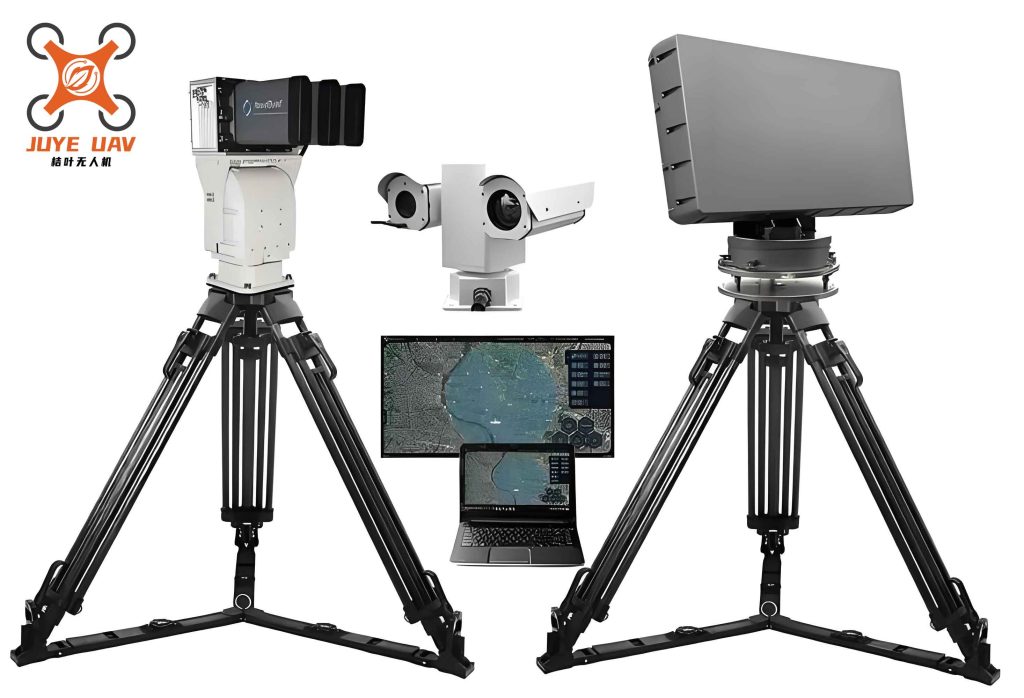
Pillar 2: The Equipment Solution – A Layered, Multi-Domain Approach
No single “silver bullet” system can counter the full spectrum of UAV threats. The solution lies in a tiered, integrated family of systems that can detect, identify, track, and defeat UAVs from the squad level to the division level. The focus must be on cost-effective solutions that invert the adversarial cost-exchange ratio.
| Defense Layer | Technology / System | Engagement Range | Mechanism of Action | Target UAV Type |
|---|---|---|---|---|
| Detection & Tracking | Enhanced radar software (AESA), Electro-optical/Infrared (EO/IR), Acoustic sensors, Radio Frequency (RF) detection | Long to Medium | Provide early warning, classification, and fire control quality tracks. | All, emphasis on low-RCS small UAVs |
| Soft-Kill / Electronic Attack | Directed RF Jammers, GNSS Spoofers, Co-opted Control Link Takeover | Medium to Short | Disrupt, deceive, or seize control of the UAV’s navigation, communication, or control link. | Commercial & lower-tier military UAVs |
| Hard-Kill / Kinetic | High-Power Microwave (HPM), High-Energy Laser (HEL), Mesh Nets, Affordable Interceptors (e.g., Coyote), Modified Air Defense Artillery | Short to Point-Blank | Physically destroy or disable the UAV airframe. | All, particularly resilient or swarming threats |
| System Integration | Common C2 Interface (e.g., FAAD C2), AI-enabled Battle Management | N/A | Fuses sensor data, manages effector allocation, and automates threat prioritization. | N/A |
The physics of electronic warfare (EW) offers a potent soft-kill avenue. Jamming aims to raise the noise floor above the signal strength at the UAV receiver. The jamming-to-signal ratio (J/S) required for effective link break is a key metric:
$$(J/S)_{req} = \frac{P_j G_j R_s^2 L_s}{P_s G_s R_j^2 L_j}$$
Where $P$ is power, $G$ is antenna gain, $R$ is range, and $L$ is loss, for the jammer ($j$) and signal source ($s$). Modern, agile frequency-hopping UAV control links require sophisticated, adaptive jammers to achieve this. High-Power Microwave (HPM) weapons offer a scalable hard-kill option against electronics, with potential effects described by:
$$E_{field} \propto \frac{\sqrt{P \cdot G}}{r}$$
Where the induced electric field ($E_{field}$) at the target UAV is proportional to the square root of the power ($P$) and antenna gain ($G$) of the HPM source, and inversely proportional to the distance ($r$). This makes HPM promising for countering dense swarms within a conical engagement volume.
Pillar 3: The Software & Integration Solution – The “Brain” of the System
The most advanced sensors and effectors are useless without the software to integrate them into a coherent, responsive system. The Army’s legacy approach of developing custom hardware for every problem is too slow. The priority must be on developing agile, updatable software for existing platforms and creating an open-architecture command and control (C2) framework.
- Sensor Fusion AI: Machine learning algorithms must be deployed to distinguish small UAVs from birds, clutter, and other false targets in radar and EO/IR feeds. This software-defined capability can be retrofitted to existing systems like the AN/MPQ-64 Sentinel and AN/TPQ-53 radars, dramatically enhancing detection without a wholesale hardware replacement.
- Open Architecture C2: A common interface (like the Forward Area Air Defense Command and Control – FAAD C2) must be evolved to seamlessly integrate data from commercial RF detectors, battalion radars, and drone alerts from frontline troops. It must then be able to task appropriate effectors—whether a battalion-level electronic warfare asset or a platoon’s vehicle-mounted jammer.
- Rapid Prototyping with Industry: The Army Futures Command must leverage partnerships with commercial tech firms through models like SOFWERX. Competitions and challenges can spur innovation in AI-driven threat classification, swarm counter-algorithms, and low-cost effector design, bypassing traditional, ponderous acquisition cycles.
| Challenge | Current Limitation | Proposed Software-Centric Pathway |
|---|---|---|
| Detection of Low-RCS UAVs | Legacy radar algorithms filter out slow, small signatures as clutter. | Develop & deploy ML-based detection algorithms via software update to existing AESA radars. |
| Battle Management of Swarms | Human operators cannot track or prioritize 100+ concurrent threats. | AI-enabled decision aids that recommend optimal effector pairing and engagement sequences in seconds. |
| System Interoperability | Proprietary systems from different vendors cannot share data or commands. | Mandate open API standards in new procurements; develop middleware translation layers for legacy systems. |
| Rapid Threat Library Updates | New UAV RF signatures or flight profiles require lengthy system re-tuning. | Cloud-based threat intelligence repository that pushes signature updates to fielded systems automatically. |
In conclusion, the imperative for a comprehensive U.S. Army anti-UAV strategy is clear and present. The convergence of technological accessibility, adversary innovation, and evolving doctrinal use has created a vulnerability that could prove decisive in future peer conflicts. The path forward cannot rely on resurrecting old systems or awaiting a single technological miracle. It demands a tripartite focus: forging soldiers who are culturally and tactically prepared for the UAV challenge; fielding a layered, cost-effective suite of detection and defeat mechanisms that leverage both kinetic and non-kinetic effects; and underpinning it all with intelligent, integrated software that provides decision superiority. This anti-UAV framework is not just about defending against drones; it is about preserving freedom of maneuver, protecting force integrity, and ensuring the Army can fight and win on the battlefields of tomorrow, which will undoubtedly be teeming with eyes and weapons in the sky. The time for a cohesive, relentless focus on dominating the anti-UAV fight is now.