
Since their inception, civilian drones, or Unmanned Aircraft (UA), have undergone a transformative journey. Originally conceived and developed for military purposes, these remotely piloted or autonomous systems have, over recent decades, proliferated into the civil sector at an unprecedented rate. The 1980s marked the beginning of wider research and application across various civilian domains globally. Entering the 21st century, the market demand for civilian drones has surged exponentially. As a major producer, user, and consumer nation, the development of civilian drones in my country has been particularly rapid and groundbreaking. However, this swift integration into economic and social life, while bringing immense convenience and fostering growth, has concurrently unveiled a spectrum of significant public security challenges and hidden dangers. From the perspective of both national security and the maintenance of domestic social stability, these issues warrant urgent and serious attention from regulatory bodies and the academic community.
Understanding and Evolution of Civilian Drones
An Unmanned Aircraft (UA), also known as a Remotely Piloted Aircraft (RPA), is defined as an aircraft operated without a pilot on board, managed from a control station through remote control or autonomous programming. The concept dates back further than many realize, with the first successful test flight of an unmanned aircraft occurring in the United States in 1909. Initially driven almost exclusively by military objectives, the technology has progressively expanded into non-military spheres alongside advancements in electronics, materials science, and data communication.
The classification of civilian drones is multifaceted, based on parameters such as application scenario, platform design, control method, visual line-of-sight (VLOS/BVLOS), weight, operational altitude, and mission radius. From a usage domain perspective, a fundamental bifurcation exists:
$$ \text{UAV}_{\text{total}} = \text{UAV}_{\text{military}} + \text{UAV}_{\text{civil}} $$
where $\text{UAV}_{\text{civil}}$ can be further decomposed into:
$$ \text{UAV}_{\text{civil}} = \text{UAV}_{\text{consumer}} + \text{UAV}_{\text{industrial}} $$
Consumer-grade civilian drones cater to personal aerial photography, filmmaking, and recreational use. Industrial-grade civilian drones serve professional functions including infrastructure inspection, public safety surveillance, agricultural monitoring, surveying, and law enforcement support. Currently, the most explosive growth and, consequently, the primary source of emerging governance issues, lies within the consumer-grade segment.
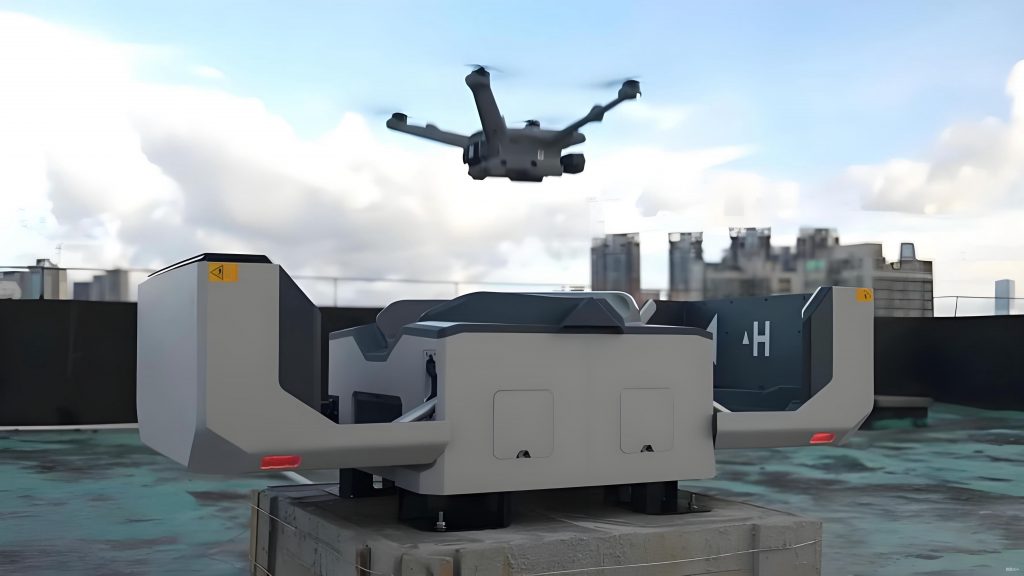
The domestic trajectory of civilian drone development began with foundational research in the mid-20th century. The real breakthrough into the commercial market, however, occurred around 2012, led by companies making high-performance, user-friendly multirotor systems accessible to the masses. This democratization of aerial technology spurred a booming industry, with the consumer market alone estimated at approximately 18 billion RMB in 2018 and projected for continued significant growth. The following table summarizes key milestones in this evolution:
| Era | Key Development | Impact on Civilian Sector |
|---|---|---|
| Early-Mid 20th Century | Initial military R&D and prototyping in the US, UK, Germany. | Laid the foundational technological principles. |
| 1950s-1970s | Domestic research institutions develop first unmanned systems. | Established indigenous technical capability. |
| 1980s-2000s | Gradual global spillover of technology into civil applications; early low-end commercial products appear. | Birth of dedicated civilian drone market segments (e.g., agricultural, surveying). |
| Post-2006 | Proliferation of private enterprises and some state-owned entities entering the civilian drone field. | Market expansion and diversification of applications. |
| Post-2012 | Consumer-grade multirotor drones achieve mass-market success, driven by key industry players. | Explosive growth, widespread public adoption, and the center of emerging regulatory challenges. |
The operational model of a typical civilian drone system involves several integrated components, which can be conceptually modeled. The core flight dynamics, simplified for a multirotor, relate thrust ($T$) to achieve lift against gravity ($mg$) and overcome drag ($D$). For a hover state:
$$ \sum T = mg + D $$
where $T = k \cdot \omega^2$ for each rotor, with $k$ as a thrust constant and $\omega$ as rotational speed.
The data link integrity, crucial for control, can be expressed as a probability of successful transmission $P_s$:
$$ P_s = 1 – \left(1 – e^{-\gamma / \Gamma_0}\right)^N $$
where $\gamma$ is the signal-to-noise ratio, $\Gamma_0$ is a threshold, and $N$ represents packet transmission attempts.
Public Security Challenges Posed by Civilian Drones
The very attributes that make civilian drones valuable—their agility, remote operation, ease of use, and relative low cost—also render them potent tools for disruption and vectors for new threats to public safety. The following sections delineate the primary areas of concern.
Disruption of National Airspace Order and Aviation Safety
Airspace is a sovereign national resource and a critical component of public infrastructure. The unauthorized or negligent operation of civilian drones, often termed “rogue flights,” poses a severe hazard to manned aviation, particularly in proximity to airports. Incidents of drones causing near-misses, necessitating evasive maneuvers, or leading to full-scale airport ground stops and diversions have become alarmingly frequent worldwide. The risk of a catastrophic collision is a paramount concern for aviation authorities. The kinetic energy upon impact at high speeds is given by:
$$ E_k = \frac{1}{2} m v^2 $$
where $m$ is the mass of the drone and $v$ is the relative closure velocity. Even a small civilian drone can cause critical damage to an aircraft engine or windshield.
Enabling Criminal Activities
Civilian drones are increasingly being co-opted for illicit purposes. Their ability to bypass traditional ground-based security measures makes them attractive for smuggling contraband, such as drugs, mobile phones into prisons, or other illicit goods across borders. The payload capacity of many consumer models, while limited, is sufficient for high-value, low-weight items. More dangerously, they can be weaponized or used as platforms for targeted attacks. Instances globally include drones carrying explosives, incendiaries, or even modified to discharge firearms. The probability of successful interdiction of such a threat ($P_{intercept}$) is inversely related to the low-altitude, low-radar-signature profile of small civilian drones:
$$ P_{intercept} \propto \frac{1}{RCS \cdot h} $$
where $RCS$ is the radar cross-section and $h$ is the operational altitude (often very low).
The Looming Threat of Drone-Enabled Terrorism
The potential for non-state actors and terrorist organizations to leverage civilian drone technology presents a profound security challenge. Drones offer a low-cost, high-impact, and deniable means of surveillance, attack, or provocation. Their commercial availability and ease of modification lower the barrier to entry for carrying out asymmetric attacks against critical infrastructure (power grids, communication hubs), public gatherings, or symbolic government facilities. The cost-benefit analysis for a malicious actor is compelling: a weaponized consumer drone represents a minimal financial investment for potentially massive disruptive or psychological returns. The risk assessment model must now account for this new vector:
$$ \text{Risk}_{\text{terror}} = \text{Likelihood}_{\text{acquisition}} \times \text{Likelihood}_{\text{deployment}} \times \text{Impact}_{\text{potential}} $$
All three factors are significantly elevated due to the proliferation of advanced civilian drones.
Proliferation of Civil Torts and Social Disputes
Beyond deliberate malfeasance, the widespread use of civilian drones has led to a surge in accidents and privacy violations, creating new social frictions and legal liabilities.
- Physical Injury and Property Damage: Crashes due to operator error, mechanical failure, or environmental factors (e.g., wind, loss of GPS) can cause direct harm to individuals on the ground or damage to property, vehicles, and critical infrastructure like power lines.
- Invasion of Privacy: Equipped with high-resolution cameras, drones can easily peer into private spaces—backyards, windows, and other areas where individuals have a reasonable expectation of privacy. This capability challenges existing privacy laws and norms.
- Nuisance and Public Disturbance: Noise pollution, perceived surveillance, and unsafe flying in parks or residential areas contribute to public anxiety and community disputes.
The table below summarizes the typology of incidents and their primary impacts:
| Incident Category | Typical Manifestations | Primary Public Security Impact |
|---|---|---|
| Airspace Violation | Unauthorized flights near airports, in controlled airspace, over sensitive facilities. | Endangers manned aviation, risks catastrophic loss of life, disrupts critical transportation networks. |
| Criminal Misuse | Smuggling (drugs, contraband); Weaponization (explosives, projectiles); Vandalism. | Undermines law enforcement, creates new avenues for organized crime, threatens direct physical harm. |
| Terrorist Tool | Surveillance of targets; Delivery of explosive payloads; Chemical/Biological agent dispersal. | High-impact asymmetric threat to national security and critical infrastructure. |
| Accident & Negligence | Mid-air collisions; Ground impact causing injury or property damage; Loss of control in crowds. | Creates public safety hazards, leads to civil litigation, erodes public trust in technology. |
| Privacy Infringement | Unauthorized aerial filming/photography of private properties, individuals in secluded settings. | Violates personal liberties, can enable stalking or blackmail, challenges legal frameworks. |
Governance Framework for Civilian Drones: A Multidimensional Approach
Addressing the complex challenges posed by civilian drones requires a holistic and proactive governance strategy. This strategy must balance innovation and economic benefit with safety, security, and privacy. A robust framework rests on four interdependent pillars: Regulatory Architecture, Legal Codification, Technological Countermeasures, and Enforcement & Education.
Pillar 1: Building a Cohesive Regulatory and Management Ecosystem
Effective management of civilian drones spans their entire lifecycle: design, production, sale, operation, and decommissioning. It involves governing the “object” (the drone itself), the “environment” (the airspace), the “actor” (the pilot/operator), and the “event” (incident response). Currently, oversight is fragmented across multiple agencies with interests in aviation, industry, commerce, telecommunications, and public security. A siloed approach leads to gaps and inefficiencies.
The solution lies in top-down, national-level design to clarify mandates and foster inter-agency collaboration. A lead agency, often the civil aviation authority, should coordinate with others to create unified technical standards, operational rules, and enforcement protocols. This ecosystem can be visualized as a matrix of responsibilities:
| Lifecycle Stage | Key Regulatory Focus | Example Responsible Entities |
|---|---|---|
| Design & Production | Type certification, safety standards, geofencing capabilities, remote ID requirements. | Aviation Authority, Standards Body, Ministry of Industry. |
| Sale & Distribution | Retailer licensing, buyer registration/verification, mandatory safety information. | Market Regulator, Aviation Authority, Law Enforcement. |
| Operation & Use | Pilot licensing/training, airspace zoning (No-Fly Zones, U-Space), flight planning/approval. | Aviation Authority, Air Force, Local Government. |
| Monitoring & Enforcement | Detecting non-compliant flights, investigating incidents, administering penalties. | Aviation Authority, Law Enforcement, Air Traffic Control. |
Pillar 2: Strengthening the Legal and Regulatory Foundation
Existing aviation laws are primarily designed for manned aircraft and often lack the specificity needed for civilian drones. While regulatory bodies have issued administrative rules on registration, operator requirements, and operational limits, these often lack the force and comprehensiveness of national legislation. A dedicated legal framework is essential.
Key legislative actions should include:
- Enacting a Comprehensive National Law: A single, overarching statute governing Unmanned Aircraft Systems in civil airspace. This law should define rights, responsibilities, and provide clear legal basis for all subsidiary regulations.
- Clarifying Liability and Penalties: Explicitly defining civil, administrative, and criminal liability for offenses such as endangering aviation safety, illegal surveillance, weaponization, and negligent causing of harm. Penalties must be proportionate and deterrent.
- Embedding Privacy Protections: Updating privacy laws to explicitly address aerial surveillance by private actors, establishing clear boundaries for permissible observation from civilian drones.
The relationship between rule violation, detection, and penalty can be conceptualized as a deterrent function $D$:
$$ D = P(\text{detection}) \times S(\text{penalty severity}) \times C(\text{enforcement certainty}) $$
A robust legal framework increases $S$ and $C$, thereby raising the overall deterrent effect $D$.
Pillar 3: Empowering Enforcement through Technology and Proactive Policing
Law enforcement agencies are the front line for responding to and preventing drone-related incidents. Their effectiveness depends on legal authority, technical tools, and proactive strategies.
A. Drone Countermeasure (Counter-UAS) Technology: Agencies must develop and deploy a toolkit to detect, identify, track, and, when necessary, mitigate rogue drones. Technologies include:
- Radio Frequency (RF) Monitoring & Jamming: Detects control signals and can disrupt the link between pilot and drone. Jamming effectiveness depends on power and frequency agility.
- GNSS Spoofing: Injects false GPS signals to mislead the drone’s navigation system.
- Kinetic Neutralization: Using nets (from another drone or ground launcher), directed-energy weapons, or interceptors.
- Acoustic and Radar Detection: For identifying drones based on sound signature or radar return, especially useful against autonomously navigating drones.
The effectiveness of an RF jamming system can be modeled by the jamming-to-signal ratio ($J/S$) required at the target drone’s receiver:
$$ \frac{J}{S} = \frac{P_j G_j R_s^2 L_s}{P_s G_s R_j^2 L_j} $$
where $P$ is power, $G$ is antenna gain, $R$ is range, and $L$ is loss, for the jammer ($j$) and signal source ($s$).
B. Proactive Public Engagement and Education: Prevention is paramount. Authorities should run public awareness campaigns on safe and legal drone operation, no-fly zones, and privacy etiquette. Implementing mandatory, competency-based online training and testing for all new operators can significantly reduce accidental violations.
C. Investigative Capacity Building: Developing forensic techniques for drones is crucial. This includes data extraction from flight controllers and logs, signal analysis to locate operators, and technical investigation of modified or weaponized systems.
Pillar 4: Leveraging Technology for Compliance, Not Just Control
Technology should also be harnessed to make compliance easier and inherent to the system. This includes:
- Remote Identification (Remote ID): A digital license plate for drones, broadcasting identity, location, and telemetry in real-time. This is foundational for accountability and integrating civilian drones into air traffic management systems.
- Geofencing: Software-based virtual boundaries that prevent drones from entering restricted areas (e.g., airports, prisons, critical infrastructure). Compliance should be mandated at the manufacturing stage for relevant categories of civilian drones.
- Unified Traffic Management (UTM): A cloud-based ecosystem that provides drone operators with information on airspace rules, weather, and other traffic, and enables authorities to monitor and manage low-altitude operations at scale.
The implementation of these technological measures transforms the governance problem from one of pure external enforcement to one of assisted self-governance. The system safety $S_s$ can be seen as a function of both inherent design safety $S_d$ (geofencing, reliability) and operational safety $S_o$ (pilot skill, traffic management):
$$ S_s = f(S_d, S_o) = \alpha \cdot \ln(S_d) + \beta \cdot S_o $$
where $\alpha$ and $\beta$ are weighting coefficients reflecting the importance of design versus operational factors.
Conclusion: Towards a Balanced Future for Civilian Drones
The ascent of civilian drones represents a classic case of disruptive technology outpacing the development of corresponding social and regulatory frameworks. The benefits of these systems for economic productivity, scientific research, emergency response, and creative expression are undeniable and should be fostered. However, the parallel rise in security risks, safety hazards, and privacy intrusions cannot be ignored.
The path forward requires a nuanced, multi-stakeholder approach. Policymakers must craft agile, risk-proportionate laws. Regulatory bodies need to collaborate to build a seamless management ecosystem. Industry has a responsibility to embed safety and security by design. Operators must embrace a culture of responsibility and compliance. Law enforcement requires the legal mandate and technical tools to protect the public.
By investing in the four pillars of governance—cohesive regulation, robust law, empowered enforcement, and enabling technology—societies can harness the tremendous potential of civilian drones while effectively mitigating their risks. The goal is not to stifle innovation but to channel it responsibly, ensuring that the integration of civilian drones into our shared airspace and daily lives enhances, rather than undermines, public safety and security. The equation for sustainable integration is clear:
$$ \text{Sustainable Integration} = \frac{\text{Innovation Potential} \times \text{Safety & Security}}{\text{Regulatory Lag} \times \text{Misuse Risk}} $$
Our collective task is to minimize the denominator and maximize the numerator, securing a future where civilian drones are a trusted and beneficial part of the technological landscape.