
Agricultural drones (agricultural UAVs) significantly enhance efficiency across agricultural operations including crop monitoring, pesticide spraying, seeding, fertilization, and pollination. This analysis leverages global patent data to examine technological evolution, geographical innovation patterns, and competitive landscapes. With 23,496 patent applications analyzed through 2025, key trends emerge that shape the future of precision agriculture.
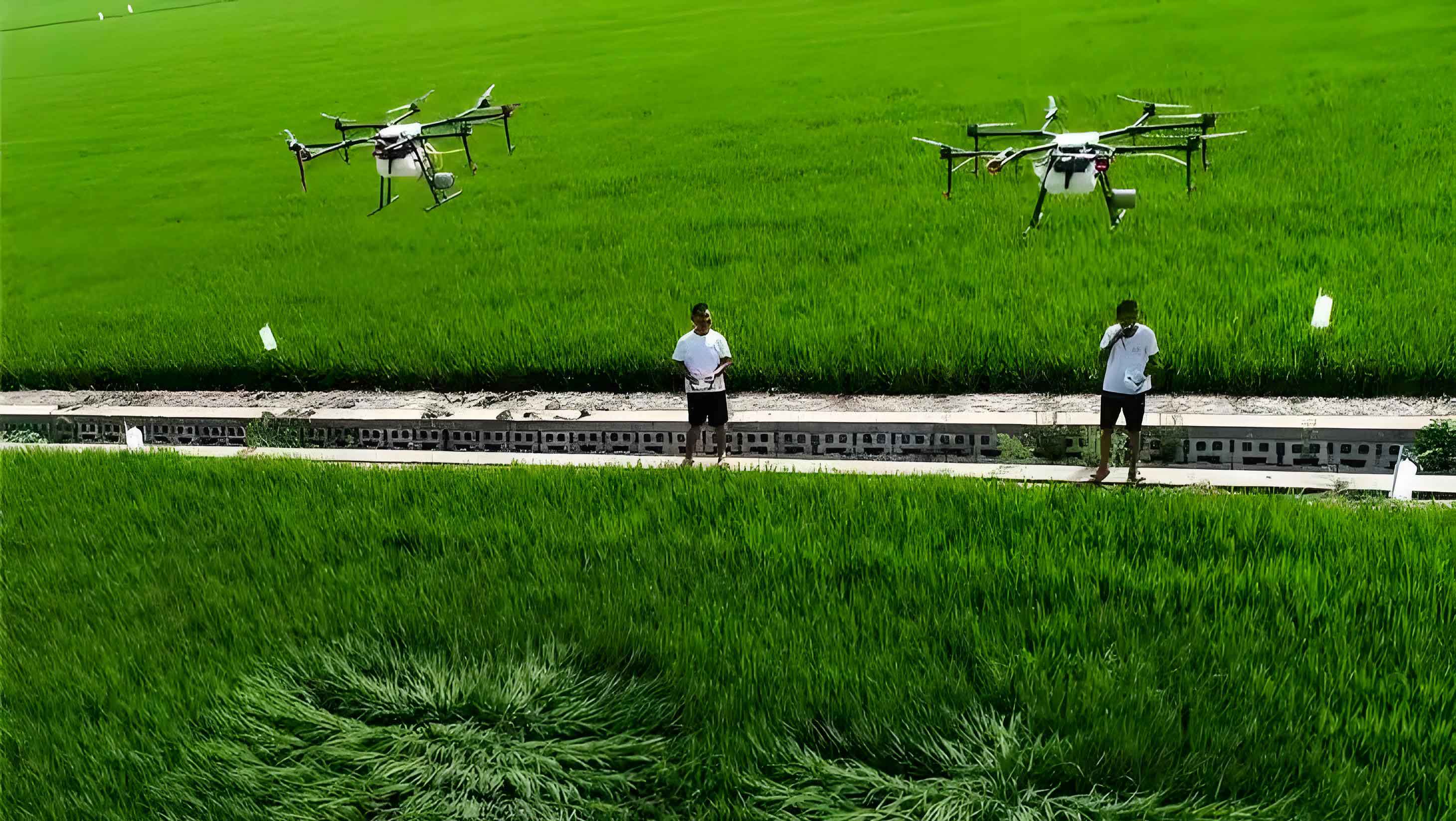
Patent data was sourced from HimmPat’s global database using comprehensive search strategies combining IPC codes like B64D1/18 with keywords including “agricultural drone,” “UAV,” “crop spraying,” and “precision agriculture.” After deduplication and noise reduction, quantitative analysis identified three evolutionary phases:
| Development Phase | Time Period | Annual Applications | Key Characteristics |
|---|---|---|---|
| Initial Stage | Pre-2012 | < 50 | Early prototypes, limited commercialization |
| Growth Stage | 2012-2017 | > 100 | Chinese-led innovation surge |
| Maturity Stage | 2018-Present | > 2,000 | Technology diversification, global competition |
The legal status distribution reveals intense market competition:
| Legal Status | Applications | Percentage |
|---|---|---|
| Active Patents | 8,807 | 37.48% |
| Expired/Invalid | 9,875 | 42.03% |
| Under Examination | 4,814 | 20.49% |
Global innovation leadership is concentrated in specific regions, with China dominating patent origination:
$$ \text{China’s Market Share} = \frac{\text{Chinese Applications}}{\text{Global Applications}} \times 100 = \frac{20,206}{23,496} \times 100 \approx 86\% $$
Domestic distribution within China shows coastal-industrial dominance:
| Chinese Province | Agricultural UAV Applications |
|---|---|
| Guangdong | 3,214 |
| Jiangsu | 2,520 |
| Beijing | 1,382 |
| Shandong | 1,361 |
Technology segmentation reveals interdisciplinary convergence:
| IPC Classification | Technology Focus | Application Share |
|---|---|---|
| B64D1 | Aerial payload delivery systems | 22% |
| A01M7 | Pesticide spraying mechanisms | 18% |
| G05D1 | Autonomous navigation algorithms | 15% |
| B64C39 | Specialized airframe designs | 12% |
Innovation velocity follows exponential growth patterns:
$$ \text{Innovation Index}_{(t)} = k \cdot e^{rt} $$
Where \(k\) represents foundational patents and \(r\) the annual growth rate (22.7% since 2012).
Chinese entities dominate global applicant rankings:
| Global Applicant | Agricultural Drone Patents |
|---|---|
| Guangzhou XAircraft Technology | 409 |
| SZ DJI Technology | 349 |
| South China Agricultural University | 270 |
| Nanjing Forestry University | 241 |
Leading international applicants outside China demonstrate specialized approaches:
| International Applicant | Technology Specialization |
|---|---|
| NileWorks (Japan) | Precision spraying in complex terrain |
| Kubota Corporation (Japan) | Flight control integration |
| Bayer AG (Germany) | Chemical delivery systems |
| AirForestry AB (Sweden) | Forestry-specific UAV platforms |
The technology diffusion rate \(D\) across agricultural sectors follows:
$$ D = \frac{N_{\text{adopters}}}{N_{\text{total farms}}} = 1 – e^{-\lambda t} $$
Where \(\lambda\) = 0.34/year, indicating rapid adoption since 2020.
Future agricultural drone development focuses on three vectors:
- Autonomy enhancement through AI navigation systems
- Payload optimization via fluid dynamics modeling
- Swarm coordination algorithms for fleet operations
Strategic recommendations include establishing international patent monitoring systems and accelerating overseas IP protection. The agricultural UAV sector exemplifies technological convergence, with patent analytics revealing shifting innovation epicenters and emerging competitive threats. Continuous IP portfolio development remains critical for maintaining leadership in this rapidly evolving field.