
The accelerating evolution toward intelligent warfare has brought unmanned aerial vehicle (UAV) swarms to the forefront of modern conflict. In recent armed clashes, these systems have demonstrated formidable and disruptive operational capabilities. Coastal cities, by their very nature, occupy a critical and vulnerable position in national defense. They are typically on the frontline, serving as primary economic and cultural hubs while also being high-value, high-priority targets for potential adversaries. The convergence of this strategic vulnerability with the proliferating threat of low-cost, intelligent drone swarms presents a unique and urgent defense challenge. This analysis, therefore, addresses the critical need for effective anti-drone swarm strategies tailored to the complex environment of coastal urban defense. We will dissect the characteristics of swarm-based harassment, synthesize the distinct challenges of the coastal urban battlespace, and propose a comprehensive, multi-layered framework for countering this emerging asymmetric threat.
The operational environment of a coastal city is a nexus of complexity, imposing significant constraints on traditional defense paradigms. Unlike conventional battlefields, the urban littoral zone creates conditions that an adversary can exploit, particularly when using agile systems like drone swarms. We can summarize the primary complicating factors for coastal city defense in the following table:
| Characteristic | Description | Impact on Defense Operations |
|---|---|---|
| Short Reaction Time | High degree of openness with significant foreign national presence; potential for long-term embedded reconnaissance and surveillance by hostile actors facilitating meticulously planned, sudden attacks. | Reduces early warning window; compresses the decision-making and deployment cycle for anti-drone units. |
| Difficult Force Mobility | High urban density with complex street networks, towering structures, and dense civilian population flow. | Impairs rapid movement and repositioning of anti-drone assets (e.g., mobile jammers, kinetic interceptors); limits lines of sight and fields of fire. |
| Constrained Firepower Application | Presence of diplomatic missions, cultural heritage sites, critical economic infrastructure, and dense civilian population. | Severely restricts the use of kinetic effects due to risk of collateral damage, political ramifications, and economic consequences, limiting anti-drone engagement options. |
| Complex Electromagnetic Environment | Saturation of commercial communication signals (5G, Wi-Fi) and numerous RF emitters. | Creates significant background noise, complicating the detection, tracking, and electronic attack against drone swarm command & control links. |
These inherent challenges create a favorable operating environment for adversarial drone swarms. To build an effective anti-drone system, we must first understand the threat’s core characteristics. UAV swarm harassment synthesizes the principles of nuisance raids—harassment, exhaustion, and distraction—with the technical advantages of distributed autonomous systems.
1. Flexible and Diverse Modus Operandi: Swarms transcend traditional categories of fire or maneuver harassment. Through network-enabled coordination, they can execute complex, adaptive tactics. The swarm can act as a cohesive unit to saturate a point defense or disperse to attack multiple targets simultaneously, thereby stretching and confusing anti-drone defenses. Individual drones can be equipped with varied payloads, enabling a single swarm to conduct reconnaissance, electronic warfare, or kinetic strikes. This is exemplified by the dual-use nature seen in conflicts: swarms can infiltrate to identify targets or directly become loitering munitions for自杀式 attacks. The functional flexibility can be modeled as a payload-to-platform cost optimization. Let a swarm \( S \) consist of \( n \) drones. The total capability \( C_{total} \) is not a simple sum but a networked function:
$$ C_{total} = f(n, P_i, N_{graph}) $$
where \( P_i \) is the payload vector for drone \( i \) (e.g., \( P_i = [sensor, jammer, explosive] \)), and \( N_{graph} \) represents the communication network topology that determines cooperative efficacy. An anti-drone strategy must therefore be prepared for a multimodal threat.
2. Persistent and Frequent Action: The economics of swarm warfare enable sustained harassment campaigns. Individual drones are often low-cost and sometimes reusable, making losses tactically acceptable for the attacker. This allows for waves of attacks designed not for decisive destruction but for cumulative attrition—wearing down defenders’ morale, depleting their interceptor inventories, and forcing continuous high-alert status that drains resources. The cost-exchange ratio heavily favors the attacker. If a defender’s interceptor missile costs \( C_d \) and an attacker’s swarm drone costs \( C_a \), with \( C_d \gg C_a \), sustaining a defense against persistent attacks becomes economically unsustainable without complementary, cost-effective anti-drone measures like directed energy or net-based capture.
3. Covert and Sudden Attack Profile: Small and micro-UAVs have low radar cross-sections, minimal acoustic signatures, and can fly nap-of-the-earth, exploiting urban canyon effects for concealment. A swarm’s launch and approach are difficult to detect with traditional sensors. Moreover, its distributed nature means it lacks a single, high-value center of gravity, making pre-emptive strikes difficult. The decision point for a defender is compressed. The probability of successful detection \( P_{det} \) across a sensor network over time \( t \) can be modeled as:
$$ P_{det}(t) = 1 – \prod_{i=1}^{m} (1 – p_i(t, RCS, environment)) $$
where \( p_i \) is the detection probability of sensor \( i \), a function of time, the swarm’s aggregate Radar Cross Section (RCS), and the clutter-prone urban environment. Low \( p_i \) values for individual drones lead to a delayed aggregate \( P_{det} \), resulting in very short tactical warning.
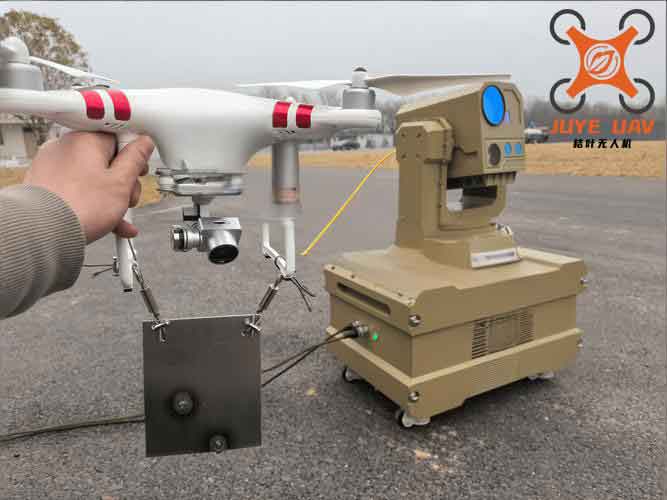
Confronting this threat requires a paradigm shift from reactive, point-defense toward a proactive, integrated, and resilient anti-drone ecosystem. The following framework outlines key pillars for defending coastal cities.
Pillar I: Enhanced ISR and Predictive Awareness – The “Identify” Function
Harassment campaigns, especially with technologically intensive systems like swarms, are not random; they serve deliberate political or military objectives (e.g., demonstrating capability, degrading specific military functions). Superior intelligence and early warning are the foundational elements of effective anti-drone operations. The goal is to shift from “find and engage” to “predict and preempt.”
First, intelligence gathering must be broadened and deepened during the adversary’s preparatory phase. This includes monitoring supply chains for dual-use components, analyzing open-source training data, and employing cyber and human intelligence to understand tactics, techniques, and procedures (TTPs). Second, a multi-domain, fused sensor architecture is non-negotiable. No single sensor type is sufficient. A layered detection grid must integrate data from:
- RF Sensors: To detect communication and navigation signals (GPS, control links).
- Radar (Multiband): Including specialized low-frequency radars for small RCS detection and higher-frequency fire control radars.
- Electro-Optical/Infrared (EO/IR): For visual confirmation, tracking, and classification, enhanced by AI-powered image recognition.
- Acoustic Sensors: Arrays to detect and triangulate unique acoustic signatures of drone motors.
Data fusion occurs at a central Anti-Drone Operations Center (ADOC), where AI algorithms correlate inputs to create a single, coherent track. The fusion process, based on Bayesian inference or Kalman filtering, significantly improves the confidence level and reduces false alarms. The probability of correct identification \( P_{ID} \) after fusion is:
$$ P_{ID} = \frac{ \prod_{k} P(D_k | ID) P_0(ID) }{ \sum_{j} \left[ \prod_{k} P(D_k | ID_j) P_0(ID_j) \right] } $$
where \( P(D_k | ID) \) is the likelihood of sensor k’s data given a specific identity (e.g., “hostile swarm”), and \( P_0(ID) \) is the prior probability. This enables a higher-fidelity Common Operational Picture (COP).
Pillar II: Adaptive Tactical Deployment and Resilience – The “Deter and Deny” Function
Given the constraints of the coastal urban environment, static defense is a recipe for failure. Defenders must leverage their inherent advantages: deep knowledge of the terrain, prepared positions, and the initiative to shape the engagement area. Operational planning must optimize for rapid response within a constrained space.
Deployment should be proactive and intelligence-informed. Key assets are pre-positioned in depth around known high-value targets (HVTs), not just at the point of expected attack. The concept involves creating an anti-drone “dome” through layered zones:
- Outer Disruption Zone: Employ long-range, wide-area electronic warfare (EW) to disrupt swarm formation and navigation at maximum range.
- Middle Engagement Zone: Deploy mobile, networked kinetic and non-kinetic effectors (e.g., microwave systems, laser platforms, interceptor nets) on elevated structures or mobile vehicles.
- Inner Hardening Zone: Focus on passive and active protection of the HVT itself (e.g., hardened shelters, last-dump point defense systems like automated grenade launchers or high-power microwave emitters).
Furthermore, recognizing that some attacks will penetrate, resilience is critical. This involves hardening critical infrastructure, creating redundant C2 nodes, and having rapid reconstitution and damage control teams on standby. The goal is to ensure that the operational impact of a successful swarm penetration is localized and transient. A simplified model for resource allocation across N zones can be expressed as an optimization problem to maximize the overall probability of defeat \( P_d \):
$$ \text{Maximize: } P_d = 1 – \prod_{z=1}^{N} (1 – p_z(n_z, t_z)) $$
$$ \text{Subject to: } \sum_{z=1}^{N} c_z n_z \leq B, \quad \text{and} \quad t_z \leq T_{max,z} $$
where \( p_z \) is the kill probability in zone \( z \), dependent on the number of anti-drone assets \( n_z \) and their engagement time \( t_z \), \( c_z \) is the cost per asset, \( B \) is the total budget, and \( T_{max,z} \) is the maximum allowed engagement time in that zone.
Pillar III: Civil-Military Fusion and Multi-Domain Integration – The “Defeat” Function
The technological and operational demands of countering drone swarms exceed the capacity of any single military branch, let alone the armed forces alone. Coastal cities, often centers of technological and economic prowess, possess vast latent potential in academia, industry, and the civilian population. Unleashing this potential through deep civil-military fusion is the key to achieving decisive anti-drone capabilities.
This fusion operates on two parallel tracks: technological and operational.
| Fusion Track | Measures | Expected Anti-Drone Capability Enhancement |
|---|---|---|
| Technological Fusion | Joint R&D on AI/ML for swarm behavior prediction and automated threat assessment. | Faster, more accurate decision-making for C2 systems. |
| Adapting commercial communications expertise (5G/6G) to develop resilient, anti-jam C2 for friendly forces and to exploit adversarial links. | Superior electronic attack and protection capabilities. | |
| Leveraging robotics and automation companies for developing novel non-kinetic interceptors (net-capture drones, parafoil systems). | Cost-effective, low-collateral damage defeat mechanisms suitable for urban areas. | |
| Operational Fusion | Integrating civilian air traffic control radars and surveillance networks into the military COP. | Expanded early warning coverage and low-altitude air picture. |
| Establishing civilian reporting protocols (e.g., via mobile apps) for suspicious drone activity. | Creates a distributed human sensor network, aiding in tracking and post-event forensics. | |
| Joint training and exercises involving police, emergency services, and critical infrastructure security for coordinated response and consequence management. | Minimizes societal disruption and accelerates recovery after an attack, enhancing overall resilience. |
The integration of defeat mechanisms must be systematic. The following table categorizes the primary anti-drone kill chains and their suitability for the coastal urban environment:
| Defeat Method | Mechanism | Pros for Urban Use | Cons/Risks |
|---|---|---|---|
| Kinetic (Hard-Kill) e.g., missiles, guns, lasers |
Physical destruction of the drone. | High probability of kill; lasers offer precision. | Risk of falling debris; lasers limited by weather/power; high cost-per-engagement for missiles. |
| Non-Kinetic (Soft-Kill) e.g., RF/GPS jamming, spoofing |
Disrupts control, navigation, or communication. | No falling debris; effective against many commercial drones. | Can cause collateral interference to friendly systems; may be less effective against autonomous swarms. |
| Cyber-Electronic e.g., hacking, takeover, EMP |
Seizes control or disables electronics. | Potentially decisive and clean; can capture drone for intelligence. | Highly target-specific; requires advanced intelligence; EMP is indiscriminate and damaging to city infrastructure. |
| Physical Capture e.g., net guns, interceptor drones |
Entangles and captures the drone. | Minimal collateral damage; allows for forensic analysis. | Short range; requires close proximity; challenging against fast, agile swarms. |
The optimal anti-drone strategy employs a dynamic mix of these methods, orchestrated by the ADOC. The engagement sequence can be modeled as a decision tree or a Markov process, where the system transitions between states (Detect, Track, Identify, Decide, Engage, Assess) based on the evolving threat parameters and available resources. The objective is to maximize the overall system effectiveness \( E \) while minimizing cost \( C \) and collateral risk \( R \):
$$ \text{Optimize: } U = \alpha E – \beta C – \gamma R $$
where \( \alpha, \beta, \gamma \) are weighting factors reflecting command priorities, and \( E \) itself is a function of the layered engagement probabilities.
In conclusion, defending coastal cities against drone swarm harassment is not merely a technical problem of shooting down drones. It is a complex, multi-dimensional challenge that sits at the intersection of technology, tactics, and civil society. Success demands a holistic anti-drone framework built on predictive intelligence, adaptive and resilient deployment, and, most critically, deep civil-military fusion. By leveraging the city’s own technological base and human capital to create a pervasive, intelligent, and layered defense network, we can transform the coastal urban environment from a vulnerable target into a denied and decisively defended battlespace. The future of urban defense lies in this integrated, networked, and intelligent approach to the anti-drone fight.