
As a critical form of future warfare, tactical-level integrated joint operations impose stringent requirements on communication network design. These requirements emphasize the rational application of relevant technologies to effectively address issues such as networking and rapid access, thereby providing reliable communication network support for operations. In light of this, 5G communication technology has begun to be employed in military UAVs. From my perspective, the integration of 5G into military UAV systems represents a transformative advancement, enabling unprecedented capabilities in reconnaissance, control, and data transmission. In this article, we delve into the multifaceted impact of 5G on military UAV development, exploring key technologies, system architectures, and application advantages, all while emphasizing the pivotal role of military UAVs in modern defense strategies.
Unmanned Aerial Vehicles (UAVs), commonly known as drones, are aircraft operated without a human pilot onboard, controlled either remotely via radio signals or autonomously through pre-programmed software. Some military UAVs leverage onboard computer systems for intermittent or fully autonomous operations, enhancing their intelligence and adaptability. Over the years, UAV technology has undergone leaps in development, finding extensive applications in military, geological exploration, and other fields, with outstanding value. To better discuss military UAVs, we first analyze the basic landscape of the UAV industry.
Basic Overview of the UAV Industry
The UAV industry has evolved significantly since the first successful test flight in 1917, which led to initial military applications. By the 1990s, UAVs began penetrating civilian sectors, spurred by the emergence of numerous private enterprises that drove industry growth. From an industrial standpoint, the UAV产业链 can be categorized into three segments: support and auxiliary services, hardware manufacturing, and application services. Hardware manufacturing is the core of UAV research and production, encompassing control systems, technical solutions, and airframe fabrication. This segment is relatively mature and commands a dominant share in the global UAV market.
China’s UAV market exhibits robust growth, holding a significant position globally. It is projected that by 2025, China’s civilian UAV market output will exceed 180 billion RMB, with technological research and development becoming more sophisticated, providing reliable guarantees for UAV innovation and application. This trend is highly beneficial for both civilian and military UAV development. The adoption of 5G technology is set to further propel UAV advancement by creating ideal communication network conditions. Below, we summarize key industry metrics in Table 1.
| Industry Segment | Key Components | Market Share (Estimate) | Growth Driver |
|---|---|---|---|
| Hardware Manufacturing | Control Systems, Airframe, Tech Solutions | 60-70% | Technological Innovation |
| Application Services | Data Analytics, Operations Support | 20-30% | Demand Expansion |
| Support & Auxiliary | Maintenance, Training, Logistics | 10-15% | Infrastructure Development |
The growth of the military UAV sector is intrinsically linked to these industrial dynamics, with 5G serving as a catalyst for enhanced performance. We can model the market growth using a simple exponential function: $$ M(t) = M_0 e^{rt} $$ where \( M(t) \) is the market size at time \( t \), \( M_0 \) is the initial market size, and \( r \) is the growth rate. For military UAVs, the integration of 5G likely accelerates \( r \), leading to faster adoption and capability enhancement.
Key 5G Technologies for Military UAVs
The deployment of 5G in military UAVs relies on several core technologies that address bandwidth, latency, and optimization challenges. These technologies are critical for ensuring reliable operations in demanding environments. As we examine these, remember that military UAV applications often require real-time data processing and low-latency control, making 5G an ideal enabler.
High-Bandwidth Video Transmission Technology
Most military UAVs are equipped with high-resolution cameras, often requiring 4K to 8K resolution, to capture detailed imagery or panoramic videos. The captured content must be transmitted in real-time to servers, allowing operators to access data and execute subsequent actions. These demands necessitate communication networks with bandwidths exceeding 100 Mbps to support real-time transmission. With 5G, technologies such as higher-order modulation, wideband carriers, and massive MIMO (Multiple-Input Multiple-Output) antenna arrays are employed to control signal interference and improve spectral efficiency. This effectively increases the per-user air interface data transmission bandwidth. Additionally, user-centric borderless network architectures provide high-efficiency data transmission services at the core network end, offering reliable technical support for military UAV applications and data collection. We can express the achievable data rate using the Shannon-Hartley theorem: $$ C = B \log_2(1 + \text{SNR}) $$ where \( C \) is the channel capacity in bits per second, \( B \) is the bandwidth, and SNR is the signal-to-noise ratio. 5G enhances both \( B \) and SNR through advanced modulation and MIMO, directly benefiting military UAV video streams.
Control Signal Transmission Technology
Military UAV control systems impose strict requirements on end-to-end signal transmission latency. To ensure operational accuracy, real-time control responses must be maintained, typically requiring latency below 20 ms. With 5G New Radio (NR) technology, mechanisms such as uplink/downlink grant-free scheduling, preemptive pilot signals, and mini-slot structures are implemented within control systems. These effectively manage air interface data transmission delays, and data transmission and feedback are high-quality controlled, often completed within a single time slot, compressing retransmission and feedback times. The latency reduction can be modeled as: $$ L_{\text{total}} = L_{\text{prop}} + L_{\text{trans}} + L_{\text{proc}} $$ where \( L_{\text{total}} \) is the total latency, \( L_{\text{prop}} \) is propagation latency, \( L_{\text{trans}} \) is transmission latency, and \( L_{\text{proc}} \) is processing latency. 5G minimizes \( L_{\text{trans}} \) and \( L_{\text{proc}} \) through optimized protocols, crucial for military UAV maneuvering.
Application Optimization Technology
To mitigate data transmission delays in military UAV applications or control and enhance智能化 levels, 5G Multi-access Edge Computing (MEC) can be utilized. By deploying UAV application servers at the network edge, intelligent processing of UAV data is enabled, reducing service latency and improving the overall experience. This is particularly vital for military UAVs engaged in complex missions like surveillance or coordinated strikes. The edge computing benefit can be quantified as: $$ T_{\text{edge}} = T_{\text{cloud}} – \Delta T $$ where \( T_{\text{edge}} \) is the response time with edge computing, \( T_{\text{cloud}} \) is the response time with cloud-only processing, and \( \Delta T \) is the time saved due to proximity. For military UAVs, this translates to faster decision-making loops.
We summarize these key 5G technologies for military UAVs in Table 2, highlighting their impact on performance metrics.
| Technology | Key Features | Benefit for Military UAVs | Typical Performance Gain |
|---|---|---|---|
| High-Bandwidth Video Transmission | Massive MIMO, Wideband Carriers | Real-time HD video streaming | Bandwidth >100 Mbps, SNR improvement of 10-20 dB |
| Control Signal Transmission | Mini-slot, Grant-free Scheduling | Low-latency control (<20 ms) | Latency reduction by 30-50% compared to 4G |
| Application Optimization (MEC) | Edge Server Deployment | Reduced processing delays | Response time improvement by 40-60% |
These technologies collectively empower military UAVs to operate more effectively in dynamic combat scenarios, underscoring the synergy between 5G and UAV capabilities.
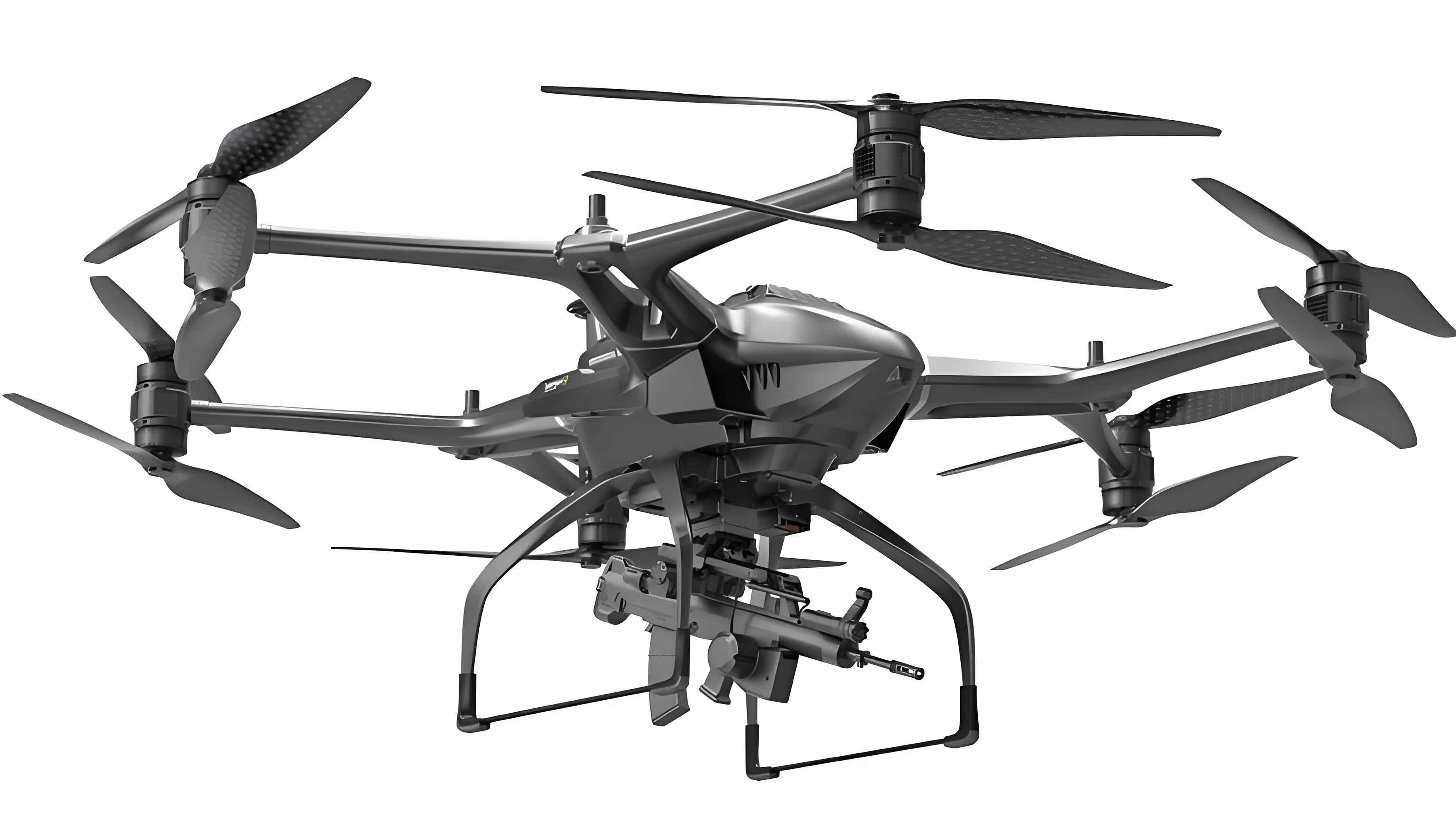
Military UAV Reconnaissance Systems
From a military standpoint, military UAVs are reusable assets that provide reliable technical support for cluster operations and扁平指挥 (flat command structures), offering precise information for battlefield analysis and decision-making. Compared to manned aircraft, military UAVs do not require pilots, can operate in extreme environments such as超低温 (ultra-low temperatures) or超高温 (ultra-high temperatures), have no overload limitations, can withstand significant vibration and impact, possess strong survivability and隐蔽性 (stealth), are fearless of casualties, and are relatively simple and flexible to operate. This effectively avoids pilot casualties and allows military UAVs to play a更大的 role (greater role) in modern warfare. In military domains, military UAVs are primarily used for enemy reconnaissance, heavy weapon fire guidance, and electronic countermeasures, with significant impacts on enhancing military strength.
A military UAV reconnaissance system typically consists of three main components: the mounting framework, video capture module, and video encoder. The mounting framework includes elements such as batteries, mechanical parts, and flight control systems, providing a stable aerial platform and ensuring飞行灵活性 (flight agility). The video capture module comprises infrared imaging and white-light imaging devices. Using image sensors, captured scenes are converted into electrical signals, which are then transformed into digital image signals via A/D conversion. These digital signals are processed in a digital signal processing chip. Military UAV lenses can achieve resolutions up to 12 megapixels, meeting the needs of motion and high-definition拍摄 (shooting). The video encoder, supported by data link设备和机载通信设备 (equipment and onboard communication devices), handles tasks like image transmission. It offers advantages such as strong anti-interference capability and low image transmission delay, making it key to wireless transmission. With 5G support, 5G signals integrate effectively with servers, allowing video images to be packetized proportionally and transmitted to the cloud. This enhances the reconnaissance capabilities of military UAVs, enabling persistent surveillance and rapid data dissemination.
To quantify the performance of such systems, we can consider the image transmission efficiency. The data rate required for video streaming can be expressed as: $$ R = f_r \times N_{\text{pixels}} \times B_{\text{depth}} $$ where \( R \) is the data rate in bits per second, \( f_r \) is the frame rate, \( N_{\text{pixels}} \) is the number of pixels per frame, and \( B_{\text{depth}} \) is the bit depth per pixel. For a military UAV with 4K resolution (3840×2160 pixels), 30 fps, and 8-bit depth, \( R \approx 1.99 \) Gbps. 5G’s enhanced bandwidth makes such high-rate transmission feasible, critical for military UAV operations.
Application Advantages of 5G Technology in Military UAVs
5G communication is characterized by low power consumption, high speed, and low latency, offering high reliability. Through its rational application, rapid completion of air-to-air and air-to-ground information data transmission can be achieved. This enhances the autonomy of military UAVs, promotes装备智能化 (equipment intelligence), expands application scenarios, and drives future warfare technological development. In our analysis, we identify several key advantages that 5G brings to military UAVs, as outlined below.
Meeting Diverse Service Requirements and Ensuring Communication Performance: Military UAV aerial information communication networks exhibit明显的三维性质 (pronounced three-dimensional nature), with network nodes moving rapidly in three-dimensional space, causing frequent topology changes. Therefore, when designing aerial communication network protocols, flexibility in mobility modeling and precise coverage of network nodes in 3D space must be addressed. 5G’s massive MIMO technology, leveraging multi-antenna arrays at base stations, uses the same frequency and time resources to serve multiple spatially separated users. This extends signal coverage in the vertical dimension, improves spatial自由度 (degrees of freedom), and achieves立体覆盖 (three-dimensional coverage), aligning with the 3D nature of military UAV communication networks. Through 3D beamforming, precise positioning of aerial network nodes is possible. Simultaneously, the richness of signal transmission paths is expanded, laying a solid foundation for military UAV communication reliability. We can model the beamforming gain as: $$ G_{\text{BF}} = 10 \log_{10}(N_t N_r) $$ where \( N_t \) and \( N_r \) are the numbers of transmit and receive antennas, respectively. For 5G massive MIMO, \( N_t \) can be large (e.g., 64 or more), significantly boosting signal strength for military UAV links.
Supporting Rich Application Scenarios: Military UAVs are employed in diverse scenarios such as cluster coordination, battlefield rescue searches, and tracking missions, all requiring certain transmission efficiency, authenticity, and reliability. Traditional data transmission technologies often fall short, failing to meet real-time high-frequency video demands. However, data transmission依托 (relying on) 5G technology can easily fulfill various mission requirements. Additionally, the use of 5G network slicing technology allows scientific partitioning of existing network resources. Based on business needs and specific functions, resources can be重组 (reorganized) into different logical network slices. These slices do not interfere with each other and provide specific network characteristics and capabilities as per user requirements. Since military UAVs have varying demands for latency, bandwidth, etc., in different scenarios, leveraging network slicing’s flexibility ensures that slices better meet具体业务要求 (specific business requirements), addressing差异化应用需要 (differentiated application needs). This enables cost control, network optimization, and improved resource utilization. The network slicing concept can be represented as: $$ \text{Network} = \bigcup_{i=1}^{n} S_i $$ where \( S_i \) denotes a slice tailored for a specific military UAV application, such as \( S_1 \) for reconnaissance (high bandwidth) or \( S_2 \) for control (low latency).
We consolidate these advantages in Table 3, illustrating how 5G addresses core challenges in military UAV deployments.
| Advantage Category | 5G Enabler | Impact on Military UAVs | Quantitative Metric |
|---|---|---|---|
| Enhanced Bandwidth | Wideband Carriers, Massive MIMO | Enables real-time HD video and sensor data flow | Peak data rates up to 10 Gbps |
| Low Latency | Mini-slot, Edge Computing | Improves control responsiveness for agile maneuvers | End-to-end latency <10 ms in ideal conditions |
| Network Slicing | Virtualized Network Resources | Allows customized networks for different missions | Resource utilization efficiency gains of 20-30% |
| 3D Coverage | 3D Beamforming | Ensures reliable connectivity in aerial environments | Coverage extension by 15-25% in vertical plane |
These advantages collectively underscore why 5G is a game-changer for military UAVs, facilitating their integration into next-generation warfare systems. As we push the boundaries, military UAVs equipped with 5G will likely become ubiquitous in defense operations, from surveillance to coordinated strikes.
Future Directions and Challenges
Despite the progress, limitations in research and development mean that the application of 5G in military UAVs still has substantial room for improvement. Continuous study and enhancement are necessary. Through comprehensive collaboration and sustained investment, various technical bottlenecks can be突破 (broken through), allowing better integration of technology into military UAVs. This will realize idealized UAV application models, contribute to enhancing and developing China’s military capabilities, and achieve expected equipment utilization goals. Since 5G technology application involves broad content, we cannot elaborate on every aspect in detail here, but we hope this discussion provides theoretical support for the development of military UAVs.
Looking ahead, key challenges include securing 5G networks against cyber threats, optimizing power consumption for prolonged military UAV missions, and ensuring interoperability with existing军事系统 (military systems). Research areas might focus on advanced waveforms for military UAV communications, AI-driven network management, and quantum-resistant encryption. The potential for military UAV swarms coordinated via 5G is particularly promising; the collective behavior can be modeled using swarm algorithms: $$ \vec{x}_i(t+1) = \vec{x}_i(t) + \vec{v}_i(t) + \sum_{j \neq i} f(\vec{x}_j – \vec{x}_i) $$ where \( \vec{x}_i \) is the position of UAV \( i \), \( \vec{v}_i \) is its velocity, and \( f \) is an interaction function. 5G enables real-time updates of such models, enhancing swarm intelligence.
Conclusion
In summary, 5G communication technology is a pivotal enabler for the advancement of military UAVs. By addressing critical needs in bandwidth, latency, and network flexibility, 5G unlocks new potentials in reconnaissance, control, and mission diversity. As the technology matures and overcomes existing hurdles, military UAVs will become even more integral to modern defense, shaping the future of warfare. We encourage ongoing innovation and cross-sector collaboration to fully harness the synergy between 5G and military UAVs, ensuring they meet evolving operational demands and contribute to global security paradigms. The journey of integrating 5G into military UAVs is just beginning, and its trajectory promises to redefine aerial capabilities in the decades to come.