
As modern warfare increasingly pivots towards network-centric and asymmetric operations, the role of Unmanned Aerial Vehicles (UAVs) has become pivotal. Among these, military UAVs represent a transformative class of assets, offering persistence, reduced risk to human life, and operational flexibility unattainable by manned platforms. The core of any military UAV’s capability is its propulsion system. The engine dictates critical performance parameters such as endurance, speed, altitude, payload capacity, and survivability. This analysis delves into the defining characteristics of turbofan engines employed in military UAVs, systematically examines the key requirements imposed by different mission profiles, and explores the intricate relationships between these requirements and fundamental engine design parameters. Understanding these interdependencies is crucial for the effective design, selection, and optimization of powerplants for the next generation of unmanned systems.
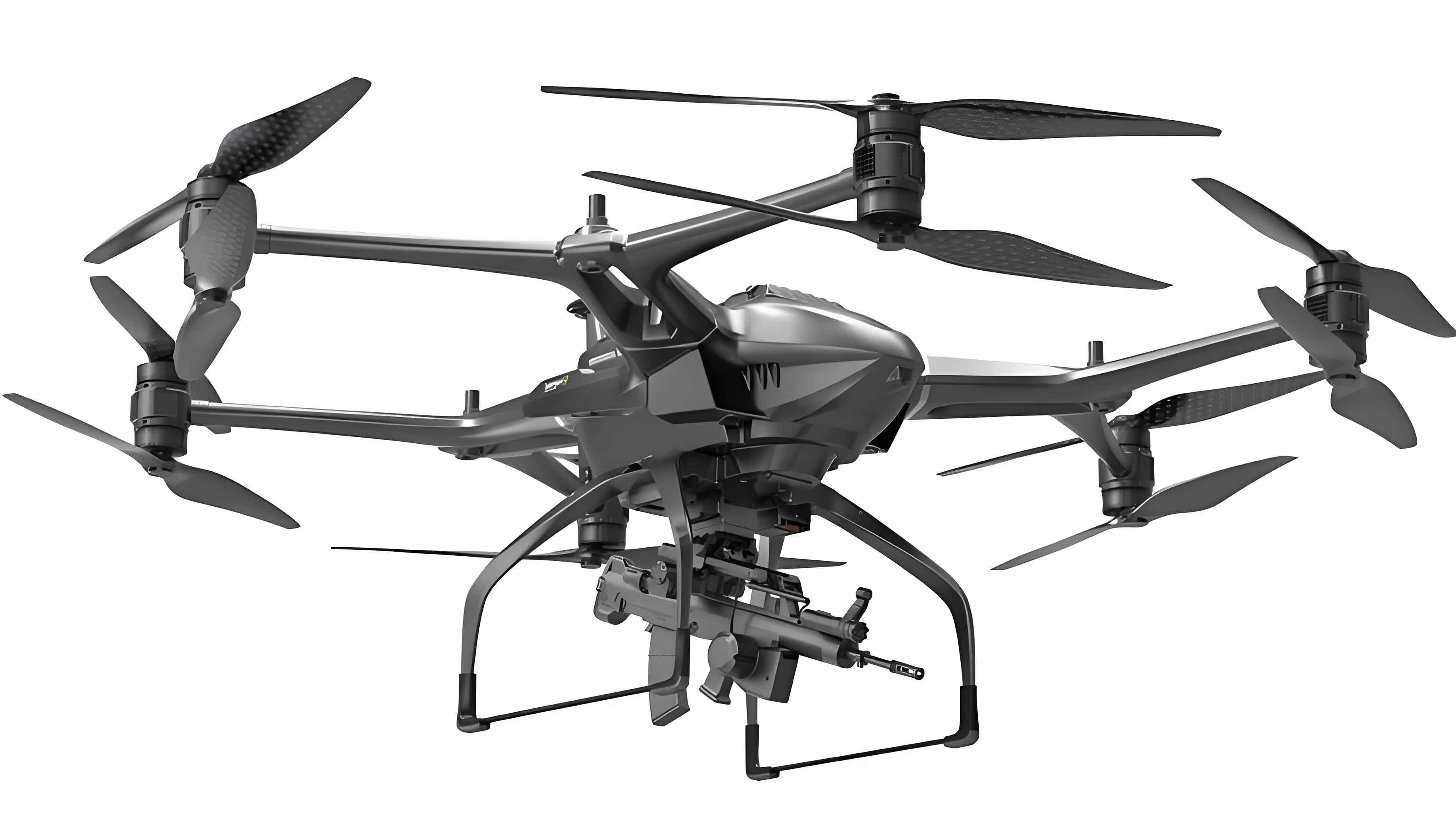
The propulsion landscape for military UAVs is diverse, primarily dominated by adaptations of existing, mature turbofan engines. This approach mitigates development risk, cost, and time-to-field. However, the adaptation is non-trivial and is driven by a specific set of demands from the unmanned platform. We can categorize major military UAVs into three primary roles, each with distinct propulsion priorities: Unmanned Combat Aerial Vehicles (UCAVs), Unmanned Reconnaissance/Surveillance Aircraft, and Unmanned Tankers. The choice and modification of an engine are fundamentally guided by the mission envelope.
Characteristics of Turbofan Engines in Military UAV Applications
Military UAVs do not typically employ newly designed “clean-sheet” engines. Instead, they leverage the reliability and known performance of proven cores from fighter, trainer, or commercial regional jet aircraft. The modifications applied are targeted to meet specific UAV-centric demands, with stealth, sustained operation, and integration being paramount concerns.
A key distinguishing feature is the bypass ratio (BPR). This parameter, representing the ratio of air bypassing the engine core to the air passing through it, serves as a primary differentiator between UAV types. UCAVs, which may require supersonic dash capability, high maneuverability, and must prioritize low frontal cross-section for stealth, invariably opt for low-bypass ratio turbofans. These engines, derived from military fighter cores, offer high thrust-to-weight ratios and smaller diameters but at the cost of higher specific fuel consumption (SFC). In contrast, reconnaissance and tanker military UAVs, where long loiter time and fuel efficiency are critical, utilize high-bypass ratio turbofans. These are often derived from commercial regional jet engines, offering excellent subsonic SFC and lower acoustic signatures, though they are larger and less suited to high-speed flight.
Stealth considerations lead to significant installation-related modifications. To reduce radar cross-section (RCS), military UAVs like the X-47B or Neuron frequently use dorsal-mounted, S-shaped inlet ducts that shield the engine face from direct radar waves. Similarly, the exhaust system is heavily modified. For low-bypass engines on UCAVs, the afterburner is typically removed, and the nozzle is replaced with a serpentine or “beaver-tail” flat nozzle to mask the hot turbine stages and control infrared (IR) signature. For some high-altitude long-endurance (HALE) military UAVs, while stealth might be secondary, specialized inlets and nozzles are still used to optimize performance at extreme altitudes.
The following table summarizes the propulsion characteristics of several representative military UAVs, illustrating the trend of adapting mature engines.
| UAV Type | Example UAV | Engine (Base Application) | Thrust (kN) | Bypass Ratio | Key Adaptation for Military UAV |
|---|---|---|---|---|---|
| UCAV | X-47B | F100-PW-220U (Fighter) | ~74 | ~0.6 | Afterburner removal, S-shaped nozzle, strengthened bearings for carrier landing. |
| Neuron | Adour Mk 951 (Trainer) | ~40 | ~0.75 | Stealth-optimized intake and exhaust, FADEC integration. | |
| S-70 Okhotnik | AL-31F Derivative (Fighter) | >100 | ~0.6 | Dorsal intake, afterburner removed, emphasis on high-altitude performance. | |
| Reconnaissance | RQ-4 Global Hawk | AE 3007H (Regional Jet) | ~42 | ~4.9 | Optimized for high-altitude (60,000 ft) loiter, low SFC. |
| MQ-20 Avenger | PW545B (Business Jet) | ~20 | ~4.1 | Dorsal S-duct intake, reduced acoustic signature. | |
| Tanker | MQ-25 Stingray | AE 3007N (Regional Jet) | ~40 | ~5.0 | Optimized for high fuel offload efficiency, carrier-suitable reliability. |
Key Requirements for Military UAV Propulsion Systems
The demands placed on a military UAV engine extend far beyond basic thrust generation. They form a complex, often conflicting set of criteria that must be balanced. These requirements can be categorized into five primary domains: Performance, Stealth, Reliability/Maintainability, Environmental Impact, and Cost. The relative importance of each domain varies significantly with the military UAV’s mission.
Performance Requirements: This is the most fundamental category. Key parameters include:
Specific Fuel Consumption (SFC): Critical for endurance-centric platforms like reconnaissance military UAVs and tankers. Lower SFC directly translates to longer mission time or greater range/payload. For a given thrust F and fuel flow rate ṁf, SFC is defined as:
$$ \text{SFC} = \frac{\dot{m}_f}{F} $$
Thrust-to-Weight Ratio (TWR): More critical for UCAVs requiring high maneuverability, rapid acceleration, or short take-off performance. It is a function of engine thrust F and engine dry weight Weng:
$$ \text{TWR} = \frac{F}{W_{eng}} $$
High Inlet Temperature (T2) Operation: Essential for UCAVs designed for supersonic flight or high-speed, low-altitude penetration, where ram air temperature rises significantly.
High-Altitude Operation: A defining requirement for HALE reconnaissance military UAVs. Engines must maintain stable combustion and component efficiency in thin air.
Power Extraction: Modern military UAVs are sensor-laden. The engine must provide ample shaft horsepower to drive generators powering radars, EO/IR systems, and mission computers.
Stealth Requirements: For survivability in contested airspace, especially for UCAVs and penetrating reconnaissance platforms, low observability is non-negotiable.
Low Radar Cross-Section (RCS): Achieved through engine placement (dorsal intake), S-shaped ducts, and the use of radar-absorbent materials (RAM) on inlet lips and ducting.
Low Infrared (IR) Signature: Mitigated by eliminating afterburners, using mixed-flow exhausts to cool core gases with bypass air, and employing non-axisymmetric nozzles that promote rapid plume mixing and shield hot metal parts.
Reliability and Maintainability (R&M) Requirements: Military UAVs often operate in remote locations or from carriers with limited support.
High Reliability and Life: Engines must have long time-on-wing, especially for long-endurance missions. This demands robust design and conservative operating margins.
High Cycle Tolerance: Engines for tactical military UAVs must endure frequent throttle excursions without excessive low-cycle fatigue (LCF) damage.
Maintainability: Modular or unitized construction is highly prized. The ability to rapidly swap engine modules (e.g., fan module, core module) minimizes ground time and required skill level for field maintenance.
Environmental Requirements: While traditionally secondary for military UAVs, these are gaining prominence.
Low Noise: Important for base operations and covert low-altitude missions. High-bypass engines are inherently quieter.
Low Emissions: Regulations and stealth (reducing smoke trails) drive the need for clean, efficient combustion.
Cost Requirements: A major driver for military UAV programs.
Low Acquisition Cost: The appeal of using derivative engines.
Low Development Cost: Avoiding clean-sheet development where possible.
Low Operating & Support Cost (O&S): Driven by high reliability, long life, and easy maintenance.
The following matrix synthesizes the relative priority (High-H, Medium-M, Low-L) of these key requirements for different military UAV roles.
| Key Requirement | UCAV | Reconnaissance Military UAV | Unmanned Tanker |
|---|---|---|---|
| Performance | |||
| Low SFC | M | H | H |
| High TWR | H | L | L |
| High T2 Operation | H | L | M |
| High-Altitude Operation | M | H | M |
| Stealth | |||
| Low RCS | H | M | L |
| Low IR Signature | H | M | M |
| R&M | |||
| Long Life | M | H | H |
| High Cycle Tolerance | H | M | M |
| Maintainability | M | H | H |
| Cost | |||
| Low Acquisition Cost | M | M | M |
| Low Development Cost | H | H | H |
Interplay Between Key Requirements and Engine Characteristic Parameters
The engine designer’s challenge lies in mapping the high-level military UAV requirements onto specific, and often competing, engine design parameters. These parameters exist at the thermodynamic cycle, mechanical design, systems, and installation levels. The relationship is rarely one-to-one; a single parameter affects multiple requirements, and requirements often pull parameters in opposite directions.
Consider the thermodynamic cycle. A primary lever for improving subsonic SFC is to reduce specific thrust (thrust per unit airflow), which is strongly influenced by fan pressure ratio (FPR) and overall pressure ratio (OPR).
$$ \text{Specific Thrust} \propto f(\text{FPR}, \text{OPR}, \text{SOT}) $$
Lower specific thrust, achieved by lower FPR (higher BPR), greatly benefits SFC and noise. However, it increases engine diameter and weight, negatively impacting TWR and RCS. This fundamental trade-off is why a reconnaissance military UAV prioritizes low FPR, while a UCAV accepts higher FPR.
Similarly, increasing turbine inlet temperature (SOT or TET) is a powerful method to improve efficiency and reduce core size for better TWR.
$$ \text{Core Size} \propto \frac{1}{\text{SOT}^{n}} $$
where n is a positive exponent. Yet, higher SOT demands advanced materials and complex cooling systems, increasing cost and potentially impacting durability—a direct conflict between performance and cost/reliability requirements.
Stealth requirements heavily influence installation parameters. The use of serpentine ducts for low RCS introduces total pressure losses and flow distortion.
$$ \text{Pressure Recovery} (P_{s, \text{engine face}} / P_{t, \text{freestream}}) < 1 $$
This loss directly reduces net thrust and increases SFC, creating a trade-off between stealth and performance. Infrared suppression via mixed-flow exhaust and cooled nozzles also adds weight, complexity, and can incur a small performance penalty.
The table below elucidates these complex, multi-faceted relationships between key military UAV requirements and underlying engine characteristics.
| Engine Characteristic Parameter | Impact on Key Military UAV Requirements | Primary Trade-Off / Conflict |
|---|---|---|
| Low Fan Pressure Ratio (FPR) / High BPR | + Low SFC, Low Noise – Low TWR, High RCS (large diameter), Challenging Integration |
Fuel Efficiency vs. Thrust-to-Weight & Stealth |
| High Turbine Inlet Temp (SOT) | + High Efficiency, High TWR (smaller core) – High Cost, Potential Reliability Risk |
Performance vs. Cost & Durability |
| Mixed Exhaust System | + Low IR Signature, Good SFC – Increased Weight & Complexity |
Stealth/Performance vs. Weight/Simplicity |
| Serpentine/ S-Duct Inlet | + Low RCS – Reduced Pressure Recovery, Increased Weight, Flow Distortion |
Stealth vs. Performance & Stability |
| Unitized/Modular Design | + High Maintainability, Low O&S Cost – Potential for Increased Weight, Slight Performance Penalty |
Supportability vs. Optimal Performance |
| Advanced FADEC & Health Monitoring | + Optimized Performance, High Reliability, Prognostics – Increased Development Cost, Software Complexity |
Performance & Reliability vs. Development Cost |
This analysis reveals that designing a propulsion system for a military UAV is an exercise in multi-disciplinary optimization. The final configuration is a carefully balanced compromise, where the priorities of the mission profile (e.g., UCAV strike vs. HALE reconnaissance) dictate which trade-offs are acceptable.
Case Studies in Requirement-Driven Design
Examining specific military UAV programs highlights how these key requirements and parameter trade-offs manifest in real-world designs.
Case 1: Northrop Grumman X-47B (UCAV)
The X-47B carrier-based UCAV required a unique blend of stealth, reliability for over-water operations, and compatibility with carrier launch/recovery cycles. It selected a derivative of the F100-PW-220 turbofan. Key adaptations directly addressed military UAV requirements:
Stealth (Low RCS/IR): The original axisymmetric nozzle was replaced with a flattened, S-shaped exhaust duct. The afterburner was entirely removed. This drastically reduced IR signature and contributed to a low-observable rear profile.
Reliability: Carrier landings impose high sink rates. The engine’s thrust bearings were upgraded to a more robust design from the F100-PW-229 to handle these high-load events.
Performance/Cost: Using a mature fighter engine core provided high TWR and good supersonic capability inherent in the design, while avoiding the cost of a new core development. The cycle modifications (afterburner removal) simplified the system.
This case exemplifies a military UAV solution where stealth and carrier suitability drove significant mechanical and installation changes to a proven military core.
Case 2: General Atomics MQ-20 Avenger (Reconnaissance/Strike)
The MQ-20 represents a jet-powered, multi-role military UAV derived from the Predator C. Its requirements center on persistence, survivability, and sensor payload. It utilizes the Pratt & Whitney PW545B, a high-bypass business jet engine.
Performance (Low SFC, High-Altitude): The high BPR (~4.1) of the PW545B provides excellent subsonic fuel efficiency, crucial for the MQ-20’s 18-hour endurance. The engine is optimized for high-altitude cruise.
Stealth: While not a penetrating stealth aircraft, the MQ-20 incorporates a dorsal S-duct intake, reducing its frontal RCS compared to a chin-mounted intake. The exhaust is also reportedly designed for low IR signature.
Cost & Support: Leveraging a commercial engine pedigree helps control acquisition and support costs. The engine’s reliability in business jet service is a known quantity.
Here, the military UAV requirement for endurance and operational economy led to the selection of a commercial-derivative high-bypass engine, with moderate stealth features added for enhanced survivability.
Case 3: Boeing MQ-25 Stingray (Unmanned Tanker)
The MQ-25’s primary requirement is to deliver significant fuel offload at long range from an aircraft carrier. This defines its propulsion needs clearly.
Performance (Low SFC): Fuel efficiency is paramount. The AE 3007N engine, with a BPR of 5.0, was chosen specifically for its excellent SFC, maximizing the “gas station’s” own fuel economy to increase net offload.
Reliability & Maintainability: Carrier operations demand extreme reliability. The AE 3007 series has a strong service history. The engine and its systems are designed for the harsh carrier environment and easy maintenance.
Integration: The dorsal intake placement is crucial for the flying-wing design and provides some low-observability benefit, but more importantly, it prevents ingestion of salt spray and deck debris.
For this military UAV, the singular focus on efficient fuel carriage and delivery made the high-BPR commercial derivative the unequivocal choice, with other requirements like stealth taking a secondary role.
Conclusion and Future Directions
The propulsion system is a critical enabler for military UAV capabilities, and its design is a direct reflection of mission-defined priorities. This analysis demonstrates that military UAV powerplants are predominantly intelligent adaptations of mature engines, modified to satisfy a hierarchy of key requirements: performance (split between efficiency and thrust-density), stealth, reliability/maintainability, and cost. The fundamental engineering challenge lies in managing the inherent conflicts between these requirements, as embodied in trade-offs between parameters like bypass ratio, turbine temperature, and installation features.
The future evolution of military UAV propulsion will continue to be driven by advancing mission needs. Emerging trends include:
Adaptive Cycle Engines: For next-generation UCAVs, engines that can vary bypass ratio in flight could bridge the gap between high-speed (low BPR) and loiter (high BPR) requirements, offering unparalleled mission flexibility.
Increased Electrification: More-electric engine architectures will provide greater power extraction for directed energy weapons and advanced sensors, while improving reliability by removing hydraulic and pneumatic systems.
Thermal & Signature Management: As sensor technology advances, managing all aspects of signature (IR, RF, acoustic, visual) will become even more integrated into the propulsion system design from the outset.
Artificial Intelligence in Control & Health Management: AI-driven FADEC systems will optimize performance in real-time for mission phases and enable predictive maintenance, further enhancing the autonomy and reliability of the military UAV platform.
In summary, the success of a military UAV program is inextricably linked to a deep understanding of the propulsion system’s characteristics and its alignment with operational demands. The continued analysis and optimization of these relationships will be vital for maintaining airpower superiority in an increasingly unmanned battlespace.