
As a military technology analyst, I have observed the Russia-Ukraine conflict with great interest, particularly focusing on the pivotal role played by military UAVs. This war has underscored how unmanned aerial vehicles are reshaping modern battlefield dynamics, moving beyond traditional reconnaissance to become integral in precision strikes, electronic warfare, and command control. In this article, I will delve into the multifaceted applications of military UAVs, drawing from the conflict to derive insights for future warfare. The widespread use of both dedicated military UAVs and modified commercial drones has revealed new tactical paradigms, while also exposing vulnerabilities that must be addressed. Through detailed examination, including tables and mathematical models, I aim to provide a thorough understanding of how military UAVs are transforming combat and what lessons can be learned for upcoming conflicts.
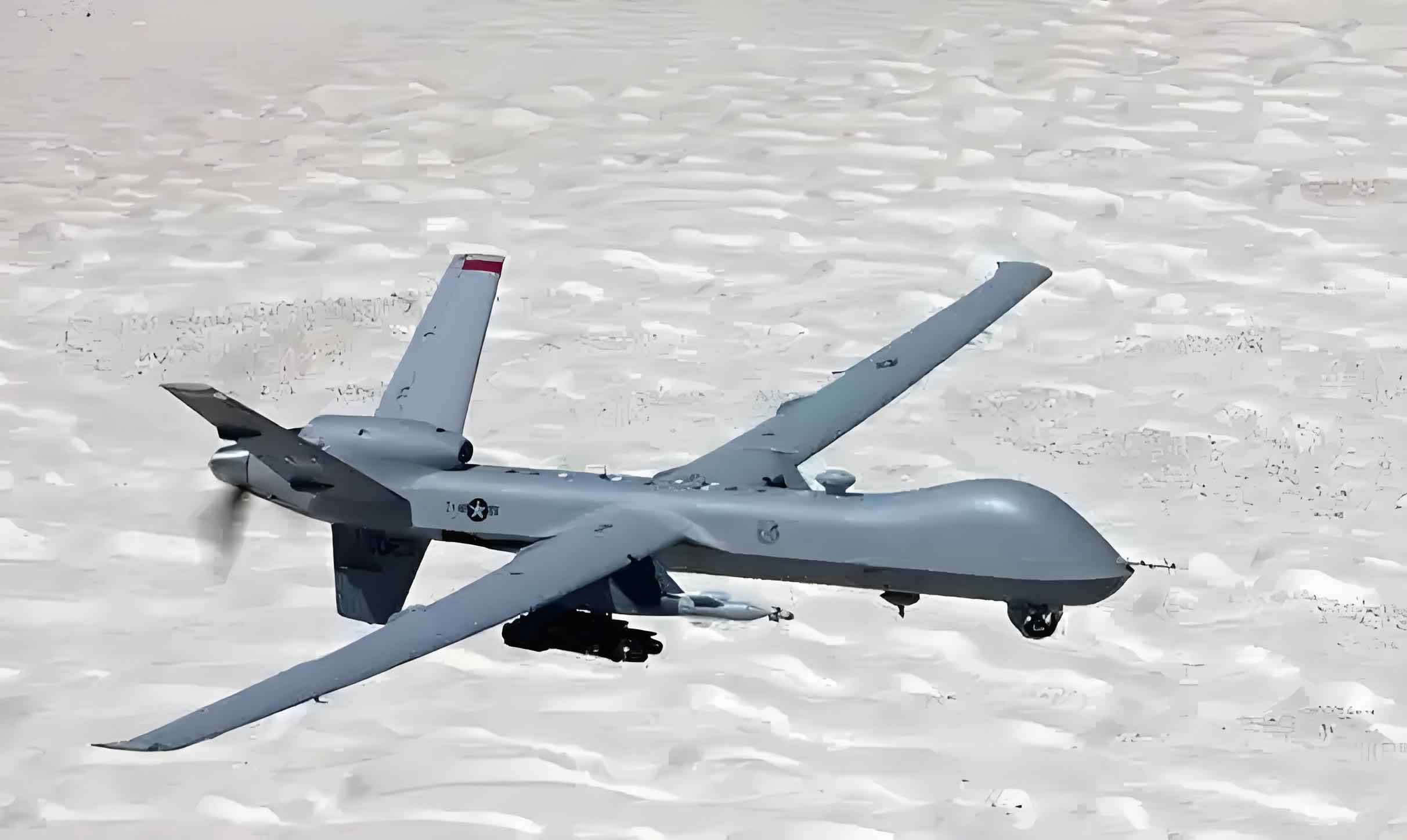
The conflict, which began in February 2022, has seen an unprecedented deployment of military UAVs by both sides. From my perspective, this isn’t merely an escalation of existing drone usage but a fundamental shift in how warfare is conducted. Military UAVs have become ubiquitous, serving as force multipliers that enhance situational awareness, reduce human risk, and enable rapid, precise engagements. What stands out is the blending of high-end military UAVs with low-cost commercial variants, demonstrating adaptability and innovation under resource constraints. In the following sections, I will explore the specific applications of military UAVs across various domains, supported by analytical frameworks that quantify their impact. The integration of military UAVs into combined arms operations has proven decisive in many battles, and I believe this trend will only accelerate in future conflicts.
Intelligence, Surveillance, and Reconnaissance (ISR) Operations
In my analysis, the intelligence, surveillance, and reconnaissance capabilities of military UAVs have been a cornerstone of the Russia-Ukraine war. These platforms provide persistent aerial monitoring, delivering real-time data that informs tactical decisions. For instance, Ukrainian forces leveraged Turkish-made Bayraktar TB-2 military UAVs early in the conflict to track Russian movements, identify troop concentrations, and guide artillery fire. Similarly, Russian units utilized Orlan-10 and Zala military UAVs for battlefield awareness, especially in the Donbas region. The effectiveness of military UAVs in ISR can be modeled by their area coverage and loiter time. Consider the following formula for surveillance coverage area:
$$A = \pi \times r^2 \times t \times v$$
where \(A\) is the total area covered, \(r\) is the sensor detection radius, \(t\) is the loiter time in hours, and \(v\) is the velocity of the military UAV. This equation highlights how extended endurance and advanced sensors amplify the ISR value of military UAVs. From my observations, the transparency afforded by these military UAVs has compressed the kill chain, reducing the time from target detection to engagement. Below is a table summarizing key military UAVs used for ISR in the conflict:
| Military UAV Model | Operator | Primary ISR Functions | Loiter Time (hours) | Sensor Payload |
|---|---|---|---|---|
| Bayraktar TB-2 | Ukraine | Real-time video, target acquisition | 24 | EO/IR cameras, laser designator |
| Orlan-10 | Russia | Reconnaissance, artillery correction | 10 | Day/night cameras, SIGINT |
| Zala 421-16 | Russia | Frontline surveillance, comms relay | 8 | High-resolution optics |
| Modified DJI Mavic | Both sides | Close-range scouting, damage assessment | 0.5 | Commercial-grade cameras |
The data from these military UAVs has been instrumental in shaping offensive and defensive operations. I have noted that the constant overhead presence of military UAVs forces adversaries to adopt concealment tactics, yet the sheer volume of drone sorties often overwhelms traditional hiding methods. Furthermore, the fusion of data from multiple military UAVs creates a comprehensive common operational picture, enabling commanders to make informed decisions rapidly. This ISR dominance, however, is not without challenges, as electronic warfare measures can degrade the effectiveness of military UAVs, a point I will address later.
Precision Strike and Loitering Munition Campaigns
Precision strike capabilities of military UAVs have been a game-changer in this conflict. From my assessment, both sides have employed military UAVs to deliver accurate fires against high-value targets, often with minimal collateral damage. Ukraine’s use of the Bayraktar TB-2 as a strike platform against Russian armor and logistics nodes demonstrated how military UAVs can exploit gaps in air defenses. On the other hand, Russia’s deployment of loitering munitions like the Lancet-3 has provided a responsive means for counter-battery fire. These military UAVs, often termed “kamikaze drones,” combine surveillance and attack functions, hovering over areas until a target is identified. The probability of a successful strike by a military UAV can be expressed as:
$$P_s = \frac{1}{1 + e^{-k(C \times A \times S)}}$$
where \(P_s\) is the success probability, \(k\) is a constant related to environmental factors, \(C\) is the command and control reliability, \(A\) is the accuracy of the guidance system, and \(S\) is the survivability against countermeasures. This logistic function underscores that as military UAV technology improves, strike success rates increase non-linearly. I have compiled a table comparing strike-oriented military UAVs used in the war:
| Military UAV Type | Role | Warhead Payload | Range (km) | Notable Engagements |
|---|---|---|---|---|
| Bayraktar TB-2 (Armed) | Precision strike | Laser-guided bombs | 150 | Armor columns, air defenses |
| Lancet-3 Loitering Munition | Anti-artillery, anti-armor | 3 kg explosive | 40 | Howitzer systems, radar units |
| FPV (First-Person View) Drones | Suicide attacks | RPG warheads, grenades | 5-10 | Infantry, light vehicles |
| Modified Commercial Quadcopters | Tactical bombing | Dropped munitions | 2-5 | Trenches, supply depots |
In my view, the proliferation of these military UAVs has democratized precision strike capabilities, allowing smaller units to conduct deep attacks without relying on traditional artillery or aircraft. The Lancet-3, for example, exemplifies how military UAVs can loiter for extended periods, using onboard AI to classify targets before diving. However, I must emphasize that the effectiveness of such military UAVs is contingent on robust targeting data, often supplied by other ISR military UAVs. This synergy between different classes of military UAVs creates a networked kill web that is difficult to defend against. The cost-effectiveness of these systems is striking; a loitering munition costing tens of thousands of dollars can destroy multimillion-dollar equipment, altering the economic calculus of war.
Electronic Warfare and Counter-UAV Dynamics
Electronic warfare (EW) has emerged as a critical domain in countering military UAVs, and from my analysis, the Russia-Ukraine conflict has become a testing ground for EW tactics. Both sides have employed jamming, spoofing, and kinetic means to degrade enemy military UAV operations. Russian forces, with their established EW capabilities, have systematically targeted Ukrainian military UAV command links and GPS signals, forcing adaptations such as frequency hopping and autonomous waypoint navigation. The effectiveness of EW against a military UAV can be modeled using the signal-to-interference ratio:
$$SIR = \frac{P_t G_t G_r}{P_j G_j L}$$
where \(P_t\) is the transmit power of the military UAV, \(G_t\) and \(G_r\) are the gains of the transmitter and receiver antennas, \(P_j\) is the jammer power, \(G_j\) is the jammer antenna gain, and \(L\) is the path loss. When SIR falls below a threshold, the military UAV loses connectivity or navigation, rendering it ineffective. I have observed that Ukrainian forces, despite weaker EW assets, have innovated by using commercial military UAVs with shorter-range controls less susceptible to broad-spectrum jamming. Below is a table outlining common EW and counter-UAV measures encountered:
| Counter-UAV System | Type | Mechanism | Effective Range | Targeted Military UAV Types |
|---|---|---|---|---|
| Russian Repellent-1 | Electronic jammer | GNSS and control link disruption | Up to 30 km | Medium-altitude military UAVs |
| Ukrainian NOTA | Portable jammer | Directional RF interference | 5-10 km | Small commercial military UAVs |
| 9K333 Verba MANPADS | Kinetic interceptor | Heat-seeking missiles | 6 km | Low-flying military UAVs |
| Drone-on-Drone Combat | Air-to-air engagement | Net-carrying or collision | Visual range | FPV and reconnaissance military UAVs |
From my perspective, this EW contest has highlighted the need for military UAVs with enhanced anti-jamming features. Future military UAVs, I argue, must incorporate resilient communications, such as spread-spectrum or cognitive radio, and alternative navigation systems like inertial measurement units (IMUs) or celestial navigation. The conflict has shown that even simple military UAVs can be neutralized by sophisticated EW, prompting a race between jamming and hardening. Moreover, I believe that autonomous military UAVs capable of operating in GPS-denied environments will become a priority, as they reduce reliance on vulnerable external signals. The interplay between military UAVs and EW is a cat-and-mouse game that will define future battlefield supremacy.
Command, Control, and Fire Coordination
Military UAVs have revolutionized command and control (C2) and fire coordination in the Russia-Ukraine war. As I see it, these platforms serve as airborne command posts, relaying real-time video and sensor data to ground stations, enabling rapid decision-making. Ukrainian artillery units, for instance, have used military UAVs like the PD-2 and commercial models to spot targets and adjust fire, significantly improving accuracy. The process can be described by a latency equation that impacts mission effectiveness:
$$T_{total} = T_{detect} + T_{transmit} + T_{decide} + T_{engage}$$
where \(T_{detect}\) is the time for a military UAV to identify a target, \(T_{transmit}\) is the data relay time, \(T_{decide}\) is the command decision latency, and \(T_{engage}\) is the weapon system reaction time. Military UAVs minimize \(T_{detect}\) and \(T_{transmit}\) through persistent surveillance and high-bandwidth links, compressing \(T_{total}\). In several engagements, Ukrainian HIMARS strikes were guided by military UAVs, demonstrating how these platforms integrate into kill chains. I have summarized the C2 roles of military UAVs in the table below:
| Military UAV Application | C2 Function | Data Type | Impact on Decision Cycle | Example in Conflict |
|---|---|---|---|---|
| Real-time Reconnaissance | Situational awareness | Live video feed | Reduces fog of war | Monitoring Russian troop movements in Kherson |
| Artillery Spotting | Fire correction | Target coordinates, damage assessment | Increases first-round hit probability | Adjusting howitzer fire in Donbas |
| Communications Relay | Network extension | Voice, data packets | Maintains C2 in contested areas | Orlan-10 acting as a radio repeater |
| Battle Damage Assessment | Post-strike analysis | Post-attack imagery | Informs re-engagement decisions | Confirming hits on ammunition depots |
From my analysis, the integration of military UAVs into C2 architectures has enabled decentralized operations, where small units can call in precision fires based on drone footage. This has empowered frontline soldiers, blurring the lines between sensors and shooters. However, I note that this reliance on military UAVs for C2 also introduces vulnerabilities; if the drone feed is compromised or jammed, coordination can break down. Therefore, future military UAV systems must be designed with redundant data paths and secure encryption. The conflict has proven that military UAVs are not just tools for observation but essential nodes in networked warfare, facilitating a faster, more agile command structure.
Innovation with Low-Cost and Commercial UAVs
The innovative use of low-cost and commercial drones, often adapted into military UAVs, has been a hallmark of this conflict. In my observation, both sides have leveraged inexpensive platforms like DJI Mavic quadcopters and custom-built FPV drones to perform tasks traditionally reserved for expensive military UAVs. These systems offer high cost-effectiveness, with attrition rates being more acceptable due to their low production costs. The economic advantage can be quantified by a cost-benefit ratio:
$$R = \frac{C_{target}}{N \times C_{UAV}}$$
where \(R\) is the cost-benefit ratio, \(C_{target}\) is the value of the target destroyed, \(N\) is the number of military UAVs used per successful engagement, and \(C_{UAV}\) is the unit cost of the military UAV. For commercial drones modified as military UAVs, \(R\) often exceeds 1, justifying their widespread use. I have compiled data on these adapted military UAVs:
| Platform Type | Original Purpose | Military Modification | Approximate Cost (USD) | Tactical Use Case |
|---|---|---|---|---|
| DJI Mavic 3 | Consumer photography | Grenade dropper, reconnaissance | 2,000 | Urban combat, trench raids |
| FPV Racing Drone | Hobbyist racing | Carrying shaped charges | 500 | Anti-armor attacks |
| Fixed-wing Kit Plane | Model aircraft | Autonomous loitering munition | 1,000 | Behind-the-lines sabotage |
| Custom Octocopter | DIY project | Signal intelligence gathering | 3,000 | Intercepting communications |
From my perspective, this trend underscores the military potential of commercial technology. Ukrainian troops, in particular, have demonstrated how rapid prototyping and field modifications can turn off-the-shelf drones into potent military UAVs. This approach lowers the barrier to entry for asymmetric forces, allowing them to contest airspace without sophisticated aerospace industries. However, I caution that these low-cost military UAVs often lack the robustness and security of dedicated military designs, making them susceptible to EW and cyber attacks. Nevertheless, their proliferation has forced militaries worldwide to reconsider acquisition strategies, favoring modular, upgradable military UAVs that can incorporate commercial advancements quickly. The conflict has shown that innovation in military UAVs is not just about high-tech solutions but also about clever, affordable adaptations.
Implications for Future Warfare and Military UAV Development
Based on my analysis of the Russia-Ukraine conflict, several key implications for future warfare and military UAV development emerge. First, military UAVs are now indispensable across all domains of conflict, from high-intensity peer warfare to irregular operations. Their versatility ensures that future militaries will invest heavily in diverse military UAV fleets, ranging from stealthy reconnaissance platforms to swarming attack drones. The evolution can be modeled as an arms race dynamic, where the capability of military UAVs grows exponentially:
$$C(t) = C_0 e^{kt}$$
where \(C(t)\) is the capability at time \(t\), \(C_0\) is the initial capability, and \(k\) is the innovation rate driven by conflicts like this one. Second, the integration of AI and autonomy will be crucial. Military UAVs capable of collaborative sensing and striking without constant human input will reduce latency and overcome jamming. I predict that future military UAVs will operate in networked swarms, overwhelming defenses through sheer numbers and coordinated maneuvers. Third, electronic warfare resilience must be a design priority. As seen in Ukraine, military UAVs that depend on GPS and radio links are vulnerable; thus, hardened systems with alternative navigation and secure datalinks will be essential. Fourth, the drone-counter-drone competition will intensify. Future battlefields will see layered defenses combining kinetic, electronic, and directed-energy weapons against military UAVs. Below is a table outlining projected trends in military UAV technology:
| Trend Area | Expected Development | Impact on Military UAV Operations | Timeframe |
|---|---|---|---|
| Autonomy | AI-driven target recognition, swarm tactics | Reduces operator workload, enables complex missions | Next 5-10 years |
| Stealth and Survivability | Low-observable materials, anti-jamming tech | Increases penetration ability in contested airspace | Ongoing |
| Modular Payloads | Plug-and-play sensors, weapons | Enhances versatility of single military UAV platform | Immediate to mid-term |
| Energy Propulsion | Solar-electric, hydrogen fuel cells | Extends endurance for persistent ISR military UAVs | Long-term (10+ years) |
From my viewpoint, the lessons from this conflict will accelerate the development of next-generation military UAVs. Militaries will likely focus on creating integrated air defense networks that can detect and neutralize small, low-flying military UAVs, while also fielding their own advanced military UAVs for offensive operations. Moreover, the commercial sector’s role will expand, with dual-use technologies being rapidly militarized. I believe that future wars will be characterized by a pervasive presence of military UAVs, making air superiority not just about manned aircraft but about controlling the unmanned spectrum. The Russia-Ukraine war has provided a blueprint for this future, highlighting both the promises and perils of military UAV dominance.
Conclusion
In conclusion, as an analyst reflecting on the Russia-Ukraine conflict, I am convinced that military UAVs have fundamentally altered the nature of modern warfare. Their applications in ISR, precision strike, EW, and C2 have proven decisive in numerous engagements, offering a blend of effectiveness, affordability, and reduced risk. The conflict has served as a live laboratory, testing theories about military UAV employment under harsh conditions and against sophisticated countermeasures. While military UAVs have demonstrated remarkable capabilities, they have also exposed vulnerabilities, particularly in electronic warfare environments, that must be addressed through technological innovation. The widespread adoption of commercial drones as improvised military UAVs further underscores the democratizing effect of this technology, enabling smaller forces to contest larger adversaries. Looking ahead, I anticipate that military UAVs will continue to evolve, becoming more autonomous, resilient, and integrated into multi-domain operations. The race between military UAV advancement and counter-UAV measures will define future battlefields, making it imperative for militaries to invest in both offensive and defensive capabilities. Ultimately, the lessons from this war will shape military strategies for decades, cementing the role of military UAVs as cornerstone assets in national defense.