
The history of unmanned aerial vehicles in warfare is a narrative of rapid adaptation and exponential growth. From their initial role as simple reconnaissance platforms to their current status as multifaceted, weaponized systems, **military UAVs** have fundamentally altered the modern battlespace. As a platform unburdened by a human pilot’s physiological limits, the **military UAV** offers unparalleled persistence, risk reduction for personnel, and a versatile chassis for an ever-expanding suite of capabilities. This analysis, drawing from decades of operational deployment and strategic planning documents, traces the operational evolution of U.S. **military UAVs**, examines the shifting demands placed upon them, and projects their trajectory into the future of integrated warfare.
The operational debut of **military UAVs** in significant numbers can be traced to the Vietnam War, where modified target drones provided vital intelligence. However, it was during the 1991 Gulf War that their utility became undeniably clear. Systems like the Pioneer UAV demonstrated exceptional value in reconnaissance, surveillance, and battle damage assessment, providing real-time data that shaped tactical decisions. This conflict established the **military UAV** primarily as an Intelligence, Surveillance, and Reconnaissance (ISR) asset.
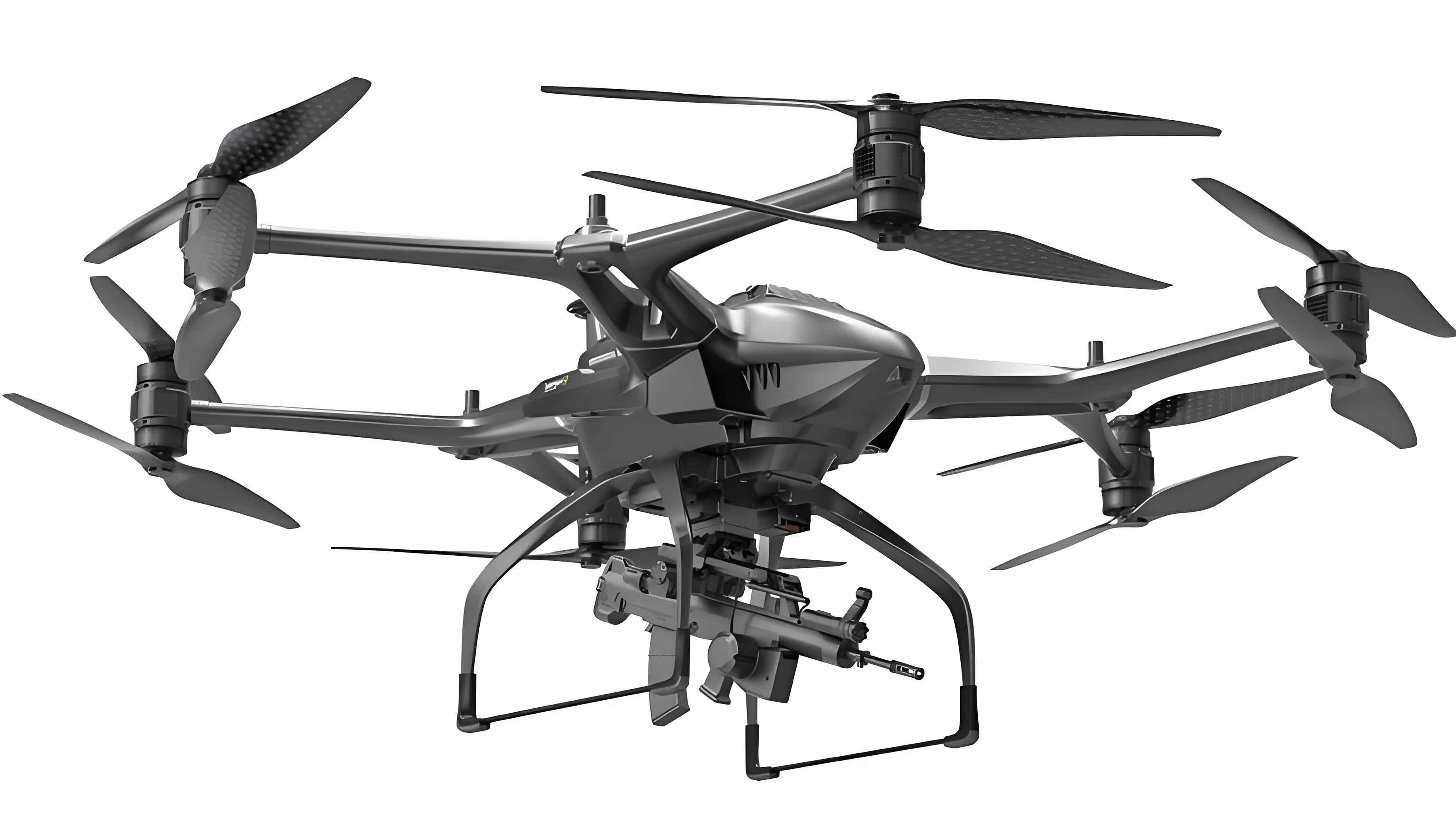
The subsequent decades saw a dramatic expansion in scope and sophistication. The conflicts in the Balkans during the 1990s saw increased use, with the RQ-1 Predator logging hundreds of flight hours. A pivotal shift occurred in the early 2000s during Operation Enduring Freedom in Afghanistan. The desire to shorten the “sensor-to-shooter” timeline—the delay between identifying a time-sensitive target and engaging it—led to the arming of the Predator. The first successful launch of a Hellfire missile from a **military UAV** in 2001 was a watershed moment, blurring the line between sensor and shooter and creating the first true Unmanned Combat Aerial Vehicle (UCAV). By the 2003 Iraq War, the U.S. deployed over a dozen different UAV systems, numbering around 90 aircraft, performing roles from tactical scouting to armed overwatch. The following table summarizes this accelerated deployment history.
| UAV System | Conflict / Operation | Timeframe | Primary Role Demonstrated |
|---|---|---|---|
| Pioneer | Desert Storm (Gulf War) | 1991 | Reconnaissance, Naval Gunfire Spotting |
| RQ-1 Predator | Allied Force (Kosovo), Provide Hope (Bosnia) | 1995-1999 | ISR, Experimental Laser Designation |
| RQ-1 / MQ-1 Predator | Enduring Freedom (Afghanistan), Iraqi Freedom | 2001-2003 | Armed ISR, Direct Strike |
| RQ-4 Global Hawk | Enduring Freedom, Iraqi Freedom | 2001-2003 | High-Altitude, Long-Endurance (HALE) Strategic ISR |
| RQ-11 Raven, RQ-7 Shadow | Iraqi Freedom | 2003 | Small-Tactical, Platoon/Company-Level ISR |
The Phased Evolution of Operational Missions
The progression of the **military UAV**’s mission set is not merely a story of adding weapons. It is a layered evolution driven by operational necessity and enabled by technological advancement. We can model this evolution as a function of increasing autonomy and task complexity over time:
$$ M(t) = I_{ISR} + D(t) \cdot A_{Strike} + C(t) \cdot A_{Multi} $$
Where \( M(t) \) is the total mission capability at time \( t \), \( I_{ISR} \) is the foundational ISR capability (a constant), \( D(t) \) is a deployment function that scaled from 0 to 1 after 2001, \( A_{Strike} \) is the strike capability coefficient, and \( C(t) \) is a convergence function representing the integration of additional roles like electronic warfare, communications relay, and close air support.
Phase 1: The Eyes of the Fleet (1990s). The primary mission was pure ISR. UAVs like the Pioneer provided overhead imagery, reducing the fog of war. Their effectiveness was measured in quality of intelligence and survivability in contested airspace.
Phase 2: The Designator (Late 1990s – Early 2000s). The next logical step was to use the UAV’s persistent stare to guide weapons from other platforms. Experiments with laser designators on the Predator allowed it to “paint” targets for manned strike aircraft, increasing the latter’s effectiveness and survivability.
Phase 3: The Armed Hunter (2001-Present). The integration of air-to-ground missiles (AGM-114 Hellfire) transformed the **military UAV** into a hunter-killer. This closed the sensor-to-shooter loop to mere seconds, making the platform ideal for time-sensitive targeting and counter-insurgency operations. The MQ-9 Reaper, with its greater payload and endurance, epitomizes this phase.
Phase 4: The Multi-Role Node (Present – Near Future). Today, the **military UAV** is conceived as a multi-role node in a networked force. Missions now regularly include Signals Intelligence (SIGINT), Communications Relay (e.g., linking dispersed ground units), Electronic Attack, and even nascent air-to-air capabilities. This phase is characterized by mission modularity, where payloads are swapped to meet specific tasking. The evolution can be summarized as follows:
| Evolution Phase | Time Period | Core Mission | Key Enabler | Example System |
|---|---|---|---|---|
| 1. ISR Platform | 1990-1999 | Reconnaissance & Surveillance | Electro-Optical/Infrared Sensors, Data Link | RQ-2 Pioneer |
| 2. Target Designator | 1999-2001 | Laser Designation for Manned Aircraft | Laser Target Designator | RQ-1 Predator (Modified) |
| 3. Armed Hunter | 2001-2010 | Direct Kinetic Strike | Weapon Hardpoints, Precision Guided Munitions | MQ-1 Predator, MQ-9 Reaper |
| 4. Multi-Role Node | 2010-Present | ISR, Strike, EW, Comm Relay, SEAD/DEAD* | Modular Open Architecture, Advanced Autonomy | MQ-9 with Pods, MQ-25 Stingray, Loyal Wingman |
*SEAD/DEAD: Suppression/Destruction of Enemy Air Defenses
New Operational Demands: The Shift to Joint Capability Areas (JCAs)
The ad-hoc, platform-centric development of early **military UAVs** gave way to a more holistic, capability-driven approach. The U.S. Department of Defense’s “Unmanned Systems Integrated Roadmap” reflects this by organizing future requirements around Joint Capability Areas (JCAs). JCAs are functional bins that describe what the joint force needs to do, allowing planners to map systems and technologies to ultimate warfighting effects. For **military UAVs**, five primary JCAs are most relevant, each defining a new vector for development and employment.
The shift to JCAs implies a move from optimizing a single platform (e.g., “build a better reconnaissance drone”) to providing a scalable, networked capability. The effectiveness of a **military UAV** swarm or a mixed team of UAVs and manned aircraft in providing a JCA can be modeled as a network effect:
$$ E_{UAS}(JCA) = \sum_{i=1}^{n} (C_i \cdot I_i) + \alpha \sum_{i \neq j} L_{ij} $$
Here, \( E_{UAS} \) is the effectiveness in a specific JCA, \( C_i \) is the capability of the i-th UAV, \( I_i \) is its level of interoperability, \( L_{ij} \) is the data link/coordination strength between UAVs \( i \) and \( j \), and \( \alpha \) is a scaling factor representing the value of networking. This shows that future **military UAV** value is derived both from individual platform capability and, critically, from their ability to collaborate.
1. Battlespace Awareness (BA). This remains the cornerstone JCA for **military UAVs**. It encompasses all aspects of ISR but expands it to include multi-INT (multiple intelligence sources) fusion, predictive analysis, and persistent surveillance over immense areas. The demand is for systems that can provide actionable intelligence, not just raw data, across all domains and in all weather conditions. The RQ-4 Global Hawk and future systems like the RQ-180 are key contributors.
2. Force Application (FA). This JCA covers the application of lethal and non-lethal force. **Military UAVs** are now expected to perform increasingly complex strike missions, including penetrating contested airspace (requiring stealth), engaging moving targets in urban environments, and conducting Suppression of Enemy Air Defenses (SEAD). The future MQ-Next and collaborative “Loyal Wingman” drones, designed to team with manned fighters like the F-35, are central to this JCA. The governing equation for a strike mission’s probability of success \( P_s \) might consider UAV-specific factors:
$$ P_s = [1 – (1-A_{det}) \cdot (1-S_{stealth})] \cdot A_{weapon} \cdot R_{timeliness} $$
Where \( A_{det} \) is the avoidance probability from active detection (e.g., via electronic attack), \( S_{stealth} \) is the reduction in detection from low-observable design, \( A_{weapon} \) is the single-shot probability of kill, and \( R_{timeliness} \) is a time-critical factor (higher for faster engagement).
3. Protection (P). **Military UAVs** are ideal for dull, dirty, and dangerous protective tasks. This includes base perimeter surveillance (as performed by small UAVs like the Desert Hawk in Iraq), chemical/biological/radiological sensing, counter-UAV operations, and missile defense support. Their use removes human operators from immediate harm.
4. Logistics (L). While less glamorous, the logistics JCA is vital. **Military UAVs** are being developed for autonomous cargo resupply (e.g., Kaman K-MAX in Afghanistan), aerial refueling (the MQ-25 Stingray for carrier decks), and medical evacuation concepts. This extends the operational range and endurance of other forces. The cargo capacity \( W_{log} \) for a logistics UAV can be a direct function of its design:
$$ W_{log} = k \cdot (S_{wing} \cdot \rho_{fuel})^{0.5} – W_{empty} $$
Where \( k \) is a design constant, \( S_{wing} \) is wing area, \( \rho_{fuel} \) is fuel density, and \( W_{empty} \) is the empty weight of the UAV.
5. Building Partnerships (BP). Interoperable **military UAVs** can be a key tool for building allied and partner capacity. Sharing ISR data from a Global Hawk or providing training on smaller tactical systems strengthens coalitions and enables partnered operations.
Future Performance Envelope and the Centrality of Autonomy
To meet the demands of these evolving JCAs, the performance characteristics of **military UAVs** must advance significantly. Roadmap documents project a 25-year development envelope where the single most critical performance metric is Autonomy. Moving from remotely piloted vehicles to fully autonomous systems is the key to scalability, resilience in communications-denied environments, and effective teaming.
The level of autonomy \( L_A \) can be modeled as a function of the complexity of the environment \( E \) and the required task independence \( T \):
$$ L_A(t) = \frac{\int (P(t) \cdot S(t) \cdot D(t)) \, dt}{H_{in\_loop}} $$
Where \( P(t) \) is processing power, \( S(t) \) is sensor fusion capability, \( D(t) \) is algorithmic maturity for decision-making, and \( H_{in\_loop} \) represents the necessity for human intervention. The goal is to minimize \( H_{in\_loop} \) over time, especially for tactical decisions, while maintaining appropriate human judgment for strategic lethal authority.
The projected performance envelope for **military UAVs** across two key dimensions—domain-agnostic attributes and air-domain-specific characteristics—illustrates the ambitious trajectory.
| Cross-Domain Performance Envelope for Unmanned Systems (2009-2034) | |||
|---|---|---|---|
| Key Attribute | ~2009 State | ~2015 Goal | ~2034 Vision |
| Autonomy & Control | 1 Operator : 1 UAV; Manual Control | 1 Operator : Multiple UAVs; Supervised Autonomy | 1 Operator : Swarm/Formation; Fully Autonomous Tactical Behavior |
| Mission Duration | Hours to Days | Days to Weeks | Months to Years (with in-flight servicing/refueling) |
| Collaboration | Single System Operations | Coordinated Swarms within a Domain (Air) | Collaborative Teams Across Domains (Air, Sea, Land) |
| Interoperability | Proprietary Data Links, Limited Bandwidth | Open Architectures, Advanced Bandwidth Management | Seamless, Resilient Integration into Joint All-Domain Command & Control (JADC2) |
| Air-Vehicle-Specific Performance Envelope for Military UAVs (2009-2034) | |||
|---|---|---|---|
| Key Attribute | ~2009 State | ~2015 Goal | ~2034 Vision |
| Speed & Maneuverability | Subsonic, ~1-3 g limits | Transonic, ~9 g capability | Hypersonic concepts, ~40 g capability for evasion |
| Survivability | Limited Stealth (RQ-170), Threat Detection | Low Observable Designs, Basic Threat Response | Active Self-Defense (e.g., directed energy), Adaptive Stealth |
| Situational Awareness | Onboard Sensors, Ground-Based SA | Onboard Sensor Fusion, Manned-UA Teaming | Fully Autonomous Sense-and-Avoid (vs. small objects), Predictive Battlespace Awareness |
| All-Weather Operation | Limited by precipitation, icing, turbulence | Moderate tolerance to adverse conditions | High tolerance/immunity to all environmental conditions |
The pursuit of these performance goals, particularly high levels of autonomy and seamless integration, will drive **military UAV** development for decades. The ultimate vision is a fully integrated force where manned platforms, **military UAVs**, ground robots, and unmanned undersea vehicles operate as a cohesive, adaptable network. In this construct, the **military UAV** is no longer a standalone asset but a critical, intelligent node in a distributed combat system. From their humble beginnings as remote-controlled cameras to their future as autonomous, collaborative, multi-role combatants, **military UAVs** have irrevocably established themselves as central actors in the past, present, and unquestionably the future of warfare.