
In modern warfare, the role of military UAVs has become increasingly pivotal, driving a surge in demand for skilled operators. As a researcher in this field, I have observed that the cultivation and training of military UAV operators are critical to harnessing this emerging combat capability. While significant advancements have been made in military UAV technologies such as remote sensing, communication, and virtual reality, there remains a relative paucity of research focusing on the cognitive abilities required by military UAV operators and their training methodologies. Cognitive ability, defined as the brain’s capacity to process, store, and retrieve information, is a comprehensive reflection of a flight operator’s quality and skill level. It serves as the core element in handling various events and ensuring the successful completion of missions. Although studies on cognitive abilities and assessment methods for manned aircraft pilots are abundant, military UAV operators represent a novel occupational role, and research in this area is still in its nascent stages. This paper aims to bridge this gap by examining the unique occupational characteristics of military UAV operators, delineating their cognitive ability requirements, and analyzing targeted training methods, with the goal of providing a reference for the development and training of military UAV operators in contemporary armed forces.
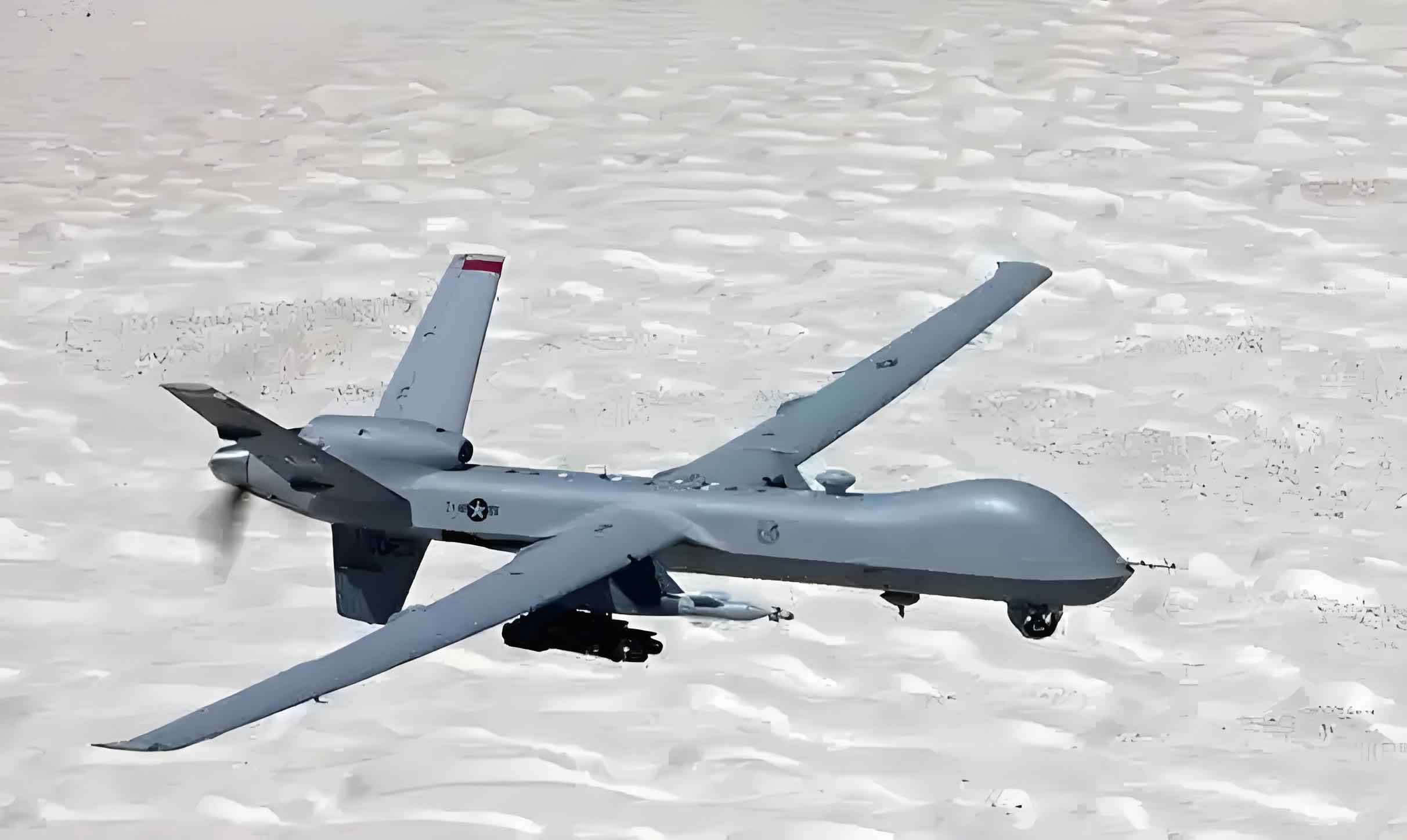
The proliferation of military UAVs in conflicts underscores their strategic importance. For instance, the United States leads in military UAV technology, with diverse applications including relay communication, electronic warfare, reconnaissance, and attack, spanning strategic, operational, and tactical levels. Since the 1990s, rapid development in military UAVs has occurred globally, with numerous target drones and reconnaissance UAVs being developed. The successful maiden flight of a new generation of reconnaissance-strike integrated military UAVs in 2017 further accelerated research and application in this domain. However, compared to hot topics like remote sensing or virtual reality, the cognitive demands and training for military UAV operators have received insufficient attention. This paper leverages insights from manned aviation psychology and occupational analysis systems to explore these aspects, emphasizing the distinct challenges posed by military UAV operations.
Military UAV operators face a unique set of occupational characteristics that differentiate them from traditional pilots. These characteristics significantly influence the cognitive abilities required and the training approaches needed. Below, I outline three primary features:
| Characteristic | Description | Impact on Cognitive Demands |
|---|---|---|
| Human-Machine Separation | Operators work in a cockpit environment but lack physical and biological feedback (e.g., vestibular, auditory, tactile cues), relying solely on visual data from displays. This creates a “sensory isolation” effect, with delayed data transmission complicating real-time situational awareness. | Enhances requirements for spatial reasoning, visual attention, and ability to map data to dynamic macro-situations. |
| Frequent Emergencies and High Psychological Stress | Military UAV missions, such as reconnaissance and precision strikes, involve frequent unexpected events. Human error, often due to situational awareness lapses, accounts for a significant portion of accidents. Operators experience stress comparable to or exceeding that of manned pilots, with risks of collateral damage and psychological issues like anxiety or PTSD. | Demands enhanced judgment, decision-making under pressure, and stress resilience. |
| High Workload and Fatigue Proneness | Long endurance missions require shift work, with operators monitoring multiple displays amid noise and radiation. Prolonged attention to data streams leads to fatigue, increasing error rates and chronic sleep issues. | Necessitates robust attention control, working memory, and fatigue management skills. |
These characteristics underscore that military UAV operations place exceptional cognitive demands on operators, necessitating tailored training regimens. The human-machine separation, for instance, means operators must infer spatial relationships from limited visual cues, unlike manned pilots who experience direct kinesthetic feedback. This can be modeled using spatial cognition formulas, where the operator’s mental representation of the military UAV’s position is updated based on incoming data. Consider a simplified model for spatial updating:
$$P(t+1) = P(t) + v(t) \cdot \Delta t + \epsilon(t)$$
Here, \(P(t)\) represents the estimated position of the military UAV at time \(t\), \(v(t)\) is the velocity derived from instrument data, \(\Delta t\) is the time interval, and \(\epsilon(t)\) accounts for perceptual errors due to data delay or noise. This equation highlights the cognitive load in maintaining accurate spatial awareness without direct sensory input.
Building on these occupational traits, I now delineate the specific cognitive abilities required for military UAV operators. Drawing from frameworks like the O*NET work analysis system, U.S. Armed Forces vocational aptitude tests, and cognitive ability assessments for pilots, I categorize these abilities into seven core domains. Each domain is critical for effective operation of military UAVs, and together, they constitute what I term “flight cognitive ability”—a synthesis of skills that enables operators to process information efficiently in high-stakes environments.
| Cognitive Ability | Definition | Relevance to Military UAV Operations |
|---|---|---|
| Attention Ability | The capacity to focus sensory information on relevant stimuli, involving selective allocation of limited cognitive resources. | Essential for monitoring multiple displays, tracking targets, and ignoring distractions during military UAV missions. |
| Working Memory | The ability to temporarily store and manipulate information, central to complex tasks like learning, reasoning, and comprehension. | Critical for retaining flight parameters, mission objectives, and sensor data while executing commands in military UAV control. |
| Judgment and Decision-Making | The cognitive process of analyzing input information and producing outputs based on knowledge, information completeness, and skill proficiency. | Vital for real-time choices during emergencies, such as evasive maneuvers or weapon deployment in military UAV scenarios. |
| Perceptual Speed | Also known as information processing speed, encompassing reaction time, short-term memory processing speed, and retrieval speed. | Directly impacts operational efficiency, enabling quick responses to changing conditions in military UAV environments. |
| Spatial Cognitive Ability | The skill to recognize spatial relationships among geographic elements, assess positions of air/ground targets, and mentally manipulate spatial data. | Particularly crucial due to human-machine separation; operators must infer 3D dynamics from 2D displays in military UAV operations. |
| Thinking Ability | Involves mental processes like judgment, abstraction, reasoning, imagination, and problem-solving, divided into decision-making, executive thinking, and learning. | Supports adaptive thinking in complex military UAV missions, such as planning routes or interpreting intelligence feeds. |
| Problem-Solving Ability | The capability to understand and resolve novel situations where standard solutions are absent, through cognitive restructuring. | Key for handling unexpected technical failures or mission deviations in military UAV tasks. |
To quantify some of these abilities, we can employ mathematical models. For attention ability, I propose a resource allocation model where attention \(A\) is distributed across \(n\) tasks (e.g., monitoring displays for a military UAV):
$$A_i = \frac{w_i \cdot I_i}{\sum_{j=1}^{n} w_j \cdot I_j} \cdot A_{\text{total}}$$
Here, \(A_i\) is attention allocated to task \(i\), \(w_i\) is the task priority weight, \(I_i\) is information salience, and \(A_{\text{total}}\) is the operator’s total attentional capacity. This formula underscores the need for training to optimize \(w_i\) and manage \(A_{\text{total}}\) under fatigue. Similarly, working memory capacity \(C\) can be described by a logarithmic relation:
$$C = k \cdot \ln(N+1)$$
where \(N\) is the number of information chunks (e.g., military UAV sensor readings) and \(k\) is an individual-specific constant influenced by training. Enhancing \(k\) through practice is a goal of cognitive training.
Given these cognitive requirements, developing effective training methods is paramount for preparing military UAV operators. Traditional approaches often repurpose manned aircraft pilots, but this wastes resources, as military UAV operators do not need to meet stringent physiological demands (e.g., hypoxia tolerance). Instead, simulation-based training allows novice personnel to acquire necessary skills efficiently. Inspired by U.S. military practices, training typically includes theoretical instruction, simulator exercises, and live flight practice. Theoretical modules cover aerodynamics, military UAV systems, data links, and navigation, building foundational knowledge. Simulator training involves virtual missions and crew coordination drills, while flight training progresses from small to large military UAVs. To address specific cognitive domains, I propose targeted training methodologies, each designed to enhance particular abilities crucial for military UAV operations.
First, attention ability training focuses on improving concentration, reducing distractibility, and boosting work accuracy. Methods include visual-auditory attention drills, attention shifting exercises, and integrated attention tasks. For instance, operators might practice tracking multiple moving targets on a screen while ignoring irrelevant cues, simulating the multi-display environment of a military UAV cockpit. A table summarizing attention training techniques is provided below:
| Training Type | Description | Example Exercise |
|---|---|---|
| Visual Attention Training | Enhances focus on visual stimuli, critical for interpreting military UAV camera feeds. | Identifying target changes in cluttered aerial imagery over time. |
| Attention Transfer Training | Improves ability to shift focus between tasks rapidly. | Alternating between monitoring radar and communication displays in a simulated military UAV mission. |
| Attention Allocation Training | Teaches optimal distribution of cognitive resources. | Using the attention model $$A_i$$ to prioritize tasks during a complex military UAV scenario. |
Second, working memory training aims to expand storage capacity and enhance executive control. This involves exercises for the phonological loop (e.g., remembering verbal commands), visuospatial sketchpad (e.g., recalling spatial layouts), and central executive (e.g., inhibiting irrelevant information). A common method is the n-back task, where operators must indicate when a current stimulus matches one presented n steps earlier, gradually increasing n to boost memory load. The effectiveness can be modeled as:
$$\Delta C = \alpha \cdot \log(T) + \beta$$
where \(\Delta C\) is the improvement in working memory capacity, \(T\) is training duration, and \(\alpha, \beta\) are learning rate parameters. Such training is vital for handling the data-intensive nature of military UAV operations.
Third, perceptual speed training emphasizes quick information processing under time pressure. Techniques include symbol-digit coding tests and number comparison tasks, where operators must rapidly match or differentiate sets of digits. For example, in a military UAV context, operators might practice identifying friend-or-foe icons on a fast-moving display. The reaction time \(RT\) can be expressed as:
$$RT = a + b \cdot \log_2(S)$$
Here, \(RT\) is reaction time, \(S\) is stimulus complexity, and \(a, b\) are constants reducible through training. Faster perceptual speed enables quicker responses to threats in military UAV missions.
Fourth, spatial cognitive ability training is especially critical due to the human-machine separation in military UAV operations. It encompasses spatial orientation, localization, and reasoning exercises. Methods involve hidden figure tests, mental rotation tasks, and 3D visualization drills. Operators might use simulators to navigate a military UAV through virtual terrain based on 2D maps, strengthening their ability to infer 3D spatial relationships. A formula for spatial updating accuracy \(A_s\) could be:
$$A_s = 1 – \frac{\sum |P_{\text{estimated}} – P_{\text{actual}}|}{N \cdot R}$$
where \(P\) denotes position, \(N\) is the number of updates, and \(R\) is a normalization factor. Training aims to maximize \(A_s\) by improving mental rotation skills, often measured by angular disparity \(\theta\) in rotation tasks:
$$RT_{\text{rotation}} = k \cdot \theta + c$$
Reducing the slope \(k\) through practice indicates enhanced spatial efficiency.
Fifth, thinking ability training fosters higher-order cognitive skills like reasoning, abstraction, and learning. Approaches include structured thinking courses (e.g., Somerset Thinking Skills), domain-specific drills (e.g., military UAV mission planning), and cross-domain exercises. For instance, operators might engage in scenario-based debates to refine decision-making logic. This can be framed using a utility maximization model for decisions:
$$D^* = \arg \max_{a \in A} \sum_{s \in S} P(s|o) \cdot U(a, s)$$
where \(D^*\) is the optimal decision, \(a\) an action (e.g., maneuvering a military UAV), \(s\) a state (e.g., enemy position), \(o\) observations, \(P\) the probability, and \(U\) the utility. Training enhances the estimation of \(P\) and \(U\) in dynamic military UAV environments.
Sixth, problem-solving ability training equips operators to tackle novel challenges. Methods include “means-ends” analysis (forward chaining), “ends-means” analysis (backward chaining), and problem transformation (changing problem perspectives). Computer-based systems like the PISA assessment simulate complex scenarios, such as system failures in a military UAV, requiring operators to diagnose and resolve issues. The problem-solving process can be modeled as a search in a state space:
$$S_{t+1} = f(S_t, A_t) + \eta_t$$
where \(S_t\) is the problem state at time \(t\), \(A_t\) is the action taken, \(f\) is a transition function, and \(\eta_t\) represents uncertainty. Training reduces \(\eta_t\) by building heuristic strategies.
In addition to these cognitive drills, integrating multidisciplinary training is essential. Military UAV task groups often include operators, mission planners, and intelligence monitors, so role-awareness and coordination exercises are crucial. Simulated multi-crew sessions can foster teamwork, optimizing the synergistic performance of military UAV units. Moreover, the cognitive training should be adaptive, using algorithms to adjust difficulty based on operator performance, akin to a reinforcement learning framework:
$$Q(s,a) \leftarrow Q(s,a) + \alpha [r + \gamma \max_{a’} Q(s’,a’) – Q(s,a)]$$
Here, \(Q\) represents the expected cumulative reward for taking action \(a\) in state \(s\) (e.g., a training scenario), with learning rate \(\alpha\) and discount factor \(\gamma\). This approach personalizes training for military UAV operators, maximizing skill acquisition.
Beyond individual cognitive training, addressing the psychological well-being of military UAV operators is paramount. These personnel operate under military stress conditions—facing harsh environments, mental overload, and intense workloads—which can trigger stress responses and non-combat attrition. Prolonged exposure to high-stakes military UAV missions, such as prolonged surveillance or strike operations, may lead to cognitive impairments like anxiety or decreased situational awareness. To mitigate this, I recommend a multi-faceted approach: First, implement rigorous screening for physical and mental health during selection. Second, foster a supportive social environment with strong interpersonal bonds and self-identity reinforcement. Third, employ dedicated psychological professionals to conduct regular mental health assessments and interventions, especially for operators engaged in high-stress military UAV tasks. The stress-cognition relationship can be described by a Yerkes-Dodson type curve:
$$\text{Performance} = \frac{\alpha \cdot \text{Arousal}}{\beta + \text{Arousal}^2}$$
where \(\alpha\) and \(\beta\) are individual parameters, and arousal relates to stress levels. Training should aim to optimize arousal for peak cognitive performance during military UAV operations, avoiding burnout.
Looking ahead, the research on cognitive abilities for military UAV operators is still evolving. As military UAV technology advances—with trends toward autonomy, swarming, and AI integration—the cognitive demands may shift, requiring continuous updates to training protocols. Future studies should explore neuroergonomic aspects, such as using EEG or fNIRS to monitor cognitive load in real-time during military UAV simulations. Additionally, cross-cultural comparisons of training efficacy could inform global standards. The integration of virtual reality (VR) and augmented reality (AR) into training systems offers immersive environments that better replicate the sensory constraints of military UAV operations, potentially enhancing spatial and attention training. A proposed framework for adaptive training might involve:
$$T_{\text{next}} = g(P_{\text{current}}, H_{\text{history}}, \Theta)$$
where \(T_{\text{next}}\) is the next training module, \(P_{\text{current}}\) is current performance, \(H_{\text{history}}\) is past training data, and \(\Theta\) are model parameters tuned via machine learning.
In conclusion, the cognitive abilities of military UAV operators are a cornerstone of effective unmanned warfare. Through a detailed analysis of occupational characteristics, I have identified seven key cognitive domains—attention, working memory, judgment, perceptual speed, spatial cognition, thinking, and problem-solving—each demanding targeted training. By employing simulation-based methods, adaptive exercises, and psychological support, we can cultivate skilled operators capable of handling the unique challenges of military UAV operations. As military UAVs become ever more integral to defense strategies, investing in cognitive training will ensure that this new combat force is rapidly and effectively deployed, maintaining operational superiority in modern battlespaces. This paper serves as a foundational exploration, urging further empirical research to refine these training methodologies for the dynamic future of military aviation.