
As a military analyst focused on aerial defense systems, I have closely observed the evolution of military UAV technology in Western Europe. Over the years, the armed forces of major Western European nations have demonstrated a proactive and rapid approach to adopting and developing military UAVs. These systems, primarily consisting of small reconnaissance and tactical drones, have become integral to modern warfare, as seen in recent conflicts like Kosovo. However, despite their deployment, I note that Western European military UAVs often lack real-time processing capabilities and generally lag behind world-leading technologies. This gap has spurred comprehensive near-term and long-term development plans, with countries like France, Germany, and the United Kingdom pursuing distinct strategies to enhance their military UAV fleets. In this analysis, I will delve into the current status, recent initiatives, and future roadmaps, using tables and formulas to summarize key aspects, while emphasizing the critical role of military UAVs in shaping defense landscapes.
From my perspective, the use of military UAVs in Western Europe has been marked by enthusiastic adoption but technological moderation. Nations such as the United Kingdom, France, Germany, and Italy have equipped their forces with a mix of domestically developed and imported military UAVs, predominantly for reconnaissance and tactical roles. For instance, during the Kosovo conflict, various drones were deployed to support NATO operations, providing substantial intelligence and reinforcing the importance of military UAVs in surveillance systems. Yet, based on my assessments, these military UAVs often fall short in advanced features like real-time data handling, highlighting a need for innovation. The overall technological level remains modest compared to global leaders, driving Western European countries to prioritize upgrades and new projects. This urgency stems from the booming global drone technology sector and the demands of contemporary warfare, where military UAVs are increasingly pivotal for missions ranging from surveillance to combat.
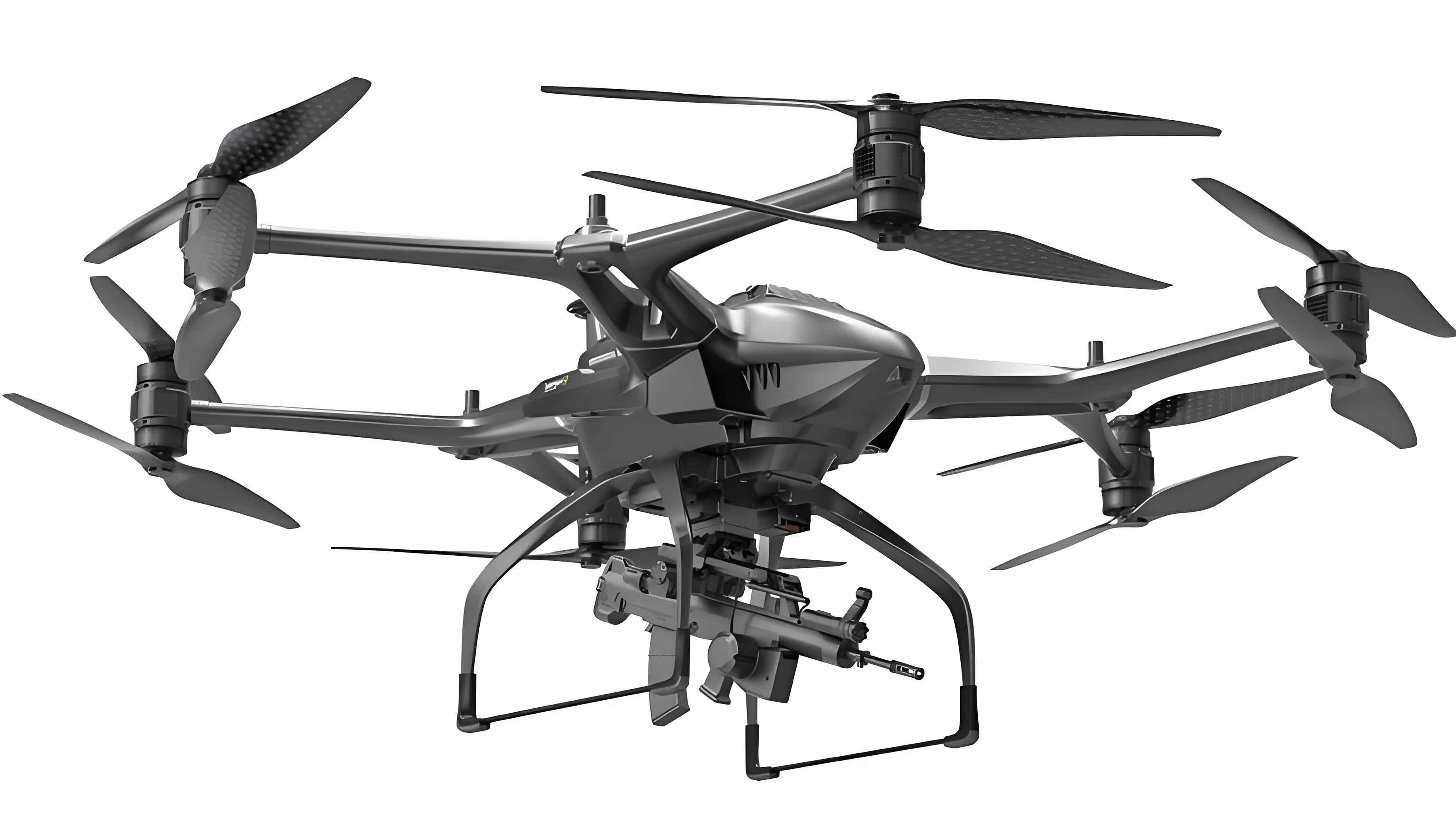
In examining the near-term plans, I find that Western European nations have tailored their military UAV programs to address immediate operational needs. France, for example, has launched several initiatives to modernize its fleet. The Multi-Sensor Multi-Mission UAV System, proposed in recent years, aims to replace older models like the “Red” and “Sparrow” drones, focusing on battlefield intelligence, target acquisition, and electronic warfare. This system is scheduled for deployment around the mid-2020s, with the French Army planning to acquire multiple units at a cost of billions of euros. Additionally, France is developing a medium-altitude long-endurance (MALE) military UAV based on Israel’s “Heron” platform, serving as a transitional solution for reconnaissance and data relay tasks. The French Air Force intends to procure several systems, with total expenses estimated in the range of hundreds of millions of euros. Another notable project is the combat military UAV, designed with stealth features such as composite materials and an upper-mounted intake duct. This drone, controlled via satellite links from aircraft like the “Rafale,” is undergoing prototype testing to evaluate flight characteristics and radar cross-sections, with full-scale development expected in the coming years. Furthermore, France is investing in micro military UAVs for urban warfare, exploring concepts like flapping-wing and vibrating-wing designs through research on artificial muscles and micro-electromechanical systems.
Germany’s near-term approach to military UAVs emphasizes cost-effectiveness and multi-role capabilities. A key project is the “Euro Hawk,” derived from Northrop Grumman’s “Global Hawk,” which will serve as Europe’s first high-altitude long-endurance (HALE) military UAV for signals intelligence. It is slated for operational use by the late 2020s. Concurrently, Germany is advancing the “Typhoon” combat military UAV, designed for anti-tank and anti-aircraft roles. This drone features a gull-wing layout, composite construction, and autonomous guidance using terrain matching and GPS-inertial systems. With a planned entry into service in the early 2030s, the German Army anticipates a demand for thousands of units. The “Typhoon” incorporates a synthetic aperture radar capable of detecting targets at altitudes below several thousand meters, enhancing its utility in diverse combat scenarios. To summarize these national efforts, I present a table comparing key near-term military UAV projects in Western Europe:
| Country | Military UAV Project | Primary Role | Key Parameters | Estimated Deployment |
|---|---|---|---|---|
| France | Multi-Sensor Multi-Mission UAV System | Reconnaissance, Electronic Warfare | Multi-sensor payload, replacement for legacy drones | Mid-2020s |
| France | MALE UAV (based on “Heron”) | Intelligence, Data Relay | Transitional platform, cost in billions of euros | Late 2020s |
| France | Combat UAV | Attack Missions | Stealth design, satellite-controlled, composite materials | 2030s |
| France | Micro UAV | Urban Warfare | Flapping/vibrating wings, micro-technologies | 2030s |
| Germany | “Euro Hawk” | Signals Intelligence (HALE) | Derived from “Global Hawk,” electronic intelligence system | Late 2020s |
| Germany | “Typhoon” Combat UAV | Anti-Tank, Ground Attack | Gull-wing, autonomous guidance, radar payload | Early 2030s |
| United Kingdom | “Watchkeeper” MALE UAV | Surveillance, Target Designation | Multi-sensor suite (EO/IR, SAR, laser), NATO interoperable | Late 2020s |
| United Kingdom | Multi-Role UAV | Maritime Patrol, Combat | Ocean surveillance, communication relay | 2030s |
The United Kingdom, in my view, prioritizes networked and multi-sensor military UAVs for enhanced situational awareness. The “Watchkeeper” program, a medium-altitude long-endurance military UAV, integrates electro-optical, infrared, synthetic aperture radar, and laser systems for comprehensive battlefield coverage. Designed with interoperability for NATO forces, it is expected to enter service in the late 2020s. Additionally, the UK is exploring a multi-purpose military UAV for roles such as maritime surveillance and combat, with trials planned for the early 2030s. These initiatives reflect a broader trend where Western European countries are not only upgrading existing military UAVs but also venturing into advanced domains like combat and long-endurance operations. From my analysis, the technological hurdles include improving real-time processing, which can be modeled using performance formulas. For instance, the endurance of a military UAV, a critical parameter for long-duration missions, can be expressed as: $$ E = \frac{W_f \cdot \eta}{P \cdot C} $$ where \( E \) is endurance in hours, \( W_f \) is fuel weight, \( \eta \) is propulsion efficiency, \( P \) is power required, and \( C \) is specific fuel consumption. This formula underscores the engineering challenges in developing military UAVs with extended loiter times, a focus area for European projects.
Looking ahead, the long-term development plans for military UAVs in Western Europe emphasize collaborative efforts to reduce costs and leverage shared expertise. Under the “European Capability Action Plan,” defense ministers have accorded high priority to military UAVs as essential equipment for rapid reaction forces. Consortia like the European Aeronautic Defence and Space Company (EADS), involving nations such as the UK, France, Germany, and Spain, are spearheading joint programs for next-generation military UAVs. These include the European Long-Endurance UAV (ELE UAV), European Combat UAV (EC UAV), and European Reconnaissance UAV (ER UAV), all currently in conceptual design phases. Based on my reviews, the ELE UAV aims for high- and medium-altitude surveillance missions, with initial operational capability targeted around 2035. Its design parameters, as discussed in forums, include a wingspan of approximately 25 meters, length of 15 meters, and a maximum takeoff weight of around 15,000 kilograms. The performance can be summarized using a formula for range: $$ R = V \cdot E \cdot \ln\left(\frac{W_i}{W_f}\right) $$ where \( R \) is range in kilometers, \( V \) is cruise velocity, \( E \) is endurance, and \( W_i \) and \( W_f \) are initial and final weights, respectively. This highlights the aerodynamic and propulsion optimizations needed for such military UAVs.
The European Combat UAV, intended for ground attack roles, represents a more ambitious leap in military UAV technology. With participation from multiple Western European countries, it targets supersonic speeds, deep penetration capabilities, and advanced weaponry integration. Key design specs include a wingspan of about 10 meters, length of 12 meters, and a maximum speed exceeding Mach 1.5. I estimate its operational radius to be over 1,000 kilometers, with a payload capacity of several hundred kilograms. The development timeline envisions deployment post-2030, with full operational capability by 2040. Similarly, the European Reconnaissance UAV focuses on high-speed, air-launched surveillance, featuring parameters like a wingspan of 8 meters and a maximum speed of Mach 0.9 at sea level. To compare these long-term military UAV projects, I have compiled a table summarizing their envisioned characteristics:
| Project | Primary Mission | Key Design Parameters | Performance Metrics | Target IOC |
|---|---|---|---|---|
| European Long-Endurance UAV (ELE UAV) | Surveillance, Reconnaissance | Wingspan: 25 m, Length: 15 m, MTOW: 15,000 kg | Endurance: 40+ hours, Payload: 1000 kg | ~2035 |
| European Combat UAV (EC UAV) | Ground Attack, Air Superiority | Wingspan: 10 m, Length: 12 m, Speed: >1.5 Mach | Radius: 1000+ km, Payload: 500 kg internal | ~2040 |
| European Reconnaissance UAV (ER UAV) | High-Speed Reconnaissance | Wingspan: 8 m, Length: 10 m, Air-launched | Speed: Mach 0.9, Radius: 800 km, Payload: 300 kg | ~2035 |
From my standpoint, these joint initiatives reflect a strategic shift towards cost-sharing and interoperability, addressing common requirements such as high autonomy, survivability, and global deployability. The design criteria for advanced military UAVs, as outlined in European conferences, include: high degree of autonomous control; cost-effectiveness; enhanced survivability through stealth and electronic warfare; compatibility with existing systems; and all-weather, day-night operation capabilities. In technical terms, the radar cross-section (RCS) reduction for stealth military UAVs can be modeled as: $$ \text{RCS} = \frac{4\pi A^2}{\lambda^2} \cdot \sigma $$ where \( A \) is the effective area, \( \lambda \) is the radar wavelength, and \( \sigma \) is the scattering coefficient. Minimizing RCS is crucial for the survivability of combat-oriented military UAVs, a focus in projects like the European Combat UAV. Moreover, network-centric operations, emphasized by the UK, involve data fusion from multiple military UAVs, which can be described using information theory formulas: $$ I(X;Y) = \sum_{x,y} p(x,y) \log \frac{p(x,y)}{p(x)p(y)} $$ where \( I(X;Y) \) represents mutual information between sensor data streams, optimizing reconnaissance efficiency.
In conclusion, as I reflect on the trajectory of military UAV development in Western Europe, it is evident that these systems are evolving from supportive tools to cornerstone assets in defense architecture. The near-term projects address immediate gaps in reconnaissance and tactical roles, while long-term collaborations aim to position Europe as a competitive player in advanced military UAV domains like combat and endurance surveillance. Throughout this analysis, I have underscored the pervasive role of military UAVs in shaping modern warfare doctrines, from intelligence gathering to strike missions. The integration of formulas and tables, as presented, helps quantify the technical ambitions and challenges. Looking forward, I anticipate that continued investment in innovation, coupled with multinational cooperation, will bridge the technological divide and enhance the operational prowess of Western European military UAVs. The journey ahead involves not only hardware advancements but also software integration for real-time processing, ensuring that these military UAVs meet the dynamic demands of future conflicts. As an analyst, I remain vigilant in tracking these developments, recognizing that military UAVs will increasingly define aerial defense strategies in the decades to come.