
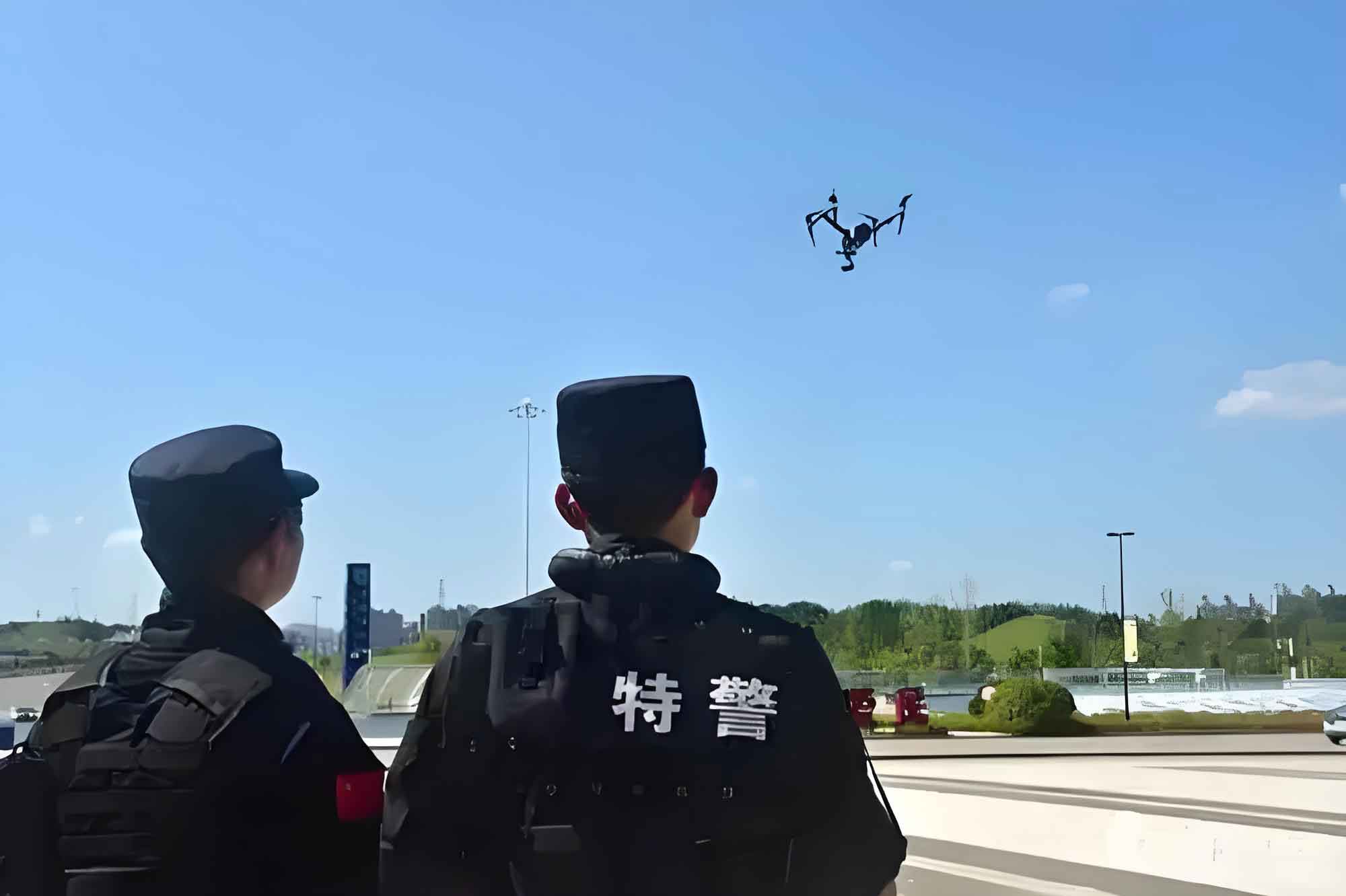
In the aftermath of natural disasters such as earthquakes, the demand for plasma in medical facilities within affected areas surges dramatically. Traditional ground-based delivery methods often become impractical due to severe infrastructure damage, highlighting the critical need for alternative logistics solutions. As a researcher focused on emergency response systems, I have explored the integration of police UAV (unmanned aerial vehicle) technology into plasma supply chains. Police UAVs, typically deployed for surveillance and law enforcement, possess inherent advantages for disaster relief: they are agile, can bypass ground obstacles, and operate in hazardous environments. This article presents a comprehensive study on designing a robust police UAV-based emergency plasma delivery system that addresses uncertainties in supply and demand while ensuring fairness and efficiency. By leveraging advanced optimization techniques, I aim to demonstrate how police UAV fleets can be pre-positioned and dynamically deployed to save lives during the critical 72-hour golden rescue window.
The core challenge lies in the stochastic nature of post-disaster scenarios. Plasma supply from blood centers and demand from hospitals fluctuate based on casualty scales, blood donation rates, and infrastructure integrity. Previous studies have employed stochastic programming, but these assume perfect knowledge of probability distributions—an unrealistic premise in chaotic disaster environments. To overcome this, I propose a two-stage distributionally robust optimization (DRO) model that accounts for worst-case distributional uncertainties. This approach not only enhances system resilience but also aligns with the operational ethos of police UAV units, which must prepare for unpredictable contingencies. Throughout this article, I will emphasize the role of police UAVs as versatile assets in public safety logistics, bridging the gap between law enforcement capabilities and humanitarian aid.
My investigation begins with a detailed problem formulation. Consider a two-echelon network comprising blood centers (set $I$) and hospitals (set $J$). In the pre-disaster preparedness stage, decisions involve configuring police UAV delivery routes between these facilities subject to budget constraints. Each route requires infrastructure investments for launch, landing, and charging stations, akin to establishing police UAV operation points. Let $x_{i,j}$ be a binary variable indicating whether a route is established between blood center $i \in I$ and hospital $j \in J$. The cost per route is $e_{i,j}$, with a total budget $F$. Crucially, police UAVs have a limited flight range $L$ (e.g., 15 km), so routes must satisfy distance constraints: $d_{i,j} \cdot x_{i,j} \leq L$, where $d_{i,j}$ is the Euclidean distance. This pre-positioning mirrors how police UAV units pre-deploy assets for rapid response.
In the post-disaster response stage, plasma delivery quantities are optimized under uncertainty. I categorize plasma into two types: type AB (universal) and type G (comprising A, B, and O, which are not substitutable among themselves but can be replaced by AB). This simplification models real-world blood compatibility protocols. Let random vectors $\xi = (\alpha, \beta, \eta, \theta)$ represent AB-type supply, G-type supply, AB-type demand, and G-type demand, respectively. These are discretized into scenarios $s \in S$ with nominal probabilities $p_s^0$. For each scenario, decision variables include $q_{i,j}^{AB,s}$ and $q_{i,j}^{G,s}$, the quantities of AB and G plasma delivered via police UAV from $i$ to $j$, and shortage variables $f_j^{AB,s}$, $f_j^{G,s}$. The objective is to minimize the maximum shortage ratio across hospitals, promoting equity—a principle central to police UAV missions in ensuring no community is left behind. The second-stage problem for a given scenario is:
$$
\begin{aligned}
\min \quad & u \\
\text{s.t.} \quad & \frac{f_j^{AB,s} + f_j^{G,s}}{\eta_j^s + \theta_j^s} \leq u, \quad \forall j \in J, \\
& \sum_{j \in J} (q_{i,j}^{AB,s} + q_{i,j}^{G,s}) \leq \alpha_i^s + \beta_i^s, \quad \forall i \in I, \\
& \sum_{i \in I} q_{i,j}^{AB,s} + f_j^{AB,s} \geq \eta_j^s, \quad \forall j \in J, \\
& \sum_{i \in I} (q_{i,j}^{G,s} + \hat{q}_{i,j}^{AB,s}) + f_j^{G,s} \geq \theta_j^s, \quad \forall j \in J, \\
& q_{i,j}^{AB,s} + q_{i,j}^{G,s} \leq \hat{R}_{i,j} \cdot x_{i,j}, \quad \forall i \in I, j \in J, \\
& q_{i,j}^{AB,s}, q_{i,j}^{G,s}, f_j^{AB,s}, f_j^{G,s} \geq 0,
\end{aligned}
$$
where $\hat{R}_{i,j}$ is the route capacity, and $\hat{q}_{i,j}^{AB,s}$ denotes AB plasma used as G substitute. The two-stage stochastic programming model minimizes expected costs: $\min \sum_{i,j} e_{i,j} x_{i,j} + \mathbb{E}[Q(x,\xi)]$, with $Q(x,\xi)$ as the second-stage value function. However, to address distributional ambiguity, I adopt a DRO framework using an $L_1$-norm ambiguity set $\mathcal{D} = \{ p \in \mathbb{R}^{|S|}_+ : \sum_{s \in S} |p_s – p_s^0| \leq \sigma, \sum_{s} p_s = 1 \}$, where $\sigma$ controls conservatism. The DRO model seeks robust optimization over worst-case distributions:
$$
\min_{x} \sup_{p \in \mathcal{D}} \mathbb{E}_p[Q(x,\xi)].
$$
Via duality theory, this transforms into a solvable linear program. Introducing dual variables $\lambda, \mu, \rho_s^+, \rho_s^-$, the equivalent formulation is:
$$
\begin{aligned}
\min \quad & \sum_{i,j} e_{i,j} x_{i,j} + \sigma \lambda + \sum_{s \in S} p_s^0 (\rho_s^+ – \rho_s^-) + \mu \\
\text{s.t.} \quad & \lambda \geq 0, \mu \geq 0, \\
& \rho_s^+ + \rho_s^- – \lambda \leq 0, \quad \forall s \in S, \\
& Q(x,\xi^s) \leq \rho_s^+ – \rho_s^- + \mu, \quad \forall s \in S, \\
& \text{and first-stage constraints.}
\end{aligned}
$$
This DRO approach ensures that police UAV routes perform well even under adverse plasma supply-demand realizations, a key requirement for emergency responders.
To validate the model, I developed a case study based on a metropolitan area with 3 blood centers and 7 major hospitals. Historical earthquake data from past 15 years generated 7 disaster scenarios, each with varying plasma supplies and demands. The police UAV used is a multi-rotor logistics drone with a baseline range of 15 km, similar to models deployed by law enforcement agencies for cargo transport. Route capacities $\hat{R}_{i,j}$ are uniformly distributed between 300 and 400 units (plasma bags), and costs $e_{i,j}$ range from 20,000 to 30,000 monetary units. The budget is set at 350,000. Key parameters are summarized in tables below.
| Parameter | Description | Value/Range |
|---|---|---|
| $|I|$ | Number of blood centers | 3 |
| $|J|$ | Number of hospitals | 7 |
| $L$ | Police UAV flight radius | 15 km |
| $\hat{R}_{i,j}$ | Route capacity | U(300, 400) units |
| $e_{i,j}$ | Route configuration cost | U(20,000, 30,000) |
| $F$ | Total budget | 350,000 |
| $|S|$ | Number of scenarios | 7 |
| $\sigma$ | Ambiguity set parameter | 0.03 |
Plasma supply and demand for each scenario are derived from casualty estimates and donation patterns. For brevity, illustrative values for Scenario 1 (magnitude 4.0 earthquake) are shown:
| Facility | AB-Type Supply ($\alpha$) | G-Type Supply ($\beta$) | AB-Type Demand ($\eta$) | G-Type Demand ($\theta$) |
|---|---|---|---|---|
| Blood Center 1 | 70.81 | 524.12 | – | – |
| Blood Center 2 | 85.82 | 586.83 | – | – |
| Blood Center 3 | 64.42 | 390.13 | – | – |
| Hospital 1 | – | – | 17.63 | 202.53 |
| Hospital 2 | – | – | 26.21 | 251.72 |
| Hospital 3 | – | – | 98.91 | 138.09 |
I implemented the DRO model and deterministic benchmarks (one per scenario) using Java with Gurobi solver. Results indicate that the DRO-designed police UAV network achieves a total plasma demand satisfaction rate of 92.14% across historical scenarios, comparable to deterministic models (82.49–96.01%). However, under new test scenarios with amplified uncertainties—simulated by perturbing historical data—the DRO model outperforms significantly, boosting satisfaction by at least 2 percentage points (see Table 1). This robustness stems from the model’s ability to hedge against distributional shifts, ensuring police UAV routes remain effective when actual conditions deviate from forecasts.
| Model Type | Historical Scenarios Avg. Satisfaction (%) | New Test Scenarios Satisfaction (%) | Key Police UAV Routes Configured |
|---|---|---|---|
| Deterministic (Scenario 1) | 94.22 | 82.32 | Blood Center 1: Hospitals 1,2,3; Blood Center 2: Hospitals 4,5,6; Blood Center 3: Hospitals 1,6,7 |
| Deterministic (Scenario 2) | 82.49 | 86.09 | Blood Center 1: Hospitals 1,3,4,6; Blood Center 2: Hospitals 2,3,5,7; Blood Center 3: Hospitals 1,4,5,6,7 |
| DRO (with $\sigma=0.03$) | 92.14 | 88.52 | Blood Center 1: Hospitals 1,3,4,5; Blood Center 2: Hospitals 2,3,6,7; Blood Center 3: Hospitals 1,2,5,6,7 |
Sensitivity analyses further elucidate system dynamics. First, varying the police UAV flight radius from 12 km to 15 km reveals a clear trade-off: shorter ranges reduce route connectivity and satisfaction rates (Figure 1). For instance, at 12 km, only 3 routes are feasible, causing satisfaction to drop by ~10% in severe scenarios. This underscores the importance of investing in police UAV technology with extended endurance for disaster operations.
Second, adjusting the budget from 70% to 100% of baseline shows that fairness—measured by inter-hospital satisfaction disparity—remains within 10 percentage points across all budgets (Figure 2). The DRO model consistently allocates police UAV resources to minimize inequity, even under financial constraints. For example, at 70% budget, satisfaction rates range from 78% to 88% across hospitals, whereas full budget yields 85–94%. This aligns with police UAV deployment strategies that prioritize equitable service delivery in crisis zones.
The mathematical formulations underpinning these results highlight the synergy between optimization and police UAV logistics. The DRO model’s dual transformation can be generalized as follows. Let $Q(x,\xi^s)$ be linear in second-stage variables; then, for a fixed $x$, the worst-case expectation problem becomes:
$$
\sup_{p \in \mathcal{D}} \sum_{s} p_s Q(x,\xi^s) = \inf_{\lambda \geq 0, \mu} \left\{ \sigma \lambda + \mu + \sum_{s} p_s^0 \max\{Q(x,\xi^s) – \mu, -\lambda\} \right\}.
$$
This representation enables efficient solving via cutting-plane methods. In practice, police UAV operators can use such models to pre-compute route networks and simulate disaster scenarios, enhancing preparedness.
Beyond natural disasters, police UAV systems hold promise for other emergency contexts, such as public health crises where contactless delivery is vital. For instance, during pandemic outbreaks, police UAVs could transport plasma or vaccines to isolated areas, leveraging existing law enforcement infrastructure. Future research could integrate dynamic re-routing capabilities, real-time weather effects on police UAV performance, and multi-objective trade-offs between cost, time, and equity. Additionally, collaboration between police UAV units and humanitarian agencies could be formalized through joint training exercises, ensuring seamless coordination when disasters strike.
In conclusion, this study demonstrates that distributionally robust optimization of police UAV-based emergency plasma delivery systems significantly enhances resilience against supply-demand uncertainties while maintaining fairness. By pre-positioning police UAV routes and optimizing deliveries under ambiguous scenarios, responders can achieve higher satisfaction rates and more equitable distribution, ultimately saving more lives. The integration of advanced analytics with police UAV fleets represents a transformative step in smart disaster response, where law enforcement assets double as humanitarian lifelines. As I continue this research, I envision a future where police UAV networks are standard components of national emergency preparedness plans, ready to deliver critical supplies when every second counts.