
In contemporary vocational and professional education, the integrated “Post-Course-Competition-Certification” model has emerged as a pivotal framework for cultivating talent that meets the direct needs of evolving industries. This model aligns educational outcomes with specific job requirements (“Post”), structures the curriculum accordingly (“Course”), integrates skill-enhancing competitions (“Competition”), and incorporates recognized professional certifications (“Certification”). For the field of police unmanned aerial vehicle (UAV) operations, this integrated approach is not just beneficial but essential. The rapid technological advancement of UAVs and their deepening integration into public safety workflows demand a new breed of警务 personnel—individuals who are not merely operators but are techno-tactical problem solvers. This article explores the application of this model to the course “Police UAV Reconnaissance Technology and Application,” analyzing the shortcomings of traditional pedagogy and detailing a reformed, holistic educational practice designed to produce highly competent police UAV professionals.
The imperative for reform stems from the unique position of police UAV operations at the intersection of technology, tactics, and law. Traditional educational models often struggle to keep pace. The “Post-Course-Competition-Certification” model addresses this by creating a closed-loop system where industry demands directly inform curriculum design, competitive arenas sharpen practical skills, and standardized certifications validate learning outcomes, ensuring graduates are immediately effective in their roles.
Pain Points in Traditional “Police UAV Reconnaissance Technology and Application” Course Instruction
Prior to reform, the course faced several systemic challenges that hindered its effectiveness in producing operationally ready personnel.
1. Misalignment Between Curriculum Design and Operational Needs
The course content was often disconnected from the actual tasks performed in the field. Instruction tended to focus heavily on generic UAV piloting skills (“the technology”) without sufficient depth in their tactical application within police reconnaissance contexts (“the use”). Learning objectives were frequently vague, focusing on rote knowledge (“understand principles”) rather than demonstrable, complex problem-solving abilities (“plan and execute a simulated search pattern in a denied environment”). This gap between the classroom and the field resulted in graduates who required significant additional on-the-job training.
2. Insufficient Support from Educational Resources
The nascent state of police UAV academia led to a scarcity of high-quality, tailored teaching materials. Instructors often had deep expertise in either engineering or police tactics, but rarely both, creating a knowledge barrier. Most critically, practical training was severely hampered. Reliance solely on outdoor flight training with physical aircraft led to extremely low student stick time due to weather, airspace restrictions, and safety protocols. The average cumulative hands-on flight time per student in a semester was often less than 30 minutes, which is grossly inadequate for skill mastery.
3. Poor Adaptability of Teaching Models to Student Needs
Pedagogy was predominantly lecture-based, fostering passive learning. The “one-size-fits-all” approach in practical sessions failed to account for the vast individual differences in students’ psychomotor skills, spatial awareness, and stress tolerance. Assessment was overwhelmingly summative, with a single final exam or flight test carrying disproportionate weight, neglecting the learning process and failing to provide timely feedback for improvement. This system did not encourage deep engagement or self-directed learning.
Connotation and Significance of the “PCCC” Model for Police UAV Course Reform
The integrated “Post-Course-Competition-Certification” (PCCC) model provides a coherent framework to address these pain points. Its significance for police UAV education is threefold, as summarized in the table below.
| Element | Core Principle | Significance for Police UAV Education |
|---|---|---|
| Post | Demand-driven, job-oriented | Ensures curriculum relevance, directly enhancing graduate employability and job readiness for specific police aviation or UAV operator roles. |
| Course | Synthesis and carrier | Serves as the central platform to integrate knowledge, skills, and professional attitude, structured around real-world task progression. |
| Competition | Skill-honing, motivation-driven | Simulates high-pressure, complex scenarios, fostering tactical thinking, innovation, teamwork, and a spirit of excellence. Transforms learning from passive to active. |
| Certification | Standardized validation, industry-recognized | Bridges education and profession by aligning learning outcomes with national/international competency standards (e.g., pilot licenses, manufacturer certifications). Enhances credential portability. |
The model’s power lies in the synergy of these elements. The relationship can be conceptualized by an integrative equation where the final competency (C) is a function of their alignment:
$$ C = f(P, C_o, C_m, C_f) = \alpha \cdot \text{Alignment}(P, C_o) + \beta \cdot \text{Intensity}(C_m) + \gamma \cdot \text{Standard}(C_f) $$
where $P$ represents Post requirements, $C_o$ represents Course design, $C_m$ represents Competition stimulus, and $C_f$ represents Certification standards. The coefficients $\alpha$, $\beta$, and $\gamma$ represent the weighting given to each integrative process in the curriculum.
Reform Practice: Implementing the Integrated PCCC Model
1. Using “Post” to Define the Course: Outcome-Based Reverse Design
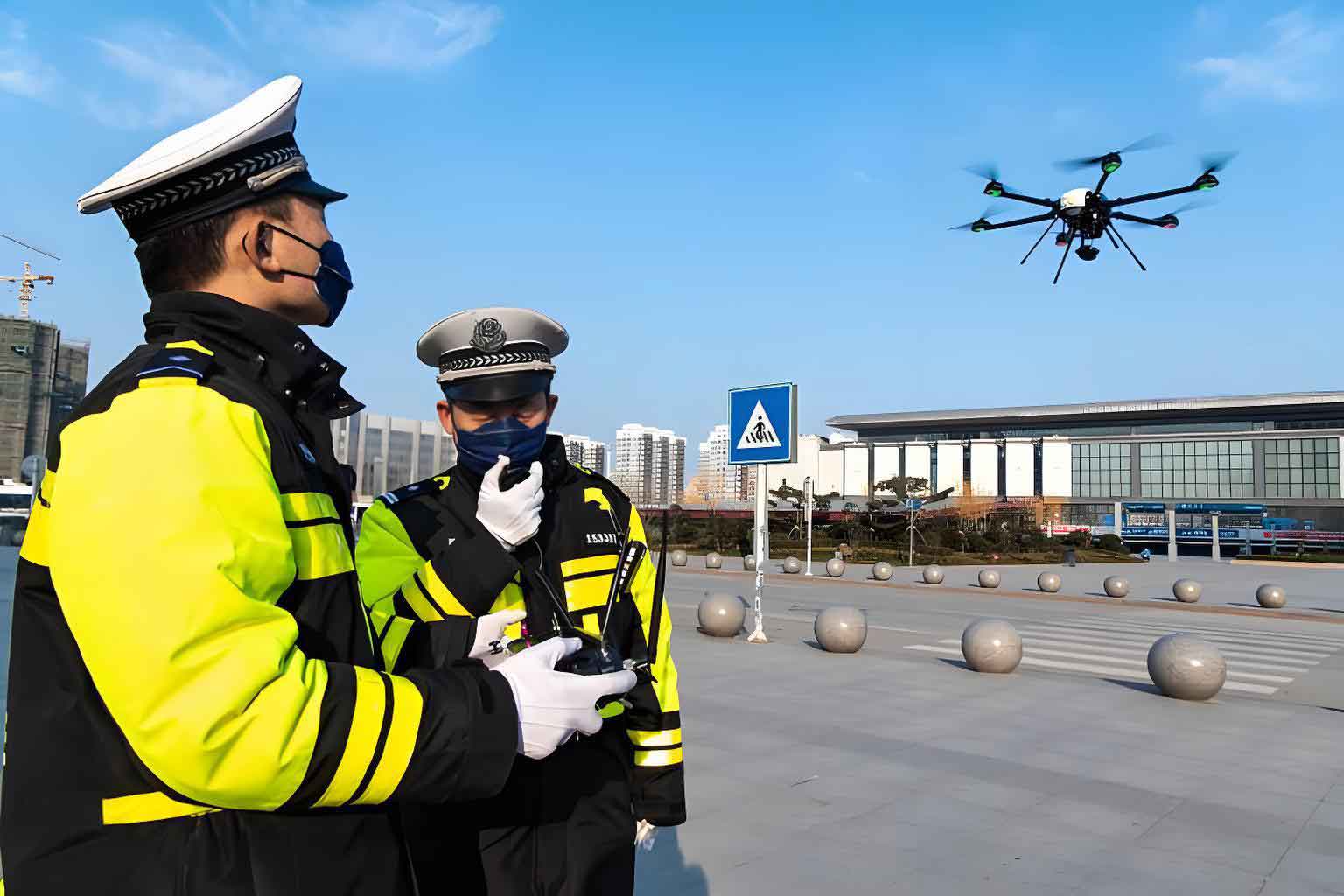
We began by conducting a thorough needs analysis with police aviation units to identify core tasks: tactical aerial reconnaissance, search and rescue support, crime scene documentation, crowd monitoring, and pursuit assistance. These posts demand a blend of technical skill (UAV operation, data analysis) and tactical acuity (situational awareness, decision-making under pressure, legal compliance).
Using this analysis, we performed a reverse design. We defined clear, measurable course objectives that directly support the broader program graduate attributes. Objectives were structured across three dimensions—Cognitive, Psychomotor, and Affective—to ensure holistic development. This three-dimensional target system ensures learning is concrete, achievable, and measurable.
| Dimension | Description | Example Objective for Police UAV Reconnaissance |
|---|---|---|
| Cognitive & Strategic | Knowledge, analysis, synthesis, evaluation. | Given a simulated barricade scenario, evaluate and select the appropriate UAV sensor package and flight plan to gather intelligence while minimizing detection. |
| Psychomotor & Procedural | Physical skills, operation, execution, troubleshooting. | Execute a precise “orbit” maneuver around a point of interest using manual controls, maintaining a consistent camera angle on target. |
| Affective & Professional | Attitudes, values, teamwork, safety culture, ethics. | Demonstrate adherence to aviation safety protocols and ethical surveillance guidelines during all team-based practical exercises. |
The learning outcome for a module can thus be modeled as a vector in this 3D space: $$ \vec{LO} = (K_{obj}, S_{obj}, A_{obj}) $$ where achieving the module goal means reaching threshold values for knowledge ($K$), skill ($S$), and attitude ($A$) objectives.
2. Integrating “Competition” and “Certification” to Reconstruct Content
Competition and certification are not add-ons but are woven into the fabric of the course content and assessment.
Competition Integration: Project-based learning modules are designed around challenges inspired by national UAV skills competitions and police tactical contests. For example, a “Hostile Area Reconnaissance” project requires student teams to plan and execute a mission to locate several targets within a complex simulated environment under time constraints and simulated countermeasures. The scoring rubrics are adapted from competition rules, emphasizing not just successful completion but efficiency, innovation, and procedural rigor. This injects a stimulating, high-stakes environment that fosters deep engagement and practical problem-solving.
Certification Integration: The curriculum maps its core practical skill modules to the requirements of widely recognized certifications, such as the CAAC Remote Pilot License or specific manufacturer operation certifications (e.g., DJI Pilot Certificate). The syllabus explicitly states which course modules prepare students for specific components of these external assessments. In some cases, the final practical exam is designed to mirror the certification practical test. This alignment gives students a clear, valuable external goal and provides an objective benchmark for course quality.
The fusion process is encapsulated in the following table, showing how elements from competitions and certifications are translated into course activities:
| Source (Competition/Certification) | Original Element | Transformed Course Activity/Project | Skills & Competencies Developed |
|---|---|---|---|
| UAV Obstacle Racing Competition | Precision flight through gates, under time pressure. | “Confined Space Navigation” drill using virtual simulators and small UAVs in a netted area. | Advanced manual control, spatial awareness, stress management. |
| Police Tactical Competition | Coordinated UAV-ground team search for a suspect. | “Integrated Patrol & Search” scenario involving communication between UAV operators and ground units. | Inter-team communication, tactical command understanding, combined arms thinking. |
| Remote Pilot License Test | Oral examination on regulations and meteorology. | Structured debate on “Ethical and Legal Boundaries of UAV Surveillance in Urban Areas”. | Regulatory knowledge, critical thinking, ethical reasoning. |
| Photogrammetry Certification | Creating a 3D model from nadir and oblique imagery. | “Crime Scene Reconstruction” project documenting a simulated traffic accident scene. | Mission planning, data capture, post-processing, analytical reporting. |
3. Promoting Learning Through Teaching: Student-Centered Pedagogical Innovation
The delivery mechanism shifts from instructor-led to student-centered, facilitated by technology and differentiated instruction.
Blended Learning for Autonomy: A flipped classroom approach is employed. Theoretical knowledge (regulations, aerodynamics, sensor physics) is delivered via online modules with videos, quizzes, and readings before class. This frees up in-person time for high-value interactive sessions. Crucially, to solve the “low stick time” problem, advanced UAV flight simulators are used extensively. Students must log a minimum number of simulated flight hours, practicing procedures and emergency responses in a risk-free environment before touching physical police UAV platforms. The formula for total skill exposure thus improves dramatically:
$$ T_{total} = T_{sim} + T_{physical} $$
where $T_{sim}$ (simulator time) can be 10-20 hours, vastly greater than the previously possible $T_{physical}$ alone.
Process-Oriented, Multi-Stakeholder Assessment: The evaluation system is overhauled to reward continuous effort and multidimensional growth. The final grade is a weighted sum of multiple process-based components.
| Assessment Component | Weight | Description | Primary Evaluator |
|---|---|---|---|
| Online Module Completion & Quizzes | 15% | Tests foundational knowledge acquisition before class. | Automated (LMS) / Instructor |
| Simulator Skill Logs & Checkpoints | 20% | Demonstrates progressive mastery of flight skills in a safe environment. | Simulator Software / Instructor |
| Project Portfolio & Team Performance | 30% | Includes mission plans, after-action reviews, and peer evaluations for team-based scenarios. | Instructor / Peers |
| In-Class Participation & Mini-Exercises | 15% | Measures engagement in workshops, tactical discussions, and quick-response drills. | Instructor |
| Final Integrated Capstone Assessment | 20% | A comprehensive, scenario-based test evaluating technical and tactical competency holistically. | Instructor / External Expert |
The overall grade $G$ is calculated as: $$ G = \sum_{i=1}^{n} w_i \cdot s_i $$ where $w_i$ is the weight and $s_i$ is the score for each of the $n$ assessment components listed above.
Differentiated Instruction: Recognizing individual differences, we categorize learners into “Dependent” and “Participatory” groups post-initial assessments. Dependent learners receive more structured, step-by-step guidance on how to perform skills. Participatory learners are given more open-ended tactical problems focusing on what to achieve, encouraging them to devise their own methods and solutions. This flexible approach helps all students progress from their individual starting points.
4. Multi-Party Collaborative Education: Optimizing Teaching Conditions
Effective implementation requires breaking down institutional silos and leveraging external expertise and resources.
Interdisciplinary Teaching Team: We formed a “Dual-Teacher” classroom model. Core theory is taught by university faculty, while specialized modules on advanced flight operations, specific sensor use, and field maintenance are co-taught by certified instructors from partner police UAV units or industry. This provides students with authentic, frontline perspectives.
Development of Immersive Resources: Collaborating with police and industry, we developed a dynamic, digital resource library containing not just textbooks but also real de-briefed mission案例, manufacturer technical manuals, current regulations, software tutorials, and competition footage. This creates a “living” curriculum that stays current.
Industry-Academia-Application Platform: Partnerships with police UAV manufacturers and service providers led to the establishment of joint labs featuring virtual reality simulators, maintenance workstations, and data processing suites. Furthermore, students participate in field exercises with police units and attend industry expos. This “Four-Chain Integration” of talent, application, production, and innovation ensures education is deeply connected to the real-world police UAV ecosystem.
Conclusion
The integrated “Post-Course-Competition-Certification”育人 model provides a robust and necessary framework for modernizing professional education in high-stakes, technology-driven fields like police UAV operations. By systematically aligning learning objectives with operational posts, transforming competitive and certification elements into engaging curricular projects, adopting student-centered and technology-enabled pedagogy, and fostering deep collaboration between academia, industry, and the profession, the reformed “Police UAV Reconnaissance Technology and Application” course transcends traditional limitations. It moves beyond teaching isolated skills towards cultivating the adaptive, critical-thinking, and technically proficient professionals required to harness the full potential of police UAV technology for public safety. This model serves as a replicable blueprint for the design of other professional courses where theoretical knowledge, practical skill, and tactical acumen must converge.