
The rapid evolution of technology continuously reshapes the operational landscape of public security organs. Among these advancements, the integration of unmanned aerial systems, particularly police drones, has become a transformative force, generating new qualitative investigative and operational capabilities. This shift necessitates a parallel evolution in the education and training of future law enforcement personnel. Police colleges, bearing the responsibility of cultivating professional talent, are confronted with a pressing question: how can specialized courses effectively bridge the gap between academic theory and the dynamic, practical demands of modern policing? The traditional siloed approach to education often falls short in preparing personnel for the interdisciplinary and technology-driven nature of contemporary police drone applications.
In response, a comprehensive educational model, integrating Post requirements, Course design, Competition, and Certification (PCCC), has emerged as a pivotal framework. This model represents a significant paradigm shift, aiming to dismantle barriers between industry, profession, and education. For a specialized field like police drone operations, the PCCC model is not merely an administrative directive but a necessary pedagogical strategy. It aligns training directly with occupational standards, injects practical vitality through competitive scenarios, and validates competencies through recognized credentials. This article explores the application of the PCCC model in reforming the course “Reconnaissance Technology and Application of Police Drones,” analyzing its conceptual foundation, diagnosing existing teaching challenges, and detailing a structured reform practice.
Conceptual Foundation: The PCCC Model’s Significance for Police Drone Education
The PCCC model is a holistic educational philosophy designed to cultivate high-level technical and skilled talent suited for industrial transformation. Its implementation within police drone curricula carries profound implications across three core dimensions, as summarized in the table below:
| Dimension | Core Principle | Impact on Police Drone Education |
|---|---|---|
| Post-Course Alignment | Designing courses based on explicit occupational requirements. | Ensures graduates possess the precise technical and tactical competencies demanded by police aviation units, reconnaissance teams, and emergency command centers, directly enhancing job readiness and operational utility. |
| Course-Competition Integration | Using competitions to drive teaching innovation and student engagement. | Transforms learning from passive reception to active application. Simulated mission competitions foster critical thinking, stress management, teamwork, and tactical innovation specific to police drone deployment scenarios. |
| Course-Certificate Fusion | Incorporating professional certification standards into the curriculum. | Harmonizes academic learning with industry-recognized skill benchmarks (e.g., pilot licenses, mission specialist certificates). It facilitates collaboration between schools and enterprises, merging the “educational field” with the “professional field,” thereby increasing the practical validity and societal recognition of the training. |
The synergy of these dimensions can be conceptually represented by a formula emphasizing the integrative output of the model:
$$ \text{Learning Outcome}_{PCCC} = \alpha(\text{Post Alignment}) + \beta(\text{Competition Stimulus}) + \gamma(\text{Certification Standard}) $$
where $\alpha$, $\beta$, and $\gamma$ are weighting coefficients representing the depth of integration for each element within a specific course, and the outcome is a composite measure of student competency.
Diagnosing Current Challenges in Teaching “Police Drone Reconnaissance Technology and Application”
Despite its critical importance, the practical teaching of courses like “Reconnaissance Technology and Application of Police Drones” often encounters significant obstacles that hinder the realization of its full potential. These challenges can be categorized as follows:
| Challenge Category | Specific Manifestations | Consequences |
|---|---|---|
| 1. Course-Design Deficiencies |
|
Graduates may be technically proficient but lack the adaptive mindset and strategic understanding needed for innovative police drone employment in complex, evolving scenarios. |
| 2. Inadequate Resource Support |
|
Teaching quality is inconsistent; student skill acquisition is slow and uneven; practical experience is insufficient to build true operational confidence. |
| 3. Misalignment with Learner Needs |
|
Low student motivation and ownership of learning; significant skill disparities within cohorts; assessment does not guide teaching improvement or accurately reflect capability. |
The cumulative effect of these challenges can be modeled as a constraint on effective skill transfer. If we define effective skill transfer ($E_{st}$) as a function of training time ($t$), resource quality ($R_q$), and pedagogical alignment ($P_a$), the traditional model shows clear limitations:
$$ E_{st}^{\text{(traditional)}} = k \cdot \frac{t \cdot R_q \cdot P_a}{C_w + C_a} $$
where $k$ is a constant, $C_w$ represents constraints like weather, and $C_a$ represents constraints like airspace access. The denominator highlights how external and pedagogical factors can diminish output.
Reform Practice: Implementing the PCCC Model in Police Drone Curriculum
To address these challenges, a systematic reform based on the PCCC framework was undertaken. The practice revolves around three interconnected pillars: reconstructing course design, innovating the teaching-learning paradigm, and building a collaborative resource ecosystem.
Pillar 1: Reconstructing Course Design through Post-Course Alignment and Competition-Certification Integration
A. Output-Oriented, Reverse-Designed Objective Architecture: The course design process begins not with content, but with the desired endpoint: a competent police drone operator. A reverse-design logic is employed: Occupational Profile → Program Graduation Requirements → Course-Level Learning Objectives. Each course objective is meticulously mapped to specific professional competencies, ensuring traceability and relevance.
B. Three-Dimensional Objective System Focused on Learning Outcomes: Objectives are structured to transcend mere knowledge acquisition, targeting integrated capabilities. The system is built across three dimensions, as detailed below:
| Dimension | Description | Exemplary Learning Outcome for Police Drone Course |
|---|---|---|
| Cognitive & Strategic | Developing analytical and strategic thinking. | Given a simulated complex incident (e.g., hostage situation, large-scale search), the student can analyze the scenario, formulate a multi-drone reconnaissance plan integrating different sensor payloads, and justify tactical choices based on principles of stealth, efficiency, and legal compliance. |
| Process & Methodological | Mastering procedures, skills, and problem-solving methods. | The student can proficiently execute a coordinated grid search pattern using a police drone, process and stitch acquired imagery in real-time using ground control software, and identify/annotate potential points of interest for ground teams. |
| Affective & Professional | Cultivating professional ethos, safety culture, and teamwork. | During team-based exercises, the student demonstrates strict adherence to pre-flight checklists, effective communication with visual observers and team members, and a consistent prioritization of operational safety and data security. |
The overall learning outcome ($LO$) can thus be viewed as a vector sum of achievements in these dimensions:
$$ \overrightarrow{LO} = \langle C, P, A \rangle $$
where $C$, $P$, and $A$ represent quantified achievements in the Cognitive, Process, and Affective domains, respectively.
C. Curriculum Content Reorganization via Competition-Certification Integration: Content is no longer purely textbook-driven. It is dynamically重组 through:
- Competition Resources: Elements from national skills competitions, innovation challenges, and tactical drills are decomposed and converted into project-based learning modules. For example, a “fast deployment and perimeter recon” competition becomes a module on rapid system setup, efficient flight path programming, and live data reporting.
- Certification Standards: The knowledge and skill requirements for recognized police drone pilot certifications (e.g., covering regulations, meteorology, airspace, advanced maneuvers) are seamlessly woven into the core syllabus, ensuring graduates are “exam-ready” and “field-ready.”
This integration ensures “high-order, innovation, and challenge” in the curriculum.
Pillar 2: Innovating the “Student-Centered” Teaching-Learning Paradigm
A. Blended Learning for Autonomy: A “Flipped-Enhanced” model is adopted. Foundational knowledge (e.g., aerodynamics, radio spectrum theory) is delivered via online modules for self-paced learning. Classroom time is reserved for high-value activities: case analysis, simulation-based decision-making, and complex skill drills. This model extends learning beyond the classroom, fostering self-directed learning capability, crucial for keeping pace with police drone technology evolution.
B. Comprehensive Process-Oriented Assessment: A multi-modal, continuous assessment system replaces the single final exam. This system provides constant feedback and motivates sustained effort.
| Assessment Component | Weight | Evaluation Focus | Primary Evaluator |
|---|---|---|---|
| Online Module Quizzes & Participation | 15% | Mastery of foundational knowledge, self-discipline. | Automated System / Instructor |
| Practical Skill Benchmarks (e.g., precision landing, obstacle course) | 25% | Psychomotor skill proficiency, safety adherence. | Instructor / Rubric |
| Project-Based Assignments (e.g., reconnaissance plan for a given scenario) | 30% | Application, analysis, synthesis, and creativity. | Instructor & Peer Review |
| Final Integrated Scenario Exercise | 30% | Comprehensive competency under simulated pressure. | Instructor Panel |
C. Differentiated Instruction Based on Proficiency: Recognizing individual differences in skill acquisition, a two-track coaching strategy is used during practical sessions. For students struggling with basic control (Dependent Learners), instruction focuses on repetitive, guided practice of fundamentals. For students proficient in basics (Participative Learners), instruction shifts to challenge-based learning, presenting tactical problems (e.g., “track a moving vehicle while maintaining visual line of sight”) for them to solve through exploration and experimentation.
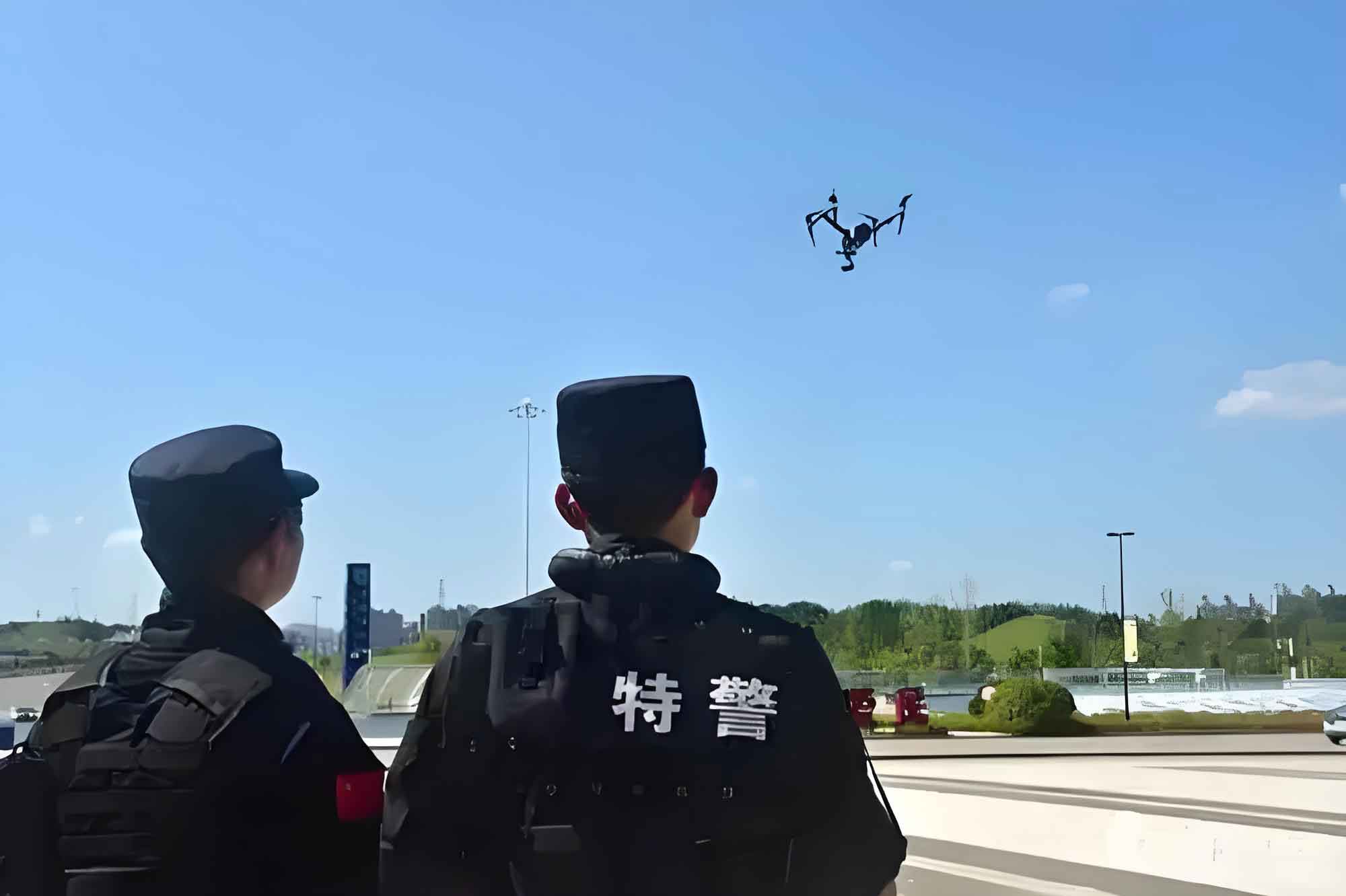
Pillar 3: Building a Collaborative Resource Ecosystem
A. Interdisciplinary Teaching Team Development: A “Dual-Teacher Classroom” model is implemented. Core theory is delivered by academic faculty, while specialized modules on advanced flight techniques, mission-specific sensor operation, and real-world case studies are co-taught by certified police drone instructors from law enforcement agencies and engineers from partner enterprises. This ensures instruction is grounded in both pedagogical rigor and cutting-edge practice.
B. Co-Development of Immersive Learning Resources: The collaborative team develops a suite of new resources:
- Modular Textbooks: Traditional chapters are supplemented with “Tactical Application Notes” and “Technology Briefs” co-written by practitioners.
- Digital Case Library: A curated collection of anonymized real-world mission debriefs, after-action reports, and video analysis.
- Virtual Simulation Training System: This is a critical innovation that overcomes the limitations of physical training. It allows for risk-free, weather-independent practice of complex maneuvers, emergency procedures, and mission rehearsals in digitally modeled environments. The effective training time is drastically amplified. The new efficiency can be modeled as:
$$ E_{st}^{\text{(PCCC)}} = k’ \cdot \frac{(t_{physical} + t_{virtual}) \cdot R_q’ \cdot P_a’}{C_w’} $$
where $t_{virtual}$ is substantial, $R_q’$ is higher due to simulation fidelity, and $C_w’$ is significantly reduced as virtual training is largely weather-agnostic.
C. Multi-Scenario Learning Environments: Learning is not confined to campus. Through partnerships, students engage in:
- Enterprise Workshops: Visiting R&D centers to understand sensor integration and data-link technology.
- Field Observations: Witnessing live police drone operations during major event security rehearsals (where permissible).
- Industry Expos: Attending exhibitions to observe the latest platform and software developments.
This “Industry-Education-Research-Application” integration ensures that the talent pipeline is directly connected to the innovation chain and application frontline of police drone technology.
In conclusion, the implementation of the Post-Course-Competition-Certificate integrated education model represents a fundamental and necessary reform for specialized police drone training. By rigorously aligning course objectives with professional posts, dynamically integrating the stimulative energy of competitions and the standardization of certifications, adopting student-centered and blended pedagogical methods, and fostering a robust collaborative ecosystem, the model effectively addresses the profound challenges in cultivating high-quality, application-oriented talent. This approach ensures that graduates are not merely operators of technology but are adaptive, strategic, and ethically-grounded professionals capable of leveraging police drone systems to enhance public safety and operational effectiveness in an increasingly complex world. The reform practice detailed herein provides a replicable framework for similar specialized courses aiming to bridge the gap between academia and the demanding field of modern law enforcement technology.