
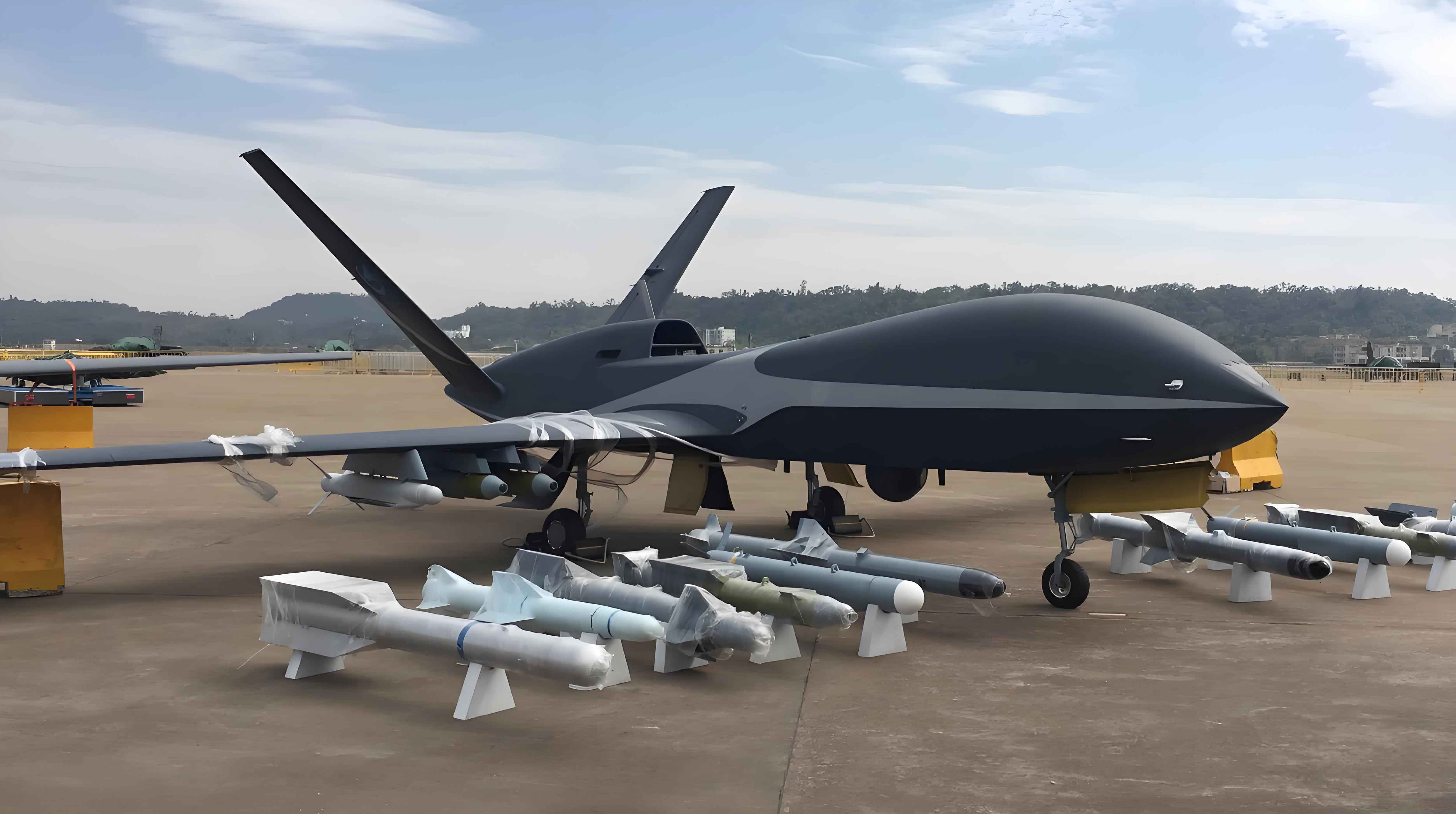
Unmanned Aerial Vehicles (UAVs), commonly known as drones, represent aircraft operated without an onboard pilot, offering unique advantages such as high flexibility, cost-effectiveness, and enhanced survivability. These attributes have propelled their widespread adoption across both civilian and military sectors. In civilian applications, military drones are employed for tasks like aerial photography, agricultural monitoring, power line inspection, and disaster response. However, in the military domain, military UAVs play critical roles in reconnaissance, electronic warfare, communications relay, precision strikes, and target simulation, significantly enhancing operational capabilities in modern warfare. The rapid expansion of the drone industry has surged demand for skilled drone pilots, prompting the need for standardized qualification systems. Specifically, for military drone operators, establishing a robust certification model is essential to ensure mission readiness, safety, and interoperability. This research addresses the gap in formalized credentialing for small and micro military UAV pilots, drawing from civilian frameworks to propose an integrated approach.
Globally, civilian drone pilot certification has matured under regulatory bodies like the Civil Aviation Administration, which mandates licensing for operators handling drones above a certain weight threshold. For instance, in China, the Aircraft Owners and Pilots Association (AOPA) oversees this process, with training conducted by accredited institutions. As of recent data, over 44,000 individuals hold civilian drone licenses, covering categories such as multi-rotor and fixed-wing systems. This model emphasizes theory and practical exams, ensuring pilots meet standardized competencies. However, military drone certification remains fragmented, with only large-scale military UAV pilots under aviation-style licensing, while smaller military drones lack uniform oversight. This disparity underscores the urgency for a dedicated military UAV certification framework, leveraging civilian best practices to elevate operational standards and support national defense strategies.
The proposed military drone pilot certification model targets soldiers in drone operator roles, incorporating eligibility criteria such as a minimum three-year field experience, associate degree-level education, and demonstrated commitment to UAV specialties. Training adopts a “three-in-one” methodology, integrating on-base drills, institutional programs, and self-directed e-learning to optimize skill development. This holistic approach ensures continuous improvement, with content aligned to military training syllabi and civilian benchmarks. For example, the curriculum spans foundational theories and hands-on operations, structured through a detailed course matrix. The effectiveness of such training can be modeled using a linear efficiency equation: $$ E = k \times T $$ where \( E \) represents training effectiveness, \( k \) is a competency constant derived from prior experience, and \( T \) denotes cumulative training hours. Higher \( k \) values correlate with faster skill acquisition, crucial for high-stakes military drone operations.
| No. | Course Name | Training Method | Total Hours | Theory Hours | Practical Hours | Notes |
|---|---|---|---|---|---|---|
| 1 | Introduction to UAV Systems | On-base training | 16 | 16 | 0 | Syllabus-based instruction |
| 2 | Military Drone Structure and Design | On-base training | 14 | 14 | 0 | Syllabus-based instruction |
| 3 | Pre-flight Procedures for Military UAVs | On-base training | 26 | 2 | 24 | Syllabus-based instruction |
| 4 | Flight Operations of Military Drones | On-base training | 38 | 6 | 32 | Syllabus-based instruction |
| 5 | Aviation Regulations and Meteorology | Combined methods | 16 | 16 | 0 | Includes e-learning modules |
| Total | 140 | 64 | 76 | Integrated approach | ||
Training delivery involves phased implementation: On-base sessions focus on core syllabus elements under unit coaches, with progress assessments determining advancement. E-learning supplements this through military education platforms, covering advanced topics like drone aerodynamics. Institutional training, conducted in partnership with civilian bodies, consolidates skills via intensive workshops. For instance, flight dynamics principles for military drones can be expressed as: $$ F_{\text{lift}} = \frac{1}{2} \rho v^2 C_L A $$ where \( F_{\text{lift}} \) is lift force, \( \rho \) is air density, \( v \) is velocity, \( C_L \) is lift coefficient, and \( A \) is wing area. This formula underpins practical modules, ensuring pilots master aerodynamic constraints during missions. The blended model not only builds expertise but also fosters adaptability, key for diverse military UAV deployments in contested environments.
Assessment protocols involve rigorous theory and practical evaluations, jointly administered by military, academic, and civilian experts. Theory exams draw from a database of 1000+ questions, testing knowledge in drone systems, flight principles, and regulations. Random selection ensures fairness, with a passing threshold of 80% in computer-based tests. Practical assessments simulate real-world scenarios, evaluating skills from mission planning to emergency response. Performance is scored on-site, with a similar 80% pass requirement. A statistical pass rate formula illustrates quality control: $$ P = \frac{N_{\text{pass}}}{N_{\text{total}}}} \times 100\% $$ Here, \( P \) is the certification pass rate, \( N_{\text{pass}} \) denotes candidates meeting standards, and \( N_{\text{total}} \) is the total assessed. High \( P \) values indicate effective training, vital for maintaining military drone fleet readiness. The table below outlines key assessment components:
| Assessment Type | Focus Areas | Duration (min) | Passing Score (%) | Evaluation Method |
|---|---|---|---|---|
| Theory Exam | Aviation laws, drone mechanics, weather systems | 90 | 80 | Computer-based, auto-graded |
| Practical Flight | Takeoff, navigation, task execution, landing | 120 | 80 | On-site expert panel scoring |
| Emergency Drills | System failures, weather hazards, comms loss | 60 | 80 | Simulated scenarios, real-time feedback |
Upon successful completion, the “one exam, dual certificates” model grants both military-specific and civilian-recognized credentials, promoting talent mobility across sectors. This dual certification not only validates competency but also enhances career pathways for military drone operators, contributing to broader military-civilian integration. The model’s efficacy is evident in projected outcomes, such as reduced error rates in UAV operations, calculated as: $$ E_r = \frac{E_{\text{incidents}}}{M_{\text{missions}}}} $$ where \( E_r \) is the error rate, \( E_{\text{incidents}} \) represents operational mishaps, and \( M_{\text{missions}} \) is total missions flown. Lower \( E_r \) values signify improved safety and proficiency, directly benefiting military UAV units. Ultimately, this framework elevates military drone pilot standards, driving innovation in defense training and operational excellence for modern military forces.