
As a designer and engineer focused on modern military logistics, I have observed the rapid integration of military drones into various operational domains, from reconnaissance to strike missions. These military drones represent a transformative shift in warfare, offering advantages such as reduced risk to personnel, extended loitering capabilities, and operational flexibility in high-threat environments. However, their introduction has exposed significant gaps in sustainment infrastructure. Being relatively new assets with limited production runs, the systems for maintaining, storing, and rapidly deploying these military drones and their associated ground control equipment are often underdeveloped. This logistical shortfall can severely impact the readiness and effectiveness of military drone units. Therefore, my work has centered on the design exploration of a specialized Readiness Shelter—a mobile, containerized solution aimed at revolutionizing how we support military drone operations. This shelter is not merely a storage box; it is a comprehensive, integrated facility designed to enhance the mobility, flexibility, and overall support capacity for military drone fleets, ensuring they can be deployed and sustained anywhere, under any conditions.
The core design philosophy stems from a deep analysis of the unique demands posed by military drone systems. Unlike manned aircraft, a military drone’s operation is entirely dependent on the reliability of its flight control systems and the continuous support from its ground segment. Any failure mid-flight, given the unpredictable operational environments, can lead to catastrophic loss. This places extraordinary demands on the support equipment’s ability to protect sensitive components during transit and storage. Furthermore, a military drone’s combat power is inextricably linked to its ground control station (GCS), which handles data processing, command, control, and communications. The GCS itself comprises numerous sophisticated electronic and electro-mechanical devices. Consequently, our readiness shelter must accommodate not just the military drone airframes or payloads but the entire ecosystem of support equipment. The design must account for a wide variety of item shapes, sizes, and sensitivities, from large drone fuselages to delicate circuit boards for the GCS. The shelter’s internal configuration must be highly adaptable. The overarching requirement is to create a unit that functions as a mobile warehouse and forward repair node, capable of secure, rapid movement via road, rail, sea, and air, thereby solving the critical challenge of equipment supply in field conditions for military drone units.
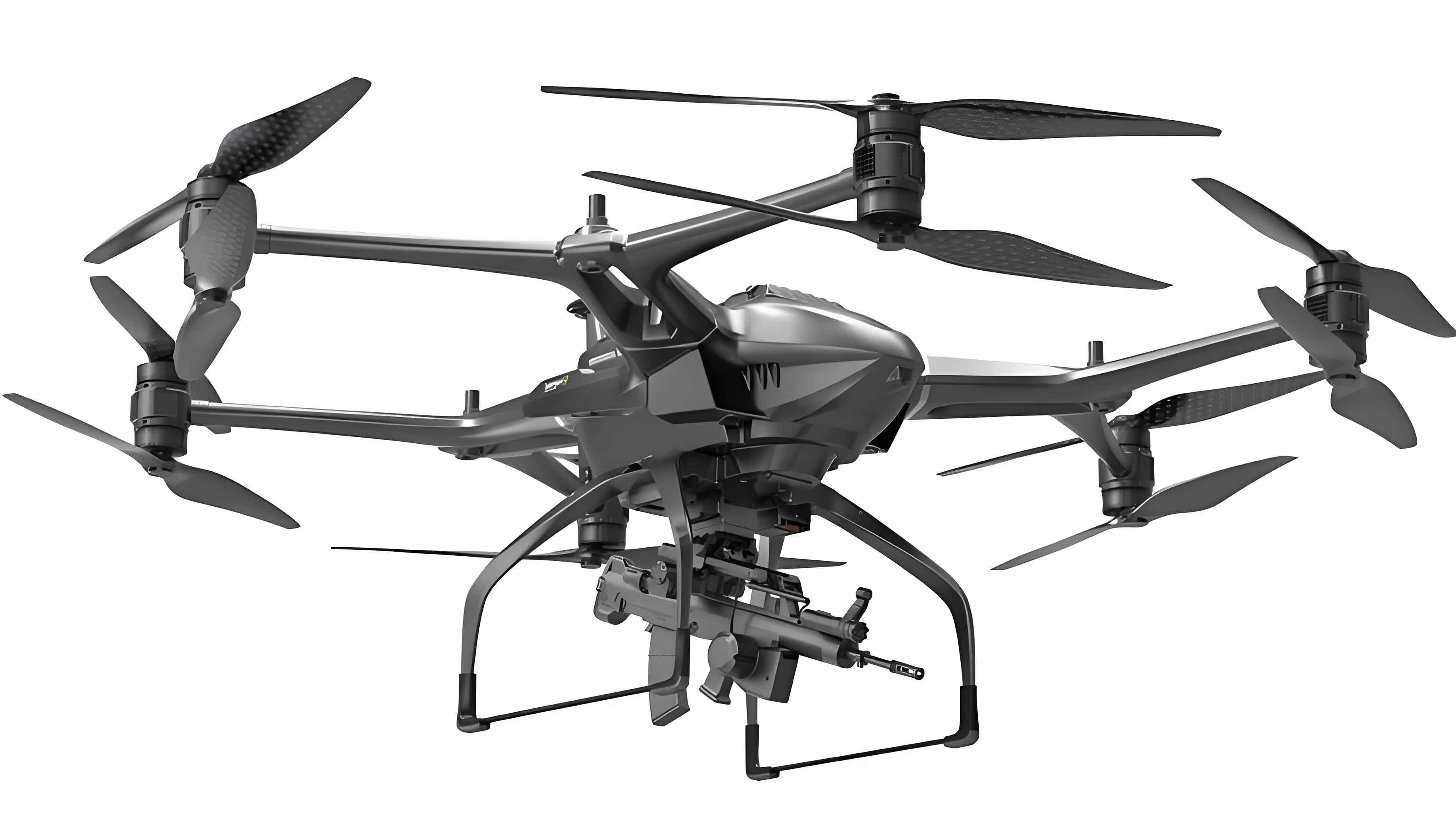
From a functional perspective, the military drone Readiness Shelter is conceived as a multi-role asset. Its primary function is to consolidate and optimize the storage of all essential equipment needed for a military drone unit to execute its mission. This consolidation enables fast, safe, and reliable transportation to any designated point of need. Compared to traditional cargo containers, this shelter is specifically engineered around the profile of military drone logistics. It maximizes internal volume utilization, allowing for a greater density of spares, tools, and subsystems to be carried. Its design prioritizes excellent handling characteristics for loading and unloading, featuring integrated points for crane lifting and forklift handling. In a野战 scenario, it can be rapidly deployed to serve as an immediate storage depot, a workshop for minor repairs, and a point-of-issue supply hub. For day-to-day operations at a home base, the shelter provides a standardized, secure, and organized storage environment, simplifying inventory management and preservation of high-value military drone components. This dual-use capability—both in transit and static storage—makes it a cornerstone for sustainable military drone operations.
The structural design of the shelter is paramount to meeting these functional goals. I approached it in two integrated layers: the external shell and the internal fit-out. Externally, the shelter conforms to standardized intermodal freight container dimensions to ensure seamless integration with global transportation networks. The main structure is a rectangular steel frame skeleton, providing the fundamental load-bearing integrity. The frame is clad with protective panels on all sides, including the roof and a reinforced base frame. Critical to its mobility are the standard corner castings, which allow for secure stacking, lifting, and locking during multimodal transport. To facilitate ground handling, the base frame incorporates forklift pockets, and the top corner castings are fitted with lifting rings. Access is provided through multiple lockable doors equipped with robust lever locks, positioned on various sides to allow flexible unloading in constrained spaces. The external design must comply with rigorous standards for strength and durability. For instance, the frame must withstand significant static and dynamic loads. A simplified model for evaluating the racking strength of the container frame can be expressed as the ability to resist forces applied to its top corners. The racking force resistance $R$ can be related to the material yield strength and frame geometry:
$$ R \propto \frac{\sigma_y \cdot I}{L} $$
where $\sigma_y$ is the yield strength of the steel, $I$ is the area moment of inertia of the frame members, and $L$ is a characteristic length (e.g., container height). This ensures the shelter can endure the stresses of transportation.
| Core Material Type | Key Advantages | Key Disadvantages | Typical Density (kg/m³) | Thermal Conductivity (W/m·K) |
|---|---|---|---|---|
| Polymer Foam (e.g., Polyurethane) | Light weight, good thermal insulation, easy to fabricate | Lower compressive strength compared to metals | 30-80 | 0.02 – 0.03 |
| Metal Honeycomb (e.g., Aluminum) | Very high strength-to-weight ratio, excellent shear stability | Higher cost, more complex manufacturing | 20-100 | Varies (depends on cell gas) |
| Foam Metal (e.g., Aluminum Foam) | Good energy absorption, fire resistance | Higher density than polymer foam, cost | 200-600 | 1.0 – 10.0 |
Internally, the layout is where the shelter’s adaptability truly shines. The space is organized using a modular system of shelves, racks, dividers, and dedicated mounting cradles. The design principle is to maximize usable volume while ensuring logical organization for quick inventory retrieval. Shelf levels are adjustable in height, and partitions can be reconfigured to accommodate different shapes and sizes of military drone components. For instance, long, slender items like propeller blades or antenna masts are stored in vertical racks, while smaller, high-value items like flight controllers or sensors are secured in lockable drawers or padded cases within the shelter. A critical rule is to co-locate items belonging to the same functional subsystem (e.g., all communication gear for the military drone’s data link) to streamline both packing and issue processes. For irregularly shaped parts, the design seeks complementary fits—nesting components together to eliminate wasted void spaces. The internal structure must also integrate seamlessly with the external frame, transferring the weight of the stored equipment directly to the load-bearing points. The total internal storage capacity $C$ can be modeled as an optimization function, seeking to maximize volume utilization for a set of $n$ item types, each with volume $v_i$ and quantity $q_i$:
$$ \text{Maximize } C = \sum_{i=1}^{n} q_i \cdot v_i \cdot \eta_i $$
$$ \text{Subject to: } \sum_{i=1}^{n} q_i \cdot v_i \leq V_{\text{total}}, \quad \text{and } \eta_i \leq 1 $$
where $\eta_i$ is a packing efficiency factor for item type $i$, and $V_{\text{total}}$ is the shelter’s internal volume. This conceptual model guides the modular layout design.
The choice of materials is a critical engineering decision that directly impacts the shelter’s weight, durability, thermal protection, and cost. The external panels employ a sandwich construction for optimal strength-to-weight ratio. For the outer and inner skins (the “bread” of the sandwich), pre-finished color steel sheet is selected. It offers a thin profile (typically around 0.5mm), high strength, light weight, corrosion resistance, and a degree of thermal reflectivity—ideal for protecting the sensitive electronics of military drone support equipment. The structural skeleton that frames these panels is made from formed channel steel, providing the necessary rigidity.
The core material filling the space between the skins is pivotal. After evaluating options, rigid polyurethane (PUR) foam was chosen as the primary core material. Its properties align perfectly with the needs of a military drone transport shelter: it is extremely lightweight, provides excellent thermal insulation (critical for protecting equipment from extreme temperatures), and possesses adequate compressive strength for this application. The foam is bonded to the metal skins using a high-performance adhesive. The adhesive must maintain a strong bond across the wide temperature range experienced by military drone equipment in transit, from desert heat to arctic cold. The shear stress $\tau$ on the adhesive bond, induced by differential thermal expansion or mechanical load, must be less than the adhesive’s allowable shear strength $S_a$:
$$ \tau = \frac{F}{A} < S_a(T) $$
where $F$ is the shear force, $A$ is the bonded area, and $S_a(T)$ is the temperature-dependent shear strength of the adhesive.
| Adhesive Base Material | Typical Service Temperature Range | Shear Strength (MPa, approx.) | Key Characteristics | Suitability for Military Drone Shelter |
|---|---|---|---|---|
| Polyurethane-based | -40°C to 100°C | 15-20 | Flexible, good impact resistance | High (Good low-temp performance) |
| Epoxy-based | -55°C to 120°C | 20-30 | High strength, rigid, excellent chemical resistance | Medium-High (May be brittle at low temps) |
| Toughened Epoxy | -60°C to 120°C | 25-35 | Improved fracture toughness over standard epoxy | High |
| Modified Epoxy (e.g., with silicones) | -70°C to 150°C | 18-25 | Wide temperature range, good durability | Very High |
Based on the analysis summarized in Table 2, a toughened or modified epoxy adhesive is preferred for its optimal balance of high strength, temperature resilience, and toughness, ensuring the sandwich panels remain intact under the harsh conditions faced by military drone units.
Beyond physical structure and materials, integrating smart technologies is essential for modern military drone logistics. A key feature designed into the shelter is a Radio-Frequency Identification (RFID) system. Each major piece of military drone equipment stored inside is tagged with a passive RFID tag. Readers can be installed at strategic points: on the shelter doors, at depot gates, or on handling equipment. This allows for automatic, non-contact inventory checks without ever opening the shelter. The data flow involves the reader capturing the unique ID of each tagged item, associating it with the shelter’s own ID and its current GPS location (if equipped), and transmitting this information via a secure network to a central logistics database. The benefits for military drone support are profound. Commanders gain real-time visibility into the location and status of critical spares. The RFID system automates the check-in/check-out process, drastically reducing human error and time spent on manual inventory counts. It enhances security by logging all access events. The system’s efficiency can be described by the reduction in inventory audit time $T_{audit}$. With $N$ items, a manual audit time per item $t_m$, and an RFID scan time for the entire shelter $t_{rfid}$, the efficiency gain $E$ is substantial:
$$ E = \frac{T_{manual}}{T_{rfid}} = \frac{N \cdot t_m}{t_{rfid}} $$
For a shelter containing hundreds of military drone components, $E$ can be on the order of 100 or more, representing a dramatic improvement in logistics responsiveness.
The design also must consider environmental control for sensitive military drone electronics. While the shelter itself provides passive insulation, for long-term storage or deployment in extreme climates, an integrated environmental control unit (ECU) can be specified. This compact HVAC system would maintain temperature and humidity within a safe envelope, preventing condensation and thermal damage to avionics and batteries. The power requirement $P_{ecu}$ for such a unit to maintain an internal temperature $T_{in}$ against an external temperature $T_{out}$ can be estimated using a simplified heat transfer model:
$$ P_{ecu} \approx U \cdot A \cdot (T_{out} – T_{in}) $$
where $U$ is the overall heat transfer coefficient of the shelter walls (a function of the insulation quality), and $A$ is the surface area. Selecting an ECU with appropriate capacity ensures the military drone gear remains operational-ready.
Another crucial aspect is the design of custom fittings and restraints within the shelter. Military drone components are not standard cuboids; they have protrusions, delicate surfaces, and specific center-of-gravity points. Therefore, the internal system includes a variety of customizable cushions, foam inserts, webbing straps with quick-release buckles, and shock-absorbing mounts. These are designed to immobilize items during transport, preventing damage from vibration and impact—a common cause of failure for delicate military drone sensors and navigation systems. The natural frequency of the mounted item $f_{item}$ should be kept sufficiently different from the dominant vibration frequencies $f_{transport}$ encountered during road or rail transport to avoid resonant amplification of shocks:
$$ |f_{item} – f_{transport}| > \Delta f_{min} $$
This is achieved by designing the restraint system’s stiffness and damping characteristics appropriately.
In conclusion, the design of a Readiness Shelter for military drone equipment is a complex, multi-disciplinary endeavor that blends mechanical engineering, materials science, and information technology. From my perspective, the goal is to create more than just a container; it is to create a responsive, intelligent, and robust extension of the military drone unit’s support capability. This shelter addresses the fundamental logistical weakness identified in the early deployment phases of military drone assets. By optimizing the structure for multi-modal transport, engineering the internal space for maximum and adaptable storage, selecting advanced materials for protection and lightweight, and integrating smart tracking, the shelter significantly enhances the operational agility of military drone forces. It enables rapid deployment, sustained operations in remote locations, and efficient management of the complex suite of equipment that modern military drones depend upon. As military drone technology continues to evolve, with new models of varying sizes and functions entering service, the modular and scalable design principles embedded in this Readiness Shelter will ensure it remains a vital asset for military logistics, safeguarding the readiness and combat power of these indispensable unmanned systems for years to come.