
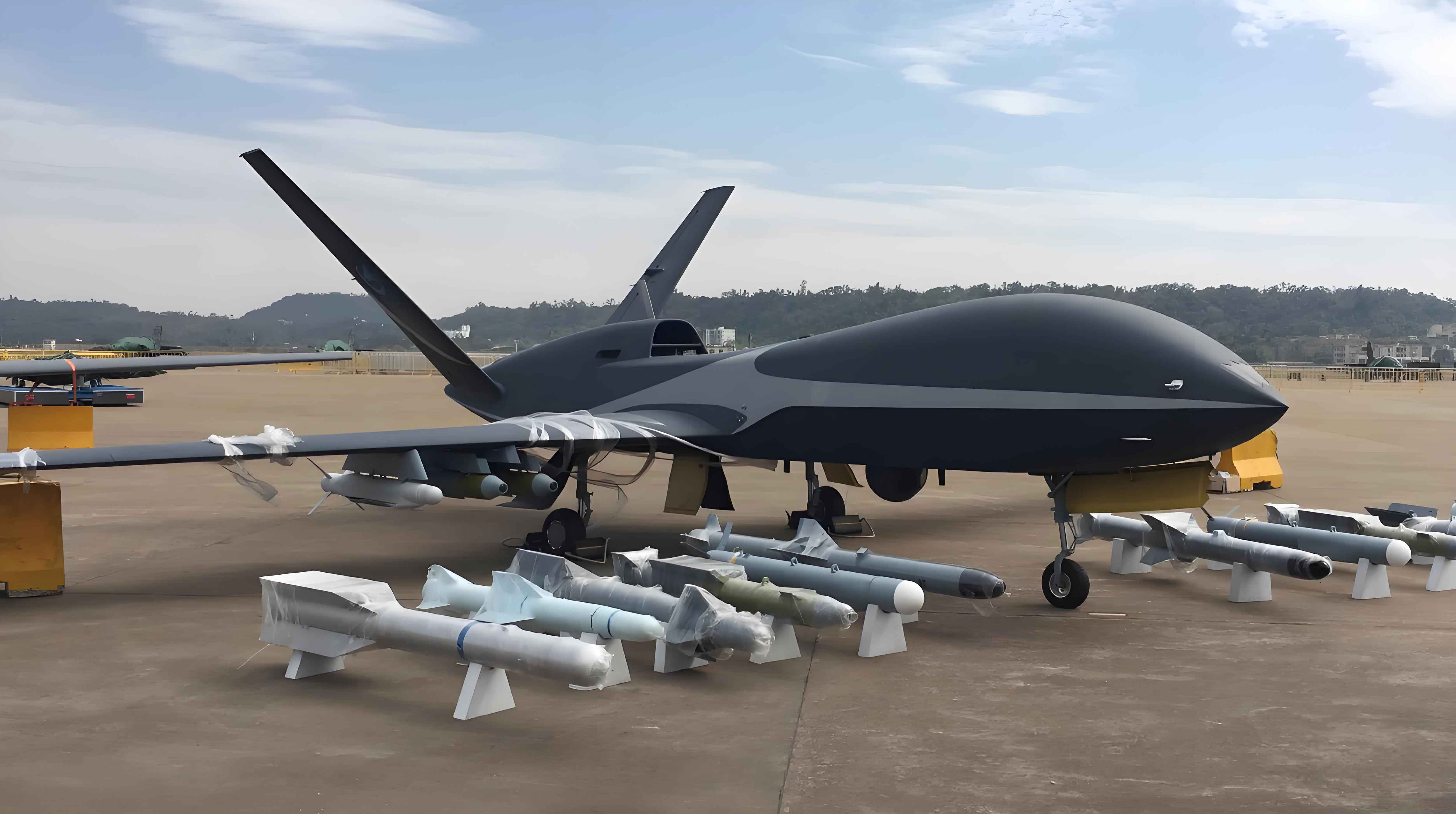
The rapid evolution of warfare toward intelligent, networked systems has fundamentally altered the tools and tactics of modern militaries. In this new battlespace, the military drone has emerged as a pivotal asset for reconnaissance, strike missions, and persistent surveillance. However, the durability and sustained operational readiness of these unmanned aerial vehicles are constantly tested by the unforgiving realities of the battlefield. Ensuring a high rate of operational availability for the in-service fleet requires robust, responsive, and mobile support infrastructure. This article explores the critical design methodology for mobile maintenance shelters—integrated, containerized workshops—specifically tailored for the rapid repair and sustainment of military drone platforms in complex natural environments. My analysis will proceed from an understanding of the environmental context and operational requirements to a systematic design framework, concluding with a practical application.
1. Defining and Analyzing the Complex Operational Environment
The battlefield environment is an aggregation of all objective factors influencing combat operations. For the design of a deployable support asset, the natural environment constitutes the primary and most demanding external factor. My focus is on “complex environments,” which refer specifically to extreme natural terrains that impose severe physical stresses on both equipment and personnel. Successfully fielding a military drone repair shelter hinges on a deep comprehension of these environmental vectors.
1.1 Taxonomy of Complex Natural Environments
These environments are characterized by a confluence of harsh parameters that degrade material performance, hinder mobility, and challenge human endurance. The primary types include:
| Environment Type | Key Characteristics | Primary Design Challenges |
|---|---|---|
| High-Altitude & Cold Mountain | Low pressure, low oxygen (hypoxia), extreme cold (e.g., -30°C), high winds, intense UV radiation. | Material embrittlement, engine/power derating, thermal insulation, structural wind loading. |
| Tropical/Jungle | High temperature, high humidity, heavy rainfall, dense vegetation, prolific mold/mildew. | Corrosion, electronic condensation/failure, fungal growth, limited mobility and visibility. |
| Desert & Arid | Extreme diurnal temperature swings (0°C to 50°C), low humidity (<25%), abrasive sand/dust storms, intense solar radiation. | Thermal management, sealing against fine particulate abrasion, UV degradation of materials. |
| Northern Frontier/Polar | Prolonged extreme cold, high winds, snow, ice, limited daylight. | Sub-zero material performance, heating requirements, snow load on structures, power generation. |
The impact of these environments can be modeled as a multi-variable stress function on the shelter system \( S \), where its performance \( P_s \) is a function of environmental parameters:
$$ P_s = f(T_{amb}, H_{rel}, \Phi_{wind}, \Psi_{particulate}, \Gamma_{solar}, \Upsilon_{terrain}) $$
Here, \( T_{amb} \) is ambient temperature, \( H_{rel} \) is relative humidity, \( \Phi_{wind} \) is wind velocity and pressure, \( \Psi_{particulate} \) is sand/dust concentration, \( \Gamma_{solar} \) is solar irradiance, and \( \Upsilon_{terrain} \) represents terrain roughness and slope.
1.2 Key Environmental Factors Influencing Shelter Design
Three dominant natural factors dictate the shelter’s form, structure, and material selection:
1.2.1 Terrain and Topography: The physical landscape directly governs mobility and deployment. Mountainous and rugged terrain demands a shelter compatible with versatile transport (e.g., helicopter sling-load) and stable leveling systems on uneven ground. Conversely, deployment on plains allows for larger, trailer-based systems.
1.2.2 Climate and Atmospheric Conditions: This is the most significant factor. The shelter’s shell must act as a robust barrier. Requirements can be specified as boundary conditions:
• Thermal Operating Range: \( T_{op} \in [-10, 70] \)°C.
• Humidity Tolerance: \( H_{op} \in [25, 85]\% \) at 25°C.
• Precipitation/Ingress Protection: Resistant to wind-driven rain at ≥ 8 mm/min for 2.5 hours.
• Wind Resilience: Operational in winds up to 13.8 m/s (Force 6), structurally intact up to 20.7 m/s (Force 8).
• Solar Load: Reflective or insulating surfaces to manage heat gain from irradiance \( \Gamma_{solar} \).
1.2.3 Vegetation and Camouflage: The visual and spectral signature of the shelter is critical for survivability. In forested areas, the exterior requires matte finishes in adaptive camouflage patterns (e.g., woodland, digital camo) to break up its outline and reduce detectability by enemy reconnaissance, including military drone surveillance.
2. The Military Drone Maintenance Shelter: A Functional Overview
A military drone maintenance shelter is not merely a container; it is a mobile, self-sufficient workshop engineered to deliver forward repair (fixing lightly damaged drones to return them to combat rapidly), periodic inspection, and routine maintenance. Its core mission is to localize support, drastically reducing evacuation times and boosting fleet readiness. The shelter integrates several key functional modules, whose physical attributes directly inform its internal layout and, consequently, its external shell design.
| Functional Module | Core Components & Attributes | Impact on Shelter Design |
|---|---|---|
| Power Generation & Climate Control | Silent diesel generator, split-unit air conditioners (internal & external units), exhaust fans, power distribution unit. | Defines need for dedicated, ventilated compartments; dictates location of vents, exhaust ports, and fuel access; influences internal heat load calculations. |
| Repair Workspace & Tooling | Modular workbenches, tool cabinets, overhead crane or gantry, task lighting, vise, electrical outlets. | Determines clear internal height, floor plan layout, floor strength (point loads), and internal lighting scheme. Requires large access doors for drone ingress/egress. |
| Parts & Inventory Storage | Adjustable aluminum shelving, sealed parts bins, consumables storage, specialized tool kits. | Influences wall design (mounting points for shelving), requires organized layout for workflow efficiency, and defines load distribution. |
| External Integration & Utilities | Cable reels (power/data), environmental sensor ports, water/fuel couplings, stabilizer jacks, lighting. | Dictates the placement and type of external service ports, connectors, and operational accessories on the shelter skin. |
The total internal volume \( V_{int} \) required can be approximated by summing the spatial footprints and operational envelopes of these modules:
$$ V_{int} = \sum_{i=1}^{n} (L_i \times W_i \times H_i) \times k_i $$
where \( L_i, W_i, H_i \) are the dimensions of module \( i \), and \( k_i \) is a packing/access factor ( \( k_i > 1 \) ) accounting for necessary clearances for human movement and repair operations around the military drone.
3. A Systematic Design Methodology for the Maintenance Shelter
The design process must seamlessly integrate the constraints of the environment, the demands of the repair process, and the physicality of the installed equipment. My proposed methodology is grounded in a scenario-based thinking, where the “field” is the complex environment and the “scenario” is the standardized repair workflow.
3.1 Optimizing the Military Drone Battle Damage Repair (BDR) Workflow
Speed and precision are paramount. The shelter’s internal layout must mirror and enable a streamlined repair pipeline to minimize the downtime of a damaged military drone. The ideal workflow can be conceptualized in two tiers:
Tier 1: Light/Moderate Damage. The damaged military drone is recovered by a mobile team and transported to the stationary or semi-stationary shelter. The repair process inside the shelter follows a linear sequence: Initial Assessment → Diagnostic Testing → Component Repair/Replacement → System Calibration & Testing → Return to Service.
This sequence dictates a logical “flow” within the shelter, ideally moving the drone from a receiving/diagnostic bay to a repair bay and finally to a testing/pre-flight bay.
Tier 2: Severe Damage or Immobility. The shelter itself is mobilized to the crash site. This requires the shelter to have rapid self-deployment capabilities and a highly efficient “field surgery” layout where critical components can be accessed and swapped with minimal time spent on setup.
The probability of a drone requiring Tier 1 vs. Tier 2 repair, \( P_{T1} \) and \( P_{T2} \) (where \( P_{T1} + P_{T2} = 1 \)), influences the design priority between internal workflow optimization and external mobility/rapid setup features.
3.2 Translating Requirements into Design Specifications
The environmental and operational needs must be converted into concrete technical specifications that guide material selection, structural analysis, and system integration.
| Requirement Category | Design Specification & Technical Response |
|---|---|
| Environmental Hardening | • Shell Material: Aluminum alloy panels (e.g., 5083/H111) for strength-to-weight ratio and corrosion resistance. • Insulation: Closed-cell polyurethane foam (PUR) core with low thermal conductivity (\( k \approx 0.022 \, W/m\cdot K \)) and flame-retardant properties. • Sealing: Continuous silicone gaskets, watertight cable glands, and over-the-corner construction for IP56 or higher rating. • Coatings: Chemical-agent-resistant coating (CARC) in environment-specific camouflage patterns. |
| Structural & Safety | • Frame: Welded steel square-tube skeleton for rigidity and ISO container compatibility. • Safety: Compliance with military standards (e.g., derived from GJB 900). Electrical systems with over-current, leakage, surge, and ground fault protection. • Ergonomics: All interior and exterior edges deburred and radiused; adequate lighting ( > 500 lux on work surfaces). |
| Transport & Mobility | • Dimensions: Compliant with road transport regulations (e.g., 2.6m W x 2.6m H x 8.0m L). Equipped with ISO corner castings for multi-modal transport (truck, ship, rail, air). • Self-Mobility: Integrated retractable wheels, jacks, or lifting points for rapid on/off loading from a transport vehicle. |
| Sustainability & Lifecycle | • Design Life: Minimum 15-year service life with appropriate maintenance. • Maintainability: Use of standardized, interchangeable parts; easy access to serviceable components like generator filters. |
3.3 Synthesizing Form: The Aesthetics of Function
The exterior造型 is a direct consequence of the internal layout and the environmental shield. The design language must communicate robustness, technological capability, and military utility. Key principles include:
• Minimalist Volumetric Form: The shape is primarily a rectangular prism, dictated by internal equipment layout and transport efficiency. Aerodynamic fairings or chamfered edges may be added to reduce drag during road transport if needed.
• Feature-Driven Articulation: Doors, vents, and access panels become the primary visual elements. Large, wide cargo doors define the main facade; smaller, recessed service doors and louvered vents for generators create a technical, purposeful aesthetic.
• Material Expression: The use of riveted or seam-welded aluminum panels expresses durability. A matte, non-reflective camouflage finish serves the dual purpose of visual signature management and environmental protection.
• Integrated Functional Elements: Lighting, handrails, and connector ports are flush-mounted or recessed where possible to maintain a clean, snag-free profile suitable for handling in rough terrain and to minimize radar cross-section.
4. Applied Design Instance: A Proposed Shelter System
To crystallize the methodology, I will now describe a conceptual design for a military drone maintenance shelter intended for versatile deployment in arid and mountainous regions.
4.1 Overall Configuration and External Layout
The shelter conforms to standard ISO 668 20-foot container footprint for global logistics, with dimensions of 8.0m (L) x 2.6m (W) x 2.6m (H). The external layout is defined by its functional apertures:
• Front Facade: Dominated by a full-height, biparting powered door system, providing a wide opening for drone entry. The door panels are structurally reinforced.
• Left Side: Features a personnel door and a large louvered panel providing intake and exhaust for the dedicated generator compartment located in the forward section.
• Right Side: Houses a sealed transparent observation window/door for supervisory access, followed by a bank of environmentally sealed connectors for power input (e.g., 400Hz ground power), data (Ethernet, fiber), and compressed air.
• Rear Facade: Comprises three upward-opening hatch doors providing external access to bulk storage compartments within, located above a reinforced bumper/fender.
The primary structure is a welded steel frame skinned with 3mm thick marine-grade aluminum alloy panels. The 60mm cavity is injected with rigid polyurethane foam for insulation. All external metalwork is treated with a desert-tan CARC finish in a digital camouflage pattern.
4.2 Internal Layout for Optimized Workflow
The interior is divided into two primary zones along the longitudinal axis:
Zone A: Power & Environmental Bay (Forward Section). This isolated compartment contains the 20kVA silenced diesel generator, two external condenser units for the HVAC system, and associated fuel and exhaust management. It has independent, forced-air ventilation to the outside to prevent heat and fumes from entering the workspace.
Zone B: Primary Repair Bay (Aft Section). This is the main volume for drone maintenance. The layout follows a linear workflow:
1. Receiving/Diagnostic Area: Near the large front door, with a clean floor area for initial drone assessment and diagnostic laptop stations.
2. Core Repair & Tooling Area: The central space features a heavy-duty, vibration-damped workbench with integrated tool chests and a modular overhead gantry crane running on longitudinal rails. The crane’s lifting capacity \( F_{lift} \) is defined by the weight of the heaviest expected military drone component \( m_{comp} \):
$$ F_{lift} > m_{comp} \cdot g \cdot \gamma_{safety} $$
where \( g \) is gravity and \( \gamma_{safety} \) is the safety factor (e.g., 1.5).
3. Parts & Storage Wall: The left interior wall is fitted with adjustable aluminum T-slot shelving for parts bins, while the right wall houses lockable cabinets for sensitive test equipment.
4. Rear Bulk Storage: Accessed from the outside hatches, this area stores less-frequently-used items, spare rotor blades, or packaging materials.
The climate within Zone B is maintained by two high-efficiency split air conditioners/heater units, maintaining a nominal internal temperature \( T_{int} \approx 20^\circ C \) regardless of external conditions within the specified range. Lighting is provided by IP65-rated LED panels, and the floor is covered with anti-slip, conductive vinyl.
4.3 Integrated Transport and Rapid Deployment System
Mobility is key. The shelter is designed for transport on a standard 20-foot flatbed military truck. Its rapid deployment system consists of:
• Four internally stowed, hydraulically-actuated retractable wheels (two at each end).
• A built-in, self-contained power pack for the hydraulics.
• Deployment Sequence: The truck bed is fitted with slide-out ramps. Upon arrival, the shelter’s wheels are extended, lifting the shelter off the truck bed. The shelter is then winched or driven via its wheels down the ramps. The process is reversed for loading. This eliminates the need for external cranes, which may not be available in remote areas.
The shelter’s design also considers secondary transport via military cargo aircraft (C-130, C-17) and stacking for sea shipment, thanks to its ISO corner fittings.
5. Conclusion
The effective design of a military drone maintenance shelter for complex environments is a multifaceted engineering challenge that sits at the intersection of environmental science, human factors, workflow logistics, and mechanical design. It cannot be approached as a simple packaging exercise. The shelter must be conceived as a system—a mobile “node” of technical capability that extends the operational reach and resilience of the unmanned fleet. The methodology outlined here proceeds from a rigorous analysis of environmental stress factors and repair scenarios, translates them into quantifiable technical specifications for structure, climate control, and safety, and finally synthesizes these requirements into a coherent physical form. The proposed design instance demonstrates how this methodology yields a shelter that is not only environmentally robust and operationally efficient but also integrable into modern military logistics chains. As the role of the military drone continues to expand, the development of such agile, capable, and resilient support infrastructure will be a critical enabler for sustaining combat power across the full spectrum of complex global terrains.