
In my experience working on ultra-high voltage (UHV) transmission projects, I have encountered significant challenges due to the long line lengths, numerous construction points, and the rugged mountainous terrain. These factors make on-site management of progress, safety, quality, and environmental protection extremely difficult. To address these issues, I have adopted unmanned aerial vehicle (UAV) aerial photography technology to assist in panoramic monitoring and control of construction sites. By capturing high-resolution aerial images along the transmission line, I can obtain real-time status of the construction sites and, through the development of a visual management system, achieve timely and comprehensive control over construction activities. This approach has greatly improved management efficiency and the level of infrastructure management.
1. Introduction
UHV transmission projects are characterized by long distances, complex terrain, high construction difficulty, and inconvenient field surveys. The communication between construction sites often requires long travel times. To better implement progress, safety, quality, and environmental protection measures, I turned to UAV aerial photography technology. By conducting aerial surveys along the entire line, I capture the actual conditions of the construction sites. Then, by creating a visual management system, I can accurately assess construction progress, perform “flying inspections” for safety, quality, and environmental compliance, and comprehensively analyze the on-site situation. This enables managers to have a more complete and accurate understanding of the dynamic construction status, thereby enhancing the overall management level of the infrastructure.
2. UAV Aerial Photography Technical Solution
UAV aerial photography offers advantages such as high image resolution, strong timeliness, mobility, and flexibility, making it suitable for acquiring construction site information. By considering factors such as ground resolution, terrain, weather, line characteristics, flight data quality, and image acquisition speed, I selected a fixed-wing UAV equipped with a compact camera (e.g., Sony SON Y 7-R) to reduce the payload and flight risks.
2.1 Aerial Photography Flight Plan Selection
2.1.1 Image Acquisition Schemes
I considered three main UAV image acquisition schemes:
| Scheme | Description | Characteristics |
|---|---|---|
| 1 | Vertical photography along the centerline of the final survey path | Low cost, short time, small data volume, fast completion |
| 2 | After scheme 1, adjust the camera angle forward by a certain angle along the perpendicular bisector and take supplementary photos | Provides additional perspective but increases cost and processing |
| 3 | After scheme 1, fly parallel to the line at a certain distance on both sides and take supplementary photos along the centerline | Offers multi-angle views but with higher cost and data volume |
Comparing the three schemes, scheme 1 is the most economical and practical, with good operability. Although schemes 2 and 3 can provide more realistic and multi-angle information, they significantly increase the cost and data processing workload. Therefore, I adopted scheme 1 for aerial photography, which yields the best balance of economic and time benefits.
2.1.2 Flight Sequence Selection
Based on the relationship between the flight path and the engineering route, I considered two flight sequences:
| Sequence | Description | Advantages |
|---|---|---|
| Sequential flight | Fly along the turning towers in order | Flexible turning, fuel saving, easier route planning and image sorting |
| Jump flight | Skip one or more towers to achieve a larger turning radius | May reduce total flight time but complicates planning and image management |
I chose sequential flight because it allows for agile turns with small radius, saves fuel for longer distances, simplifies route design, and makes post-flight image organization easier.
2.2 Implementation of UAV Aerial Photography
In accordance with national airspace regulations, I determined the airspace location based on the final survey path and coordinated the necessary flight permits. I conducted field surveys to identify takeoff and landing points, used professional software to design flight routes, and then executed the aerial survey. The implementation process followed the steps below:
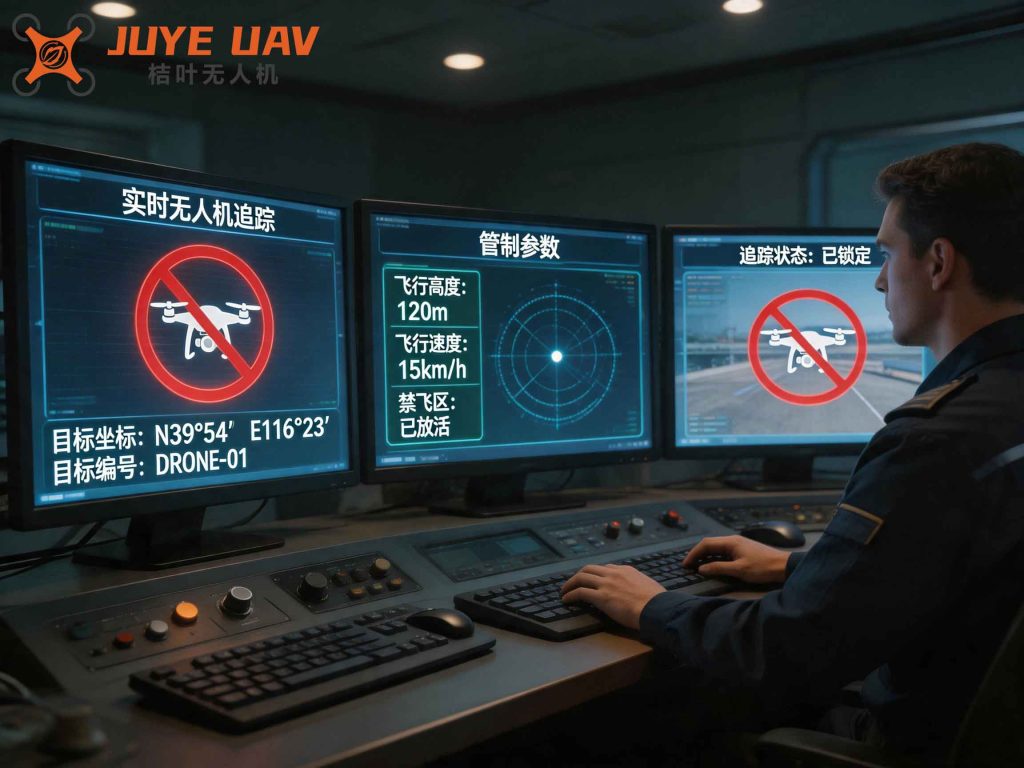
The flow includes: final survey coordinate acquisition → airspace application and approval → field reconnaissance → route design → flight mission → data quality check → image processing. Throughout this process, I strictly adhered to drone regulation requirements, ensuring that all operations were conducted legally and safely. Compliance with drone regulation is critical for large-scale infrastructure projects, as it ensures airspace safety and public acceptance. I also considered drone regulation when selecting flight altitudes and zones to avoid restricted areas.
3. Rapid Image Processing and Interpretation of UAV Imagery
After completing the UAV aerial photography, I processed the images rapidly to obtain usable results. With expert guidance, I established interpretation keys for typical regions and built a knowledge base for image interpretation, which was then used to extract construction site information.
3.1 Rapid Image Processing
The raw images first underwent distortion correction to eliminate sensor-related errors. Then, using specialized software, I performed data processing to generate digital terrain models (DTM) and orthophoto mosaics. The formula for the geometric correction model can be expressed as:
$$
\begin{bmatrix}
x \\
y \\
1
\end{bmatrix}
=
H
\begin{bmatrix}
X \\
Y \\
1
\end{bmatrix}
$$
where $(x,y)$ are image coordinates, $(X,Y)$ are ground coordinates, and $H$ is the homography matrix. I also applied bundle adjustment to improve accuracy. The processing workflow reduced the total time from days to hours, enabling near-real-time insights.
3.2 Fast Matching of Each Tower with Its Corresponding Image
Since construction progress, safety, quality, and environmental information are derived from multi-temporal UAV images, I needed to efficiently identify which image corresponds to each tower. I used the POS (Position and Orientation System) data from the UAV together with the tower final survey coordinates. By performing a nearest neighbor analysis, I found the exposure point closest to each tower coordinate and then retrieved the corresponding image. The matching criterion is:
$$
d_{ij} = \sqrt{(x_i – X_j)^2 + (y_i – Y_j)^2}
$$
where $(x_i,y_i)$ is the POS coordinate of exposure point $i$, and $(X_j,Y_j)$ is the tower coordinate $j$. The minimum $d_{ij}$ determines the best match. This method significantly reduced the time spent manually searching through thousands of images.
3.3 Image Interpretation of Construction Sites
With expert guidance and the help of high-resolution UAV images, I analyzed the construction sites according to the construction sequence. I developed interpretation keys for safety measures, quality assurance measures, and environmental/water conservation measures. The construction phases are listed in the table below:
| Phase ID | Construction Phase |
|---|---|
| 1 | Not started |
| 2 | Foundation excavation |
| 3 | Foundation pouring |
| 4 | Tower assembly |
| 5 | Conductor stringing |
For each phase, I defined specific interpretation keys. The following table summarizes the keys used for safety, quality, and environmental assessment:
| Phase | Interpretation Key |
|---|---|
| All phases | Construction site tidy and standardized |
| No guardrails around construction area | |
| Raw materials stacked improperly without isolation | |
| (Additional keys for general compliance) | |
| Foundation | No protective boards over foundation pit – safety hazard |
| Excess soil and debris not cleared | |
| Improper soil disposal without retaining measures | |
| Foundation pit not backfilled in time | |
| Water ponding in foundation pit | |
| Non-compliant concrete pouring | |
| (Other foundation-related keys) | |
| Tower assembly & stringing | Construction site not cleaned after work |
| Workers present under tower during assembly | |
| Packaging waste abandoned on site | |
| Anchor pit not backfilled in time |
Through the visual management system, I interpreted the UAV images for all towers along the line, analyzing and summarizing the progress, safety, quality, and environmental conditions.
4. Development of a Visual Construction Management System
To meet the functional requirements of controlling construction progress, safety, quality, and environmental protection, I developed a visual construction management system. This system integrates 3D terrain and corridor information, grid data, and multi-temporal UAV imagery. The main features include:
4.1 System Management
This module manages project information, data layers, and basic tools. I can manage, query, and locate each tower in the 3D scene. It handles satellite imagery, aerial imagery, multi-period UAV images, crossing points, tension and pulling sites, and substation data. Basic measurement and analysis tools are also provided.
4.2 Construction Progress Control
This module offers four-dimensional visualization of progress (3D + time), statistical summaries of construction status, and interpretation results. I can edit, view, and compare the progress, safety, quality, and environmental data for each tower. The system supports filtering by tower number, design package, construction bid, supervision company, and flight date. Results can be exported to reports.
4.3 Remote Inspection
I can mark hazardous points and crossing areas on the 3D map to quickly locate regions that affect construction. The system supports multi-temporal UAV image comparison based on user-defined extents.
4.4 Environmental and Water Conservation Assistance
With expert knowledge, I can edit environmental issues detected during construction and save the results in standard geographic data formats. This helps monitor the implementation of environmental measures and provides important reference material for the final environmental acceptance report.
4.5 Cableway Information Monitoring
In the 3D scene, I manage cableway data by creating 3D models to represent cableways, and I can edit, view, and analyze cableway information. This is especially useful for accessing remote construction sites in mountainous areas.
5. Engineering Applications
Based on the actual construction progress, I conducted three rounds of UAV aerial photography along the entire line. With expert guidance, I interpreted the images tower by tower and statistically analyzed the results. The applications are summarized in the following aspects.
5.1 Assisting Construction Progress Control
During foundation construction, tower assembly, and conductor stringing, I loaded the aerial images into the visual management system and associated each image with the corresponding tower. Through image interpretation, I could intuitively understand the progress at different time points, forming an effective time-series comparison. This allowed managers to quickly grasp the actual construction status. The table below shows a sample statistical output of progress interpretation results by design package:
| Bid | Not started (No.) | % | Excavation (No.) | % | Pouring (No.) | % | Tower Assembly (No.) | % | Stringing (No.) | % | Total |
|---|---|---|---|---|---|---|---|---|---|---|---|
| 1 | 0 | 0 | 1 | 0.3 | 73 | 25.5 | 163 | 57.0 | 49 | 17.1 | 286 |
| 2 | 0 | 0 | 6 | 1.8 | 77 | 22.5 | 224 | 65.5 | 35 | 10.2 | 342 |
| 3 | 0 | 0 | 0 | 0 | 0 | 0 | 36 | 30.8 | 81 | 69.2 | 117 |
| 4 | 0 | 0 | 0 | 0 | 26 | 12.7 | 127 | 62.0 | 52 | 25.4 | 205 |
| 5 | 1 | 0.3 | 0 | 0 | 122 | 33.7 | 188 | 51.9 | 51 | 14.1 | 362 |
| 6 | 0 | 0 | 0 | 0 | 34 | 14.5 | 175 | 74.8 | 25 | 10.7 | 234 |
| 7 | 0 | 0 | 15 | 7.8 | 59 | 30.7 | 118 | 61.5 | 0 | 0 | 192 |
| 8 | 0 | 0 | 0 | 0 | 1 | 0.9 | 98 | 86.7 | 14 | 12.4 | 113 |
| 9 | 1 | 0.6 | 1 | 0.6 | 12 | 7.2 | 146 | 88.0 | 6 | 3.6 | 166 |
| 10 | 0 | 0 | 0 | 0 | 13 | 11.9 | 81 | 74.3 | 15 | 13.8 | 109 |
5.2 Assisting Safety, Quality, and Environmental Control
By using multi-temporal UAV images, I performed comparative analysis to promptly detect deficiencies in safety protection, quality hazards, environmental measures, and vegetation restoration. The high-resolution images allowed me to identify potential issues such as landslides, soil erosion, water pollution, and other environmental incidents caused by construction. I then generated statistics on safety, quality, and environmental conditions. An example output is shown in the table below:
| Phase | Interpretation Result | Count (towers) | Percentage (%) |
|---|---|---|---|
| All phases | Site clean and standardized | 2089 | 96.7 |
| No guardrails around site | 20 | 1.0 | |
| Raw materials improperly stored | 50 | 2.3 | |
| Total towers checked | 2124 | 100 | |
| Foundation | No protective board above pit | 17 | 3.9 |
| Excess soil/debris not cleared | 11 | 2.5 | |
| Improper soil disposal | 0 | 0 | |
| Pit not backfilled | 0 | 0 | |
| Water ponding | 0 | 0 | |
| Non-compliant concrete pouring | 5 | 1.1 | |
| Tower assembly & stringing | Site not cleaned after work | 20 | 1.2 |
| Workers under tower during assembly | 1 | 0.1 | |
| Packaging waste abandoned | 15 | 0.9 | |
| Anchor pit not backfilled | 0 | 0 |
5.3 Assisting Cableway Information Monitoring
With the help of high-resolution images, I could identify cableways near towers. Using a typical support model library, I created 3D visualizations of cableways by placing model supports at each identified location and simulating ropes connecting the hooks. This allowed managers to understand the cableway deployment status in real time, including the total number of cableways and their exact positions. The effect clearly showed the on-site cableway installation, which is crucial for material transportation in remote mountainous areas.
6. Conclusion
This research demonstrates that the UAV aerial photography technology applied to UHV transmission project construction site management enables the acquisition of high-resolution images along the line, the extraction of per-tower interpretation results, and the provision of real-time information on construction status, safety, quality, and environmental compliance. The developed visual construction management system has generated rich digital outcomes, supporting refined infrastructure management and standardizing on-site operations. The approach innovates the construction management model and has formed a comprehensive technical solution that can be extended to other projects. Furthermore, the image data collected during construction can serve as evidence for corridor rights protection and can be transferred to operation and maintenance phases, providing essential baseline data for the long-term management of the power grid. Throughout the entire process, adherence to drone regulation was paramount; every flight plan was reviewed for compliance with local airspace rules, and I continuously updated my knowledge of evolving drone regulation to ensure safe and lawful operations. The success of this project also highlights the importance of integrating drone regulation into the project management framework, as it directly impacts flight efficiency, data quality, and overall project acceptance. Moving forward, I plan to further optimize the image processing pipeline and explore the use of AI-based interpretation to enhance automation, while always keeping drone regulation as a core consideration in system design and operational planning.