
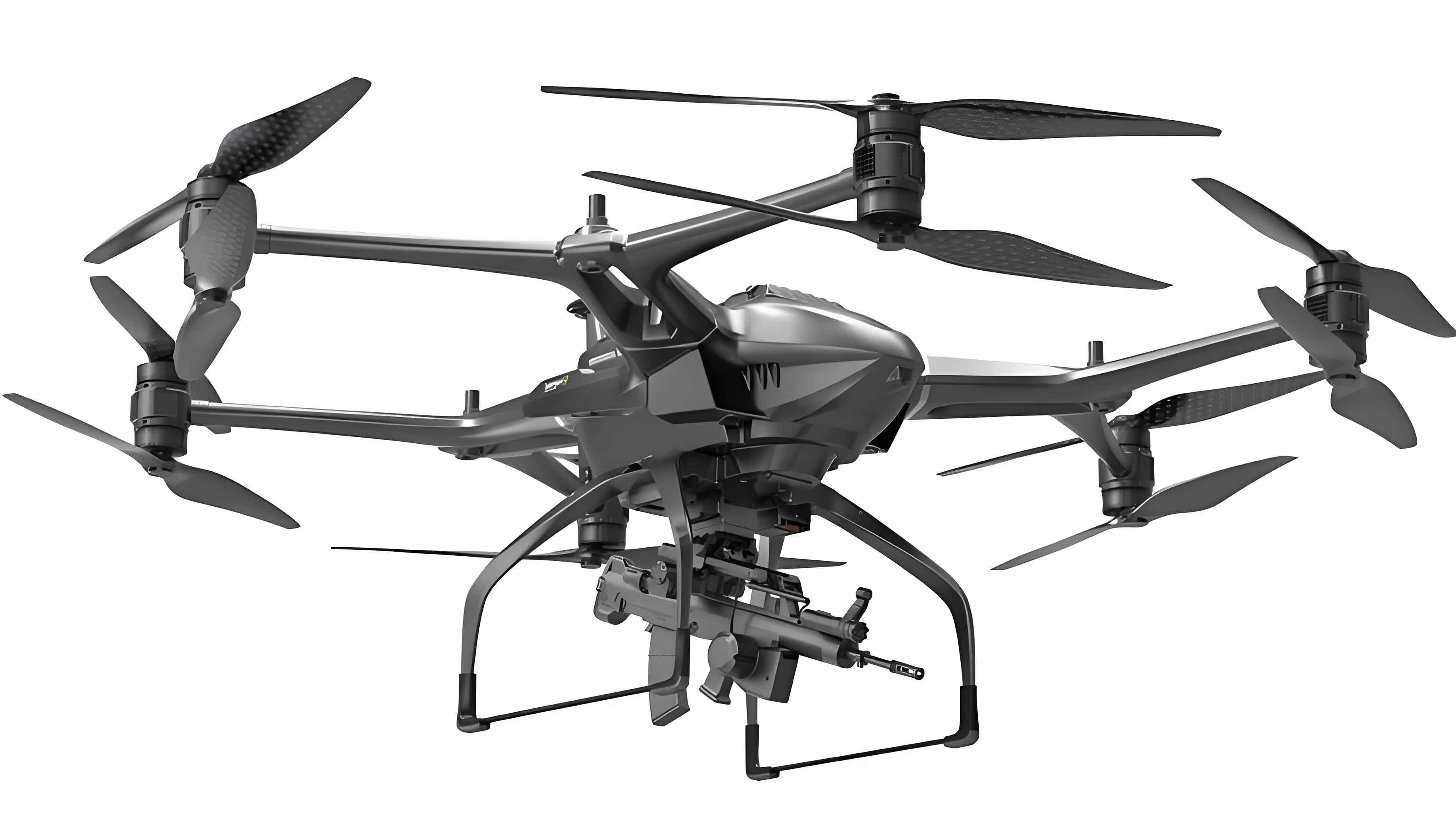
The landscape of modern warfare has been fundamentally reshaped by the advent and proliferation of unmanned systems. Since the first combat deployment of a reconnaissance drone in the Vietnam War, the role of the military drone has expanded exponentially, transitioning from a niche surveillance asset to a cornerstone of contemporary military strategy. From the deserts of Iraq to the complex terrains of Afghanistan and Syria, these uncrewed platforms have proven indispensable for Intelligence, Surveillance, and Reconnaissance (ISR), precision strike, combat assessment, and electronic warfare. The United States, as the pioneer and predominant force in this domain, maintains a technological and operational lead that is both extensive and deeply institutionalized. This analysis delves into the driving forces behind the development of U.S. military drones, examines the current inventory and cutting-edge prototypes, addresses persistent technological challenges, and forecasts the critical trajectories that will define their future evolution on the battlefield.
Catalysts for Proliferation: The Imperatives for Drone Dominance
The rapid acceleration in military drone development and deployment is not serendipitous but a calculated response to a confluence of strategic, economic, and operational imperatives.
Firstly, the relentless rise in weapons system costs, often described by Augustine’s Law—which posits that aircraft costs increase exponentially while defense budgets increase linearly—has forced a strategic reassessment. Developing and procuring exquisite, multi-role manned platforms like the F-22 Raptor or B-2 Spirit bomber entails staggering investments and lengthy development cycles. In contrast, military drone systems offer a compelling cost-capability trade-off. They provide persistent coverage and strike capabilities at a fraction of the cost and, critically, with zero risk to human pilots in contested environments. This economic calculus is driving a shift towards distributed, networked systems where simpler, more affordable unmanned assets operate in collaborative swarms to achieve complex effects, fundamentally altering force structure economics.
Secondly, the post-Cold War security environment, dominated by asymmetric threats and counter-insurgency operations, created a pressing demand for persistent, granular intelligence and the ability to strike fleeting targets with minimal collateral footprint. Traditional ISR assets like satellites and high-altitude manned aircraft could not provide the continuous “pattern of life” monitoring required in dense urban or rugged environments. The military drone, particularly the Medium-Altitude Long-Endurance (MALE) type, filled this gap perfectly, offering 24/7 eyes-on-target capability. Furthermore, the need to protect forward bases and naval assets from swarm attacks by inexpensive adversary platforms (e.g., drone boats, improvised aerial devices) has spurred the development of counter-drone systems and friendly drone swarms for defensive purposes.
Thirdly, the explosive growth of the commercial drone sector has created a powerful symbiotic relationship with military development. The U.S. adherence to a civil-military integration strategy has accelerated the cross-pollination of technologies. Advances in miniaturization, battery efficiency, lightweight composite materials, and artificial intelligence for navigation and collision avoidance, driven by companies like Intel and Google, have rapidly migrated to defense applications. This civilian ecosystem not only reduces R&D costs but also provides a vast reservoir of innovation and manufacturing capacity that can be rapidly tapped for military-specific adaptations, as seen with the repurposing of commercial airframes for military logistics or chemical detection roles.
The Current Fleet: A Tiered Ecosystem of Capability
The U.S. military operates a vast and tiered fleet of unmanned aerial systems, categorized broadly by size, endurance, and mission profile. The following table summarizes key performance parameters of some of the most numerous and strategically significant platforms currently in service.
| Category | Platform | Primary Role | Approx. Inventory | Endurance (Hours) | Max Altitude (ft/m) | Typical Payload/Weapons | Propulsion System |
|---|---|---|---|---|---|---|---|
| Small & Miniature | RQ-11 Raven | Hand-launched ISR (Platoon-level) | ~7,000+ | 60-90 min | ~500 ft / 150 m | Electro-optical/Infrared (EO/IR) camera | Electric motor |
| RQ-12A Wasp AE | Micro ISR | ~1,000 | ~50 min | ~1,000 ft / 300 m | EO/IR camera | Lithium battery | |
| RQ-20 Puma AE | Small Tactical ISR | ~1,100 | ~2.5 hrs | > 1,000 ft / 300 m | EO/IR camera, laser illuminator | Electric motor | |
| RQ-21 Blackjack | Tactical ISR (Ship & Land) | ~300+ | > 10 hrs | ~19,000 ft / 5,800 m | Modular payload bays (EO/IR, Sigint, comms relay) | 2-stroke engine | |
| Medium & Large | RQ-7 Shadow | Brigade-level ISR | ~500 | 6-9 hrs | ~15,000 ft / 4,600 m | EO/IR gimbal, laser rangefinder | Rotary engine |
| MQ-1C Gray Eagle | Armed Reconnaissance & Attack | ~250 | 25-40 hrs | ~29,000 ft / 8,800 m | EO/IR, SAR, 4x Hellfire missiles | Heavy Fuel Engine | |
| MQ-9 Reaper | Hunter-Killer / ISR | ~300+ | ~27 hrs | ~50,000 ft / 15,000 m | Multi-spectral Targeting System, 4x Hellfire + 2x GBU-12 Paveway II | Turbo-prop engine (Honeywell TPE331) | |
| RQ-4 Global Hawk | HALE ISR | ~30+ | > 34 hrs | ~60,000 ft / 18,300 m | Synthetic Aperture Radar (SAR), EO/IR, Signals Intelligence suites | Turbofan engine (Rolls-Royce AE 3007H) |
This ecosystem demonstrates a deliberate stratification: small military drones like the Raven provide immediate situational awareness to squads; tactical systems like the Shadow support battalion operations; MALE platforms like the Reaper deliver persistent strike and reconnaissance at the theater level; and HALE assets like the Global Hawk offer strategic, wide-area surveillance. The propulsion column highlights a key technological frontier, with electric power dominating the small-end and hydrocarbon fuels enabling the endurance of larger platforms—a dichotomy that future developments aim to bridge.
The Cutting Edge: Next-Generation Prototypes and Programs
Beyond the current fleet, several advanced programs illustrate the future direction of U.S. military drone capabilities, focusing on greater autonomy, multi-domain integration, and survivability in high-threat environments.
MQ-8C Fire Scout: An evolution of the MQ-8B, the MQ-8C is based on a commercial Bell 407 helicopter airframe. This upgrade substantially increases capability, roughly doubling endurance and tripling payload capacity. It is designed to provide the U.S. Navy with persistent ISR, targeting, and communications relay from littoral combat ships and other naval vessels. Its ability to carry Hellfire missiles and advanced sensor pods makes it a potent force multiplier for surface action groups. The transition from MQ-8B to MQ-8C is a clear move towards greater reliability, payload, and mission flexibility for ship-based vertical take-off and landing (VTOL) drones.
MQ-9B SkyGuardian/SeaGuardian: Representing a significant evolution of the proven MQ-9 Reaper, the MQ-9B platform emphasizes increased endurance (over 40 hours), enhanced reliability for civil airspace compliance, and multi-role modularity. Key features include a strengthened wing for greater payload (up to 2,300 kg external stores), anti-icing capabilities, and a collision-avoidance system. The SeaGuardian variant is particularly noteworthy, equipped with a multi-mode maritime surface-search radar and sonobuoy dispensers, transforming the hunter-killer military drone into a persistent maritime patrol asset capable of monitoring vast ocean areas for surface and subsurface threats.
X-47B (Technology Demonstrator): Although not a program of record, the Northrop Grumman X-47B remains one of the most significant military drone technology demonstrators in history. As the first tailless, autonomous, low-observable (stealth) unmanned aircraft to operate from an aircraft carrier, it validated several critical technologies: autonomous carrier launch and recovery (including arrested landing and catapult launch), autonomous aerial refueling (AAR), and operations in a carrier’s networked environment. Its success paved the way for the Navy’s current Carrier-Based Unmanned Aerial System (CBARS) program, now known as the MQ-25A Stingray, which will focus primarily on aerial refueling but inherits the operational concepts proven by the X-47B. The strategic implication is profound: extending the strike range of carrier air wings while keeping the carrier itself at a safer distance.
Confronting the Frontiers: Persistent Technological Bottlenecks
Despite their transformative impact, current military drone systems face significant limitations that constrain their full potential. These bottlenecks represent the primary focus areas for ongoing research and development.
1. Limited Interoperability and “Mosaic Warfare”: Many current unmanned systems are built as “stove-piped” or closed architectures, with proprietary data links and interfaces. This severely limits the ability of different drones, and between drones and manned platforms (air, sea, land), to share data seamlessly and collaborate dynamically. The vision of “Mosaic Warfare,” where a vast number of simpler, attritable systems combine like tiles to form a potent, resilient force, is hampered by this lack of inherent interoperability. The challenge is to move towards open systems architectures that enable rapid, plug-and-play integration of sensors, effectors, and platforms across all domains. The effectiveness of a networked military drone swarm can be conceptualized by a simplified metric of network cohesion \( C \):
$$ C = \frac{\sum_{i=1}^{N} \sum_{j \neq i}^{N} L_{ij}}{N(N-1)/2} $$
where \( N \) is the number of nodes (drones) in the swarm, and \( L_{ij} \) is the data link reliability (from 0 to 1) between drone \( i \) and drone \( j \). Maximizing \( C \) requires robust, adaptive communication protocols.
2. The Autonomy Gap: Most fielded military drones are remotely piloted, not truly autonomous. They require constant satellite communication links and large teams of pilots, sensor operators, and analysts. This creates a massive manpower burden and presents a critical vulnerability, as jamming or spoofing the command link can neutralize the asset. The goal is to move towards Higher-Level Autonomy (HLA), where drones can perform complex missions (e.g., collaborative search and engage, adaptive route planning in denied communications environments) with minimal human supervision. This raises immense technical, ethical, and verification challenges. The trust in an autonomous system’s decision-making, especially for lethal actions, must be quantifiable. A foundational element is robust perception and classification, often involving Bayesian inference for target identification under uncertainty:
$$ P(Target | Data) = \frac{P(Data | Target) \cdot P(Target)}{P(Data)} $$
where prior beliefs \( P(Target) \) are updated with sensor data likelihoods \( P(Data|Target) \) to form a posterior probability for action.
3. Propulsion and Power Limitations: Endurance, speed, and payload are fundamentally governed by propulsion and energy density. Small electric military drones are limited by battery technology (often < 2 hours), while larger hydrocarbon-fueled drones generate heat and acoustic signatures that compromise stealth and require complex logistics. The quest is for high-efficiency, low-signature power sources. Options include hybrid-electric systems, advanced diesel/jet fuels for improved specific fuel consumption, and ultimately, high-energy-density fuels or compact directed energy systems for novel propulsion methods like laser or microwave power beaming for ultra-long-endurance missions.
4. Inefficient Training Paradigms: Training drone operators on live systems is costly, time-consuming, and risks damage to expensive platforms. The current pipeline cannot keep pace with demand. The solution lies in advanced, high-fidelity simulation and synthetic training environments that leverage Virtual Reality (VR) and Artificial Intelligence (AI) to create realistic, complex scenarios for mission rehearsal and operator skill development, reducing the need for live-flight training hours.
Future Trajectories: The Path Towards an Unmanned Force Multiplier
The evolution of U.S. military drones will be guided by efforts to overcome the above bottlenecks, leading to several defining trends.
1. Systemic Interoperability through Open Architectures and Standards: Future development will prioritize modular open systems approach (MOSA) designs. This will allow for the rapid integration of new payloads, software apps, and communication systems across different drone platforms and with the broader Joint All-Domain Command and Control (JADC2) network. Drones will function less as standalone platforms and more as adaptable “nodes” in a vast, resilient combat network, capable of sharing targeting data, electronic warfare effects, and computational resources.
2. The March Towards Trusted Autonomy and AI Teaming: Research will intensify in machine learning, computer vision, and secure multi-agent planning algorithms. The objective is to develop “teammate-level” autonomy, where a single human operator can manage a collaborative team of heterogeneous military drones. These drones will be capable of executing commander’s intent in dynamic environments, performing tasks like dynamic target prioritization, adaptive jamming, or suppressive fire without requiring micromanagement. The operational tempo and decision-making advantage afforded by such teams could be modeled as an OODA (Observe, Orient, Decide, Act) loop acceleration factor \( \alpha \):
$$ \Delta T_{Human-only} = \alpha \cdot \Delta T_{Human-AI Team} \quad \text{where} \quad \alpha > 1 $$
indicating the human-AI team completes the cycle faster.
3. Revolution in Propulsion and Energy Management: The focus will be on silent electric or hybrid propulsion for stealthy, tactical military drones, and on ultra-long-endurance solutions for strategic platforms. This includes sophisticated solar-regenerative systems for HALE drones, potentially enabling flights lasting weeks or months. Advanced thermal and signature management will be integral to these new power systems to maintain survivability. The specific endurance \( E \) of an aircraft is related to the overall efficiency \( \eta \), lift-to-drag ratio \( (L/D) \), and specific energy of the fuel \( e \) divided by weight \( W \):
$$ E \propto \eta \cdot \left(\frac{L}{D}\right) \cdot \left(\frac{e}{W}\right) $$
Future breakthroughs aim to maximize all terms in this product.
4. Proliferation of Attritable and Swarming Systems: Cost pressures and the need to overwhelm adversary defenses will drive the production of lower-cost, attritable (not necessarily expendable, but acceptably lossable) military drones designed for one-way missions or high-risk environments. These will be deployed in collaborative swarms, using emergent behaviors to saturate air defenses, conduct electronic warfare, or provide distributed sensing. Control of such swarms will rely on the autonomous technologies above, with humans setting broad parameters for swarm behavior.
In conclusion, the military drone has progressed from a tactical supplement to a central component of U.S. warfighting doctrine. The current fleet demonstrates a mature, tiered capability, while next-generation prototypes point towards greater integration, autonomy, and survivability. However, significant hurdles in interoperability, autonomy, power, and training remain. The future trajectory is clear: a shift towards networked, intelligent, and collaborative unmanned systems that operate seamlessly with manned forces across all domains. The successful navigation of this technological path will not merely add another tool to the arsenal but will fundamentally alter the calculus of power projection, making the advanced military drone a true force multiplier and a decisive element in maintaining strategic advantage in the complex security landscape of the 21st century.