
From my perspective, observing the relentless march of technology, the rise of the unmanned aerial vehicle, or the military drone, represents one of the most transformative shifts in modern warfare and security operations. The journey from a rudimentary target to a central node in network-centric warfare is a testament to human ingenuity and strategic necessity. The proliferation of the military drone across air, land, and maritime domains has not only altered tactical playbooks but has also fundamentally reshaped strategic thinking. This analysis delves into the historical progression, current technological landscape, and future trajectory of this pivotal asset, drawing comparisons and identifying critical pathways for development.
1. Historical Progression and Global Scale of Military Drone Development
The genesis of the military drone concept is deeply rooted in the crucible of 20th-century conflict. The initial impulse was not for a hunter, but for a target. The following timeline encapsulates key milestones in its early evolution:
| Period | Development | Primary Role | Technological Significance |
|---|---|---|---|
| 1914-1918 (WWI) | Secret British research into pilotless aircraft. | Conceptual/Theoretical | Laying the foundational idea for autonomous flight. |
| 1920s | Successful tests of radio-controlled aircraft carrying bombs, serving as target drones, and torpedo-dropping variants. | Experimental Weapon/Target | Proof-of-concept for remote control and armament. |
| 1939-1945 (WWII) | Limited operational use, primarily as target drones for anti-aircraft training; some reconnaissance attempts. | Training Aid / Limited ISR | Transition from experiment to a standardized training tool. |
| Cold War Era | Rapid diversification driven by aerospace advances and superpower rivalry. Development of high-altitude reconnaissance drones (e.g., U.S. AQM-34 Ryan Firebee variants). | Strategic Reconnaissance, Electronic Intelligence (ELINT) | Shift to high-value, high-risk intelligence missions, reducing pilot exposure in denied airspace. |
| Post-Cold War (1990s+) | Proliferation and prominence in regional conflicts. Pioneering use in persistent surveillance, targeted strikes, and network integration (e.g., Predator, Global Hawk). | Tactical ISR, Precision Strike, Force Multiplier | Integration of real-time data links, satellite communications, and precision-guided munitions, enabling persistent “sensor-to-shooter” loops. |
The contemporary global landscape of military drone capability is markedly stratified. A comparative analysis reveals distinct tiers of development and focus:
| Country/Region | Technology Level | Key Focus Areas | Industry & Strategic Posture |
|---|---|---|---|
| United States | World Leader | High-Altitude Long Endurance (HALE), Unmanned Combat Aerial Vehicles (UCAVs), stealth platforms, swarming technologies, and AI integration. | Dominant R&D investment; operates the most extensive and advanced fleet; sets global doctrinal trends. |
| Israel | First Tier / Export Leader | Tactical and Strategic UAVs, sophisticated payloads (SAR, ELINT), counter-UAS systems. Often pioneers in operational concepts. | Heavy reliance on indigenous innovation; leading global exporter with high market share in both military and high-end civilian sectors. |
| Europe (Russia, UK, France, Germany) | Rapidly Developing / Varied | Medium-Altitude Long Endurance (MALE) drones (e.g., EuroMALE project), naval UAVs, loyal wingman concepts. National programs exist but collaboration is increasing. | Strong industrial base but fragmented; catching up with leaders; emphasis on sovereign capability and interoperability within NATO/EU frameworks. |
| Other Nations (Japan, S. Korea, India, Iran, etc.) | Developing / Aspiring | Domestic production of tactical UAVs for reconnaissance, border patrol, and light strike roles; heavy reliance on imports or licensed production. | Growing indigenous programs motivated by security concerns and technology sovereignty; significant import markets. |
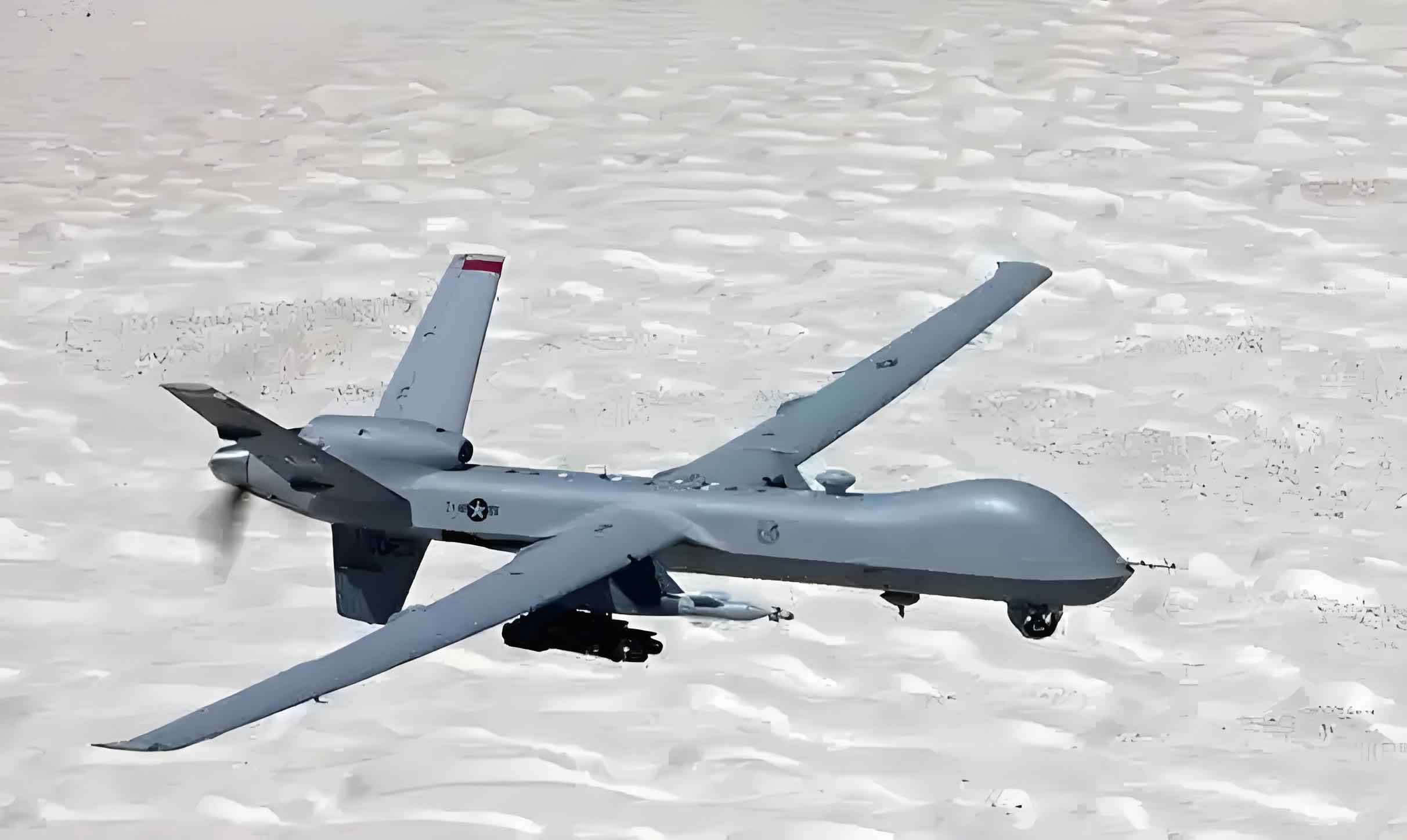
2. Technical Foundations and Current State-of-the-Art
The modern military drone is a complex system-of-systems. Its efficacy is governed by a series of interlinked technical parameters and capabilities. We can model a drone’s core operational envelope using fundamental aerospace equations. For instance, the theoretical maximum range (R) for a propeller-driven surveillance military drone can be approximated using the Breguet range equation:
$$ R = \frac{\eta}{g} \frac{L}{D} \frac{1}{SFC} \ln \left( \frac{W_{initial}}{W_{final}} \right) $$
Where:
$\eta$ = propeller efficiency,
$g$ = acceleration due to gravity,
$L/D$ = lift-to-drag ratio (aerodynamic efficiency),
$SFC$ = specific fuel consumption of the engine,
$W_{initial}$ = initial gross weight,
$W_{final}$ = final weight (after fuel burn).
This formula highlights the critical levers for endurance: aerodynamic efficiency, propulsion efficiency, and fuel fraction. Modern HALE drones like the RQ-4 Global Hawk maximize these factors. Similarly, sensor performance is paramount. The ground area coverage rate (GACR) for a surveillance sensor can be expressed as:
$$ GACR = V_{g} \cdot swath $$
Where $V_{g}$ is the ground speed and $swath$ is the sensor’s imaging width on the ground. A key metric for electro-optical/infrared (EO/IR) systems is the Noise-Equivalent Temperature Difference (NETD), which defines thermal sensitivity:
$$ NETD = \frac{(A_d \Delta f)^{1/2}}{D^{*} \cdot (A_o \tau_o)^{1/2} \cdot (\partial W / \partial T)_{\lambda_1-\lambda_2}} $$
Where $A_d$ is detector area, $\Delta f$ is electrical bandwidth, $D^{*}$ is specific detectivity, $A_o$ is optics area, $\tau_o$ is transmission, and $(\partial W / \partial T)$ is the change in spectral radiant emittance with temperature. Lower NETD values indicate a more sensitive sensor capable of detecting smaller temperature differences—crucial for identifying concealed targets.
3. Imperatives for Advancing Military Drone Capabilities
The strategic rationale for possessing advanced military drone capabilities is multifaceted. Beyond the often-cited advantages of risk reduction to personnel and potential cost savings, their true value lies in enabling new operational paradigms. They provide persistent intelligence, surveillance, and reconnaissance (ISR) over vast and contested areas, creating a decisive information advantage. In my assessment, they act as force multipliers, extending the reach and precision of traditional platforms. For nations with extensive borders and complex security environments, a layered drone fleet—from handheld mini-UAVs to strategic HALE systems—is indispensable for domain awareness, rapid response, and deterrence. The military drone is no longer a mere support asset but a central component of integrated air defense, maritime patrol, and ground maneuver operations.
4. Identifying Current Technical Vulnerabilities and Gaps
Despite impressive advances, several technological chokepoints persist, especially for developers aiming to compete with first-tier capabilities. The most salient weaknesses often lie not in airframe design, but in subsystems and integration. The following table contrasts desired capabilities against common technical challenges:
| Desired Capability | Associated Technical Challenges | Impact on Operational Effectiveness |
|---|---|---|
| High Survivability (Stealth, ECM) | Developing low-observable (LO) shapes and materials at scale; integrating advanced radar-absorbent structures; producing compact, powerful onboard electronic countermeasures (ECM). | Vulnerability in contested airspace against advanced Integrated Air Defense Systems (IADS). Limits penetration and persistence in high-threat environments. |
| Autonomous Operations & Swarming | Robust artificial intelligence/machine learning (AI/ML) for complex decision-making in dynamic environments; secure, resilient, low-latency communication links for drone-to-drone (D2D) coordination; collaborative autonomy algorithms. | Reliance on constant satellite or ground station links creates a vulnerability. Limits ability to conduct decentralized, adaptive swarm attacks or ISR missions in communication-denied settings. |
| Advanced Power & Propulsion | Developing high energy-density power sources for electric drones; creating efficient, durable hybrid-electric or heavy-fuel engines for extreme endurance; thermal management for high-power systems. | Constrains mission endurance and payload capacity. Limits the operational utility of smaller tactical and mini-UAVs. |
| Sensor Fusion & Data Processing | Real-time fusion of data from EO/IR, SAR, SIGINT, and other sensors into a single actionable track; edge computing to process vast data onboard to reduce bandwidth needs. | Information overload for operators; delayed situational awareness due to bandwidth constraints on raw data transmission; increased risk of missing critical indicators. |
We can model one aspect of the vulnerability: the probability of successful mission completion $P_{success}$ in a contested electronic environment might be expressed as a function of communication reliability and autonomy level:
$$ P_{success} = f(R_{comm}, L_{autonomy}, T_{threat}) $$
Where $R_{comm}$ is the reliability of the command & control link, $L_{autonomy}$ is the level of autonomous task execution (from 0 for fully remote-piloted to 1 for fully autonomous mission), and $T_{threat}$ is the environmental threat density. Current systems often have high dependency on $R_{comm}$, making $P_{success}$ plummet when $R_{comm}$ degrades. The goal is to increase $L_{autonomy}$ to maintain high $P_{success}$ even with low $R_{comm}$.
5. Future Trajectories and Strategic Research Vectors
Looking forward, the evolution of the military drone will be guided by convergence with other disruptive technologies. The future fleet will be characterized by heterogeneity, collaboration, and intelligence. A strategic research and development roadmap should prioritize the following interconnected vectors:
| Research Vector | Key Objectives | Enabling Technologies | Expected Capability Leap |
|---|---|---|---|
| Cognitive Autonomy & AI | Develop drones capable of understanding commander’s intent, adapting to dynamic threats, and making tactical decisions within defined rules of engagement. | Explainable AI (XAI), reinforcement learning, advanced sensor fusion algorithms, natural language processing for human-machine teaming. | Creation of true “loyal wingmen” that can operate alongside manned aircraft and execute complex, multi-objective missions with minimal human supervision. |
| Networked Swarm Operations | Enable cooperative behaviors among large numbers of inexpensive drones for saturation attacks, distributed sensing, and resilient communications. | Mesh networking protocols, bio-inspired algorithms (e.g., ant colony optimization), distributed data fusion, secure low-probability-of-intercept communications. | Ability to overwhelm traditional defenses, create ad-hoc surveillance grids, and provide unprecedented resilience through redundancy. |
| Advanced Power & Propulsion | Achieve step-change improvements in endurance and payload for all classes of drones. | Next-generation batteries (solid-state), hydrogen fuel cells, ultra-efficient hybrid propulsion, and possibly directed energy beaming for remote charging. | Multi-day endurance for tactical MALE drones; viable electric propulsion for larger platforms; enabling persistent station-keeping for swarms. |
| Multi-Domain Integration | Seamlessly integrate drone data and effects into joint all-domain command and control (JADC2) architectures. | Open architecture standards (e.g., OMS/UCI), tactical cloud computing, cross-domain solutions for secure data sharing. | The military drone becomes a ubiquitous sensor and shooter node in a fully networked force, providing targeting data for naval, ground, and cyber assets. |
| Counter-Anti-Access Technologies | Enhance survivability in highly contested environments against advanced electronic warfare and kinetic threats. | Low-cost stealth materials, cognitive electronic warfare (EW) systems that learn and adapt to enemy radars, anti-jam/anti-spoof navigation (e.g., assured PNT). | Restoration of operational access and persistence in environments currently dominated by sophisticated IADS. |
The culmination of these advances can be conceptualized in an overall system effectiveness metric $E_{sys}$ for a future military drone system, which might be modeled as a weighted sum of key performance attributes (KPAs):
$$ E_{sys} = w_1 \cdot P_{surv} + w_2 \cdot P_{detect} + w_3 \cdot C_{autonomy} + w_4 \cdot B_{network} + w_5 \cdot E_{endurance} $$
Where:
$P_{surv}$ = Probability of Survivability,
$P_{detect}$ = Probability of Target Detection/Identification,
$C_{autonomy}$ = Level of Collaborative Autonomy,
$B_{network}$ = Network Bandwidth/Latency Resilience,
$E_{endurance}$ = Mission Endurance (normalized),
and $w_i$ are strategic weighting factors that reflect doctrinal priorities (e.g., $\sum w_i = 1$). The goal of next-generation development is to maximize $E_{sys}$ across a diverse family of systems.
In conclusion, the trajectory of the military drone is one of accelerating complexity and strategic centrality. Its development is no longer just an aviation challenge but a grand systems integration problem spanning materials science, artificial intelligence, propulsion, and network theory. The nations that will lead in this domain are those that can foster synergistic collaboration between defense research institutions, academia, and private industry to master these core technologies. The future battlespace will undoubtedly be populated by intelligent, collaborative, and resilient unmanned systems, making the continuous and focused advancement of military drone capabilities a defining imperative of 21st-century defense.