
The advent and battlefield deployment of Unmanned Aerial Vehicles (UAVs), or military drones, have fundamentally reshaped modern warfare, heralding an era dominated by long-range, intelligent, and information-centric weaponry that facilitates non-contact engagements. As an analyst observing this transformative shift, I see these systems not merely as tools but as pivotal agents changing operational doctrines. Compared to their manned counterparts, military drones offer compelling advantages: reduced physical footprint, lower procurement and operational costs, operational flexibility, diminished logistical demands for launch and recovery, and enhanced survivability in high-threat environments. These attributes have propelled them to the forefront of military research and development programs worldwide. Based on lessons learned from recent conflicts and anticipated future operational needs, the trajectory of military drone development is crystallizing along several key, interconnected axes.
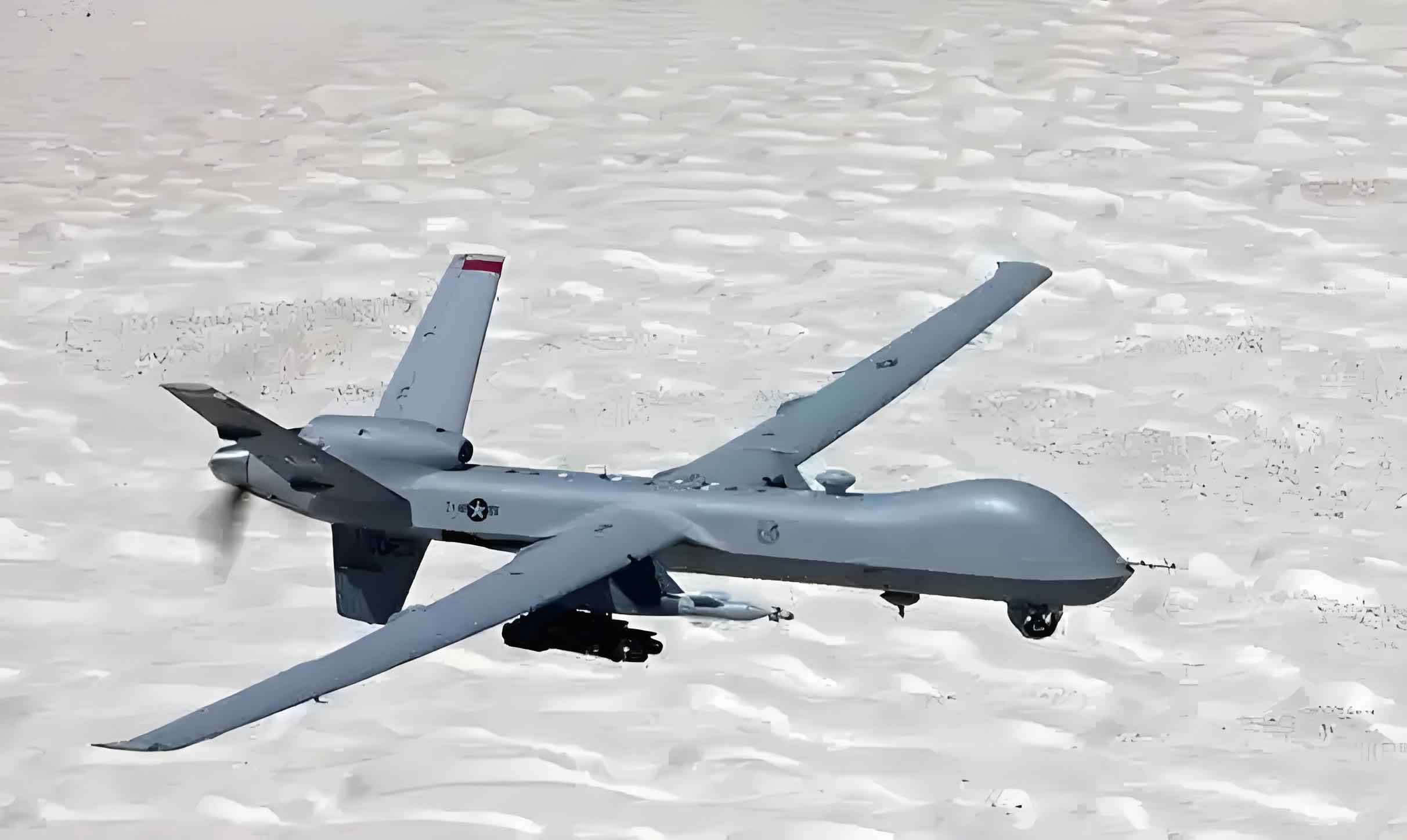
A military drone is fundamentally an aircraft system that operates without an onboard human pilot, controlled either remotely by an operator or autonomously by an onboard computer program. Its core architecture comprises the airframe, propulsion system, flight control system, mission payload, and launch/recovery mechanisms. The inherent strengths of this configuration—structural simplicity, compact size, light weight, high maneuverability, extended endurance, cost-effectiveness, low observability, independence from traditional runways, reusability, and the ability to perform missions beyond human physiological limits or in chemically/radiologically contaminated areas—have led to their prolific use in contemporary theaters. The future promises an even more expansive role, solidifying their status as a cornerstone of 21st-century military arsenals. The evolutionary trends for these systems are multifaceted and driven by the relentless pursuit of persistent awareness, survivability, lethal autonomy, and networked integration.
1. Extending Endurance and Augmenting Velocity
The strategic value of a military drone is immensely amplified by its loitering capability. High-Altitude, Long-Endurance (HALE) and Medium-Altitude, Long-Endurance (MALE) drones, with their enhanced survivability and persistent intelligence, surveillance, and reconnaissance (ISR) capacity, are becoming indispensable assets. Operating above 20,000 meters, they form a critical layer in the atmospheric surveillance network, providing unblinking eyes over vast areas. Consequently, a primary focus is pushing the boundaries of flight duration. This is often achieved through aerodynamic optimization, lightweight composite materials, and highly efficient propulsion systems, sometimes hybrid or solar-assisted. The fundamental relationship for endurance (E) in a propeller-driven aircraft, neglecting reserves, can be simplified as:
$$E = \\frac{\\eta_p}{C} \\cdot \\frac{L}{D} \\cdot \\ln\\left(\\frac{W_{initial}}{W_{final}}\\right)$$
where $\\eta_p$ is propeller efficiency, $C$ is the specific fuel consumption, $L/D$ is the lift-to-drag ratio (a measure of aerodynamic efficiency), and $W_{initial}/W_{final}$ is the mass ratio. This formula underscores why improving $L/D$ and reducing $C$ are paramount for endurance.
Simultaneously, the proliferation of military drones has spurred the development of counter-UAV systems. To mitigate interception risks, increasing velocity is a crucial strategy. Higher speeds compress the enemy’s decision and engagement timeline, reducing vulnerability to ground-based air defenses and manned interceptors. The quest for high-speed, long-endurance platforms, including compound helicopters with coaxial rotors and pusher propellers capable of both high-speed cruise and stationary hover, represents a significant engineering challenge. The table below contrasts the endurance and speed parameters of representative drone categories.
| Drone Category | Representative Model | Typical Endurance | Typical Cruise Speed | Primary Role |
|---|---|---|---|---|
| Mini/Micro | Black Widow | 0.5 – 2 hours | 40 – 80 km/h | Close-range ISR |
| Tactical MALE | MQ-9 Reaper | 24 – 30 hours | 280 – 400 km/h | ISR, Strike |
| Strategic HALE | RQ-4 Global Hawk | 32+ hours | 570 km/h | Broad-area ISR |
| High-Speed Target | Various | 1 – 2 hours | Mach 0.8 – 0.9+ | Aerial target, R&D |
2. Enhancing Survivability through Stealth and Miniaturization
Survivability on the modern battlefield is synonymous with low observability. The next generation of military drones is embracing advanced stealth technologies across the entire electromagnetic spectrum. This involves a holistic approach: radar cross-section (RCS) reduction, infrared (IR) signature suppression, visual camouflage, and acoustic quieting. RCS reduction is achieved through faceted shaping, the use of radar-absorbent materials (RAM) and structures (RAS), and seamless body designs that minimize gaps and cavities. The RCS ($\\sigma$) of a simple shape can be approximated, but complex designs rely on computational modeling. For a flat plate at normal incidence, a basic relation is:
$$\\sigma = \\frac{4\\pi A^2}{\\lambda^2}$$
where $A$ is the area and $\\lambda$ is the radar wavelength, highlighting why managing physical dimensions and angles is critical.
IR signature management involves shielding hot engine parts, using mixed exhaust streams, and applying special low-emissivity coatings. Furthermore, novel concepts like “charging” the skin with a low-voltage current to create adaptive camouflage or radar-absorbing layers are under exploration. Alongside stealth, radical miniaturization is progressing. Micro- and Nano-air vehicles (MAVs/NAVs), with wingspans under 15 cm, represent a disruptive trend. These insect or bird-sized military drones offer unparalleled concealment and can operate in dense urban and indoor environments, providing hyper-local situational awareness. Their development hinges on breakthroughs in micro-electro-mechanical systems (MEMS), low-Reynolds number aerodynamics, and lightweight power sources.
3. The March Towards Autonomy and Weaponization
The current paradigm of remote piloting, while effective, has limitations, including latency, communication vulnerability, and high cognitive load on operators. The future lies in increased autonomy. For a military drone, true autonomy translates to “the capability to make decisions”—navigating complex airspace, dynamically re-planning routes in response to threats or pop-up targets, and performing complex tasks like target recognition and sensor management with minimal human intervention. This is enabled by advances in artificial intelligence (AI), machine learning (ML), and robust sensor fusion algorithms. The ultimate expression of this trend is the Unmanned Combat Aerial Vehicle (UCAV), designed for high-risk suppression of enemy air defenses (SEAD) and direct strike missions within contested airspace.
Concurrently, the weaponization of existing ISR platforms continues apace. What began as a sensor platform is rapidly evolving into a networked shooter. The integration of precision-guided munitions like Hellfire missiles, guided bombs (e.g., JDAM), and even air-to-air missiles onto MALE platforms such as the MQ-9 has created a persistent “hunt-and-kill” capability. This convergence of persistence, sensing, and striking power in a single military drone system is a game-changer. The level of autonomy (L) in a mission can be modeled as a function of various sub-system capabilities:
$$L = f(A_{nav}, A_{perc}, A_{plan}, A_{coord})$$
where $A_{nav}$ is autonomous navigation, $A_{perc}$ is perception and scene understanding, $A_{plan}$ is mission planning/re-planning, and $A_{coord}$ is coordination with other assets. Progress is being made incrementally across all these variables.
4. System Integration, Multi-Spectral Sensing, and Robust Data Links
Modern military drones are evolving from single-mission platforms into multi-role, networked nodes. This is facilitated by modular, open-architecture designs that allow for rapid reconfiguration of payloads. A single airframe can sequentially or concurrently host electro-optical/infrared (EO/IR) sensors, synthetic aperture radar (SAR), signals intelligence (SIGINT) packages, or electronic warfare (EW) jammers. Sensor fusion—the synergistic combination of data from EO, IR, and SAR—is key to all-weather, day/night operation and improved target classification. For instance, SAR provides through-cloud imaging and ground moving target indication (GMTI), while EO/IR offers high-resolution visual identification.
Ensuring the reliable flow of this data is paramount. Next-generation military drones employ resilient, multi-path communication architectures. This typically includes a direct Line-of-Sight (LOS) datalink for local control and a Beyond-Line-of-Sight (BLOS) satellite communication (SATCOM) link for long-range operations. The total data throughput ($\\Theta$) and latency are critical metrics. Anti-jam, low-probability-of-intercept (LPI) waveforms are increasingly standard. Reliability is also being addressed through hardware and software means: redundant critical systems (flight controls, computers), virtual system monitoring that can predict and compensate for failures, and the use of high-grade aviation components previously reserved for manned aircraft. The following table summarizes key payload and communication features.
| System Aspect | Technologies & Features | Impact on Capability |
|---|---|---|
| Multi-Spectral Payloads | EO/IR Gimbal, SAR/GMTI Radar, SIGINT Pod, LiDAR | All-weather, persistent ISR; Target detection/ID in clutter; Electronic order of battle. |
| Communication Links | Common Data Link (CDL), Tactical Common Data Link (TCDL), KU/KA-band SATCOM, Mesh Networks | High-bandwidth video/data relay; Global remote piloting; Network-centric connectivity. |
| Survivability & Reliability | Triple/Quadruple Redundant Flight Controls, Automated Take-off & Landing (ATOL), Detect and Avoid (DAA) Systems | Safe integration into national airspace; Continued operation after system faults; Reduced accident rate. |
5. Dominance in the Electronic and Information Spectrum
The information domain is the new frontline, and military drones are becoming key instruments of electronic and information warfare. Their endurance and positioning flexibility make them ideal platforms for a range of EW missions. First, as dedicated electronic attack platforms, they can loiter near hostile air defenses, jamming radar and communication networks to create corridors for friendly strike packages. Second, the anti-radiation drone (e.g., loitering munitions) represents a potent SEAD tool, designed to autonomously detect, classify, and engage emitting radars. Third, decoys and expendable jammers can be deployed en masse to saturate and confuse enemy integrated air defense systems (IADS), degrading their effectiveness at a fraction of the cost of risking manned assets.
Looking ahead, network-centric military drone swarms represent a paradigm shift. A swarm of collaborating drones can perform complex tasks—distributed sensing, coordinated electronic attack, or saturation strikes—with emergent behaviors that are highly resilient to the loss of individual units. The cooperative control of such a swarm involves solving complex optimization problems for path planning and task allocation, often drawing from bio-inspired algorithms. The information warfare capability of a networked drone swarm can be conceptualized in terms of its collective sensing coverage ($C_s$), communication connectivity ($\\Lambda$), and decision speed ($\\Delta t_d$):
$$\\text{Swarm Efficacy} \\propto \\frac{C_s \\cdot \\Lambda}{\\Delta t_d}$$
Maximizing coverage and connectivity while minimizing decision latency is the core challenge.
6. Functional Expansion and the Manned-Unmanned Teaming (MUM-T) Frontier
The utility of military drones continues to expand beyond the classic “dull, dirty, and dangerous” mission sets. We are witnessing their integration into strategic-level reconnaissance, maritime patrol, airborne early warning, and even in-flight refueling roles. This expansion is driven by the core advantages of persistence and risk reduction. Perhaps one of the most significant trends is the evolution towards Manned-Unmanned Teaming (MUM-T). Here, a manned aircraft (e.g., a fighter jet, helicopter, or command post) directly controls or teams with one or more drones, effectively extending its sensor and weapon reach. The drone acts as a loyal wingman, performing forward scouting, launching attacks, or absorbing threats.
This concept is maturing into the development of optionally manned platforms. These are airframes designed from the outset to operate either with a pilot onboard or as a fully autonomous military drone. This dual-mode capability offers unparalleled flexibility: a pilot can handle complex tasks in benign environments, while the autonomous system can take over for long-duration legs or when penetrating high-risk areas. The operational modes of such a platform can be defined by a control parameter ($\\alpha$), where:
$$
\\text{Platform Mode} =
\\begin{cases}
\\text{Direct Pilot Control}, & \\text{if } \\alpha = 1 \\\\
\\text{Remote Operator Control}, & \\text{if } \\alpha = 2 \\\\
\\text{Fully Autonomous}, & \\text{if } \\alpha = 3
\\end{cases}
$$
The seamless, dynamic transition between these states based on mission phase and threat environment is a key research focus.
Conclusion
The trajectory for military drone development is not linear but convergent, blending advancements in materials science, propulsion, artificial intelligence, and network theory. The future battlespace will likely be populated by a heterogeneous mix of drone systems: stealthy, penetrating UCAVs; ultra-persistent HALE sensor platforms; expendable, attritable swarm units; and intelligent wingmen collaborating with manned aircraft. As autonomy matures and trust in automated decision-making grows, the role of the human will evolve from direct pilot to mission commander and strategic overseer. The continued miniaturization and proliferation of these systems also raise profound questions about defense, airspace security, and the very character of conflict. One conclusion is inescapable: the military drone, in its myriad evolving forms, will remain a central and defining element of national security strategy for decades to come, continuously pushing the boundaries of what is possible in aerial warfare.