
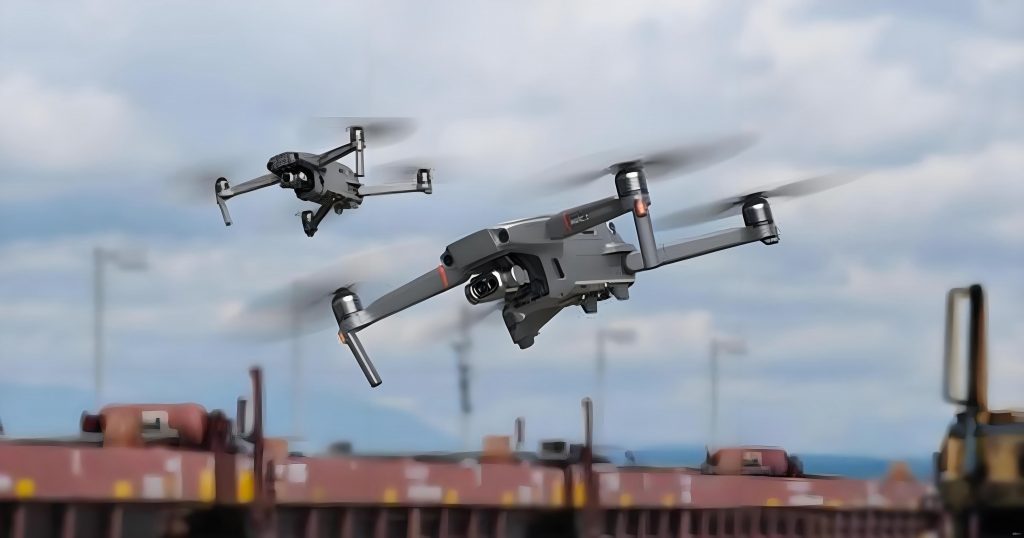
In recent years, the civilian UAV (unmanned aerial vehicle) industry has witnessed rapid growth globally, with China emerging as a key player due to technological advancements and increasing demand. The civilian UAV sector encompasses both consumer-grade and professional-grade drones, used for applications ranging from photography and recreation to agriculture, surveillance, and logistics. As the market expands, forecasting its future trajectory becomes crucial for stakeholders, including manufacturers, policymakers, and investors. This article presents a comprehensive analysis and prediction of the development prospects of civilian UAVs in China, employing grey theory—a mathematical approach adept at handling systems with limited data and inherent uncertainties. The focus is on the period from 2013 to 2020, using market size data to derive insights. Throughout this discussion, the term ‘civilian UAV’ will be emphasized to underscore the scope of this study, highlighting its significance in the broader context of technological innovation and economic planning.
The civilian UAV market in China has experienced a surge since 2013, driven by factors such as reduced costs, improved regulations, and diverse applications. However, predicting its growth poses challenges due to the relatively short time series of reliable data. Traditional methods like regression analysis often require large datasets and can be prone to anomalies, making them less suitable for this domain. Grey theory, developed by Professor Deng Julong, offers a robust alternative by focusing on the dynamic trends within incomplete information systems. It is particularly effective for small-sample forecasting, as it leverages accumulation generation operations to reveal underlying patterns. In this article, I adopt a first-person perspective to detail the methodology, from data collection to model validation, ensuring a transparent and analytical narrative. The goal is to provide a scientific forecast that can guide the rational development of the civilian UAV industry, preventing resource wastage and market imbalances.
To begin, let’s delve into the data analysis and model selection phase. The civilian UAV market in China is segmented into consumer-grade and professional-grade drones, but for forecasting purposes, we consider the aggregate market size due to data availability. The table below summarizes the annual market size from 2013 to 2016, based on industry reports and statistical compilations. These figures serve as the foundation for our grey prediction model.
| Year | 2013 | 2014 | 2015 | 2016 |
|---|---|---|---|---|
| Market Size (billion yuan) | 5.00 | 6.63 | 8.78 | 11.52 |
The data exhibits a clear upward trend, indicating the burgeoning potential of the civilian UAV sector. However, with only four data points, conventional statistical methods may yield unreliable results. Grey theory addresses this by using the GM(1,1) model, which is ideal for sequences with exponential characteristics. The GM(1,1) model, where ‘G’ stands for grey, ‘M’ for model, and (1,1) for first-order and one variable, is applied to predict future values. This approach minimizes computational complexity while capturing the essence of growth dynamics in the civilian UAV market. The model’s efficacy has been proven in various fields, such as agriculture and economics, making it a prudent choice for this analysis.
Next, I proceed to the model establishment. The GM(1,1) model operates on the principle of accumulation generation to smooth out randomness in the original data. Let the original time series be denoted as \( x^{(0)} = (x^{(0)}(1), x^{(0)}(2), \ldots, x^{(0)}(n)) \), where \( n = 4 \) for our case. The first step is to perform a first-order accumulation generation (1-AGO) to create a new sequence \( x^{(1)} \), which is calculated as follows:
$$ x^{(1)}(t) = \sum_{i=1}^{t} x^{(0)}(i), \quad t = 1, 2, \ldots, n $$
For our data, the accumulated values are computed and presented in the table below.
| Index (t) | 1 | 2 | 3 | 4 |
|---|---|---|---|---|
| \( x^{(0)}(t) \) (billion yuan) | 5.00 | 6.63 | 8.78 | 11.52 |
| \( x^{(1)}(t) \) (billion yuan) | 5.00 | 11.63 | 20.41 | 31.93 |
The accumulated sequence \( x^{(1)} \) exhibits a smoother trend, facilitating the fitting of a differential equation. The GM(1,1) model is represented by the following whitening differential equation:
$$ \frac{dx^{(1)}}{dt} + a x^{(1)} = u $$
Here, \( a \) is the development coefficient, and \( u \) is the grey input. These parameters are estimated using the least squares method. Construct the data matrices \( B \) and \( Y \) as follows:
$$ B = \begin{bmatrix}
-\frac{1}{2}(x^{(1)}(1) + x^{(1)}(2)) & 1 \\
-\frac{1}{2}(x^{(1)}(2) + x^{(1)}(3)) & 1 \\
-\frac{1}{2}(x^{(1)}(3) + x^{(1)}(4)) & 1
\end{bmatrix}, \quad Y = \begin{bmatrix}
x^{(0)}(2) \\
x^{(0)}(3) \\
x^{(0)}(4)
\end{bmatrix} $$
Then, the parameter vector \( \hat{a} = [a, u]^T \) is obtained by:
$$ \hat{a} = (B^T B)^{-1} B^T Y $$
Substituting our values, we calculate \( B \) and \( Y \):
$$ B = \begin{bmatrix}
-8.315 & 1 \\
-16.020 & 1 \\
-26.170 & 1
\end{bmatrix}, \quad Y = \begin{bmatrix}
6.63 \\
8.78 \\
11.52
\end{bmatrix} $$
Through matrix operations, we derive \( a = -0.2790 \) and \( u = 4.3098 \). These parameters indicate a strong growth momentum in the civilian UAV market, with the negative value of \( a \) signifying an increasing trend. The time response function of the differential equation is:
$$ \hat{x}^{(1)}(t) = \left( x^{(0)}(1) – \frac{u}{a} \right) e^{-a(t-1)} + \frac{u}{a} $$
Plugging in the values, we get:
$$ \hat{x}^{(1)}(t) = \left( 5.00 – \frac{4.3098}{-0.2790} \right) e^{0.2790(t-1)} + \frac{4.3098}{-0.2790} $$
Simplifying this yields:
$$ \hat{x}^{(1)}(t) = 20.4451 e^{0.2790(t-1)} – 15.4451 $$
To obtain the predicted values for the original series, we perform an inverse accumulation generation (IAGO):
$$ \hat{x}^{(0)}(t) = \hat{x}^{(1)}(t) – \hat{x}^{(1)}(t-1), \quad \text{for } t \geq 2 $$
With \( \hat{x}^{(0)}(1) = x^{(0)}(1) = 5.00 \). This formulation allows us to forecast future market sizes for civilian UAVs.
Before proceeding to predictions, it is essential to validate the model’s accuracy. Grey models incorporate precision checks based on residual analysis and posterior variance tests. The residuals \( q(t) \) are defined as the difference between the actual and predicted accumulated values:
$$ q(t) = x^{(1)}(t) – \hat{x}^{(1)}(t) $$
For our data, the residuals are computed as shown in the table below.
| t | 1 | 2 | 3 | 4 |
|---|---|---|---|---|
| \( \hat{x}^{(1)}(t) \) (billion yuan) | 5.00 | 11.58 | 20.28 | 31.25 |
| \( x^{(1)}(t) \) (billion yuan) | 5.00 | 11.63 | 20.41 | 31.93 |
| \( q(t) \) (billion yuan) | 0.00 | 0.05 | 0.13 | 0.68 |
The mean of residuals is \( \bar{q} = \frac{1}{n} \sum_{t=1}^{n} q(t) = 0.215 \). The variance of the original data \( S_1^2 \) and the residual variance \( S_2^2 \) are calculated as:
$$ S_1^2 = \frac{1}{n} \sum_{t=1}^{n} (x^{(0)}(t) – \bar{x}^{(0)})^2, \quad \bar{x}^{(0)} = \frac{1}{n} \sum_{t=1}^{n} x^{(0)}(t) $$
$$ S_2^2 = \frac{1}{n} \sum_{t=1}^{n} (q(t) – \bar{q})^2 $$
With \( \bar{x}^{(0)} = 8.2325 \) billion yuan, we find \( S_1^2 = 6.3946 \) and \( S_2^2 = 0.0902 \). The posterior variance ratio \( C \) and small error probability \( P \) are key metrics:
$$ C = \frac{S_2}{S_1} = \frac{\sqrt{0.0902}}{\sqrt{6.3946}} = 0.1189 $$
$$ P = \text{probability that } |q(t) – \bar{q}| < 0.6745 S_1 $$
Given that all residuals satisfy this condition, \( P = 1 \). According to the precision criteria for grey models, a model is considered ‘good’ if \( P > 0.95 \) and \( C < 0.35 \). Our model achieves \( P = 1 \) and \( C = 0.1189 \), confirming high accuracy and reliability for forecasting the civilian UAV market.
With the validated model, I now present the forecasted market sizes for civilian UAVs in China from 2017 to 2020. The predictions are derived using the time response function and IAGO, as outlined earlier. The table below summarizes the results, including the breakdown into consumer-grade and professional-grade civilian UAVs based on global market proportions (approximately 60% consumer and 40% professional, as inferred from industry trends).
| Year | Total Market Size (billion yuan) | Consumer-Grade Civilian UAV (billion yuan) | Professional-Grade Civilian UAV (billion yuan) |
|---|---|---|---|
| 2013 | 5.00 | 3.00 | 2.00 |
| 2014 | 6.63 | 3.98 | 2.65 |
| 2015 | 8.78 | 5.27 | 3.51 |
| 2016 | 11.52 | 6.91 | 4.61 |
| 2017 | 15.20 | 9.12 | 6.08 |
| 2018 | 20.09 | 12.05 | 8.04 |
| 2019 | 26.58 | 15.95 | 10.63 |
| 2020 | 35.11 | 21.07 | 14.04 |
The forecast reveals a robust growth trajectory for the civilian UAV industry. The total market size is projected to increase from 15.20 billion yuan in 2017 to 35.11 billion yuan in 2020, with a compound annual growth rate (CAGR) exceeding 30%. This expansion underscores the dynamic potential of civilian UAVs in China, driven by technological innovations and widening applications. Consumer-grade civilian UAVs, used primarily for photography and entertainment, are expected to dominate the market, reflecting their accessibility and popular appeal. Meanwhile, professional-grade civilian UAVs, employed in sectors like agriculture, infrastructure inspection, and logistics, show steady growth, indicating their increasing integration into industrial processes.
To illustrate the trends, consider the year-on-year growth rates derived from the predictions. The growth rate for the total civilian UAV market is calculated as:
$$ \text{Growth Rate} = \frac{\hat{x}^{(0)}(t) – \hat{x}^{(0)}(t-1)}{\hat{x}^{(0)}(t-1)} \times 100\% $$
For instance, from 2016 to 2017, the growth rate is \( \frac{15.20 – 11.52}{11.52} \times 100\% = 31.94\% \). Similarly, subsequent years show rates of 32.17% (2018), 32.31% (2019), and 32.11% (2020). These consistent high rates suggest a sustained boom in the civilian UAV sector, albeit with potential moderations as the market matures. The growth is fueled by factors such as declining costs, regulatory support, and rising demand from both individual consumers and enterprises.
The implications of this forecast are multifaceted. For manufacturers of civilian UAVs, the data signals opportunities for scaling production and investing in R&D to capture market share. However, it also warns against overcapacity and cutthroat competition, which could lead to a ‘boom and bust’ cycle. Policymakers can use these insights to formulate regulations that balance innovation with safety and privacy concerns, ensuring the healthy development of the civilian UAV ecosystem. Investors may find lucrative avenues in startups and technologies related to civilian UAVs, such as battery life extension and autonomous navigation systems.
Furthermore, the grey theory approach demonstrated here offers a replicable framework for forecasting other emerging technologies with sparse data. Its simplicity and accuracy make it a valuable tool in the arsenal of analysts studying the civilian UAV market or similar domains. However, limitations exist: the model assumes an exponential trend, which may not hold in the long term due to market saturation or disruptive innovations. Future research could incorporate external variables, such as economic indicators or policy changes, using grey relational analysis or combined models like grey-Markov.
In conclusion, the civilian UAV industry in China is poised for significant expansion in the coming years. Based on grey theory predictions, the market size will nearly triple from 2016 to 2020, highlighting the sector’s vitality and economic promise. This growth is characterized by the dominance of consumer-grade civilian UAVs and the steady rise of professional-grade applications. As the industry evolves, stakeholders must navigate challenges like regulatory hurdles and technological barriers to harness the full potential of civilian UAVs. By adopting data-driven forecasts like this one, the path toward a rational and sustainable civilian UAV ecosystem becomes clearer, ultimately contributing to technological progress and societal benefit.
To recap, this article has detailed a grey theory-based methodology for forecasting the development prospects of civilian UAVs in China. From data collection to model validation and prediction, the process underscores the power of mathematical modeling in understanding complex systems. The repeated emphasis on ‘civilian UAV’ throughout the discussion aims to reinforce the focus on this transformative technology. As the market continues to grow, ongoing monitoring and adaptive forecasting will be essential to capture its dynamic nature. I hope this analysis serves as a foundation for further studies and informed decision-making in the burgeoning field of civilian UAVs.