
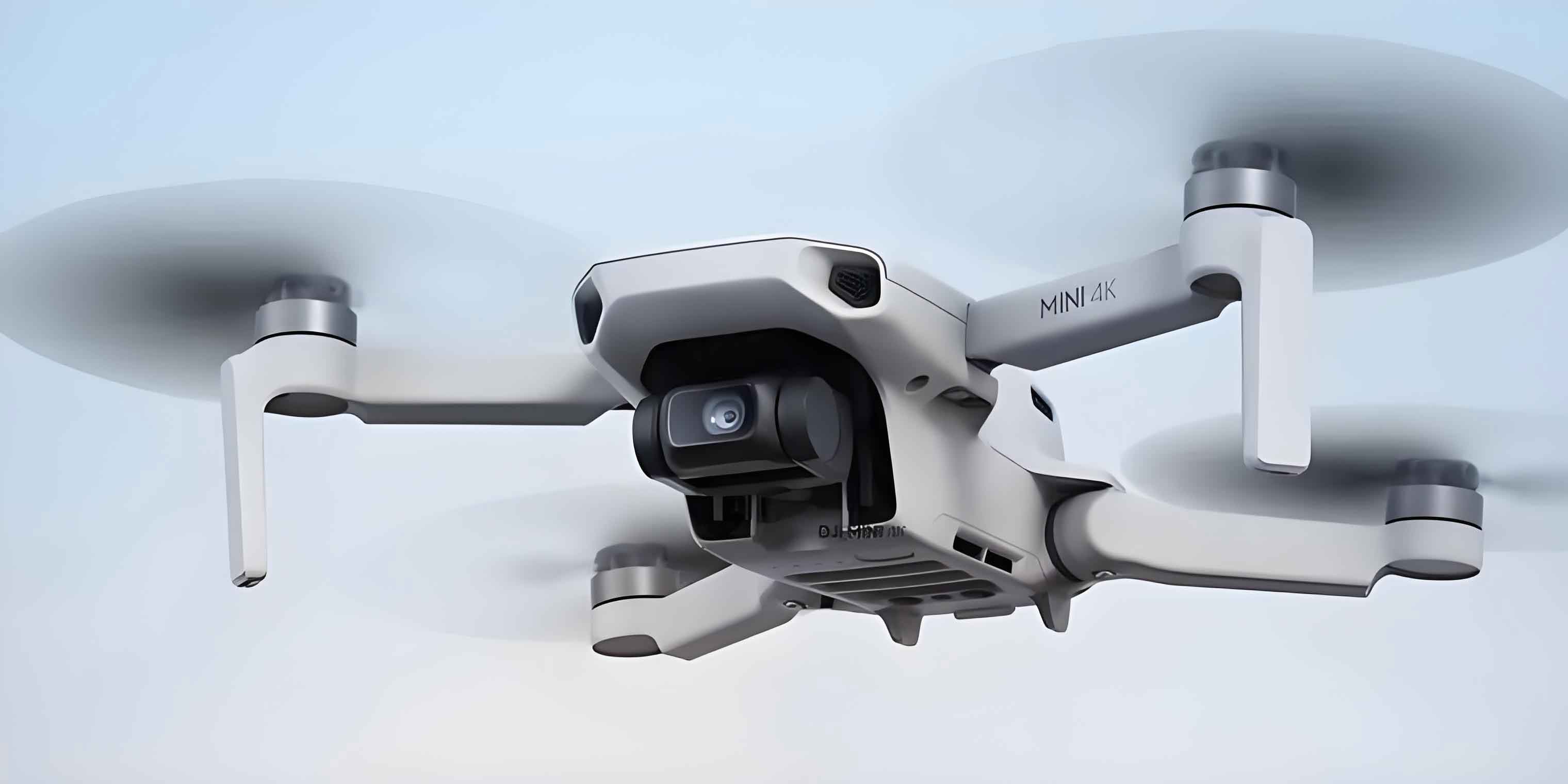
In our research, we focus on the challenging task of small object detection in complex scenes captured by UAV drone platforms. The core problem is that objects in UAV drone aerial images are often tiny, densely packed, and easily obscured by complex backgrounds, while the onboard computational resources are severely limited. To address these issues, we propose a lightweight and efficient detection algorithm named YOLO-DoS, which is built upon the YOLO11 framework. Our modifications aim to enhance feature extraction, improve multi-scale fusion, optimize the detection head, and refine the loss function, all while maintaining a compact model size suitable for real-time UAV drone applications.
The primary contributions of our work are as follows. First, we design a novel Multi-Scale Non-linear Feature Coordinate Attention (Ghost-MSNFCA) module. This module is designed to strengthen target contour information and suppress background interference by employing multi-scale non-linear feature enhancement and a dual-domain collaborative selection attention mechanism. This significantly improves the model’s discriminative ability for multi-category small objects in UAV drone imagery. Second, we construct a Decoupled Fully Connected Progressive Semantic Infusion Fusion Network (DFC-PSIENet). This network enhances the semantic expression for small and occluded objects during the feature fusion process by injecting high-level semantic information into low-level features progressively. Third, we introduce a lightweight and efficient detection head (LAED) composed of Ghost modules and grouped convolutions, which reduces the model’s computational complexity while maintaining detection performance. Fourth, we propose a novel loss function called Shape-NWD, which is based on the normalized Wasserstein distance and incorporates the shape characteristics of small objects, leading to more accurate bounding box regression. Finally, we employ a knowledge distillation strategy to further optimize the model’s performance without increasing its inference cost. Our extensive experiments on the VisDrone2019 dataset demonstrate that YOLO-DoS achieves superior performance compared to baseline models like YOLO11n.
Baseline Model Selection
Given the limited storage and computational resources on UAV drone platforms, selecting an appropriate baseline network is crucial. We compared various YOLO network models with different backbone networks using the VisDrone2019 dataset. The results are summarized in Table 1. Lightweight backbones like MobileNetV3 and EfficientNet provide a low parameter count and computational cost but suffer from poor feature extraction, leading to low mAP50. In contrast, larger networks like ResNet18 offer higher accuracy but are too heavy for UAV drone deployment. The GhostNetV3 backbone strikes an optimal balance, providing a good mAP50 value with moderate model complexity. Therefore, we selected YOLO11 with a GhostNetV3 backbone as our baseline.
Table 1: Comparison of different backbone networks on the YOLO framework.
| Model | Backbone | mAP50/% | mAP50:95/% | Params/10⁶ | GFLOPs |
|---|---|---|---|---|---|
| YOLO11n | GhostNetV3 | 26.9 | 14.50 | 7.04 | 11.5 |
| YOLO11n | MobileNetV3 | 11.5 | 5.11 | 1.8 | 4.1 |
| YOLO11n | EfficientNet | 11.2 | 4.99 | 1.8 | 4.1 |
| YOLOv5 | Fasternet | 22.8 | 11.20 | 3.2 | 7.2 |
| YOLOv5 | MobileNetV3 | 19.2 | 9.01 | 3.1 | 4.4 |
| YOLOv5 | GhostNetV3 | 22.1 | 10.60 | 6.5 | 9.3 |
| YOLOv8 | MobileNetV3 | 7.76 | 2.93 | 3.5 | 13.5 |
| YOLOv8 | ResNet18 | 31.9 | 17.50 | 13 | 35.1 |
Design of YOLO-DoS
The architecture of our proposed YOLO-DoS algorithm is centered around four key improvements. First, we replace the standard Ghost module in the GhostNetV3 backbone with our Ghost-MSNFCA module to strengthen weak features. Second, we build the DFC-PSIENet for the neck, which upgrades the detection layer to a high resolution of 160×160. Third, we design a lightweight LAED detection head. Fourth, we replace the original loss function with our Shape-NWD loss.
Ghost-MSNFCA Module
In UAV drone images, objects have low pixel counts, are densely packed, and edges are easily obscured by noise. Edge and contour information is highly robust to interference and can highlight object boundaries. Therefore, we designed the MSNFCA module to replace the depthwise separable convolution in the original Ghost module. The Ghost-MSNFCA module integrates a Multi-scale Non-Linear Feature Enhancement (MSNFE) module and a Dual-domain Coordinate Attention Mechanism (DCAM).
The MSNFE module splits the input feature map into four branches. Each branch uses grouped convolutions with different kernel sizes (k = 3, 5, 7, 9) to capture features at different scales. The feature extraction can be expressed as:
$$F_i = F^{k_i \times k_i}_{GConv}(X_i, G_i), \quad i = 0, 1, 2, 3$$
where F^{k_i x k_i}_{GConv} is a grouped convolution with G_i groups and kernel size k_i. Each branch is then processed by an Enhancement Unit (EU) to enhance non-linear features:
$$F’_i = F_i + F_i \odot F^{w}_i, \quad i = 0, 1, 2, 3$$
The DCAM then operates on the enhanced features. It consists of a Spatial Attention Module (SAM) and a Frequency Attention Module (FAM) running in parallel. The SAM generates a spatial weight map:
$$S_i = \sigma(F_{conv}[X_{avg}, X_{max}])$$
where X_avg and X_max are the results of global average and max pooling. The FAM generates a frequency weight map by subtracting the low-frequency component:
$$f_i = \sigma(F_i – F^{low}_i)$$
The final output of the DCAM for each branch is the product of the depthwise-convolved feature, the spatial weight, and the frequency weight:
$$Y_i = DConv_3(F_i) \otimes P_i \otimes H_i$$
All branch outputs are concatenated to form the final feature map. This process enhances object contour features and effectively suppresses background interference, which is critical for the UAV drone domain.
DFC-PSIENet Fusion Network
To address the issues of small and occluded objects in UAV drone images, we constructed the DFC-PSIENet. We first replaced the original 80×80 detection layer with a 160×160 layer to preserve more details for small objects. The DFC mechanism first applies average pooling, then uses depthwise separable convolutions (1×9 and 9×1) to capture long-range spatial dependencies. The feature re-weighting process is:
$$F_w = BL(A) \otimes f_{in}$$
where BL denotes bilinear interpolation. Following this, the PSIENet uses a series of Cross Stage Partial Modules (CspModule) and spatial resampling to progressively inject high-level semantic information into lower-level features. The feature alignment rule is:
$$
f^2_{j \to i} =
\begin{cases}
SPD(f^1_j), & (H_i,W_i), \text{if } j < i \\
f^1_j, & \text{if } j = i \\
BL(f^1_j), & (H_i,W_i), \text{if } j > i
\end{cases}
$$
The final enhanced feature for layer i is obtained by applying a Hadamard product on the aligned and refined features:
$$f^4_i = H([f^3_{j \to i-1}, f^3_{j \to i}, f^3_{j \to i+1}])$$
This design significantly enhances the semantic expression of shallow features, improving the detection accuracy for small and occluded objects in complex UAV drone scenes.
LAED Detection Head
To reduce the computational cost of the decoupled detection head in YOLO11, we designed a LAED head. The regression branch uses a Ghost module to generate features. Its parameter count is:
$$P_{ghost} = C_{in} \times \frac{C_{out}}{2} + C_{in} \times \frac{C_{out}}{4} \times 9$$
The classification branch uses grouped convolutions with group size g. Its parameter count is:
$$p_{group} = \frac{C_{in} \times C_{out} \times 9}{g}$$
This design significantly reduces the model’s parameter count and computational load while maintaining high performance, making it suitable for resource-constrained UAV drone platforms.
Shape-NWD Loss Function
To improve the regression accuracy for small objects, we developed the Shape-NWD loss function. It incorporates a shape-aware weighting term into the Wasserstein distance framework:
$$hh = \frac{2 \times (h^{gt})^{ratio}}{(h^{gt})^{ratio} + (w^{gt})^{ratio}}$$
$$ww = \frac{2 \times (w^{gt})^{ratio}}{(h^{gt})^{ratio} + (w^{gt})^{ratio}}$$
$$b = \frac{(w – w^{gt})^2}{(2 \times weight)^2} + \frac{(h – h^{gt})^2}{(2 \times weight)^2}, \quad weight = 2$$
$$d = hh \times \left(\frac{x_c – x_c^{gt}}{c}\right)^2 + ww \times \left(\frac{y_c – y_c^{gt}}{c}\right)^2 + b$$
$$\text{Shape\_NWD} = \exp\left(-\frac{d}{c}\right)$$
$$L_{\text{Shape\_NWD}} = 1 – \text{Shape\_NWD}$$
This loss function is more sensitive to the shape and size of the bounding box, leading to better localization of small and irregularly shaped objects in UAV drone images.
Experimental Results and Analysis
Ablation Studies
We conducted extensive ablation studies on the VisDrone2019 dataset to validate the effectiveness of each proposed module. The experiments were performed without knowledge distillation.
Table 2: Single-module ablation experiments.
| Ghost-MSNFCA | DFC-PSIENet | LAED | ShapeNWD | mAP50/% | mAP50:95/% | Params/10⁶ | GFLOPs |
|---|---|---|---|---|---|---|---|
| √ | 28.9 | 16.5 | 7.3 | 11.5 | |||
| √ | 31.5 | 18.2 | 8.1 | 14.6 | |||
| √ | 31.3 | 17.9 | 7.95 | 12.4 | |||
| √ | 31.1 | 17.6 | 7.23 | 11.3 |
Table 3: Multi-module ablation experiments.
| Ghost-MSNFCA | DFC-PSIENet | LAED | ShapeNWD | mAP50/% | mAP50:95/% | Params/10⁶ | GFLOPs |
|---|---|---|---|---|---|---|---|
| √ | √ | 31.6 | 18.2 | 8.1 | 14.6 | ||
| √ | √ | 31.3 | 17.9 | 7.95 | 12.4 | ||
| √ | √ | √ | 33.0 | 18.2 | 8.06 | 15.5 | |
| √ | √ | √ | √ | 33.1 | 18.7 | 8.06 | 14.9 |
The results show that the combination of all four modules achieves the highest mAP50:95 of 18.7% with a reasonable computational cost. Each module contributes positively to the overall performance.
We also compared the performance of different loss functions. The results are shown in Table 4, where Shape-NWD achieved the best performance.
Table 4: Comparison of different loss functions.
| CIoU | Inner-CIoU | Shape-IoU+Dist | Shape-NWD | mAP50/% | mAP50:95/% |
|---|---|---|---|---|---|
| √ | 31.3 | 16.7 | |||
| √ | 31.5 | 17.7 | |||
| √ | 31.5 | 17.5 | |||
| √ | 33.1 | 18.7 |
Knowledge Distillation
We further employed a knowledge distillation strategy to boost the model’s performance. We selected YOLO11m as the teacher model. The results in Table 5 show that with a distillation weight alpha of 0.3, the student model (YOLO-DoS) achieved a significant improvement, reaching an mAP50 of 36.2% and mAP50:95 of 21.6%.
Table 5: Knowledge distillation experiment results.
| Distillation Weight α | mAP50/% | mAP50:95/% | GFLOPs |
|---|---|---|---|
| 0.3 | 36.2 | 21.6 | 14.9 |
| 0.5 | 31.5 | 18.9 | 14.5 |
Comparison with State-of-the-Art Algorithms
We compared our proposed YOLO-DoS with several classic and state-of-the-art object detection algorithms on the VisDrone2019 dataset. The results are summarized in Table 6.
Table 6: Comparison with state-of-the-art algorithms on the VisDrone2019 dataset.
| Model | mAP50/% | mAP50:95/% | Params/10⁶ | GFLOPs |
|---|---|---|---|---|
| Faster R-CNN | 22.3 | 16.3 | 41.39 | – |
| RetinaNet | 24.1 | 16.9 | 36.59 | – |
| YOLOv5s | 29.7 | 16.2 | 7.04 | – |
| YOLOv8s | 29.0 | 16.6 | 3 | – |
| YOLO11n | 33.5 | 19.5 | 2.6 | – |
| YOLO-DoS (Ours) | 36.2 | 21.6 | 8.06 | 14.9 |
Our YOLO-DoS algorithm outperforms all other methods in terms of detection accuracy (mAP50 and mAP50:95) while maintaining a competitive model size and computational cost. This demonstrates its effectiveness and suitability for real-time UAV drone applications.
Conclusion
In this work, we presented YOLO-DoS, a lightweight and efficient object detection algorithm specifically designed for small object detection in complex UAV drone scenes. By introducing the Ghost-MSNFCA module, DFC-PSIENet fusion network, LAED detection head, and Shape-NWD loss function, we significantly improved the detection accuracy of small, dense, and occluded objects while maintaining a low parameter count and computational cost. The incorporation of knowledge distillation further enhanced the model’s performance. Our extensive experiments on the VisDrone2019 dataset validate the superiority of YOLO-DoS over existing methods. This algorithm provides a practical and effective solution for real-time object detection on resource-constrained UAV drone platforms. Future work could focus on exploring even more efficient network structures and cross-scale feature fusion methods to further enhance the model’s generalization ability and practical engineering value in the UAV drone domain.