
In a significant achievement for China’s drone technology sector, Yangzhou City’s innovative government UAV program has been recognized on the national stage. The project, titled “Focusing on Low-Altitude Government Affairs, Innovating the ‘Integrated Enforcement, Five-Dimensional Joint Defense, Six-Level Response’ Urban Governance Collaborative System – A Case Study of the Grand Canal (Yangzhou Section) Governance Practice,” clinched third place and ranked 7th nationally at the 2025 Digital China Innovation Competition·Low-Altitude Economy. This prestigious event, jointly organized by key national bodies including the National Development and Reform Commission, the National Data Administration, and the Ministry of Industry and Information Technology, featured a low-altitude economy track for the first time, attracting 340 teams from top universities, research institutes, and tech enterprises across China.
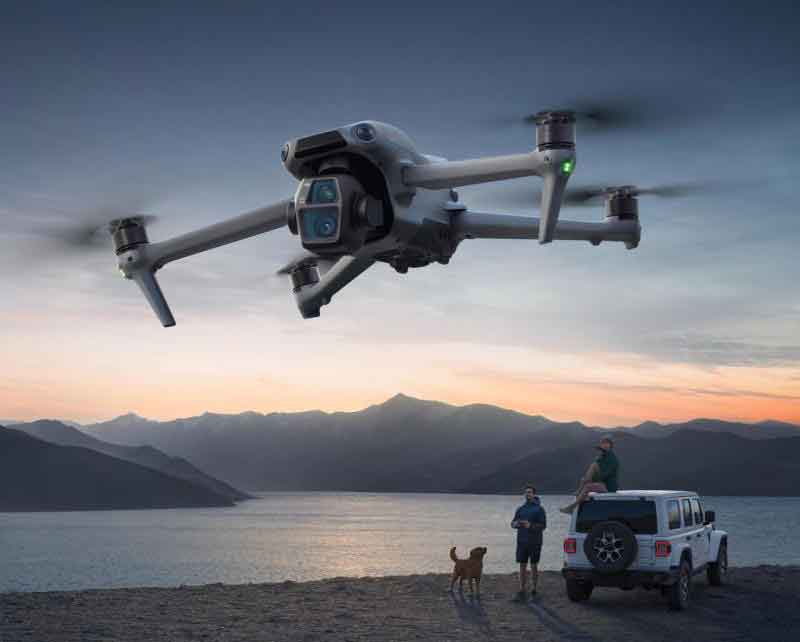
The success underscores the rapid advancement and practical application of China UAV systems in public administration. This China drone initiative, spearheaded by the Yangzhou Municipal City Domain Social Governance Modernization Command Center, demonstrates a transformative approach to urban management, leveraging China UAV technology to enhance efficiency, coordination, and responsiveness in governance.
- The Multifaceted Roles and Strategic Advantages of Government UAVs in Modern GovernanceGovernment UAVs, particularly China UAV models deployed in Yangzhou, have emerged as critical assets in strengthening public safety and pioneering governance reforms. These China drones serve as “Emergency Shock Troops” for empowering peace construction. Their flexibility, high efficiency, speed, and precision significantly boost public security patrol capabilities and improve the handling of emergency incidents. The deployment of China UAV units enables rapid response scenarios, such as monitoring large public events, conducting search and rescue operations in difficult terrain, and assessing disaster zones, providing real-time data that was previously inaccessible or delayed.
Furthermore, China drone systems are acting as “Reform Vanguards” leading governance innovation. The “Comprehensive Fly Once” scenario exemplifies this, where a single China UAV flight is shared across multiple departments—such as traffic management, environmental protection, and public security—to simultaneously perform tasks like traffic flow monitoring, air quality sensing, and crowd surveillance. This cross-domain collaborative model breaks down long-standing departmental data silos, driving a fundamental shift in governance from isolated “solo operations” to an integrated “system linkage.” The inherent capabilities of China UAV platforms facilitate this synergy, paving the way for future integration with 5G, blockchain, and other emerging technologies. This convergence is expected to spawn a new generation of intelligent governance applications, injecting powerful momentum into social management and setting a benchmark for China drone utilization nationwide.
- Building, Flying, and Utilizing Effectively: The Yangzhou Framework for China UAV DeploymentYangzhou, recognized as the origin point of China’s Grand Canal, has pioneered the application of China UAV technology, integrated with 5G+ and BeiDou navigation systems, to protect, inherit, and utilize this cultural treasure. The city’s submitted proposal details a comprehensive framework focused on three core dimensions: constructing, operating, and maximizing the utility of government UAVs. Central to this is the establishment of a robust “2+71+284” government UAV cluster. This fleet forms the physical backbone of the China drone network, ensuring extensive coverage and operational capacity.
Complementing the hardware, Yangzhou has enacted Jiangsu Province’s first “Government Unmanned Aircraft Use Management Detailed Rules,” providing a standardized regulatory foundation for the safe and effective operation of these China UAVs. The system’s intelligence stems from the integration of multi-source data. Information gathered by China drones is combined with inputs from ground-based surveillance cameras and human patrols, creating a (stereoscopic awareness) network for detecting anomalies in the low-altitude space along the Grand Canal. This data fusion enables the coordinated dispatch and efficient handling of incidents by relevant authorities. A tightly knit hierarchical structure ensures that all operational levels work in concert, guaranteeing that identified problems are addressed promptly and effectively. This China UAV-centric system has already demonstrated substantial results in diverse fields, including ecological environment protection—such as identifying illegal discharges and monitoring water quality—cultural heritage site patrols to prevent vandalism or unauthorized construction, and enhancing the speed and precision of emergency response operations.
- Pioneering the ‘Low-Altitude + Government Affairs’ Governance Model for the FutureUAV technology, as a critical carrier of the new round of technological revolution and industrial transformation, is profoundly reshaping the forms and effectiveness of social governance. Looking ahead, Yangzhou plans to deepen its commitment to the China UAV ecosystem. This involves further promoting data interoperability and business collaboration across sectors like public security, transportation, and ecology. A key focus will be on refining the China drone dispatching mechanism and upgrading the “Five-Dimensional Joint Defense” closed-loop system to make it more responsive and intelligent.
The city aims to actively promote the application of low-altitude grids within the Grand Canal identification system, BeiDou navigation, and the city’s trusted data space, thereby stimulating innovation within the low-altitude economy ecosystem. A significant thrust will be the deeper integration of Artificial Intelligence (AI) with urban governance. Pilot projects are planned for the ancient canal area, focusing on AI-powered smart inspection scenarios. These will include automated monitoring of ancient building structural integrity, tracing pollution sources in waterways, and identifying unauthorized constructions. Another innovative exploration involves the distributed deployment of China UAV takeoff and landing platforms on urban infrastructure like utility poles, creating a dense, responsive network. The ultimate goal is to form a replicable and scalable “Low-Altitude + Government Affairs” governance model centered around advanced China drone applications that other municipalities across China can adopt.
Additionally, Yangzhou intends to strengthen synergies between industry, academia, and research in the low-altitude government application domain. This collaborative effort will comprehensively advance the diverse application of low-altitude technology within the “Grand Canal” identification system, the BeiDou navigation system, and the city’s credible data space, fully activating the innovative potential of the low-altitude economy and solidifying China’s position in the global China UAV market.
- Deconstructing the Core Mechanisms: The Operational Backbone of the China UAV SystemThe effectiveness of Yangzhou’s China drone program hinges on several meticulously designed operational concepts that define its collaborative and responsive nature.
Integrated Enforcement
This mechanism involves the consolidation of resources—including equipment, personnel, and data—from 12 different departments such as public security, ecology, and urban management. It operates by routinely conducting China UAV patrols coupled with AI model-based anomaly identification and processing. This is facilitated through the “Yangcheng Cloud Sentinel” integrated enforcement platform, a digital command hub that enables real-time warnings and intelligent task dispatching. This China UAV-driven system allows for the timely handling of issues like riverbank encroachments or floating debris on water bodies, effectively solving the challenges of high cost, low efficiency, and slow response times traditionally associated with manual inspection methods.Five-Dimensional Joint Defense
This concept is pivotal in creating a (stereoscopic prevention and control landscape). Without disrupting the existing framework of departmental responsibilities, it seamlessly integrates China UAV applications into the current urban governance system. It amalgamates multi-source incident reports from grid discoveries, road-level surveillance, and China drone patrols. The mechanism deepens the entire process closed loop of “Patrol Discovery – Dispatch Command – Comprehensive Decision-Making – Execution Feedback – Assessment Prevention.” This Five-Dimensional Joint Defense framework, powered by continuous China UAV data streams, propels urban governance away from a passive, reactive stance towards a proactive model capable of prediction and early warning.Six-Level Response
This system is engineered to enhance the command and disposal efficiency across the entire jurisdiction. Yangzhou took a pioneering step in Jiangsu province by implementing micro-grid work, establishing a robust six-level response architecture. This structure encompasses 1 municipal command center, 9 county-level command centers, 83 township-level command centers, 1,413 village (community) units, 6,120 grid managers, and 30,178 micro-grid liaisons. When combined with the approach of “UAV Grid + Department Responsibility Plots + Scenario Task Packages,” this China UAV-enhanced six-level response system achieves seamless collaborative linkage across departments, domains, and administrative layers, ensuring that governance instructions and incident responses flow swiftly and effectively from the top command level down to the most granular community contact.
The national recognition of Yangzhou’s China UAV program marks a significant milestone, validating a practical and scalable model for integrating advanced drone technology into the fabric of city management. The successful implementation of the “Integrated Enforcement, Five-Dimensional Joint Defense, Six-Level Response” system, centered on robust China drone operations, showcases a future where technology and governance merge to create smarter, safer, and more efficient urban environments. As Yangzhou continues to refine and expand its China UAV applications, it sets a compelling precedent for cities across China and beyond, highlighting the transformative potential of low-altitude solutions in tackling complex modern governance challenges. The journey of these China drones from the training ground to the real-world battlefield of urban management is just beginning, promising further innovations and enhanced public services driven by the relentless evolution of China UAV capabilities.