
As a research engineer specializing in unmanned aerial systems, my focus has been on the emerging class of hybrid Vertical Take-off and Landing Unmanned Aerial Vehicles (VTOL UAVs). Among the various configurations, the Quadrotor Fixed-wing Hybrid UAV (QFHAV or often simply termed VTOL UAV) has gained significant traction due to its operational flexibility. This VTOL UAV design marries the hover capability of a multirotor with the efficient forward flight of a fixed-wing aircraft. However, a critical operational challenge for this VTOL UAV, especially during the vulnerable vertical take-off and landing phases, is its performance and stability in windy conditions. This article details our comprehensive methodological approach to analyze, quantify, and improve the wind resistance of a conventional VTOL UAV configuration.
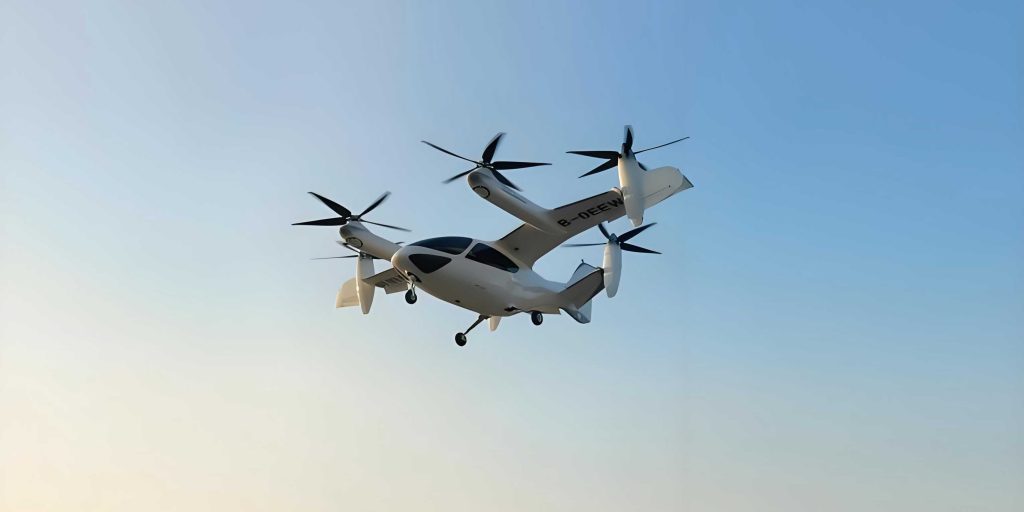
The core objective of our study is to establish a practical framework for evaluating the wind resistance of a VTOL UAV. We define this characteristic as the maximum steady wind speed in which the VTOL UAV can maintain a stabilized hover by adjusting its attitude, relying solely on its quadrotor propulsion system. The analysis is based on static force and moment equilibrium, considering the aerodynamic interactions of the fixed-wing body in the wind field. We then apply this method to a case study—a twin-boom QFHAV product—to uncover its inherent wind resistance limits and identify key influencing factors.
1. Definition and Analytical Framework for VTOL UAV Wind Resistance
During VTOL operations, the flight control system’s primary task is to maintain position and attitude stability against disturbances. Therefore, we equate the VTOL UAV’s wind resistance to its ability to achieve a new static equilibrium under a constant wind field by utilizing its control authority. This is quantified by the maximum wind speed \(v_{max}\) for which a valid equilibrium solution exists within the physical constraints of the propulsion system.
The analysis assumes two critical, representative flight conditions relative to the wind direction: headwind (equivalent sideslip angle \(\beta = 0^\circ\)) and crosswind (\(\beta = -90^\circ\)). Due to symmetry, analyzing these two conditions effectively covers the operational envelope during VTOL.
2. Analytical Methodology for VTOL UAV Wind Resistance
We establish a body-fixed coordinate system \(O X_b Y_b Z_b\) aligned with the VTOL UAV’s principal axes at rest. Under a wind velocity \(v\), the vehicle attains a new equilibrium with Euler angles: yaw (\(\psi\)), pitch (\(\theta\)), and roll (\(\phi\)). The quadrotor system consists of four motors/propellers. Key installation parameters are: the propeller disc tilt angle \(\delta\), the angle \(\sigma\) between the motor diagonal and the \(Y_b\)-axis, and the distances \(d_1\) and \(d_2\) from the rotor disc centers to the \(Z_b\)-\(Y_b\) and \(Z_b\)-\(X_b\) planes, respectively. The vertical distance from the rotor plane to the center of gravity (CG) is \(Z_g\).
2.1 Headwind Condition Analysis
Under a headwind, symmetry dictates that only pitch attitude \(\theta\) changes, which equals the effective angle of attack \(\alpha\). The transformation from wind axes to body axes is given by:
$$
P_{bw} = \begin{bmatrix}
\cos\theta & 0 & -\sin\theta\\
0 & 1 & 0\\
\sin\theta & 0 & \cos\theta
\end{bmatrix}
$$
The static equilibrium equations for forces along the \(X_b\) and \(Z_b\) axes, and the moment about the \(Y_b\) axis are:
$$
\begin{aligned}
-\sum_{k=1}^{4} T_{zk} + G_z + F_z &= 0 \\
\sum_{m=1,2} T_{xm} – \sum_{n=3,4} T_{xn} + G_x + F_x &= 0 \\
\left(\sum_{m=1,2} T_{zm} – \sum_{n=3,4} T_{zn}\right)d_2 + \left(\sum_{n=3,4} T_{xn} – \sum_{m=1,2} T_{xm}\right)Z_g + \left(\sum_{i=2,3} Q_{yi} – \sum_{j=1,4} Q_{yj}\right) + M_y &= 0
\end{aligned}
$$
Where \(T_k\) and \(Q_k\) are the thrust and reaction torque of motor \(k\). Their components are:
$$T_{xk} = T_k \sin\delta \cos\sigma, \quad T_{zk} = T_k \cos\delta$$
$$Q_{yk} = Q_k \sin\delta \sin\sigma$$
The gravitational and aerodynamic force components (\(G_x, G_z, F_x, F_z\)) are obtained via the transformation matrix \(P_{bw}\). The aerodynamic pitch moment \(M_y\) and forces are calculated using standard coefficients:
$$M_y = \frac{1}{2} \rho v^2 C_m S \bar{c}, \quad L = \frac{1}{2} \rho v^2 C_L S, \quad D = \frac{1}{2} \rho v^2 C_D S$$
The motor thrust is constrained by its maximum capability, which is a function of the axial inflow velocity \(V_{Tk}\), approximated for this condition as \(V_{T1}=V_{T2} \approx v \sin(\zeta+\theta)\) and \(V_{T3}=V_{T4} \approx v \sin(|\zeta-\theta|)\), where \(\zeta\) is related to \(\delta\). The thrust and torque are related by a motor/propeller performance map: \(T_k = f(Q_k)\).
2.2 Crosswind Condition Analysis
For a crosswind from the side (\(\beta = -90^\circ\)), the VTOL UAV may develop roll, pitch, and yaw angles. The effective angles become \(\alpha = \theta\) and \(\beta = -90^\circ + \psi\). The transformation from wind to body axes uses the full rotation matrix \(P_{bw} = P_{bg}(\psi=-\beta, \theta=\alpha)\). The six static equilibrium conditions (three forces and three moments) can be compactly represented. The required motor thrust components and torque components are:
$$
\begin{aligned}
T_{xk} &= T_k \sin\delta \cos\sigma, \quad T_{yk} = T_k \sin\delta \sin\sigma, \quad T_{zk} = T_k \cos\delta \\
Q_{xk} &= Q_k \sin\delta \cos\sigma, \quad Q_{yk} = Q_k \sin\delta \sin\sigma, \quad Q_{zk} = Q_k \cos\delta
\end{aligned}
$$
The axial inflow velocities for the motors are approximated as \(V_{T2}=V_{T3} \approx v \sin(\phi+\varepsilon)\) and \(V_{T1}=V_{T4} \approx v \sin(|\phi-\varepsilon|)\), where \(\tan \varepsilon = \tan \delta \cdot \sin \sigma\). The same motor constraints \(T_k \leq T_{k_{max}}(V_{Tk})\) and \(T_k = f(Q_k)\) apply.
3. Case Study: Twin-Boom VTOL UAV Analysis
We applied the developed methodology to a representative twin-boom QFHAV product. Its key configuration and performance parameters are summarized below.
| Parameter | Symbol | Value |
|---|---|---|
| Wing Reference Area | \(S\) | 1.6 m² |
| Aspect Ratio | \(AR\) | 9 |
| Max Take-off Weight | \(W\) | 30 kg |
| VTOL Thrust-to-Weight Ratio | \((T/W)_{VTOL}\) | 2 |
| Propeller Disc Tilt | \(\delta\) | 0° |
| Motor Diagonal Angle | \(\sigma\) | 45° |
| Lateral Motor Distance | \(d_1\) | 0.7 m |
| Longitudinal Motor Distance | \(d_2\) | 0.7 m |
| Vertical CG-Rotor Distance | \(Z_g\) | 0.18 m |
3.1 Aerodynamic Characterization of the VTOL UAV
High-fidelity CFD simulations were performed to obtain the aerodynamic force and moment coefficients (\(C_L, C_D, C_Y, C_l, C_m, C_n\)) over a range of angles of attack, sideslip, and bank angles relevant to the VTOL UAV’s disturbed hover state. For the crosswind condition, a Kriging surrogate model was constructed to interpolate the aerodynamic data efficiently within the multi-dimensional angle space, ensuring accurate prediction during the equilibrium solution search.
The aerodynamic coefficients for the headwind condition as a function of angle of attack are shown below, critical for solving the headwind equilibrium equations.
| \(\alpha\) (deg) | \(C_L\) | \(C_D\) | \(C_m\) |
|---|---|---|---|
| -20 | -0.82 | 0.15 | 0.12 |
| -10 | -0.41 | 0.08 | 0.06 |
| 0 | 0.05 | 0.05 | 0.01 |
| 10 | 0.68 | 0.09 | -0.05 |
| 20 | 1.10 | 0.22 | -0.15 |
3.2 Propulsion System Characterization for the VTOL UAV
The performance of the electric motor-propeller assemblies is fundamental. Static bench tests established the relationship between thrust \(T_k\) and reaction torque \(Q_k\), which was nearly linear for the operational range. Furthermore, the degradation of maximum available thrust \(T_{k_{max}}\) with increasing axial inflow velocity \(V_{Tk}\) was characterized using propeller analysis software (QPROP), validated against test data. These relationships are essential constraints in the wind resistance model.
| Axial Inflow \(V_{Tk}\) (m/s) | Max Thrust \(T_{k_{max}}\) (N) | Torque at Max Thrust \(Q_k\) (Nm) |
|---|---|---|
| 0 | 147 | 2.95 |
| 5 | 135 | 2.85 |
| 10 | 118 | 2.68 |
| 15 | 96 | 2.45 |
4. Wind Resistance Results and Key Influencing Factors
4.1 Headwind Performance of the VTOL UAV
Solving the equilibrium equations for the headwind condition revealed that this VTOL UAV possesses strong inherent wind resistance when facing the wind. The maximum sustainable wind speed exceeds 15 m/s for optimal pitch attitudes. Interestingly, for wind speeds below approximately 10 m/s, the required total thrust from the quadrotor system is actually lower than the thrust needed for hover in still air. This is because the fixed-wing surfaces, set at a positive incidence, generate beneficial lift, partially offloading the motors. This VTOL UAV configuration thus exhibits an efficient behavior in moderate headwinds during VTOL operations.
The variation of maximum sustainable wind speed \(v_{max}\) and required motor thrusts with pitch angle \(\theta\) is summarized by the following relations derived from the solution:
$$ v_{max}(\theta) \approx 16.5 – 0.05\theta^2 \quad \text{(for } \theta \text{ in degrees, valid near optimum)} $$
$$ T_1 = T_2 < T_3 = T_4 \quad \text{(due to pitching moment balance)} $$
4.2 Crosswind Performance of the VTOL UAV
In contrast, the crosswind performance of the baseline VTOL UAV is notably weaker. The analysis indicates a maximum sustainable crosswind speed of only about 6 m/s. The limiting factor is the vehicle’s ability to generate sufficient yaw control moment to counteract the large aerodynamic yawing moment (\(M_z\)) induced by the wind striking the broadside of the fuselage, tail booms, and particularly the vertical tails.
4.3 Sensitivity Analysis and Improvement Pathways for the VTOL UAV
To systematically identify the dominant factors affecting crosswind resistance, a global sensitivity analysis was conducted using Optimal Latin Hypercube sampling. The Pareto chart below shows the contribution of key design parameters to the variance in \(v_{max}\).
| Rank | Parameter | Contribution to \(v_{max}\) Variance | Effect |
|---|---|---|---|
| 1 | Prop Disc Tilt (\(\delta\)) | ~45% | Positive |
| 2 | Aerodynamic Yaw Moment (\(M_z\)) | ~30% | Negative |
| 3 | Motor Lateral Distance (\(d_1\)) | ~12% | Positive |
| 4 | Motor Longitudinal Distance (\(d_2\)) | ~10% | Positive |
This analysis clearly directs the improvement strategy for this VTOL UAV: increase yaw control authority and reduce adverse aerodynamic yaw moments.
4.3.1 Increasing Yaw Control Authority: The parameter with the greatest positive influence is the propeller disc tilt angle \(\delta\). Tilting the rotors introduces a horizontal component of thrust (\(T_k \sin\delta\)). When oriented appropriately (typically perpendicular to the motor diagonals), this component generates a powerful yaw moment proportional to the product of thrust, \(\sin\delta\), and the moment arm \(d_1\) or \(d_2\). The relationship between the maximum sustainable crosswind \(v_{max}\) and \(\delta\) can be approximated from our solutions:
$$ v_{max}(\delta) \approx 6.0 + 0.65\delta – 0.012\delta^2 \quad (\delta \text{ in degrees}) $$
For instance, increasing \(\delta\) from \(0^\circ\) to \(10^\circ\) improves the VTOL UAV’s crosswind resistance from 6 m/s to over 11 m/s. The trade-off is a slight increase in power required for vertical lift, as the usable vertical thrust component is \(T_k \cos\delta\). For \(\delta = 10^\circ\), this represents a loss of only about 1.5%, which is acceptable for the significant gain in wind resistance for this VTOL UAV.
4.3.2 Leveraging Motor Geometry: The distances \(d_1\) and \(d_2\) act as moment arms for the yaw control forces. Increasing them amplifies the yaw control effectiveness for a given thrust and \(\delta\). However, they are structurally coupled with the airframe. Our analysis shows an interplay: for a desired \(v_{max}\), a larger \(\delta\) allows for smaller \(d_1, d_2\), easing structural demands. An optimized VTOL UAV design would carefully balance these parameters. Configurations like an “X-layout,” where the quadrotor arms attach directly to a central fuselage rather than the wing, can facilitate larger \(d_1, d_2\) with less structural penalty.
4.3.3 Reducing Adverse Aerodynamic Yaw Moment (\(M_z\)): The aerodynamic yaw moment in crosswind is the primary “disturbance” the control system must overcome. CFD component breakdown revealed that the vertical tails are the dominant contributor to \(M_z\), with the fuselage and booms providing some counteracting moment. This points to a direct design improvement: optimizing the vertical tail design (size, shape, placement) to minimize its yaw moment coefficient in crosswind conditions. A more radical but effective solution for a VTOL UAV is to adopt a tailless or blended-wing-body (BWB) configuration, which intrinsically reduces the crosswind yaw disturbance. Our analysis confirmed that removing the vertical tails from the model significantly improved the theoretical crosswind resistance, bringing it closer to the headwind performance.
5. Flight Test Validation for the VTOL UAV
The theoretical findings were validated through a series of flight tests on the prototype VTOL UAV. Tests were conducted in two ways: tethered hover in controlled wind conditions and free-flight determination of maximum stable lateral speed in calm air.
The results strongly supported our analytical predictions:
| Configuration | Predicted \(v_{max}\) (Crosswind) | Tested \(v_{max}\) (Crosswind) | Observation |
|---|---|---|---|
| Baseline (\(\delta=0^\circ\), with tail) | ~6 m/s | ~5-6 m/s | Agreement within test limits. |
| Modified (\(\delta=5^\circ\), with tail) | ~9 m/s | ~7-8 m/s | Clear improvement, trend correct. |
| Without Vertical Tails | >14 m/s | >14 m/s (lateral speed) | Dramatic improvement as predicted. |
The headwind performance in all configurations was validated to be strong, with stable flight achieved in winds exceeding 10 m/s and maximum forward speeds in calm air matching predictions. Minor discrepancies between prediction and test are attributed to modeling approximations, manufacturing tolerances, and dynamic effects not captured in the static analysis. Overall, the flight tests confirmed the viability of our analytical method for assessing and guiding the design of a robust VTOL UAV.
6. Conclusion
This work has developed and demonstrated a comprehensive static methodology for analyzing the wind resistance of Quadrotor Fixed-wing Hybrid VTOL UAVs during critical take-off and landing phases. The case study on a conventional twin-boom VTOL UAV yielded crucial insights. The VTOL UAV exhibits strong inherent resistance to headwinds, even showing reduced power requirement in certain ranges. However, its resistance to crosswinds is a significant weakness for this VTOL UAV configuration.
Through systematic sensitivity analysis, we identified the propeller disc tilt angle (\(\delta\)), the aerodynamic yaw moment (\(M_z\)), and the motor moment arms (\(d_1, d_2\)) as the dominant factors influencing crosswind performance for this class of VTOL UAV. Accordingly, effective design improvements for a VTOL UAV include:
- Introducing a modest propeller disc tilt (e.g., \(5^\circ\)-\(15^\circ\)) to significantly enhance yaw control authority.
- Optimizing the airframe layout to manage motor placement and structural weight associated with larger moment arms.
- Reducing the adverse yaw moment via vertical tail optimization or, more fundamentally, by adopting alternative tailless fixed-wing configurations for the VTOL UAV platform.
These measures directly address the core limitation and can dramatically improve the operational envelope and reliability of VTOL UAV systems in realistic, windy environments. The methodology and findings provide a valuable foundation for the design and development of next-generation, weather-resilient VTOL UAVs.