
The rapid proliferation of unmanned aerial vehicles (UAVs), or drones, across commercial, civilian, and potential adversarial domains has necessitated the parallel development of robust counter-unmanned aerial systems (C-UAS). Among the various technological approaches, visual perception-based anti-drone technology has emerged as a critical and versatile component. By leveraging computer vision and image processing techniques to detect, track, and analyze drones, these systems provide a foundational layer of situational awareness essential for effective neutralization. This essay explores the landscape of anti-drone technology, delves into the core algorithms powering visual detection, and analyzes future trends and persistent challenges in this dynamic field.
At its core, an effective anti-drone system must first be able to “see” and “understand” the threat. This process of detection, tracking, and warning forms the bedrock upon which all subsequent countermeasures—whether hard-kill, soft-kill, or deceptive—are built. Visual perception technology addresses this need by processing data from optical sensors (e.g., visible-light and infrared cameras) to identify UAV targets within complex environments.
The broader ecosystem of anti-drone technologies can be categorized based on their end effect. A summary of common approaches is presented in the table below.
| Countermeasure Category | Mechanism of Action | Key Advantages | Primary Limitations |
|---|---|---|---|
| Signal Jamming | Disrupts UAV command, control, and navigation links (GPS, RF). | Non-kinetic, rapid deployment, cost-effective for area denial. | Effective range limited; may cause uncontrolled drone behavior; ineffective against autonomous drones. |
| Kinetic & Directed-Energy | Physically destroys or damages the UAV (missiles, nets, lasers). | Definitive neutralization; effective against various sizes and speeds. | High cost per engagement; collateral risk; requires precise targeting. |
| Spoofing & Cyber Takeover | Injects false signals or hijacks communication to take control. | Can capture drone intact for intelligence; covert. | Technologically complex; requires protocol knowledge; limited range. |
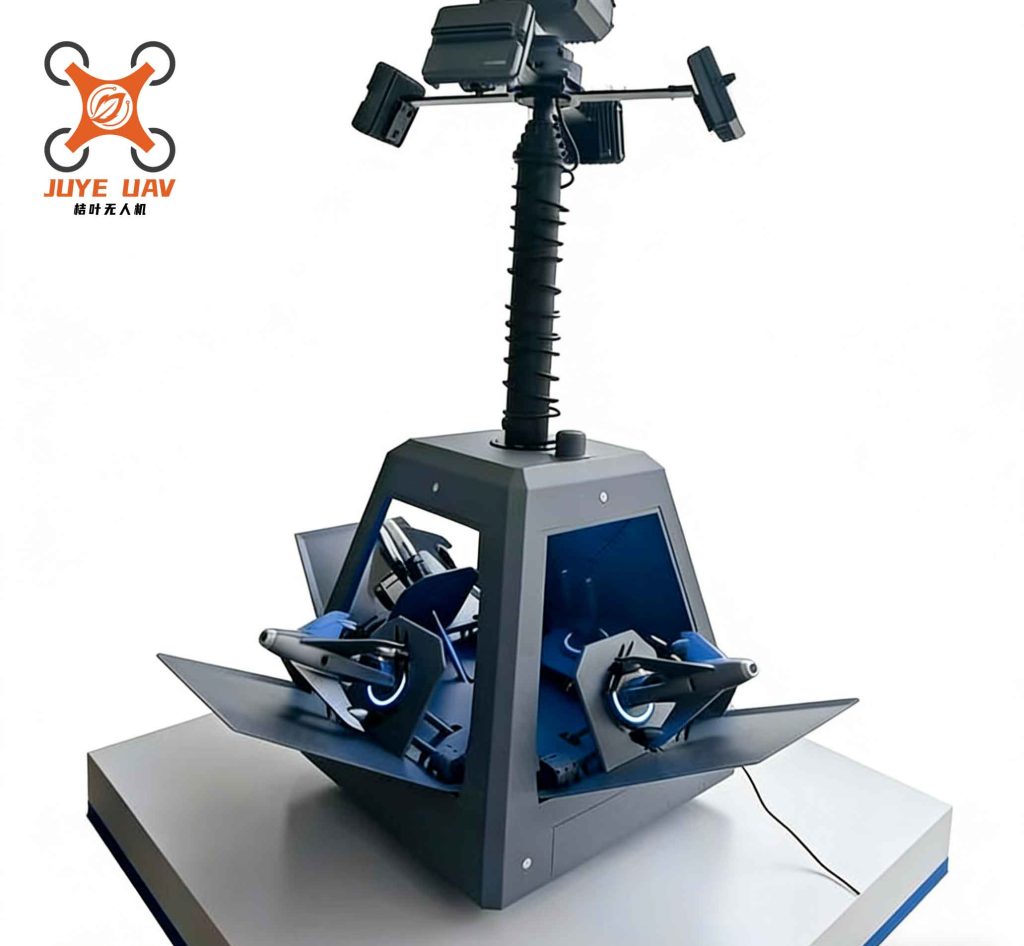
While jamming and kinetic methods are direct, their success is contingent upon prior detection and tracking. This is where visual perception systems excel, providing the high-resolution, feature-rich data needed for positive identification and continuous monitoring. The following figure illustrates a conceptual multi-sensor anti-drone system where visual cameras play a central role.
The evolution of visual anti-drone detection mirrors the broader progress in computer vision, transitioning from traditional feature-engineering methods to deep learning-driven paradigms.
1. Traditional Target Detection Methods for Anti-Drone Applications
Before the deep learning revolution, anti-drone detection relied on manually designed feature extractors and machine learning classifiers. The general pipeline involved: image preprocessing, handcrafted feature extraction, and classification/regression for object localization.
Scale-Invariant Feature Transform (SIFT) was a cornerstone algorithm. It identifies keypoints invariant to scale and rotation by finding extrema in the Difference of Gaussian (DoG) scale space. The scale space $L(x, y, \sigma)$ is constructed by convolving the image $I(x, y)$ with a Gaussian kernel $G(x, y, \sigma)$:
$$ L(x, y, \sigma) = G(x, y, \sigma) * I(x, y) $$
The DoG is then computed as the difference between two nearby scales:
$$ D(x, y, \sigma) = L(x, y, k\sigma) – L(x, y, \sigma) $$
Local extrema in $D(x, y, \sigma)$ are identified as potential keypoints. While robust, SIFT is computationally intensive for real-time anti-drone applications.
Histogram of Oriented Gradients (HOG) captures object shape by analyzing the distribution of local intensity gradients. For a cell within an image, a 1D histogram of gradient orientations is compiled. The feature vector for the entire detection window is formed by concatenating the histograms from all blocks, after contrast normalization. The gradient magnitudes $m(x,y)$ and orientations $\theta(x,y)$ are computed as:
$$ m(x,y) = \sqrt{[I(x+1,y)-I(x-1,y)]^2 + [I(x,y+1)-I(x,y-1)]^2} $$
$$ \theta(x,y) = \arctan\left(\frac{I(x,y+1)-I(x,y-1)}{I(x+1,y)-I(x-1,y)}\right) $$
HOG combined with a linear SVM classifier was effective but struggled with high variability in drone appearance.
Deformable Part Models (DPM) advanced this by modeling objects as a collection of parts with spatial relationships. A root filter and several part filters are learned, with a cost associated with the displacement of each part from its anchor position relative to the root. The score for a hypothesis is given by:
$$ \text{Score} = \sum_{i=0}^{n} F_i \cdot \phi(H, p_i) – \sum_{i=1}^{n} d_i \cdot \phi_d(dx_i, dy_i) + b $$
where $F_i$ are the filter weights, $\phi$ is the feature vector, $p_i$ is the part location, $d_i$ are deformation weights, and $b$ is a bias. DPM added robustness to viewpoint changes but remained complex and slow.
These traditional methods provided the initial framework for anti-drone vision systems but were often brittle in complex, dynamic environments and required extensive parameter tuning.
2. Deep Learning-Based Detection: A Revolution for Anti-Drone Systems
The advent of deep learning, particularly Convolutional Neural Networks (CNNs), dramatically improved the capability of visual anti-drone systems. These methods automatically learn hierarchical feature representations from data, excelling at handling the vast appearance variations of drones. They are broadly categorized into one-stage and two-stage detectors.
2.1 One-Stage Detectors: Speed for Real-Time Anti-Drone Defense
One-stage detectors perform object localization and classification in a single pass through the network, prioritizing inference speed—a critical factor for real-time anti-drone operations.
YOLO (You Only Look Once) frames detection as a single regression problem. The image is divided into an $S \times S$ grid. Each grid cell predicts $B$ bounding boxes and confidence scores, along with $C$ class probabilities. The core idea is to predict:
$$ \text{Prediction} = [p_c, b_x, b_y, b_w, b_h, c_1, c_2, …, c_C] $$
where $p_c$ is the objectness confidence, $(b_x, b_y)$ are the center coordinates relative to the grid cell, $(b_w, b_h)$ are the dimensions, and $c_i$ are the class probabilities. Later versions like YOLOv4/v5/v8 introduced advanced backbones, neck architectures (e.g., PANet), and loss functions, significantly boosting accuracy while maintaining speed for anti-drone tracking.
Single Shot MultiBox Detector (SSD) improves upon YOLO by leveraging feature maps at multiple scales for prediction. It uses a base CNN and adds convolutional feature layers of decreasing size. Predictions are made from each of these feature maps, allowing the network to detect drones at various sizes more effectively. For each default box at a feature map location, it outputs offsets $( \Delta cx, \Delta cy, \Delta w, \Delta h )$ and class scores.
RetinaNet addressed the class imbalance problem prevalent in dense detection by introducing the Focal Loss. Standard cross-entropy loss for binary classification is $CE(p, y) = -\log(p)$ for $y=1$ and $-\log(1-p)$ otherwise. Focal Loss adds a modulating factor $(1-p_t)^\gamma$:
$$ FL(p_t) = -(1-p_t)^\gamma \log(p_t) $$
where $p_t = p$ if $y=1$, else $p_t = 1-p$, and $\gamma$ is a focusing parameter. This reduces the loss contribution from easy, background examples, forcing the network to focus on hard, misclassified drones—a common challenge in anti-drone scenes cluttered with birds or other small objects.
2.2 Two-Stage Detectors: Precision for High-Stakes Anti-Drone Identification
Two-stage detectors first generate region proposals and then classify and refine them. They generally offer higher accuracy at the cost of slower speed.
The R-CNN family revolutionized object detection. Faster R-CNN is a landmark model that integrates a Region Proposal Network (RPN) with a detection network. The RPN slides a small network over the convolutional feature map, producing multiple candidate region proposals (anchors) at each location. For each anchor, it outputs an objectness score and bounding box regression offsets. The proposals are then fed to the Fast R-CNN head for final classification and bounding box refinement. The loss function for the RPN is:
$$ L(\{p_i\},\{t_i\}) = \frac{1}{N_{cls}} \sum_i L_{cls}(p_i, p_i^*) + \lambda \frac{1}{N_{reg}} \sum_i p_i^* L_{reg}(t_i, t_i^*) $$
where $p_i$ is the predicted probability of anchor $i$ being an object, $t_i$ is the predicted bounding box, and $p_i^*$ and $t_i^*$ are the ground-truth labels. This architecture provides high localization accuracy crucial for targeting in anti-drone systems.
Feature Pyramid Networks (FPN) enhanced both one-stage and two-stage detectors for multi-scale detection—essential for drones at varying distances. FPN constructs a feature pyramid with rich semantics at all levels by combining high-resolution, low-semantic features from early layers with low-resolution, high-semantic features from later layers via lateral connections and top-down pathways. This allows every level of the pyramid to detect drones of a specific scale range, dramatically improving performance on small drones.
Recently, Vision Transformers (ViTs) and detection transformers like DETR have introduced a paradigm shift. DETR eliminates the need for hand-crafted components like anchor boxes and NMS by framing detection as a set prediction problem. It uses a transformer encoder-decoder architecture to directly output a set of object predictions. The model uses bipartite matching loss to assign predictions to ground truth:
$$ \mathcal{L}_{Hungarian}(y, \hat{y}) = \sum_{i=1}^{N} [-\log \hat{p}_{\hat{\sigma}(i)}(c_i) + \mathbb{1}_{\{c_i \neq \varnothing\}} \mathcal{L}_{box}(b_i, \hat{b}_{\hat{\sigma}}(i))] $$
where $\hat{\sigma}$ is the optimal assignment. While promising, their computational demands for real-time anti-drone video processing remain a research focus.
3. Persistent Challenges in Visual Anti-Drone Perception
Despite remarkable progress, significant challenges impede the reliability of visual anti-drone systems in operational environments.
3.1 Detection in Complex Environments: Real-world anti-drone operations face adverse weather (rain, fog, haze), dynamic lighting (glare, low light), and cluttered backgrounds. These conditions degrade image quality and cause false positives (e.g., birds, kites) or missed detections. Techniques like image dehazing models, adaptive histogram equalization, and robust training with augmented data are employed, but fundamental limitations remain.
3.2 The “Low-Slow-Small” (LSS) Dilemma: This represents the most significant challenge. LSS drones have minimal visual signatures. Their small size results in very few pixels on the sensor, making feature extraction difficult. Their low and slow flight makes them blend into background motion. The following table summarizes the LSS challenge and mitigation strategies.
| Challenge Aspect | Impact on Detection | Potential Mitigation Strategies |
|---|---|---|
| Low Pixel Count | Insufficient features for discrimination; easily lost in noise. | Super-resolution networks; dedicated high-resolution sensors; feature pyramid networks. |
| Slow Relative Motion | Hard to distinguish from static background using motion cues. | Temporal filtering over long sequences; background modeling with slow update rates. |
| Small Size & Similarity | High confusion rate with birds or insects. | Spatio-temporal feature learning; integrating micro-Doppler radar or acoustic signatures. |
3.3 Detection of Stealth and Adversarial Drones: Adversaries may employ camouflage, low-observable shapes, or materials that reduce visual contrast. Furthermore, drones can execute adversarial attacks against the vision system itself, such as applying subtle patches to the drone that cause the neural network to misclassify it. Defending against these requires research into adversarial training and explainable AI to understand model vulnerabilities.
3.4 Real-Time Performance on Edge Devices: Deploying sophisticated models on mobile or airborne anti-drone platforms demands a balance between accuracy and computational efficiency. Model compression, quantization, pruning, and the development of lightweight architectures (e.g., MobileNet, EfficientNet backbones) are critical areas of work to enable real-time, on-device anti-drone inference.
4. Future Trends and Development Trajectories
The future of visual perception in anti-drone systems lies in integration, intelligence, and adaptation.
4.1 Multi-Modal Sensor Fusion: Pure visual systems have inherent limitations. The future is in fusing visual data with other modalities to create a robust perception suite. A common fusion framework can be represented as an optimization problem seeking the best state estimate $\hat{x}_t$:
$$ \hat{x}_t = \arg\max_{x_t} P(x_t | z_t^{vis}, z_t^{IR}, z_t^{radar}, z_t^{RF}) $$
where $z_t^{modality}$ represents observations from visual, infrared, radar, and RF sensors at time $t$. Deep learning-based fusion networks (early, late, or hybrid fusion) are being developed to automatically learn how to best combine these heterogeneous data streams for superior anti-drone tracking and classification, especially at long ranges or in obscurants.
4.2 Advanced Drone Behavior Prediction and Intent Recognition: Next-generation systems will move beyond simple detection to predicting flight trajectories and inferring intent. This involves using sequence models like Long Short-Term Memory (LSTM) networks or Transformers to model drone dynamics:
$$ h_t = \text{LSTM}(f_t, h_{t-1}) $$
$$ \hat{p}_{t+1} = W \cdot h_t + b $$
where $h_t$ is the hidden state encoding the flight history from visual features $f_t$, and $\hat{p}_{t+1}$ is the predicted future position. This enables proactive countermeasure selection in an anti-drone system.
4.3 Autonomous Decision-Making and Countermeasure Selection: Closing the “sensor-to-shooter” loop autonomously is the ultimate goal. An AI-based controller will assess the threat level (based on drone type, trajectory, proximity), evaluate available countermeasures (jamming, laser, interceptor), and execute the optimal response in milliseconds. This requires reinforcement learning frameworks where the anti-drone agent learns a policy $\pi(a|s)$ that maps the perceived state $s$ (from vision and other sensors) to an action $a$ (type and parameters of countermeasure) to maximize long-term security rewards.
4.4 Explainable AI (XAI) for Trustworthy Systems: As anti-drone systems become more autonomous, understanding their reasoning is vital for operator trust and debugging. XAI techniques like Grad-CAM or attention visualization will be integrated to highlight which visual features (e.g., rotor shape, fuselage) the network used to classify a target as a hostile drone, rather than a benign bird.
5. Conclusion
Visual perception has cemented its role as a cornerstone technology in modern anti-drone systems. The journey from handcrafted feature descriptors to deep neural networks has yielded dramatic improvements in detection accuracy, robustness, and speed. Today’s state-of-the-art models, powered by CNNs and increasingly by Transformers, provide the critical “eyes” for anti-drone platforms. However, the enduring challenges posed by complex environments, LSS targets, and adversarial threats drive continuous innovation. The future of visual anti-drone technology lies not in standalone vision systems, but in their intelligent fusion with other sensors, their evolution towards predictive analytics and autonomous decision-making, and their development into trustworthy, explainable components of our defense infrastructure. As drone technology itself advances, so too must the sophistication of the visual perception systems designed to counter them, ensuring they remain an effective shield in the evolving security landscape.