
As we advance into an era where ecological civilization and sustainable resource management are paramount, the need for innovative educational tools in geospatial technology has never been more critical. In my research, I focus on addressing the challenges of mineral resource monitoring and environmental risk mitigation through the design and implementation of a virtual simulation experimental course platform. This platform leverages drone-based 3D real-scene modeling to train the next generation of surveying and mapping professionals. The core of this initiative is to enhance drone training by integrating virtual reality with real-world applications, thereby overcoming traditional limitations in field-based education. Through this platform, students can engage in comprehensive drone training that spans from data acquisition to large-scale project management, all within a safe and scalable virtual environment.
The motivation behind this work stems from the growing concerns over illegal mining activities, which lead to resource depletion and environmental hazards. Traditional monitoring methods are often hampered by the remote and scattered nature of mining sites, making it difficult to conduct effective surveillance. Satellite remote sensing combined with drone technology has emerged as a viable solution, but it requires specialized skills that are costly and time-consuming to impart. My goal is to bridge this gap by developing a virtual simulation platform that democratizes access to high-quality drone training. This platform not only teaches technical proficiencies but also instills a sense of social responsibility and innovation, aligning with the broader objectives of national ecological strategies.
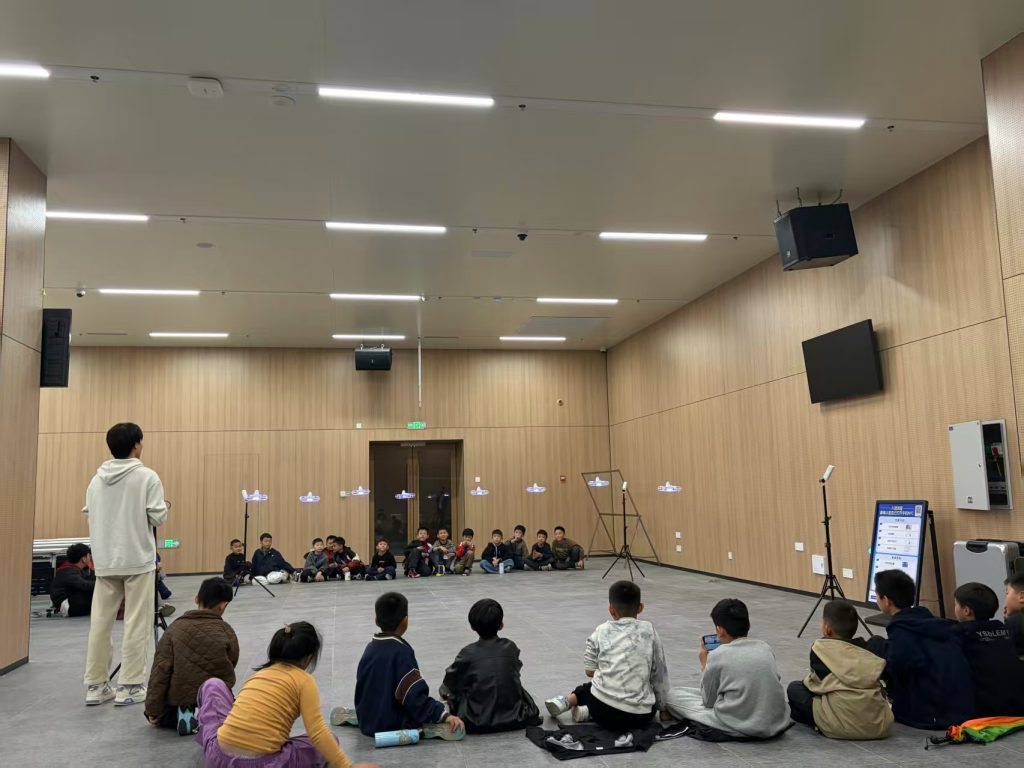
In designing the course content, I adopted a structured approach that combines theoretical knowledge with practical simulation and engineering applications. The platform is built around four key modules, each tailored to foster a deep understanding of drone-based 3D real-scene technology. These modules include: (1) cognitive training on mining area monitoring objects and technologies, (2) virtual simulation of drone data acquisition and 3D modeling, (3) intelligent monitoring applications using 3D models, and (4) large-scale project planning for provincial-level resource management. This modular design ensures that students progress from basic concepts to complex applications, reinforcing their drone training at every step. To illustrate the curriculum structure, I have summarized the modules in Table 1.
| Module | Key Components | Learning Objectives |
|---|---|---|
| 1. Cognitive Training | Open-pit mine elements, drone basics, ideological education | Understand monitoring objects and technologies |
| 2. Data Acquisition & Modeling | Drone assembly, flight planning,倾斜摄影, 3D reconstruction | Master drone operation and 3D model generation |
| 3. Intelligent Monitoring | 3D measurement, boundary analysis, environmental risk detection | Apply 3D models for监管 and analysis |
| 4. Large-Scale Planning | Task planning, cost analysis, statistical evaluation | Design and manage provincial-level projects |
The theoretical foundation of the course is reinforced through a knowledge graph approach, which links concepts in a networked structure to facilitate associative learning. For instance, the relationship between drone flight parameters and model accuracy can be expressed mathematically. In drone training, the ground sample distance (GSD) is a critical metric for image resolution, calculated as:
$$ GSD = \frac{H \times s}{f} $$
where \( H \) is the flight altitude, \( s \) is the sensor pixel size, and \( f \) is the focal length. This formula is integrated into the virtual simulations to help students optimize data collection. Moreover, the platform emphasizes the importance of cost-effectiveness in large-scale monitoring, using equations like the total project cost \( C \) for provincial drone training initiatives:
$$ C = \sum_{i=1}^{n} (C_{flight_i} + C_{processing_i} + C_{analysis_i}) $$
Here, \( n \) represents the number of mining sites, and each component cost is derived from virtual experiments. By embedding such formulas, the course enhances quantitative reasoning, a vital skill in modern drone training.
The virtual simulation platform is technically architected using a B/S framework based on open-source WebGIS technologies. I employed Nginx as the web server, SpringCloud and SpringBoot for backend microservices, and MySQL for database management. The 3D visualization is powered by Cesium, a robust engine that renders digital twin representations of mining areas with high measurability and realism. This setup allows students to access the platform via any web browser, eliminating the need for specialized hardware and making drone training more accessible. The system’s modular design supports various learning methods, including task-driven exercises, collaborative projects, and autonomous discovery. Key functional modules are listed in Table 2, highlighting the platform’s comprehensive capabilities.
| Module | Description | Role in Drone Training |
|---|---|---|
| Experiment Training | Virtual labs for drone operations and 3D modeling | Hands-on practice without physical risks |
| Experiment Report | Automated and manual grading of student submissions | Assess learning outcomes and provide feedback |
| Data Statistics | Track student progress and performance metrics | Personalize drone training paths |
| Knowledge Graph | Interactive concept maps linking theory to practice | Enhance understanding of complex topics |
| Collaborative Services | Tools for group projects and peer review | Foster teamwork in large-scale planning |
In terms of pedagogical innovation, I developed a multi-dimensional evaluation system that goes beyond traditional testing. This system incorporates operational, test-based, attempt-oriented, and innovative assessments to measure student proficiency holistically. For example, in a drone training scenario on flight planning, students are scored not only on accuracy but also on creativity in optimizing routes. The evaluation criteria can be formalized as a weighted sum:
$$ Score = w_1 \cdot O + w_2 \cdot T + w_3 \cdot A + w_4 \cdot I $$
where \( O \) is operational skill, \( T \) is test performance, \( A \) is attempt quality, and \( I \) is innovation, with weights \( w_1 \) to \( w_4 \) adjusted based on course objectives. This approach encourages students to explore beyond rote learning, aligning with the platform’s goal of cultivating critical thinking. Additionally, the platform includes a dynamic ranking system that compares student results across institutions, fostering healthy competition and motivation in drone training.
The platform’s effectiveness is evident in its ability to simulate real-world mining environments with high fidelity. Using actual data from provincial-scale monitoring projects, such as billion-pixel panoramic images and亚米级遥感影像, the virtual scenes provide an immersive experience. Students can practice drone flights over diverse terrains, process倾斜摄影 data into 3D models, and analyze mining violations without the risks associated with field visits. This not only reduces costs but also allows for repetitive practice, a key aspect of effective drone training. The integration of ideological elements, such as discussions on ecological responsibility, further enriches the curriculum, helping students connect technical skills with societal impacts.
From a technical perspective, the platform leverages advanced algorithms for data processing. For instance, the structure-from-motion (SfM) technique used in 3D reconstruction involves solving bundle adjustment problems, which can be represented as:
$$ \min \sum_{i,j} || x_{ij} – P_i(X_j) ||^2 $$
where \( x_{ij} \) are image points, \( P_i \) are projection matrices, and \( X_j \) are 3D points. In the virtual simulations, students tweak parameters like overlap ratio and camera angles to see how they affect model quality, deepening their understanding of photogrammetry principles. This hands-on experimentation is crucial for mastering the nuances of drone training in surveying contexts.
The platform also addresses scalability challenges in resource management. By simulating provincial-level projects, students learn to plan monitoring tasks across hundreds of sites, considering factors like weather, equipment availability, and budget constraints. A typical planning exercise might involve optimizing drone deployment using linear programming:
$$ \text{Minimize } Z = \sum_{k=1}^{m} c_k y_k \quad \text{subject to} \quad \sum_{k} a_{ik} y_k \geq d_i \quad \forall i $$
where \( y_k \) represents drone units, \( c_k \) costs, \( a_{ik} \) coverage rates, and \( d_i \) monitoring demands. Such exercises prepare students for the complexities of real-world drone training and project management, bridging the gap between academia and industry.
In conclusion, the virtual simulation platform represents a significant advancement in drone training for 3D real-scene applications. It combines cutting-edge technology with pedagogical best practices to create an engaging and effective learning environment. The platform’s design—rooted in modular content, interactive simulations, and multi-faceted evaluation—ensures that students develop not only technical expertise but also innovative thinking and ethical awareness. As the demand for skilled professionals in natural resource management grows, tools like this will play a pivotal role in shaping the future of geospatial education. My ongoing work involves expanding the platform to include more diverse scenarios, such as urban planning and disaster response, to further enhance its utility in global drone training initiatives.
Looking ahead, I plan to incorporate artificial intelligence algorithms for automated anomaly detection in mining areas, which will add another layer of sophistication to the drone training modules. This will involve teaching students how to train machine learning models using 3D data, a skill increasingly relevant in smart监管 systems. The platform’s open-source nature also allows for community contributions, fostering collaboration across institutions and countries. By continuously refining this virtual simulation ecosystem, I aim to set a new standard for drone training that is accessible, scalable, and aligned with the sustainable development goals of our time.
Throughout this journey, the emphasis on drone training has been unwavering, as it is the cornerstone of empowering the next generation to tackle environmental and resource challenges. The virtual platform not only simulates reality but also inspires innovation, encouraging students to envision new applications for drone technology. As I reflect on the development process, I am convinced that such immersive educational tools are essential for accelerating the adoption of advanced surveying techniques and building a more resilient and informed society.