
In recent years, the rapid advancement of drone technology has transformed both commercial and military landscapes, presenting new challenges for air defense systems. As a researcher focused on electronic warfare and defense strategies, I have closely monitored the US military’s efforts to enhance its anti-drone capabilities. The proliferation of drones, including small unmanned aerial vehicles (UAVs) and drone swarms, has necessitated a comprehensive approach to counter these threats. This article delves into the current state of US anti-drone operations, analyzing technological innovations, organizational developments, and future directions. Through first-person analysis, I aim to provide a detailed overview of how the US is adapting to this evolving battlefield, emphasizing the integration of detection, disruption, and destruction methodologies in anti-drone systems.
The US Department of Defense and various military branches have issued a series of guiding documents to establish a robust anti-drone strategy. These initiatives highlight not only technological superiority but also systemic construction, ensuring that anti-drone measures are woven into broader defense frameworks. From my perspective, the US military’s anti-drone efforts are driven by a recognition of drones as one of the most disruptive aerial threats, alongside fixed-wing aircraft, ballistic missiles, cruise missiles, and helicopters. The lessons from conflicts such as the Nagorno-Karabakh war in 2020, where drones demonstrated significant combat effectiveness, have accelerated the urgency for advanced anti-drone solutions. In this analysis, I explore the organizational, budgetary, and tactical aspects of US anti-drone warfare, while projecting future trends based on current developments.
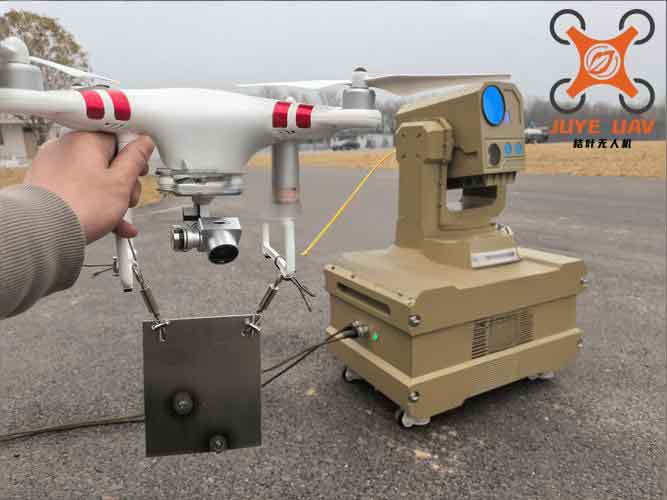
From an organizational standpoint, the US military has strengthened its anti-drone functions through dedicated offices and revised doctrines. For instance, the establishment of the Joint Counter-Small Unmanned Aircraft Systems Office in 2019 has centralized testing, evaluation, and standardization of anti-drone systems. This move, in my view, reflects a strategic shift towards coordinated anti-drone operations across all services. Additionally, publications like the US Army Technical Publication ATP 3-01.81 on counter-unmanned aircraft systems provide tactical guidance, emphasizing the importance of training and procedures in anti-drone engagements. I believe that such institutional frameworks are crucial for ensuring interoperability and effectiveness in diverse combat scenarios.
Budgetary allocations further underscore the importance placed on anti-drone capabilities. In 2021, the US defense budget included approximately $404 million for anti-drone equipment and technology, signaling a commitment to research and development. From my analysis, this funding supports a wide range of projects, from high-energy lasers to electronic warfare systems, enabling the rapid transformation of concepts into deployable solutions. The financial backing has facilitated innovations in anti-drone technology, allowing the US to maintain a edge in countering both state and non-state drone threats. I have observed that investments often focus on dual-use technologies, which can be adapted for both military and civilian anti-drone applications.
In terms of tactical applications, the US military has conducted numerous exercises and real-world tests to refine anti-drone techniques. For example, the Navy’s use of the Laser Weapon System (LaWS) to destroy small drones in 2017 demonstrated the potential of directed energy weapons in anti-drone roles. Similarly, the Army’s deployment of systems like the “Drone Defender” electromagnetic gun showcases the emphasis on portable, non-kinetic anti-drone tools. From my perspective, these efforts highlight a multi-layered approach to anti-drone defense, combining kinetic and non-kinetic methods to address varying threat levels. The integration of anti-drone measures into existing air defense networks is a key focus, ensuring seamless operation in complex environments.
The technological innovations in US anti-drone warfare can be categorized into three main areas: detection, disruption, and destruction. Each area employs advanced technologies to counter drone threats effectively. In my analysis, detection systems have evolved to address the challenges posed by “low, slow, and small” drones, which are difficult to track with traditional radar. The US has invested in multi-sensor networks, combining radar, electro-optical, infrared, and acoustic sensors to enhance situational awareness. For instance, the use of mobile and networked radar systems, such as the KuRFS precision targeting radar, enables the detection of drone swarms at extended ranges. I believe that the future of anti-drone detection lies in cognitive systems that can autonomously identify and classify threats using artificial intelligence.
| Technology Type | Key Features | Range | Applications |
|---|---|---|---|
| Radar Systems | Multi-frequency, adaptive scanning | Up to 50 km | Long-range drone detection |
| Electro-Optical Sensors | High-resolution imaging | 5-10 km | Visual identification |
| Infrared Sensors | Heat signature detection | 3-7 km | Low-visibility conditions |
| Acoustic Sensors | Sound wave analysis | 1-2 km | Close-range monitoring |
| RF Sensors | Communication signal interception | 10-20 km | Command link disruption |
Disruption techniques in anti-drone operations focus on interfering with drone communication, navigation, and control systems. From my viewpoint, electronic warfare plays a pivotal role here, with systems like the “Wolfpack” project enabling networked jamming of drone swarms. The use of GPS spoofing and signal jamming can neutralize drones by forcing them to land or return to base. I have analyzed that portable anti-drone guns, such as the “Drone Defender,” are effective for short-range disruption, providing troops with a lightweight option for countering immediate threats. Moreover, cyber intrusion methods are being developed to hack into drone networks, seizing control and turning the drones against their operators. These non-kinetic anti-drone measures are cost-effective and minimize collateral damage.
The destruction aspect of anti-drone warfare involves both kinetic and directed energy weapons. High-power microwave (HPM) and high-energy laser (HEL) systems are at the forefront of US anti-drone technology. For example, the Athena (Advanced Test High Energy Asset) laser system and the Tactical High-power Microwave Responder (THOR) have demonstrated the ability to disable multiple drones simultaneously. From my analysis, these systems offer advantages such as rapid engagement, precision targeting, and low cost per shot compared to traditional missiles. The integration of these weapons onto mobile platforms, like all-terrain vehicles or naval ships, enhances their versatility in anti-drone missions. I believe that the development of compact, high-output energy weapons will revolutionize anti-drone defense, enabling continuous operation against swarm attacks.
To quantify the effectiveness of anti-drone systems, mathematical models can be applied. For instance, the probability of detecting a drone using a sensor network can be expressed as:
$$P_d = 1 – \prod_{i=1}^{n} (1 – p_i)$$
where \(P_d\) is the overall detection probability, \(n\) is the number of sensors, and \(p_i\) is the detection probability of the \(i\)-th sensor. In anti-drone operations, this model helps optimize sensor placement and coordination. Similarly, the success rate of an anti-drone jamming system can be modeled using signal-to-interference ratio (SIR) calculations:
$$SIR = \frac{P_s}{P_j + N}$$
where \(P_s\) is the signal power from the drone, \(P_j\) is the jamming power, and \(N\) is the noise power. Effective anti-drone jamming requires an SIR below a threshold, typically derived from empirical data. From my perspective, such formulas are essential for designing robust anti-drone electronic warfare systems.
| System Name | Type | Power Output | Effective Range | Status |
|---|---|---|---|---|
| Athena (ATHENA) | Laser | 30 kW | Up to 35 km | Operational |
| THOR | Microwave | High-power pulses | Several kilometers | Testing |
| HELWS | Laser | 10-100 kW | 20-50 km | Deployed |
| GBAD | Laser | 30 kW | Short to medium range | Development |
| Silent Archer | Microwave/Laser | Variable | 5-15 km | Experimental |
Looking ahead, the future of US anti-drone warfare will be shaped by advancements in artificial intelligence, autonomy, and network-centric operations. From my analysis, the integration of cognitive electronic warfare systems will enable real-time adaptation to drone threats, enhancing the speed and accuracy of anti-drone responses. For example, machine learning algorithms can analyze drone behavior patterns to predict swarm tactics and recommend countermeasures. I believe that the concept of “decision-centric warfare” will drive the development of anti-drone systems that can operate with minimal human intervention, leveraging data fusion from multiple sources.
Another trend is the emphasis on portable and scalable anti-drone solutions. The US military is exploring drone-on-drone combat, where autonomous UAVs are used to intercept hostile drones. This approach, often referred to as “loyal wingman” tactics, reduces risk to human operators and can be deployed in large numbers. From my viewpoint, such systems will benefit from 3D printing and additive manufacturing, allowing for rapid production and customization of anti-drone platforms. Additionally, the use of swarming tactics in anti-drone defense—where multiple interceptor drones collaborate to neutralize threats—mirrors the offensive capabilities of adversary drones, creating a dynamic counter-swarm environment.
The role of space-based assets in anti-drone operations is also expanding. The proposed Deep Space Advanced Radar Capability (DARC) aims to enhance space situational awareness, which could indirectly support anti-drone efforts by tracking drone launch sites or communication satellites. In my analysis, a multi-domain approach that combines air, land, sea, space, and cyber elements is essential for comprehensive anti-drone defense. The US military’s investments in joint all-domain command and control (JADC2) will facilitate the integration of anti-drone systems into a unified network, enabling coordinated strikes against drone swarms across vast areas.
To illustrate the complexity of anti-drone engagements, consider the following formula for the effectiveness of a layered anti-drone defense system:
$$E = \alpha \cdot D + \beta \cdot J + \gamma \cdot K$$
where \(E\) represents overall effectiveness, \(D\) is the detection efficiency, \(J\) is the jamming efficiency, \(K\) is the kinetic destruction efficiency, and \(\alpha, \beta, \gamma\) are weighting factors based on threat level and environment. In anti-drone operations, optimizing these parameters requires continuous testing and adaptation. From my perspective, simulation and wargaming, such as the Black Dart anti-drone exercises, play a crucial role in refining these models.
Ethical and legal considerations in anti-drone warfare cannot be overlooked. As a researcher, I note that the use of electronic warfare and directed energy weapons raises questions about spectrum management, collateral damage, and compliance with international laws. The US military must balance innovation with responsibility, ensuring that anti-drone measures do not disrupt civilian communications or infrastructure. I believe that developing rules of engagement and standards for anti-drone systems will be a key focus in coming years, particularly as drones become more ubiquitous in commercial airspace.
| Priority Area | Description | Expected Impact | Timeline |
|---|---|---|---|
| AI-Powered Detection | Autonomous threat identification using deep learning | Increased accuracy and speed | Near-term (1-3 years) |
| Adaptive Jamming | Real-time signal analysis and countermeasure adjustment | Enhanced resilience against evolving drones | Mid-term (3-5 years) |
| Compact Directed Energy | Miniaturized lasers and microwaves for portable use | Broader deployment in field operations | Long-term (5+ years) |
| Swarm Countermeasures | Drone-based interceptors and networked defenses | Effective response to mass attacks | Ongoing |
| Cyber-Physical Integration | Combining cyber attacks with physical disruption | Holistic neutralization of drone systems |
In conclusion, the US military’s anti-drone capabilities are evolving rapidly, driven by technological innovation and strategic imperative. From my first-person analysis, the integration of detection, disruption, and destruction systems forms a cohesive framework for countering drone threats. The emphasis on cognitive systems, portable weapons, and multi-domain coordination will define the future of anti-drone warfare. As drones continue to proliferate, the US must maintain its leadership in anti-drone technology while addressing ethical and operational challenges. I am confident that ongoing research and collaboration will yield more effective anti-drone solutions, ensuring security in an increasingly complex battlespace.
Reflecting on the broader implications, I believe that anti-drone measures are not just a military concern but also a societal one, given the dual-use nature of drone technology. The lessons from US anti-drone operations can inform global efforts to regulate and secure airspace. Ultimately, the goal is to achieve a balance where innovation in drone technology is matched by robust anti-drone defenses, fostering a safe and stable environment for all. Through continuous analysis and adaptation, the US military can stay ahead in the anti-drone arena, leveraging its expertise to protect assets and personnel from emerging aerial threats.