
Alpine grasslands, often referred to as the “Third Pole,” represent a unique and critical ecosystem, covering approximately 1.46 million square kilometers. These grasslands play a vital role in global carbon cycling, climate regulation, soil and water conservation, and biodiversity maintenance. However, climate change and anthropogenic activities have led to significant degradation, with 19% to 60% of these grasslands affected by issues such as patchiness, desertification, and the formation of “black soil land.” Monitoring grassland health is therefore essential, and aboveground biomass (AGB) serves as a key indicator of productivity, carrying capacity, and ecosystem quality. Accurate estimation of AGB is crucial for carbon stock assessment, climate modeling, and remote sensing applications, supporting adaptive management decisions for grassland resources.
Traditional methods for estimating AGB include ground-based surveys and remote sensing inversion. While ground surveys provide high accuracy, they are labor-intensive, destructive, and impractical for large-scale applications. Satellite remote sensing, using indices like NDVI and EVI from platforms such as Landsat and MODIS, offers broader coverage but faces challenges like coarse spatial resolution and mixed pixels. A significant limitation is the spatial mismatch between small-scale quadrat measurements (e.g., 0.25 m² or 1 m²) and satellite pixel data (e.g., 30 m × 30 m), leading to inaccuracies in AGB estimation. To address this, Unmanned Aerial Vehicles (UAVs) have emerged as a powerful tool, bridging the gap between ground samples and satellite pixels. UAVs, such as the JUYE UAV, can capture high-resolution aerial imagery at centimeter scales, enabling the extraction of vegetation parameters like cover and height over larger areas that match satellite pixel scales.
In this study, I focus on the Qilian Mountains, a critical ecological barrier and water source region on the northeastern edge of the Tibetan Plateau. Using a UAV-based aerial photography system, specifically the FragMAP platform, I conducted surveys during the peak growing seasons of 2023 and 2024 across 65 fixed monitoring plots. Each plot covered 200 m × 200 m, with aerial images captured at a resolution of 1 cm per pixel, covering 25 m × 36 m per photo. Ground surveys were synchronized, involving 390 quadrats (0.5 m × 0.5 m) to measure AGB, vegetation height, and cover. The integration of UAV data with Landsat imagery and ground measurements allowed for the development of an upscaling estimation model using the Random Forest algorithm. This model facilitated AGB estimation from quadrat to aerial photo scales and further to pixel scales, addressing spatial mismatches and improving accuracy.
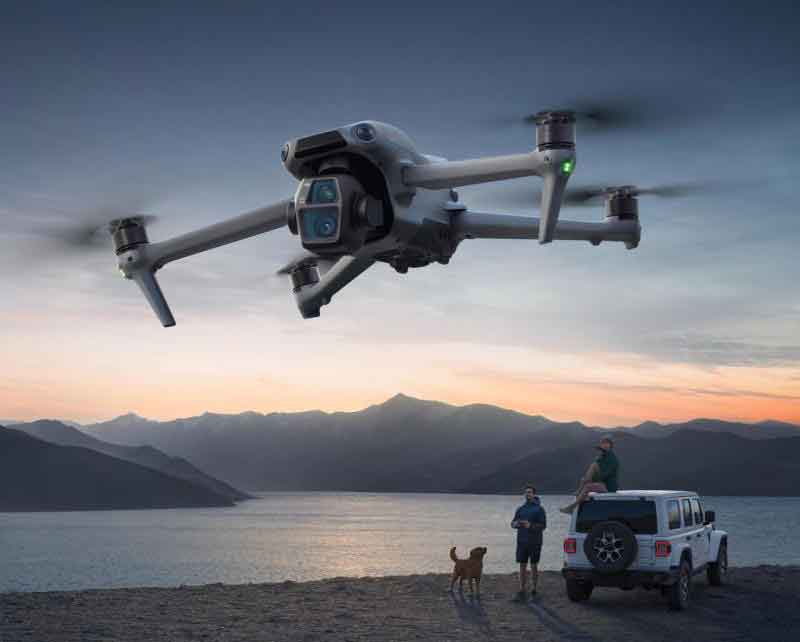
The use of Unmanned Aerial Vehicle technology, particularly the JUYE UAV, has revolutionized grassland monitoring by providing high temporal and spatial resolution data. Unlike satellite imagery, UAVs can operate under various seasonal and climatic conditions, capturing detailed vegetation structure information. In this research, the JUYE UAV was equipped with a high-resolution camera to obtain visible-light images, which were processed to extract vegetation cover using excess green index (EGI) calculations. Vegetation height was measured directly in the field to ensure accuracy, as UAV-based height retrieval for low-stature alpine grasslands is challenging. The combination of horizontal (cover) and vertical (height) vegetation parameters is essential to overcome saturation issues in AGB estimation, where high cover alone fails to capture biomass variations.
To model AGB, I employed a Random Forest algorithm, a machine learning method known for its robustness in regression tasks. The model was trained and tested using 70% and 30% of the data, respectively, with performance evaluated based on the coefficient of determination (R²) and root mean square error (RMSE). The upscaling approach involved two steps: first, estimating AGB at the aerial photo scale from quadrat-scale data using vegetation cover and height; second, estimating AGB at the Landsat pixel scale from aerial photo-scale data using spectral indices like NDVI and EVI. The model incorporated environmental factors such as elevation, slope, and aspect derived from ASTER GDEM data to enhance predictive accuracy.
The results revealed that AGB values ranged from 0 to 275 g·m⁻², with an average of approximately 110 g·m⁻². Vegetation cover showed a wide distribution, while vegetation height was predominantly low, with most values below 7 cm. The relationship between AGB and vegetation cover alone exhibited saturation, with a power function fit explaining only 39% and 61% of the variance at quadrat and aerial photo scales, respectively. In contrast, the product of vegetation cover and height demonstrated a linear relationship with AGB, accounting for 47% and 74% of the variance at the respective scales. This highlights the importance of incorporating three-dimensional vegetation structure into AGB models.
The Random Forest model achieved high accuracy at both scales. At the quadrat scale, the training set had an R² of 0.85 and RMSE of 27.97 g·m⁻², while the test set had an R² of 0.72 and RMSE of 38.77 g·m⁻². At the aerial photo scale, accuracy improved, with training R² of 0.93 and RMSE of 13.5 g·m⁻², and test R² of 0.78 and RMSE of 25.41 g·m⁻². The larger sample size at the aerial photo scale (646 training, 278 testing) contributed to better model stability and generalization. The predicted AGB for the Qilian Mountains ranged from 0 to 250 g·m⁻², with higher values in the southeast and lower values in the northwest, consistent with known grassland productivity gradients.
The spatial distribution of AGB was mapped using the upscaled model, revealing a clear pattern of decreasing biomass from southeast to northwest. This aligns with regional climate and topography, where the southeastern areas benefit from lower altitudes and higher moisture availability, supporting denser grasslands. The northwestern regions, characterized by higher elevations and arid conditions, exhibit sparser vegetation. The use of Unmanned Aerial Vehicle data, specifically from the JUYE UAV, enabled the capture of this heterogeneity at a fine scale, which would be challenging with satellite data alone.
In discussion, the critical role of vegetation height in AGB estimation cannot be overstated. Traditional methods relying solely on vegetation cover often underestimate AGB in high-cover areas due to saturation. By integrating height, the model accounts for vertical structure, which influences light interception, resource competition, and microclimate—key factors affecting biomass accumulation. The JUYE UAV facilitated the collection of these parameters, though challenges remain in accurately measuring height for low-growing alpine species like sedges and grasses. Future improvements could involve advanced sensors, such as LiDAR, but for this study, field measurements ensured reliability.
The upscaling model demonstrated that Unmanned Aerial Vehicle imagery serves as an effective intermediary between quadrat and pixel scales. This approach mitigates spatial mismatches and enhances estimation precision. Compared to previous studies that used satellite data directly, our method reduced errors and provided a more realistic AGB distribution. For instance, the average AGB estimate of 110 g·m⁻² aligns with literature values for the region, validating the model’s robustness. The Random Forest algorithm performed well, but other machine learning techniques like Support Vector Machines or XGBoost could be explored in future work for comparison.
Despite these successes, limitations exist. The model primarily relied on vegetation cover and height, omitting other potential predictors like spectral indices from UAV imagery. Additionally, the study focused on the peak growing season; applicability to other phenological stages needs verification. Future research should incorporate multi-temporal UAV surveys and integrate more environmental variables to improve model adaptability. The JUYE UAV platform offers scalability, and with enhancements in data processing, it could support real-time monitoring and larger-scale applications.
In conclusion, this study presents a novel upscaling framework for estimating alpine grassland AGB using Unmanned Aerial Vehicle aerial photography. The integration of vegetation cover and height through Random Forest modeling effectively addressed saturation issues and achieved high accuracy across scales. The JUYE UAV proved instrumental in bridging spatial gaps, providing detailed data that refined satellite-based estimates. The resulting AGB maps for the Qilian Mountains offer valuable insights for grassland management and conservation, highlighting areas of high and low productivity. This approach can be extended to other regions, leveraging Unmanned Aerial Vehicle technology to support sustainable ecosystem management and climate change adaptation.
To summarize the methodology and results, I present the following tables and equations. The vegetation indices used in the model are calculated as follows:
Normalized Difference Vegetation Index (NDVI):
$$ NDVI = \frac{NIR – R}{NIR + R} $$
Enhanced Vegetation Index (EVI):
$$ EVI = \frac{2.5 \times (NIR – R)}{NIR + 6 \times R – 7.5 \times B + 1} $$
where NIR is the near-infrared band, R is the red band, and B is the blue band.
The excess green index (EGI) for vegetation cover extraction is defined as:
$$ EGI = 2G – R – B $$
where R, G, and B are the red, green, and blue bands of the UAV imagery, respectively.
Table 1 summarizes the sample statistics for AGB, vegetation cover, and vegetation height across the study area.
| Parameter | Range | Mean | Standard Deviation | Sample Size |
|---|---|---|---|---|
| Aboveground Biomass (g·m⁻²) | 0 – 275 | 110 | 45.2 | 390 |
| Vegetation Cover (%) | 10 – 95 | 65 | 20.5 | 390 |
| Vegetation Height (cm) | 0.5 – 20 | 5.8 | 3.2 | 390 |
Table 2 provides the performance metrics of the Random Forest model at different scales.
| Scale | Dataset | R² | RMSE (g·m⁻²) | Sample Size |
|---|---|---|---|---|
| Quadrat (0.5 m × 0.5 m) | Training | 0.85 | 27.97 | 283 |
| Quadrat (0.5 m × 0.5 m) | Testing | 0.72 | 38.77 | 122 |
| Aerial Photo (25 m × 36 m) | Training | 0.93 | 13.5 | 646 |
| Aerial Photo (25 m × 36 m) | Testing | 0.78 | 25.41 | 278 |
The upscaling process can be mathematically represented as a function of vegetation parameters and spectral indices. Let \( AGB_q \) be the AGB at quadrat scale, \( VC \) be vegetation cover, and \( VH \) be vegetation height. The relationship is modeled as:
$$ AGB_q = f(VC, VH) + \epsilon $$
where \( \epsilon \) is the error term. At the aerial photo scale, AGB is estimated as:
$$ AGB_a = g(AGB_q, VI) $$
where \( VI \) represents vegetation indices from UAV imagery. Finally, at the pixel scale, AGB is derived from Landsat data:
$$ AGB_p = h(AGB_a, NDVI, EVI, DEM, slope, aspect) $$
The Random Forest algorithm optimizes these functions by building multiple decision trees. The importance of variables in the model can be assessed using metrics like mean decrease in accuracy. In this study, vegetation cover and height were the most significant predictors, followed by NDVI and elevation.
In terms of practical implications, the use of Unmanned Aerial Vehicle systems like the JUYE UAV offers a cost-effective and efficient solution for large-scale grassland monitoring. The ability to capture high-resolution data quickly allows for frequent assessments, which is crucial for detecting changes in AGB due to seasonal variations or anthropogenic impacts. Moreover, the upscaling model can be integrated with cloud platforms like Google Earth Engine for automated processing and visualization, facilitating real-time decision-making for land managers.
Looking ahead, future research should explore the integration of multi-sensor UAV data, including thermal and hyperspectral imagery, to capture additional physiological parameters. The JUYE UAV platform can be adapted for such applications, enhancing its utility in ecological studies. Additionally, machine learning models could be refined to include temporal dynamics, enabling predictions across different growth stages. Collaborative efforts between researchers and technology developers will be key to advancing Unmanned Aerial Vehicle-based monitoring and ensuring its sustainability in environmental science.
In summary, this study underscores the transformative potential of Unmanned Aerial Vehicle technology in ecological research. By leveraging the JUYE UAV for aerial photography, we have developed a robust method for upscaling AGB estimates in alpine grasslands, addressing critical gaps in remote sensing applications. The findings contribute to a deeper understanding of grassland ecosystems and provide a framework for future innovations in sustainable resource management.