
The battlefield of the Russia-Ukraine conflict has served as a profound crucible for the development and tactical application of unmanned aerial vehicles (UAVs). This prolonged, high-intensity conventional war has not only validated the centrality of the unmanned drone in modern combat but has also accelerated its evolution from a supporting intelligence asset to a ubiquitous, multi-role, and often expendable weapon system that fundamentally shapes the character of war. Each distinct phase of the conflict—marked by shifting strategic objectives, changing front-line dynamics, and adaptations in force employment—has catalysed specific developments in drone technology, production, and tactical innovation. This paper examines the trajectory of unmanned drone warfare through the lens of the conflict’s major stages, synthesizing observed patterns into conceptual frameworks and quantitative models to distill lessons on the integration, utility, and future trajectory of unmanned systems in peer-state conflict.
The initial invasion phase was characterized by manoeuvre warfare and high-value targeting. Both sides employed medium-altitude long-endurance (MALE) unmanned drones, such as the Ukrainian Bayraktar TB2 and the Russian Orion, with expectations of achieving strategic effects through precision strikes. However, the contested airspace and presence of layered air defences rapidly demonstrated the vulnerability of these high-cost platforms. Loss rates escalated quickly, proving the unsustainability of traditional MALE drones in a high-threat environment without air superiority. This period underscored a critical, early lesson: the survivability $$ P_s $$ of an unmanned drone in a dense anti-access/area denial (A2/AD) environment is a function of its observability, countermeasure sophistication, and the enemy’s integrated air defence system (IADS) density. We can model this conceptually as:
$$ P_s = e^{-(\lambda_{radar} + \lambda_{SAM} + \lambda_{EW}) \cdot t} $$
Where $$ \lambda_{radar} $$, $$ \lambda_{SAM} $$, and $$ \lambda_{EW} $$ represent the threat density from surveillance radars, surface-to-air missiles, and electronic warfare systems, respectively, and $$ t $$ is the mission duration. The high attrition of MALE drones signaled a pivot towards lower-cost, more expendable systems.
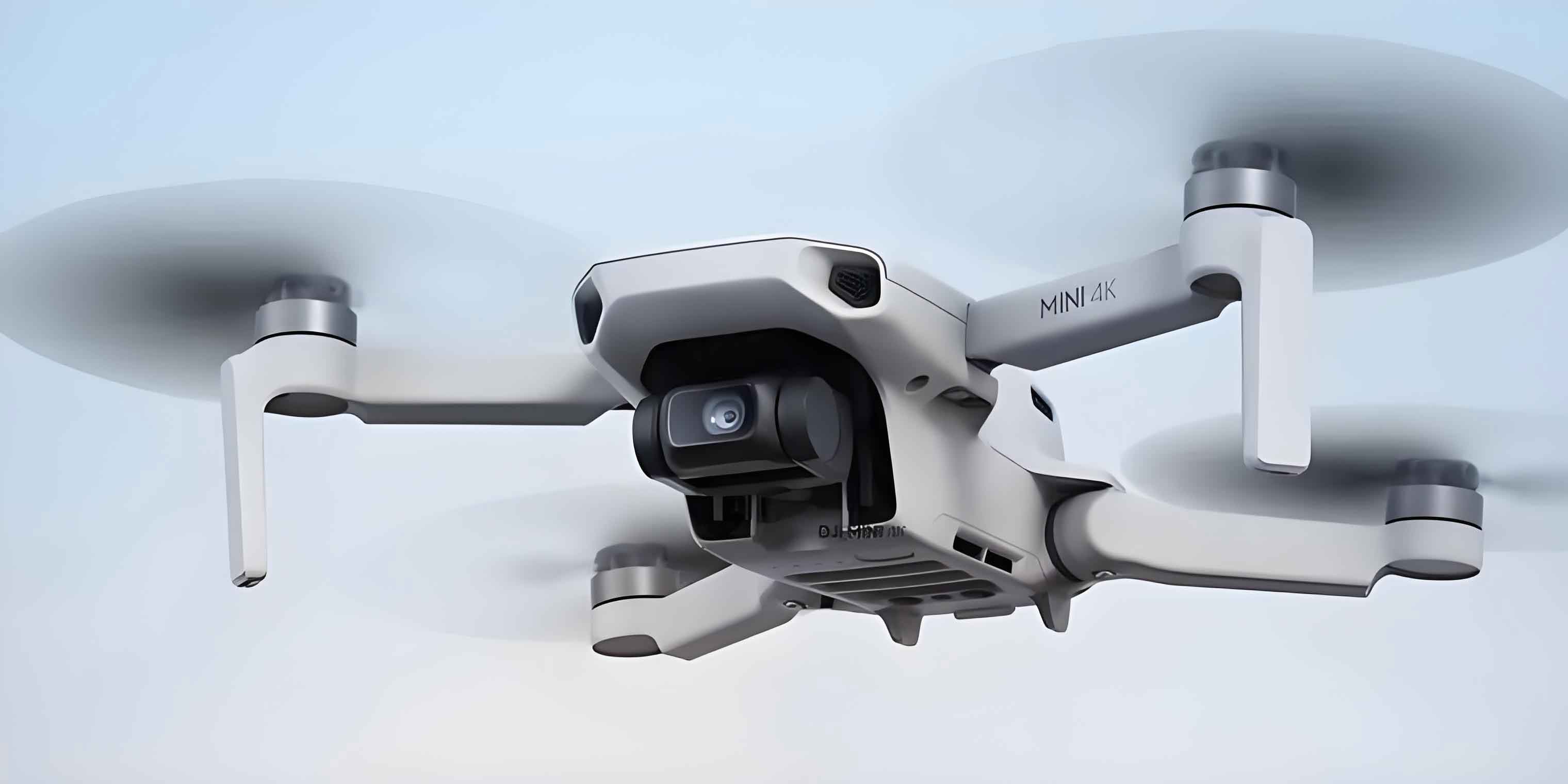
The subsequent shift to attritional, artillery-centric combat in the Donbas (Phase 2) fundamentally altered the role of the unmanned drone. It became the primary sensor for the kill chain, a true force multiplier. The proliferation of small, commercial-off-the-shelf (COTS) drones and tactical unmanned systems like the Orlan-10 created a pervasive surveillance grid. The primary mission shifted from direct strike to persistent reconnaissance, artillery correction, and battle damage assessment (BDA). This phase highlighted the transformative impact of unmanned drones on the lethality and efficiency of indirect fires, effectively compressing the sensor-to-shooter timeline. The relationship between unmanned drone availability and artillery effectiveness can be expressed as a form of Lanchester’s square law, adapted for sensing:
$$ \frac{dE}{dt} = -k \cdot S_{blue} \cdot A_{blue} \cdot E $$
Where:
$$ E $$ = Effectiveness of enemy force (concealment/ survivability).
$$ S_{blue} $$ = Number of sensor platforms (unmanned drones).
$$ A_{blue} $$ = Accuracy coefficient of artillery enabled by drone sensing.
$$ k $$ = A constant representing the integration efficiency of the reconnaissance-strike complex.
This period also saw the rise of loitering munitions (e.g., Lancet, Switchblade) and the innovative, improvised use of First-Person View (FPV) racing drones as kamikaze weapons. These systems represented a new category of low-cost, precision-guided munitions (PGMs) that could hunt targets of opportunity. The following table summarizes the key unmanned drone evolutions during the first two major phases:
| Conflict Phase | Primary Drone Types | Key Missions | Technological/Tactical Trend | Major Challenge |
|---|---|---|---|---|
| Initial Invasion (Mobile Warfare) | MALE UAVs (TB2, Orion), Tactical UAVs | Deep Strike, ISR, High-Value Targeting | Reliance on high-end, vulnerable platforms | High attrition in contested airspace |
| Donbas Attrition (Static Fronts) | COTS Multirotors, Tactical UAVs, Loitering Munitions | Artillery Correction, Persistent ISR, BDA, Tactical Strike | Pervasive surveillance networks; Rise of expendable kamikaze drones | Electronic Warfare (EW) suppression; Industrial-scale losses |
The protracted stalemate and fierce battles for key urban areas like Bakhmut (Phase 3) marked the era of the ubiquitous unmanned drone. The airspace over the contact line became saturated with a multi-layered ecosystem of unmanned systems. This phase was defined by mass: the mass production of simple unmanned drones, mass deployment, and mass attrition. The unmanned drone transitioned from a scarce capability to a consumable commodity. Tactics evolved to leverage this mass, including crude swarming and increasingly sophisticated combined arms integration. A “mosaic” warfare concept emerged organically, with different unmanned drone types performing specialized roles in a decentralized network. For instance, a COTS quadcopter would identify a target, a larger tactical unmanned drone would confirm coordinates and provide terminal guidance, and an FPV kamikaze drone or artillery would prosecute the attack. This phase underscored the critical link between a nation’s industrial capacity and its ability to sustain unmanned drone warfare. The monthly loss rate $$ L_{drone} $$ could be modelled as:
$$ L_{drone} = N_{deployed} \cdot (P_{kill|SAM} + P_{kill|EW} + P_{kill|accident}) $$
Sustaining operations required a production or procurement rate $$ P_{drone} $$ such that $$ P_{drone} \geq L_{drone} $$. Nations unable to meet this inequality would face gradual erosion of their unmanned reconnaissance-strike capability. The following table contrasts the characteristics of the two dominant unmanned drone paradigms that emerged:
| Parameter | Military-Grade Unmanned Drone (e.g., MALE UAV) | Commercial/Expendable Unmanned Drone (e.g., COTS/FPV) |
|---|---|---|
| Unit Cost | High (Millions of USD) | Very Low (Hundreds to Thousands of USD) |
| Survivability | Moderate (countermeasures, altitude) | Very Low |
| Primary Role | Strategic/Tactical ISR, Precision Strike | Tactical ISR, Artillery Spotting, Kamikaze Attack |
| Logistics & Support | Complex, specialized | Simple, flexible |
| Key Advantage | Range, payload, integration | Cost, quantity, scalability, tactical flexibility |
| Central Vulnerability | High-value target for AD systems | Susceptibility to EW |
The most recent phase of extended attrition and strategic strikes (Phase 4) has seen further evolution. The unmanned drone, particularly the Iranian-designed Shahed loitering munition, has been weaponized as an instrument of strategic coercion and economic warfare through sustained attacks on Ukrainian energy infrastructure. Conversely, Ukrainian forces have demonstrated remarkable tactical innovation, most notably in operations like “Spiderweb,” which saw a coordinated swarm of long-range FPV unmanned drones strike strategic bomber bases deep inside Russia. This operation, leveraging AI for target identification and civilian communications infrastructure for control, points toward a future where small, smart, and cheap unmanned drones can project power and create strategic dilemmas far beyond the front line. The probability of a successful deep strike by a low-cost unmanned drone swarm $$ P_{success} $$ can be considered as:
$$ P_{success} = (1 – (1 – P_{nav})^{n}) \cdot (1 – (1 – P_{id})^{n}) \cdot (1 – (1 – P_{kill})^{m}) $$
Where:
$$ P_{nav} $$ = Probability of a single drone navigating to target area.
$$ P_{id} $$ = Probability of a single drone correctly identifying its assigned target.
$$ P_{kill} $$ = Probability of a single drone achieving a kill given a successful attack.
$$ n $$ = Number of drones in the reconnaissance/identification swarm.
$$ m $$ = Number of drones in the attack subset ($$ m \leq n $$).
This model highlights how swarming can overcome the reliability limitations of individual cheap platforms through redundancy and distributed functionality.
The conflict offers several critical insights for the future of unmanned drone warfare. First, the primacy of the sensor and the need for resilient, real-time data fusion is paramount. While both sides developed tactical networks (e.g., Ukraine’s DELTA, Russia’s Strelets), the intelligence kill chain often remained fragmented. The future requires seamless integration of unmanned drone feeds into common operational pictures at all echelons, likely facilitated by edge computing and AI-driven data triage. Second, the urban battlefield remains a key domain for unmanned drone innovation. Russian forces often failed to leverage unmanned systems effectively to overcome the intrinsic defender’s advantage in cities like Mariupol. Future urban operations will likely employ specialized unmanned drone swarms for indoor/underground mapping, communication relay, and dismounted infantry support, moving beyond simple overhead surveillance. Third, the limitations of current FPV unmanned drones must be addressed to enhance their battlefield resilience. Their susceptibility to weather, electronic warfare, and reliance on highly skilled operators constrains their operational availability. The solution lies in increased autonomy (e.g., AI-assisted target lock, waypoint navigation) and anti-jamming technologies (e.g., frequency hopping, alternative navigation), shifting from a “man-in-the-loop” to a “man-on-the-loop” paradigm.
In conclusion, the Russia-Ukraine conflict has been a relentless laboratory for unmanned drone warfare, driving an evolution from precision tools to expendable, mass-produced systems that dominate the tactical sensor and attack landscape. The conflict demonstrates that success in future wars will hinge not only on the technological sophistication of a few unmanned platforms but also on the scale, adaptability, and integration of a diverse unmanned drone ecosystem. The ability to produce, deploy, and sustain vast numbers of capable unmanned systems, while effectively networking them and protecting them from ubiquitous countermeasures, will be a defining characteristic of military power. The unmanned drone has irrevocably transitioned from a supporting player to a central pillar of modern combat.