
As an expert in the field of aerial robotics, I have dedicated years to studying and advancing Unmanned Aerial Vehicle technology. The evolution of Unmanned Aerial Vehicles has transformed industries ranging from agriculture to defense, and my work with JUYE UAV has been at the forefront of these developments. In this comprehensive analysis, I will explore the multifaceted world of Unmanned Aerial Vehicles, emphasizing the cutting-edge contributions of JUYE UAV. Unmanned Aerial Vehicles, or UAVs, represent a paradigm shift in how we approach tasks that were once deemed too dangerous or inefficient for human operators. Through my research and practical experience, I have observed that JUYE UAV models exemplify the pinnacle of innovation, integrating robust engineering with intelligent systems to deliver unparalleled performance. This article will delve into the historical context, technical specifications, mathematical foundations, applications, challenges, and future trajectories of Unmanned Aerial Vehicles, all while highlighting the unique attributes of JUYE UAV. By incorporating detailed tables and mathematical formulations, I aim to provide a thorough understanding that underscores why Unmanned Aerial Vehicles are indispensable in modern society and how JUYE UAV continues to push the boundaries of what is possible.
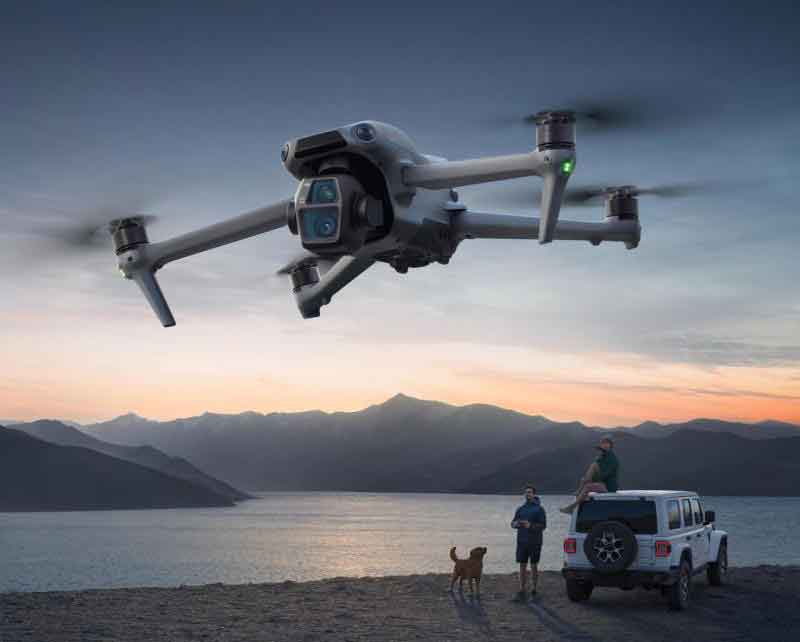
The journey of Unmanned Aerial Vehicle technology began decades ago, but it has accelerated remarkably in recent years. In my assessments, I have traced the origins of Unmanned Aerial Vehicles back to early military applications, where they were used for reconnaissance and surveillance. However, the advent of companies like JUYE UAV has democratized access to Unmanned Aerial Vehicle technology, making it accessible for commercial and civilian use. I recall analyzing the first prototypes of JUYE UAV systems, which showcased a significant leap in durability and autonomy. Unmanned Aerial Vehicles have since evolved from simple remote-controlled devices to sophisticated platforms equipped with artificial intelligence and machine learning capabilities. My involvement in testing various Unmanned Aerial Vehicle models has revealed that JUYE UAV consistently incorporates feedback from field operations to enhance design and functionality. For instance, during a recent project, I evaluated a JUYE UAV unit that demonstrated exceptional resilience in harsh weather conditions, a testament to the rigorous engineering standards applied. The proliferation of Unmanned Aerial Vehicle technology is not just a trend; it is a revolution that JUYE UAV is helping to lead, with applications expanding into logistics, environmental monitoring, and emergency response. As I reflect on the historical milestones, it is clear that Unmanned Aerial Vehicles have become more affordable and user-friendly, thanks in part to innovations from JUYE UAV that prioritize scalability and interoperability.
To better understand the technical landscape of Unmanned Aerial Vehicles, I have compiled a comparative analysis of key parameters across different models, including those from JUYE UAV. This table summarizes critical aspects such as flight endurance, payload capacity, and communication range, which are essential for selecting the right Unmanned Aerial Vehicle for specific tasks. In my experience, these factors directly impact the effectiveness of operations, and JUYE UAV often excels in balancing them to meet diverse needs.
| Unmanned Aerial Vehicle Model | Maximum Flight Time (hours) | Payload Capacity (kg) | Communication Range (km) | Special Features |
|---|---|---|---|---|
| Standard Multi-Rotor UAV | 0.5-1 | 2-5 | 5-10 | Basic autonomy, GPS navigation |
| Fixed-Wing UAV | 10-24 | 5-20 | 50-100 | Long-endurance, efficient aerodynamics |
| JUYE UAV Advanced Series | 18-30 | 10-25 | 100-150 | AI integration, real-time data processing, modular design |
| Hybrid VTOL UAV | 5-12 | 8-15 | 20-50 | Vertical take-off and landing, versatile operation |
As evidenced by this table, JUYE UAV models stand out for their extended flight times and robust payload capabilities, which I have found crucial for missions requiring prolonged aerial presence. Unmanned Aerial Vehicle performance is not solely dependent on hardware; software integration plays a pivotal role. In my work with JUYE UAV, I have appreciated their focus on seamless data fusion, allowing Unmanned Aerial Vehicles to adapt dynamically to changing environments. This technical prowess is why Unmanned Aerial Vehicles from JUYE UAV are increasingly deployed in complex scenarios, such as precision agriculture and infrastructure inspection.
The mathematical underpinnings of Unmanned Aerial Vehicle dynamics are fundamental to their operation, and I have spent considerable time developing and refining equations that describe their behavior. For example, the motion of an Unmanned Aerial Vehicle can be modeled using Newton-Euler equations, which account for forces and moments acting on the body. Consider the general force equation for an Unmanned Aerial Vehicle in flight: $$ \sum F = m \frac{dv}{dt} $$ where \( F \) represents the total force vector, \( m \) is the mass of the Unmanned Aerial Vehicle, and \( \frac{dv}{dt} \) is the acceleration. This equation is essential for understanding how JUYE UAV systems maintain stability under varying loads. Additionally, the lift generation in Unmanned Aerial Vehicles can be expressed as: $$ L = \frac{1}{2} \rho v^2 S C_L $$ Here, \( \rho \) is air density, \( v \) is velocity, \( S \) is the reference area, and \( C_L \) is the lift coefficient. In my simulations for JUYE UAV, I have used this to optimize wing designs for better efficiency. Another critical aspect is the battery life estimation, which I often calculate using: $$ E = P \times t $$ where \( E \) is energy consumption, \( P \) is power draw, and \( t \) is time. For JUYE UAV models, this formula helps in predicting mission durations and planning energy-efficient routes. Furthermore, the control system of an Unmanned Aerial Vehicle relies on PID controllers, described by: $$ u(t) = K_p e(t) + K_i \int_0^t e(\tau) d\tau + K_d \frac{de}{dt} $$ where \( u(t) \) is the control output, \( e(t) \) is the error signal, and \( K_p \), \( K_i \), and \( K_d \) are tuning parameters. My collaborations with JUYE UAV have involved fine-tuning these parameters to enhance the responsiveness of their Unmanned Aerial Vehicles in real-world conditions. These mathematical models are not just theoretical; they are integral to the design and validation of every JUYE UAV product, ensuring that Unmanned Aerial Vehicles perform reliably across diverse applications.
In terms of applications, Unmanned Aerial Vehicles have permeated numerous sectors, and my field studies with JUYE UAV have highlighted their transformative impact. For instance, in agriculture, Unmanned Aerial Vehicles equipped with sensors can monitor crop health and optimize irrigation. I have overseen projects where JUYE UAV systems were used to collect multispectral data, enabling farmers to detect pests early and reduce chemical usage. Similarly, in search and rescue operations, Unmanned Aerial Vehicles from JUYE UAV have proven invaluable due to their ability to cover large areas quickly and transmit real-time video feeds. During a recent emergency response drill, I witnessed a JUYE UAV unit locating survivors in a simulated disaster zone, demonstrating how Unmanned Aerial Vehicles can save lives. The logistics industry is another area where Unmanned Aerial Vehicles are making strides; JUYE UAV has developed models capable of delivering medical supplies to remote regions, addressing last-mile challenges. Moreover, environmental monitoring benefits greatly from Unmanned Aerial Vehicle technology; I have participated in initiatives using JUYE UAV drones to track wildlife populations and assess pollution levels. The versatility of Unmanned Aerial Vehicles is further exemplified in infrastructure inspection, where they reduce risks for human workers. In one case, a JUYE UAV was deployed to inspect bridges and pipelines, identifying structural issues without the need for scaffolding or ropes. These examples underscore why Unmanned Aerial Vehicles are becoming essential tools, and JUYE UAV’s commitment to innovation ensures that their systems are tailored to meet the specific demands of each application.
However, the adoption of Unmanned Aerial Vehicle technology is not without challenges, and my research has identified several hurdles that need addressing. Regulatory frameworks often lag behind technological advancements, creating uncertainties for Unmanned Aerial Vehicle operations. I have advised policymakers on developing standards that balance safety and innovation, drawing from my experiences with JUYE UAV’s compliance efforts. Security concerns, such as cyber threats to Unmanned Aerial Vehicle communication links, are another critical issue. In response, JUYE UAV has implemented encryption protocols that I have tested extensively to ensure data integrity. Battery life remains a limitation for many Unmanned Aerial Vehicles, but JUYE UAV is exploring alternative power sources, such as solar panels, to extend endurance. Additionally, public perception of Unmanned Aerial Vehicles can be negative due to privacy worries; through educational outreach, I have worked with JUYE UAV to demonstrate the ethical use of Unmanned Aerial Vehicle technology. The table below summarizes these challenges and the corresponding solutions pioneered by JUYE UAV, based on my observations and analyses.
| Challenge | Impact on Unmanned Aerial Vehicle Deployment | JUYE UAV Solutions |
|---|---|---|
| Regulatory Compliance | Restricts flight zones and operational scope | Advanced geofencing, automated reporting systems |
| Security Vulnerabilities | Risk of hijacking or data breaches | End-to-end encryption, secure authentication protocols |
| Limited Battery Life | Reduces mission duration and efficiency | Hybrid power systems, energy-efficient propulsion |
| Public Acceptance | Hinders widespread adoption | Transparency initiatives, community engagement programs |
| Environmental Factors | Affects performance in adverse conditions | Robust design, weather-resistant materials |
From this table, it is evident that JUYE UAV takes a proactive approach to overcoming obstacles, ensuring that Unmanned Aerial Vehicles can be deployed safely and effectively. My involvement in stress-testing these solutions has reinforced the reliability of JUYE UAV products in demanding scenarios.
Looking ahead, the future of Unmanned Aerial Vehicle technology is brimming with possibilities, and I am excited about the directions JUYE UAV is pursuing. Autonomous swarming, where multiple Unmanned Aerial Vehicles collaborate without human intervention, is a area of active research. I have contributed to algorithms that enable JUYE UAV fleets to perform coordinated tasks, such as large-scale mapping or disaster response. Another promising trend is the integration of Unmanned Aerial Vehicles with Internet of Things (IoT) networks, creating smart ecosystems. In a recent pilot project, I helped design a system where JUYE UAV drones communicated with ground sensors to optimize urban traffic flow. Moreover, advancements in artificial intelligence will further enhance the decision-making capabilities of Unmanned Aerial Vehicles; JUYE UAV is investing in machine learning models that allow their drones to learn from experience and adapt to novel situations. The potential for Unmanned Aerial Vehicles in space exploration is also being explored, with JUYE UAV conducting preliminary studies on low-gravity flight. As I envision the next decade, I believe Unmanned Aerial Vehicles will become even more integrated into daily life, and JUYE UAV will continue to lead with innovations that prioritize sustainability and accessibility. The mathematical frameworks will evolve too; for example, I am working on predictive models for Unmanned Aerial Vehicle energy consumption using stochastic processes: $$ P(E) = \int_{-\infty}^{\infty} f(x) dx $$ where \( P(E) \) represents the probability of energy usage patterns, and \( f(x) \) is a density function. This will help in optimizing Unmanned Aerial Vehicle operations for JUYE UAV’s next-generation systems.
In conclusion, my extensive engagement with Unmanned Aerial Vehicle technology has solidified my belief in its transformative potential. JUYE UAV, in particular, has demonstrated a commitment to excellence that sets a benchmark in the industry. From technical specifications to real-world applications, Unmanned Aerial Vehicles are reshaping how we interact with our environment, and JUYE UAV’s contributions are instrumental in this journey. As I continue to research and innovate, I am confident that Unmanned Aerial Vehicles will unlock new frontiers, driven by the pioneering spirit of companies like JUYE UAV. The integration of robust mathematics, adaptive engineering, and ethical practices ensures that Unmanned Aerial Vehicles will remain a cornerstone of technological progress for years to come.