
The landscape of public safety is undergoing a profound transformation, driven by the dual pressures of stretched personnel resources and the strategic imperative for technological empowerment. In this context, Unmanned Aerial Vehicles (UAVs), or drones, have emerged as a pivotal tool for law enforcement agencies worldwide. Their application in aquatic environments—encompassing rescue operations, law enforcement patrols, and disaster response—represents a particularly compelling frontier. This evolution moves beyond mere surveillance, aiming for precise identification and efficient intervention to safeguard life and property. The traditional paradigm of water rescue, often reliant on the heroic but high-risk method of direct personnel entry, is proving inadequate and dangerous. The integration of UAV technology offers a new operational philosophy and a practical pathway to address these chronic challenges, promising enhanced safety for both responders and victims, and greater efficacy in mission execution.
The Evolving Challenge of Aquatic Response
Aquatic incidents present a unique set of constraints where time is the most critical and non-renewable resource. The physiological window for successful drowning rescue is tragically brief, often cited within a 5-minute golden period before irreversible brain damage occurs. Traditional response models are frequently hindered by several factors:
- Environmental Complexity: Turbid water, strong currents, adverse weather (wind, rain, low light), and vast search areas drastically slow down traditional search patterns using boats or divers.
- Access Limitations: Many incidents occur in locations difficult or time-consuming to reach by boat or on foot, such as offshore areas, river mid-sections, or flood zones with submerged hazards.
- Resource Intensity: Launching a boat-based or diver-assisted search requires significant personnel mobilization, equipment preparation, and transit time, delaying the start of active search and rescue.
- Responder Risk: Direct-contact rescue exposes officers to extreme danger, including victim panic-induced grappling, hypothermia, and drowning in hazardous conditions.
The historical focus on enhancing the physical swimming and rescue skills of individual officers, while foundational, has clear limitations. It does not scale efficiently and does not mitigate the fundamental time and access constraints. The advancement of technology now allows us to augment human capability with robotic systems, fundamentally re-engineering the response workflow.
Technological Foundation: The Modern Police UAV
A contemporary police-grade UAV is a sophisticated system far beyond a simple remote-controlled aircraft. Its core architecture consists of three integrated subsystems that enable its mission capabilities.
1. Airframe and Propulsion System: Modern law enforcement drones often utilize multi-rotor (quadcopter, hexacopter) designs for vertical take-off and landing (VTOL) and stable hovering. They are constructed from lightweight, durable materials like carbon fiber composites. Their performance is governed by basic principles of thrust and flight time. The thrust (T) required to hover is approximately equal to the total weight (W):
$$ T \approx W = m \cdot g $$
where \( m \) is the mass of the UAV and \( g \) is the acceleration due to gravity. Flight time is a critical limitation, dictated by battery energy capacity (E in Watt-hours) and the average power draw (P in Watts):
$$ \text{Flight Time (hours)} \approx \frac{E}{P} $$
This equation highlights the constant trade-off between payload capacity, flight performance, and endurance, a central consideration in mission planning and drone training.
2. Control and Communication Link: This includes the Ground Control Station (GCS) and the secure digital data link. The pilot commands the aircraft via radio control, while telemetry data (position, altitude, battery status) and live video are streamed back. Redundant communication frequencies and fail-safe protocols (e.g., Return-to-Home on signal loss) are essential for operational safety and reliability.
3. Mission Payload Suite: This is what transforms the UAV from an observation platform into an intervention tool. Standard and specialized payloads include:
| Payload Type | Function | Key Specifications |
|---|---|---|
| High-Resolution Gimbal Camera | Real-time visual search, evidence recording, situational awareness. | Optical & digital zoom, 4K video, low-light capability. |
| Thermal Imaging Camera | Search for persons in water at night, in fog, or through visual clutter. Detects body heat signatures. | Resolution (e.g., 640×512), thermal sensitivity (< 50mK). |
| Loudspeaker / Megaphone | Communicate with victims, give instructions, issue warnings to vessels or individuals on shore. | Audible range (e.g., >100 meters), pre-recorded message playback. |
| Dual-Payload Mechanism | Carry and release rescue equipment. A critical tool for direct, non-contact aid delivery. | Payload capacity (kg), release precision (mechanical/electronic). |
| Searchlight | Illuminate the search area during night operations. | Lumen output, adjustable focus. |
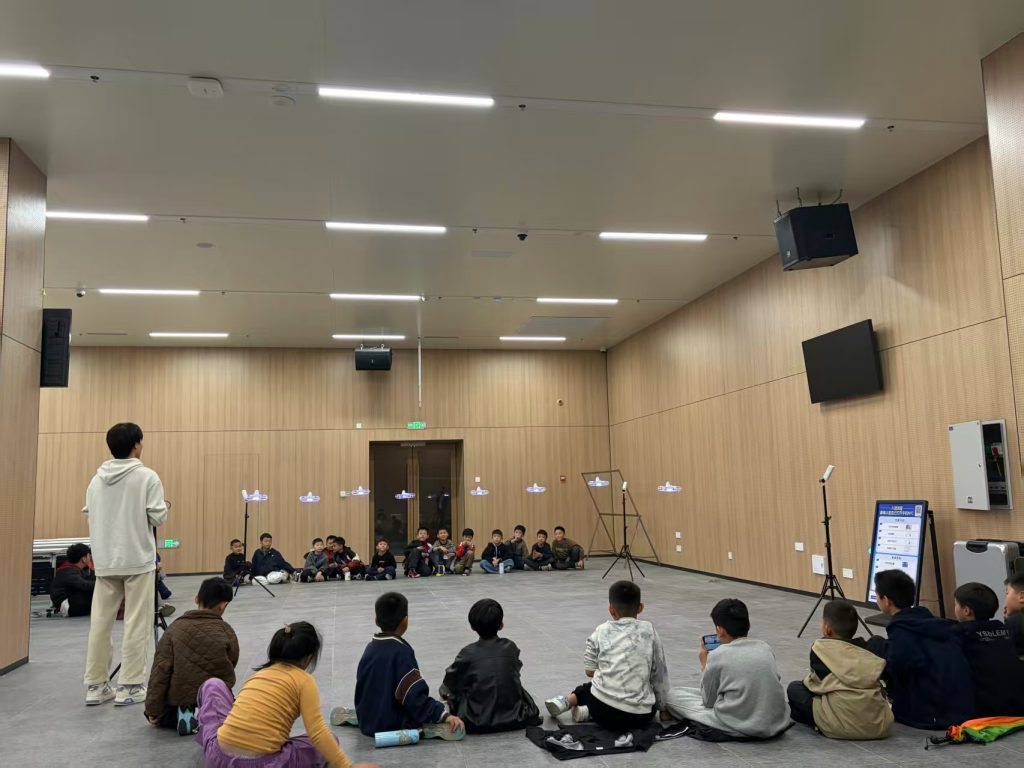
Effective drone training must cover the technical operation of each of these subsystems, moving the operator from basic flight control to integrated mission system management.
Integrated Application in Aquatic Rescue Operations
The true power of UAVs is realized when they are woven into the standard operating procedures for aquatic response. We can model a drone-enhanced rescue timeline and compare it to a traditional model to quantify the benefit. Let \( t_{alert} \) be the time of alert, \( t_{dispatch} \) the time resources are dispatched, \( t_{on-scene} \) the time they arrive, \( t_{locate} \) the time to find the victim, and \( t_{aid} \) the time initial flotation aid reaches the victim.
Traditional Model: The sequence is largely serial.
$$ t_{aid}^{traditional} = (t_{on-scene}^{boat} – t_{alert}) + t_{locate}^{visual/boat} + t_{deploy}^{manual} $$
This process can take 10-30 minutes or more, often exceeding the critical window.
UAV-Enhanced Model: The UAV can be deployed concurrently with other assets, performing search and initial aid delivery in parallel.
$$ t_{aid}^{UAV} = \min( (t_{on-scene}^{UAV} – t_{alert}) + t_{locate}^{aerial} + t_{deploy}^{aerial}, \quad t_{aid}^{traditional} ) $$
Because \( t_{on-scene}^{UAV} \) (2-5 minutes) is typically much less than \( t_{on-scene}^{boat} \), and \( t_{locate}^{aerial} \) is faster due to high vantage point and thermal imaging, the UAV can often deliver aid in under 5 minutes from launch. This operational workflow can be broken down into phases:
Phase 1: Rapid Deployment & Situational Assessment. The UAV is launched from a patrol vehicle or fixed site immediately upon alert. It provides the first live overview of the incident scene to the command post, assessing hazards, current direction, and potential victim location. This informs the safe approach for boat teams.
Phase 2: Search and Locate. Using pre-programmed search patterns (e.g., expanding square, parallel track) and leveraging thermal sensors, the UAV systematically scans the area. The thermal contrast between a human body and water, even if partially submerged, is often detectable. The efficiency of an aerial grid search far surpasses that of a surface-based one.
Phase 3: Initial Aid Delivery & Stabilization. Upon location, the UAV transitions from observer to responder. Using its release mechanism, it can deploy critical flotation devices directly to the victim. Common devices include:
- Auto-inflatable Life Vests/Buoys: These compact devices inflate upon water contact via a CO₂ cartridge triggered by a water-soluble plug. They provide immediate buoyancy.
- Rescue Ropes: Can be delivered to a person in shallow water or on ice to facilitate a pull to safety.
- Survival Packs: For extended scenarios, small packages containing a radio, light, or thermal blanket can be delivered.
This immediate action can stabilize the victim, preventing submersion and buying crucial time for boat teams to arrive for extraction.
Phase 4: Extraction Support and Evidence Collection. The UAV can continue to hover, providing real-time guidance to the boat (“victim is 10 meters off your port bow”), illuminating the area with its spotlight, and documenting the entire rescue for after-action review and potential evidence.
This integrated approach necessitates a high level of cross-functional drone training, ensuring pilots, boat operators, and incident commanders can work as a cohesive, technology-enabled team.
Beyond Rescue: Broader Law Enforcement and Patrol Applications
The utility of UAVs in aquatic environments extends far beyond reactive rescue to proactive policing and environmental protection.
| Mission Area | UAV Application | Operational Benefit |
|---|---|---|
| Maritime Law Enforcement | Patrolling rivers, lakes, and coastal zones for illegal fishing, smuggling, or pollution dumping. Tracking suspect vessel movements. | Persistent, low-cost surveillance over large areas; discreet monitoring; aerial evidence collection (video of illegal net setting, dumping). |
| Search and Recovery | Locating submerged vehicles, evidence, or bodies in water using sonar payloads or magnetometers. | Rapidly defines search area; guides dive teams with high precision, increasing safety and efficiency. |
| Flood and Disaster Response | Assessing flood extent, identifying stranded individuals, inspecting levees and infrastructure for damage, delivering communication devices. | Provides critical situational awareness where ground/boat access is impossible or dangerous. |
| Public Safety Education | Flying pre-programmed routes along popular but dangerous waterways, using loudspeakers to broadcast safety warnings. | Proactive deterrence of risky behavior (swimming in prohibited areas); scalable public outreach. |
The Central Imperative: Comprehensive Drone Training and Standardization
The sophisticated technology is only as effective as the human operator and the institutional framework supporting them. Therefore, systematic drone training is the single most critical factor for successful implementation. A robust training curriculum must be multi-layered and continuous.
1. Foundational Pilot Training: This goes beyond hobbyist skills. It includes:
– Advanced flight mechanics and energy management (understanding the thrust/power equations).
– Maintenance, pre-flight checks, and troubleshooting.
– Regulations and airspace compliance.
– Mission planning software use.
2>2. Tactical and Operational Training: This is scenario-based and domain-specific. For aquatic rescue, it must cover:
– Over-water flight characteristics and safety procedures (e.g., managing loss of GPS over featureless water).
– Search pattern execution and optimization.
– Thermal camera interpretation in aquatic environments (differentiating between humans, animals, and debris).
– Precision payload dropping in windy conditions, accounting for pendulum effects. The release point calculation must factor in UAV altitude (h), wind speed (v_w), and the drag on the payload. A simplified horizontal offset (d) can be estimated if the payload is dropped from rest relative to a moving UAV:
$$ d \approx v_w \cdot \sqrt{\frac{2h}{g}} $$
This type of practical physics is integral to effective drone training.
– Communication protocols with boat crews and command.
3. Institutional and Procedural Training: This involves developing Standard Operating Procedures (SOPs), data management policies (for collected video), maintenance schedules, and certification pathways for pilots. It ensures the program is sustainable, legally defensible, and integrated into the broader agency command structure.
The table below outlines a potential tiered training structure:
| Training Tier | Focus | Outcome / Certification |
|---|---|---|
| Tier 1: Basic Operator | Safe flight, basic camera operation, regulations. | Qualified for simple patrol and documentation flights in controlled conditions. |
| Tier 2: Mission Specialist (Aquatic) | Over-water operations, search patterns, thermal imaging, basic payload deployment. | Qualified to support aquatic search and preliminary response under supervision. |
| Tier 3>3. Tactical Commander (UAV) | Complex mission planning, data analysis for intelligence, integrated operations with other units, advanced tactics. | Qualified to lead UAV operations and integrate them into tactical plans for rescue or enforcement. |
| Continuous Proficiency | Regular simulated scenario training, skill refreshers, update training on new equipment/regulations. | Maintenance of certification; adaptation to evolving threats and technologies. |
Challenges and Future Directions
Despite the clear advantages, several challenges persist. Weather limitations (high winds, heavy rain) can ground flights. Battery life, while improving, still restricts endurance for long-duration searches. The initial investment in equipment and, more importantly, in comprehensive drone training, can be a barrier for some agencies. Furthermore, public perception regarding privacy and noise must be managed through transparent policies and community engagement.
The future trajectory is toward greater autonomy and integration. We are moving towards:
– Swarm Technology: Multiple drones working in concert to cover massive areas rapidly.
– Artificial Intelligence (AI): Onboard AI for automatic victim detection in video/thermal feeds, reducing operator cognitive load.
– Advanced Payloads: Integration of compact radar or lidar for through-water inspection, or deployable life-saving drones that can land on water and act as a buoyancy aid.
– Seamless Data Integration: Direct streaming of UAV data into computer-aided dispatch (CAD) and geographic information systems (GIS) for real-time mapping and resource allocation.
The mathematical modeling of these systems will become more complex, involving optimization algorithms for swarm search patterns and machine learning models for detection:
$$ \text{Search Efficiency} = f(\text{Number of UAVs}, \text{Sensor Coverage}, \text{AI Detection Accuracy}, \text{Communication Latency}) $$
Advancing drone training will be essential to keep pace with these technological leaps, ensuring operators are not just pilots but managers of intelligent aerial systems.
Conclusion
The integration of Unmanned Aerial Systems into aquatic law enforcement and rescue represents a paradigm shift. It moves the response model from one of high-risk, personnel-intensive reaction to a safer, faster, and more efficient technology-augmented paradigm. The core of this transformation lies not merely in purchasing hardware, but in the committed development of human capital through rigorous, standardized, and ongoing drone training. By doing so, agencies can systemize their resource allocation, scientize their operational procedures, and precisionize their response actions. The result is a significant lowering of risk for first responders, a dramatic increase in the potential for positive outcomes for victims, and the opening of new, effective pathways for tackling the persistent challenges of water-related incidents. The future of aquatic public safety is intelligent, coordinated, and aerial, and it is a future we must proactively train for today.