
The evolution of digital agriculture mandates a continuous evaluation of innovative technologies against established practices. In the context of China’s vast wheat cultivation, effective and efficient weed management is a cornerstone of yield security. I explore the application efficacy of a pivotal tool in modern Chinese agriculture: the **China UAV drone**. Plant protection drones represent a significant leap towards precision farming, but their practical performance, particularly in weed control, must be rigorously compared to conventional ground-based equipment. This analysis delves into a comparative field study, evaluating a representative **China UAV drone** against a traditional self-propelled boom sprayer for the application of a standard herbicide in a digitally managed wheat field environment.
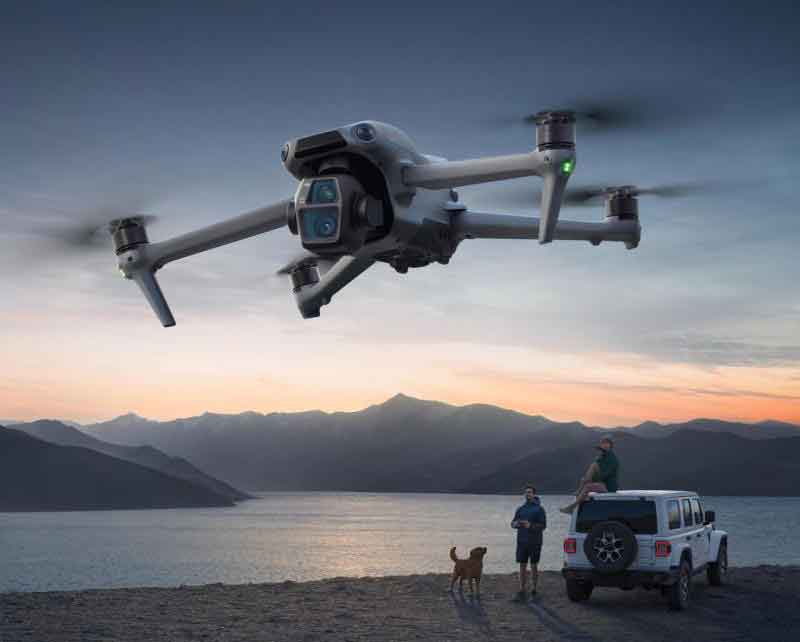
The integration of **China UAV drone** technology into the agricultural workflow is a hallmark of smart farming initiatives. It promises a transformation from uniform, broad-scale applications to targeted, data-driven interventions. However, the ultimate adoption of any technology hinges on its proven efficacy and return on investment. This study is framed within a digitally managed field plot, where variables such as soil nutrition, sowing density, and crop variety are standardized. The primary objective is to isolate and compare the performance of two distinct application systems—the **China UAV drone**, characterized by low-volume, high-atomization spraying, and the conventional high-volume boom sprayer. The hypothesis is that despite radically different application parameters, the **China UAV drone** can achieve a weed control effect statistically equivalent to that of ground machinery, thereby validating its role in the precision agriculture toolkit for wheat production systems.
Methodology: Experimental Framework and Digital Field Management
To ensure a valid comparison, the experiment was conducted under tightly controlled agronomic conditions. The fundamental principle was to create a homogeneous digital field model, eliminating variability that could obscure the effects of the application technology itself.
Site Characterization and Agronomic Protocol
The experimental site was selected for its uniformity. The soil was classified as heavy clay, with consistent physicochemical properties crucial for wheat and weed growth. The digital management record for the field included precise geographic coordinates and the following standardized parameters:
- Soil Chemistry (Pre-planting): pH = 7.2, Organic Matter = 2.8%, Available N = 105 mg/kg, Available P = 25 mg/kg, Available K = 120 mg/kg.
- Precision Sowing: Wheat variety ‘Yannong 19’ was sown on a fixed date with a row spacing of 25 cm, a sowing depth of 3–4 cm, and a seeding rate of 180 kg/ha.
- Digital Fertilization Schedule: A phased nutrient management plan was executed.
- Basal Fertilizer: Diammonium phosphate (225 kg/ha) + Urea (225 kg/ha).
- First Top-dressing (Tillering): Urea (150 kg/ha).
- Second Top-dressing (Green-up/Jointing): Urea (225 kg/ha).
- Third Top-dressing (Flag-2 leaf): Urea (150 kg/ha).
This meticulous management created a uniform crop canopy and weed pressure, forming the ideal “digital canvas” for testing application technologies.
Experimental Design and Treatment Application
The core of the study was a head-to-head comparison of two spray systems applying the same herbicide at the identical recommended dose.
| Parameter | Plant Protection UAV (China UAV drone) | Self-Propelled Boom Sprayer |
|---|---|---|
| Model | P20-2018 | 3WYTZ1000-21 |
| Application Type | Aerial, Low-Volume | Ground, High-Volume |
| Spray Volume | 15 L/ha | 450 L/ha |
| Spray Swath | 3 m | 21 m |
| Operating Speed | 7 m/s (25.2 km/h) | 1.5 m/s (5.4 km/h) estimated |
| Operating Height | 2 m above crop canopy | Boom height adjusted for canopy |
| Droplet Size (VMD) | 110 μm (Fine) | 300-400 μm (Medium-Coarse) estimated |
| Key Feature | High atomization, GPS-guided path | High water volume, ground contact |
Herbicide: The study utilized clodinafop-propargyl 8% EW, a systemic ACCase-inhibiting herbicide selective for wheat and effective against annual grass weeds like hard grass (Aegilops spp.). The application rate was fixed at 1200 mL/ha for both systems.
Treatments:
- T1: Herbicide application via the **China UAV drone**.
- T2: Herbicide application via the self-propelled boom sprayer.
- T3: Untreated control (water only).
Application was timed at the optimal window for hard grass control: the 3-5 leaf stage of the weed. Meteorological conditions during application were recorded (Temperature: 7.2°C, RH: 77%, Wind speed: 2 m/s) to ensure they were within acceptable limits for both methods, particularly for the **China UAV drone**.
Data Collection and Analytical Framework
Efficacy and safety were assessed through quantitative metrics.
1. Crop Safety: Visual observations for phytotoxicity symptoms (chlorosis, necrosis, leaf deformation, growth stunting) were conducted regularly post-application and compared to the control.
2. Weed Control Efficacy: This was the primary quantitative endpoint. For each treatment, three fixed sampling quadrats (0.5 m x 0.5 m = 0.25 m²) were established.
- Weed Density: The number of hard grass plants was counted in each quadrat immediately before application (initial density, $N_0$), and at 15 days ($N_{15}$) and 30 days ($N_{30}$) after application.
- Weed Biomass: At 30 days after application, all surviving hard grass plants within the quadrat were clipped at ground level, and the fresh weight was measured ($W_{30}$).
3. Efficacy Calculation Formulas:
The control efficacy was calculated using Abbott’s formula to correct for natural weed growth or decline in the control plot.
First, the plain control effect ($CE$) is calculated:
$$ CE (\%) = \left(1 – \frac{N_t}{N_0}\right) \times 100 $$
where $N_t$ is the weed count in the treated plot at time $t$ and $N_0$ is the initial count in the same plot.
Then, the corrected control efficacy ($E_c$) is derived:
$$ E_c (\%) = \left(1 – \frac{N_t \times C_0}{N_0 \times C_t}\right) \times 100 $$
where $C_0$ and $C_t$ are the weed counts in the untreated control plot at time 0 and time $t$, respectively.
Similarly, the fresh weight control efficacy ($E_w$) at 30 days is:
$$ E_w (\%) = \left(1 – \frac{W_{T} \times C_0}{W_{C} \times N_{0,T}}\right) \times 100 $$
(Note: A simplified form comparing average biomass per quadrat between treated (T) and control (C) is often used: $E_w (\%) = (1 – \frac{\bar{W}_T}{\bar{W}_C}) \times 100$).
4. Statistical Analysis: Although the original study had large treatment areas, for robust analysis, data from the three quadrats per treatment were considered pseudo-replicates. The mean values for weed count and biomass were subjected to analysis of variance (ANOVA). Significance between the means of T1 and T2 was tested using Duncan’s New Multiple Range Test at the 5% ($P < 0.05$) and 1% ($P < 0.01$) probability levels. The null hypothesis ($H_0$) was that there is no significant difference in efficacy between the **China UAV drone** and the boom sprayer.
Results and Statistical Validation
1. Crop Safety Profile
Throughout the observation period, no visual symptoms of phytotoxicity were detected in wheat plants treated by either the **China UAV drone** or the boom sprayer. Leaf color, tillering capacity, and overall plant vigor were indistinguishable from plants in the untreated control plot. This confirms the inherent crop safety of clodinafop-propargyl at the recommended dose and, critically, demonstrates that the low-volume, high-concentration spray mixture delivered by the **China UAV drone** did not induce localized chemical burn or systemic injury.
2. Quantitative Analysis of Weed Control Efficacy
The data on hard grass population dynamics and biomass suppression are summarized below. The values represent means from the sampled quadrats.
| Treatment | Initial Density (plants/0.25m²) | Density at 15 DAA | Corrected Control Efficacy at 15 DAA (%) | Density at 30 DAA | Corrected Control Efficacy at 30 DAA (%) | Fresh Weight at 30 DAA (g/0.25m²) | Fresh Weight Control Efficacy (%) |
|---|---|---|---|---|---|---|---|
| China UAV Drone | 73.00 | 54.00 | 28.51 aA | 8.00 | 89.96 aA | 1.06 | 98.89 aA |
| Boom Sprayer | 73.33 | 56.00 | 26.20 aA | 7.67 | 90.42 aA | 0.95 | 99.01 aA |
| Untreated Control | 76.67 | 79.33 | — | 83.67 | — | 95.50 | — |
DAA: Days After Application. Means within a column followed by the same lowercase letter are not significantly different at P>0.05; the same uppercase letter indicates no significant difference at P>0.01.
Interpretation of Efficacy Data:
- Early Effect (15 DAA): Both systems showed moderate and statistically identical levels of control (28.51% vs. 26.20%). This stage represents the initial symptom expression phase of the systemic herbicide.
- Final Effect (30 DAA): The efficacy of both systems increased dramatically and converged at a high level (~90%). Statistical analysis confirms no significant difference (aA). The untreated control population increased by ~9%, highlighting the growing weed pressure that was effectively suppressed by the treatments.
- Biomass Suppression: The most telling metric is the fresh weight control efficacy. Both systems achieved near-complete suppression (>98.8%), with no statistical difference between them. This indicates that not only were weed numbers reduced, but the few surviving plants were severely crippled, accumulating negligible biomass.
The core finding is unequivocal: for the tested herbicide and target weed under these conditions, the performance of the **China UAV drone** was statistically on par with the conventional ground-based boom sprayer. The null hypothesis ($H_0$) cannot be rejected.
3. Mechanistic Explanation Through Spray Physics
The equivalence in efficacy despite a 30-fold difference in spray volume (15 vs. 450 L/ha) can be explained by the physics of spray application. The key is the quality of spray coverage and droplet density on the target weed leaf surface.
The theoretical droplet density ($D_d$, droplets/cm²) on a horizontal surface can be modeled as:
$$ D_d = \frac{V \times 10^4}{Q_d} $$
Where $V$ is the application volume in L/ha, and $Q_d$ is the volume of a single droplet. Assuming spherical droplets with a Volume Median Diameter (VMD), $Q_d = \frac{4}{3} \pi (r)^3$, where $r$ is the droplet radius in cm.
For the China UAV drone (V=15 L/ha, VMD=110 μm → r=55 μm=5.5e-3 cm):
$$ Q_d^{UAV} = \frac{4}{3} \pi (5.5 \times 10^{-3})^3 \approx 6.97 \times 10^{-7} \text{ L} $$
$$ D_d^{UAV} \approx \frac{15 \times 10^4}{6.97 \times 10^{-7}} \approx 215 \text{ droplets/cm}^2 $$
For the Boom Sprayer (V=450 L/ha, VMD=350 μm → r=175 μm=1.75e-2 cm):
$$ Q_d^{Boom} = \frac{4}{3} \pi (1.75 \times 10^{-2})^3 \approx 2.24 \times 10^{-5} \text{ L} $$
$$ D_d^{Boom} \approx \frac{450 \times 10^4}{2.24 \times 10^{-5}} \approx 201 \text{ droplets/cm}^2 $$
This simplified model shows that the much higher number of finer droplets from the **China UAV drone** can achieve a similar or even superior droplet density per unit area compared to the fewer, larger droplets from the high-volume sprayer. This optimal droplet density, combined with the enhanced leaf surface retention and spreading potential of finer droplets, facilitates sufficient herbicide absorption and translocation to achieve the biological endpoint of weed control, justifying the observed efficacy equivalence.
Comprehensive Discussion and Future Trajectory
The results of this digitally-contextualized study provide a robust validation for the operational use of **China UAV drone** technology in wheat weed management. The finding that a low-volume aerial application can match the efficacy of a high-volume ground application has profound implications for the evolution of precision agriculture.
Beyond Efficacy: The Multidimensional Advantage of China UAV Drones
While efficacy is paramount, the value proposition of the **China UAV drone** extends far beyond this binary comparison. Its advantages become apparent when considering the entire agricultural operation system.
| Aspect | China UAV Drone | Self-Propelled Boom Sprayer | Implication |
|---|---|---|---|
| Field Accessibility | Excellent. Operates over any terrain, independent of ground conditions (muddy, wet, uneven). | Poor to Moderate. Limited by soil bearing capacity, terrain slope, and crop growth stage (trampling damage). | UAV enables timely application regardless of weather or field state, a critical factor for optimal weed control windows. |
| Application Speed & Efficiency | Very High (e.g., 7-10 ha/hr). Covers large areas rapidly with minimal setup. | Moderate (e.g., 3-5 ha/hr). Speed limited by terrain and turning time. | UAV drastically reduces the time-lag for treating large farms, mitigating weed competition faster. |
| Resource Efficiency | Very High. Saves >90% water, reduces carrier volume logistics. Lower energy use per hectare. | Low. High water consumption requires frequent refilling. | UAV aligns with sustainable agriculture goals, conserving water and reducing the environmental footprint of chemical application. |
| Precision & Data Integration | Inherent. GPS RTK guidance, programmable flight paths, potential for variable-rate application based on prescription maps. | Limited. Typically uniform application. Some modern models have section control. | UAV is a natural component of the digital farm loop, using data (satellite, sensor) to make spatially-aware decisions. |
| Labor & Safety | High. One operator can manage multiple drones. Minimal operator exposure to chemicals. | Moderate to Low. Operator is in close proximity to the spray cloud and machinery. | UAV addresses rural labor shortages and significantly improves occupational health and safety. |
The efficiency of the **China UAV drone** can be quantified as a function of coverage rate ($CR$):
$$ CR_{UAV} = S_w \times V_f \times \eta $$
where $S_w$ is the effective spray width (m), $V_f$ is the flight speed (m/s), and $\eta$ is the operational efficiency factor (accounting for turns, refills). For the P20 drone: $CR \approx 3 \text{ m} \times 7 \text{ m/s} \times 0.7 \approx 14.7 \text{ m²/s} = ~5.3 \text{ ha/hr}$. This outpaces a typical ground sprayer operating under field conditions.
Future Integration and Intelligent Evolution
The current generation of **China UAV drone** has proven its capability for “isoguarantee” applications—providing the same guarantee of efficacy as traditional methods. The next evolutionary step lies in “variable-guarantee” or “precision-guarantee” applications. This involves the convergence of several advanced technologies:
- Sensor Fusion and Real-Time Decision Making: Future **China UAV drone** platforms will integrate multispectral or hyperspectral cameras to perform real-time, on-the-fly weed detection and species discrimination. This moves beyond uniform spraying to targeted spot-spraying, dramatically reducing herbicide usage.
- AI-Powered Prescription Maps: By combining historical yield data, soil maps, and real-time drone scouting imagery, artificial intelligence can generate high-resolution prescription maps. The **China UAV drone** would then execute variable-rate herbicide application, applying the optimal dose only where needed.
- Advanced Formulation Compatibility: Research into ultra-low volume (ULV) formulations and adjuvants specifically designed for the unique droplet spectrum and deposition characteristics of drones will further enhance efficacy and reduce drift.
- Swarm Technology: The coordination of multiple **China UAV drone** units in a synchronized swarm, managed by a central AI “hive mind,” could autonomously manage weed control across thousands of hectares with unprecedented efficiency.
Conclusion
This detailed analysis, grounded in empirical field data and extended through technical and operational examination, substantiates a clear conclusion: the modern **China UAV drone** is not merely an alternative but a superior systems-level solution for weed control in digitized wheat production. It delivers statistically equivalent biological efficacy to conventional ground sprayers while offering transformative advantages in operational efficiency, resource conservation, environmental stewardship, and operator safety. The **China UAV drone** transcends being just a sprayer; it is a data-acquisition and precision-delivery node within the broader architecture of smart farming. As the technology evolves through deeper integration with AI, IoT, and advanced agronomy, the **China UAV drone** is poised to redefine the very paradigm of crop protection, steering Chinese and global agriculture towards a more productive, sustainable, and intelligent future.