
In modern electronic warfare, the proliferation of networked radar systems poses significant challenges to traditional jamming techniques due to their robust multi-target detection and anti-jamming capabilities. As a result, drone technology has emerged as a critical enabler for advanced deception strategies. In this paper, we address the problem of phantom track deception against networked radars using Unmanned Aerial Vehicle (UAV) swarms. Specifically, we focus on scenarios where platform failures or damages disrupt the continuity of generated false tracks, leading to degraded deception performance. To overcome this, we propose a novel joint optimization algorithm that integrates task allocation and flight path planning for UAV swarms based on coalition game theory. Our approach leverages a decentralized cooperation mechanism to enhance the robustness and adaptability of deception operations.
The core of our work lies in modeling the UAV swarm’s deception process as a cooperative game. In this framework, each UAV acts as a player that optimizes its utility by selecting tasks and trajectories, while ensuring collective efficiency. We formulate the problem considering the homology test criteria of networked radars, which require false tracks to maintain spatial consistency across multiple radar perspectives. The optimization objective is to maximize the swarm’s overall deception utility, subject to constraints on UAV kinematic performance and task allocation limits. We prove the existence and convergence of Nash equilibrium solutions using exact potential game theory, ensuring that the algorithm reaches a stable and optimal state. To solve the resulting non-convex, nonlinear mixed-integer optimization problem, we develop an iterative algorithm combining distributed coalition game theory with genetic algorithms.
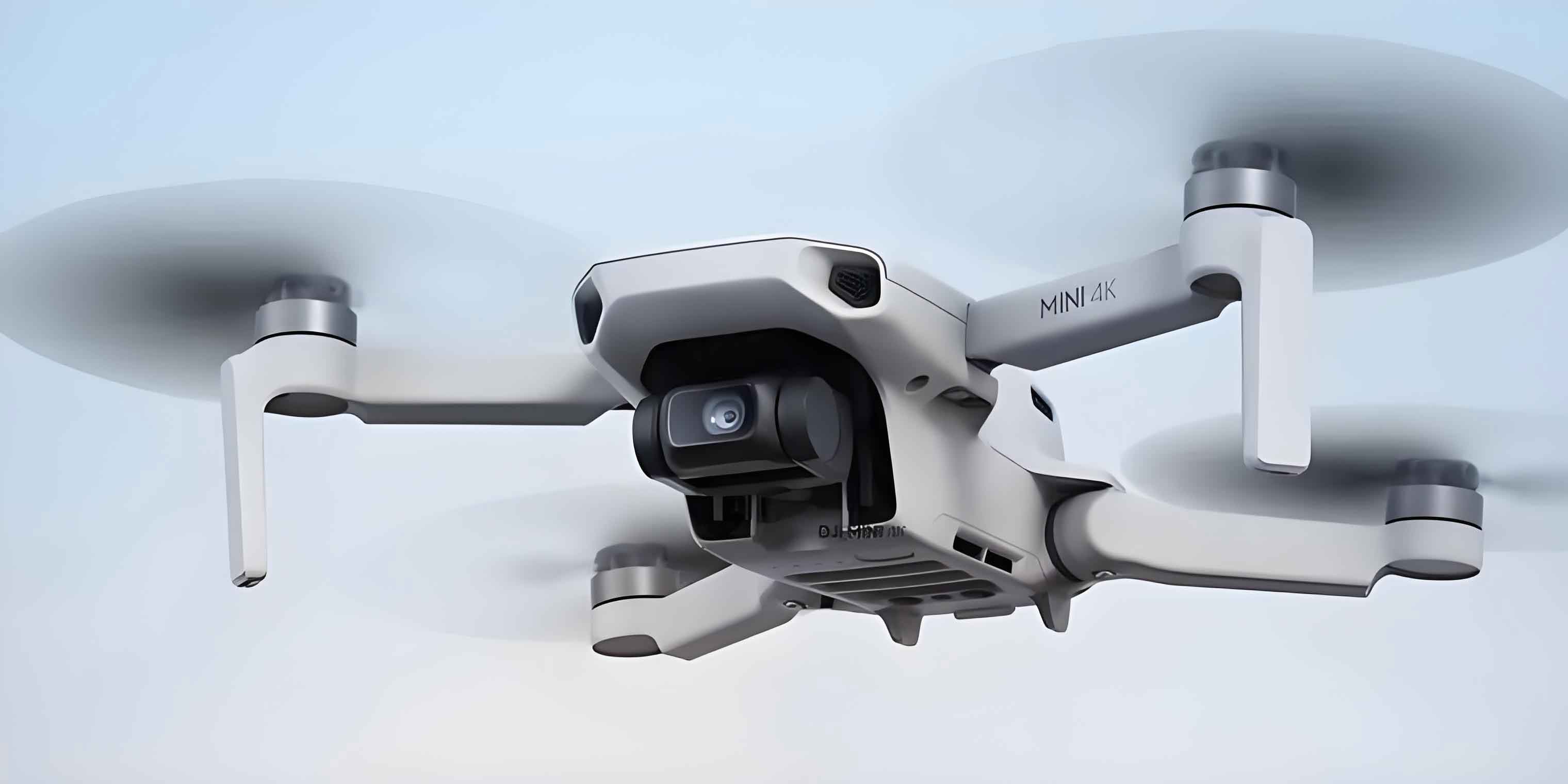
We begin by defining the system model for UAV swarm-based phantom track deception. Consider a swarm of $N_u$ UAVs targeting a networked radar system composed of $N_r$ radars, generating $N_p$ false tracks. At time step $k$, the 3D Cartesian coordinates of UAV $n$, false target $m$, and radar $q$ are denoted as $\mathbf{u}_{n,k} = [x^u_{n,k}, y^u_{n,k}, z^u_{n,k}]^T$, $\tilde{\mathbf{p}}_{m,k} = [\tilde{x}^p_{m,k}, \tilde{y}^p_{m,k}, \tilde{z}^p_{m,k}]^T$, and $\mathbf{r}_q = [x^r_q, y^r_q, z^r_q]^T$, respectively. The deception model adheres to the Line-of-Sight (LOS) criterion, where the radar’s main lobe, UAV, and false target must be collinear. Thus, the actual position of false target $m$ generated by UAV $n$ for radar $q$ is derived as:
$$ \mathbf{p}^q_{m,k} = \begin{cases}
\frac{\tilde{z}^p_{m,k}}{z^u_{n,k}} (\mathbf{u}_{n,k} – \mathbf{r}_q) + \mathbf{r}_q, & \text{if } s_{n,k} \mu^q_{n,m,k} = 1 \\
\emptyset, & \text{otherwise}
\end{cases} $$
Here, $s_{n,k} \in \{0,1\}$ indicates the operational status of UAV $n$ (1 for functional, 0 for faulty/damaged), and $\mu^q_{n,m,k} \in \{0,1\}$ is a binary variable representing task allocation (1 if UAV $n$ deceives radar $q$ to generate false target $m$). The set of functional UAVs at time $k$ is $\mathcal{W}_k = \{ n \mid s_{n,k} = 1 \}$.
The deception signal model involves key parameters such as time delay and Doppler modulation. The time delay $\Delta t$ for signal forwarding by the Digital Radio Frequency Memory (DRFM) is given by:
$$ \Delta t = \frac{2 \| \mathbf{p}^q_{m,k} – \mathbf{u}_{n,k} \|_2}{c} $$
where $c$ is the speed of light. The Doppler frequency shift $f_d$ is calculated as:
$$ f_d = \frac{2 ( \mathbf{v}^b_{q,k} \cdot \mathbf{v}^p_{m,q,k} – \mathbf{v}^b_{q,k} \cdot \mathbf{v}^u_{n,k} )}{\lambda_q} $$
Here, $\mathbf{v}^u_{n,k}$ and $\mathbf{v}^p_{m,q,k}$ are the velocity vectors of the UAV and false target, respectively, $\mathbf{v}^b_{q,k}$ is the direction vector of the radar’s echo signal, and $\lambda_q$ is the wavelength of radar $q$’s transmitted signal. The amplitude modulation parameter $\rho$ for the deception signal is:
$$ \rho = \frac{R_{n,q,k}^2}{R_{n,m,q,k}^2 \lambda_q} \sqrt{\frac{4\pi \sigma_{m,q,k}}{G_j}} $$
where $R_{n,q,k}$ is the distance between UAV $n$ and radar $q$, $R_{n,m,q,k}$ is the distance between the false target and radar, $\sigma_{m,q,k}$ is the radar cross-section (RCS) of the false target, and $G_j$ is the DRFM antenna gain.
Next, we formalize the cooperative game model for UAV swarm deception. The game is defined as a 4-tuple $\Gamma = \langle \mathcal{W}_k, \mathcal{A}, U_k, u_{n,k} \rangle$, where:
– $\mathcal{W}_k$ is the set of players (functional UAVs).
– $\mathcal{A}$ is the strategy set (task choices and flight parameters).
– $U_k(\mathcal{C}_m)$ is the characteristic function for coalition $\mathcal{C}_m$ (group of UAVs generating false target $m$), defined as $U_k(\mathcal{C}_m) = g_{m,k}$, where $g_{m,k}$ is the homology test result.
– $u_{n,k}(a_{n,k}, \mathcal{A}_{-n,k})$ is the utility function of UAV $n$, given by:
$$ u_{n,k}(a_{n,k}, \mathcal{A}_{-n,k}) = \sum_{m \in \mathcal{G}_{n,k}} g_{m,k} $$
where $\mathcal{G}_{n,k} = \{ m \mid \mu^q_{n,m,k} = 1 \}$ is the set of false targets generated by UAV $n$. The homology test result $g_{m,k}$ is a binary variable indicating whether false track $m$ passes the test across radar pairs:
$$ g_{m,k} = u\left( \sum_{q_1=1}^{N_r} \sum_{q_2=q_1+1}^{N_r} h^{q_1,q_2}_{m,k} – N_K \right) $$
Here, $h^{q_1,q_2}_{m,k} = u( \delta^{\min}_{q_1,q_2} – \| \mathbf{p}^{q_1}_{m,k} – \mathbf{p}^{q_2}_{m,k} \|_2 )$ checks if the distance between false target positions for radar pair $(q_1,q_2)$ is within the minimum resolution cell $\delta^{\min}_{q_1,q_2}$, and $N_K$ is the threshold for the number of radar pairs required to pass the test.
The optimization problem aims to maximize the total deception utility $U_{\text{sum}}(\mathcal{A}_k) = \sum_{m \in \mathcal{HG}_{k-1}} U_k(\mathcal{C}_m)$, where $\mathcal{HG}_{k-1}$ is the set of false tracks that passed the homology test in the previous step. The constraints include UAV kinematic limits (e.g., velocity, acceleration, yaw, and pitch angles) and task allocation rules (e.g., each false target can be generated at most once per radar). Formally:
$$ \begin{aligned}
\max_{\mathbf{v}_k, \Delta \boldsymbol{\theta}_k, \boldsymbol{\beta}_k, \boldsymbol{\mu}_k} & \quad U_{\text{sum}}(\mathcal{A}_k) \\
\text{s.t.} & \quad v_{\min} \leq v_{n,k} \leq v_{\max} \\
& \quad \alpha_{\min} \leq \alpha_{n,k} \leq \alpha_{\max} \\
& \quad \Delta \theta_{\min} \leq \Delta \theta_{n,k} \leq \Delta \theta_{\max} \\
& \quad \beta_{\min} \leq \beta_{n,k} \leq \beta_{\max} \\
& \quad \mu^q_{n,m,k} \in \{0,1\} \\
& \quad 1 \leq \sum_{m \in \mathcal{HG}_{k-1}} \mu^q_{n,m,k} \leq \mu_{\max} \\
& \quad \sum_{n \in \mathcal{W}_k} \mu^q_{n,m,k} \leq 1 \\
& \quad n \in \mathcal{W}_k
\end{aligned} $$
We prove that this game is an exact potential game, with the potential function $\psi(a_{n,k}, \mathcal{A}_{-n,k}) = U_{\text{sum}}(a_{n,k}, \mathcal{A}_{-n,k})$. This guarantees the existence of a Nash equilibrium and convergence to a stable coalition structure. The distributed optimization is solved iteratively using a genetic algorithm, where each UAV updates its strategy to maximize individual utility while considering others’ fixed strategies.
To validate our approach, we conduct simulations under various scenarios. In Scenario 1, a swarm of 12 UAVs deceives a network of 3 radars. The initial task allocation is shown in Table 1. The results demonstrate that our algorithm maintains false track continuity despite DRFM delay errors (100 ns) and UAV jitter errors (5 m). Figure 1 illustrates the spatial relationship between radars, UAVs, and false targets, with all false tracks approximately aligned along the UAV-radar lines. The deviation distances for false tracks are summarized in Table 2, showing that our distributed algorithm performs comparably to centralized optimization in the absence of platform failures.
| False Track | Radar 1 | Radar 2 | Radar 3 |
|---|---|---|---|
| Track 1 | UAV 1 | UAV 2 | UAV 3 |
| Track 2 | UAV 1 | UAV 4 | UAV 5 |
| Track 3 | UAV 6 | UAV 2 | UAV 7 |
| Track 4 | UAV 8 | UAV 9 | UAV 3 |
| Track 5 | UAV 10 | UAV 11 | UAV 12 |
| UAV | Track 1 | Track 2 | Track 3 | Track 4 | Track 5 |
|---|---|---|---|---|---|
| UAV 1 | 25-30 | 20-25 | – | – | – |
| UAV 2 | 30-35 | – | 25-30 | – | – |
| UAV 3 | 30-40 | – | – | 35-40 | – |
| UAV 4 | – | 30-40 | – | – | – |
| UAV 5 | – | 25-35 | – | – | – |
In Scenario 2, we simulate concurrent failures of UAVs 2, 6, and 12. Without our algorithm, false tracks 1, 3, and 5 are interrupted. However, with dynamic task reallocation, UAV 10 takes over track 2 for radar 1, and UAV 11 handles track 1 for radar 2, minimizing disruptions. The association distances for radar pairs remain below the detection threshold in most frames, ensuring track continuity. Table 3 compares the performance of our algorithm with centralized optimization and random task allocation, highlighting its superiority in maintaining false track count and deception success rate under failures.
| Algorithm | False Tracks Generated | Deception Success Rate (%) |
|---|---|---|
| Proposed Distributed | 4 | 87 |
| Centralized Optimization | 5 | 96 |
| Random Allocation | 2 | 92 |
Scenario 3 involves a larger swarm of 16 UAVs deceiving 4 radars, with UAVs 2, 4, 11, and 16 damaged. Our algorithm successfully restores 3 interrupted false tracks with S-shaped maneuver trajectories. The deviation distances increase due to complex path constraints, but the homology test results confirm effective deception. The impact of UAV failures on track generation is analyzed in Table 4, showing a nonlinear decline in performance as failure scale expands. Notably, if all UAVs for a radar are lost, no false tracks can be generated for that radar.
| Number of Failed UAVs | False Tracks Generated (Mean ± Std Dev) |
|---|---|
| 1 | 5.2 ± 0.8 |
| 2 | 4.1 ± 0.9 |
| 3 | 2.8 ± 1.2 |
| 4 | 1.5 ± 1.0 |
In conclusion, our proposed coalition game-based optimization algorithm enhances the resilience of UAV swarm deception against networked radars. By jointly optimizing task allocation and flight paths, it ensures continuous false track generation even under platform failures. Future work will integrate model predictive control and dynamic spectrum allocation to address communication delays and uncertain radar locations. The advancement in drone technology and Unmanned Aerial Vehicle capabilities will further empower such adaptive deception strategies in complex electronic warfare environments.