
The imperative for swift and accurate situational awareness in disaster zones is paramount for effective emergency response. Traditional ground-based surveying and mapping methods are often rendered ineffective due to terrain inaccessibility, time constraints, and dynamic hazards. This research presents a comprehensive technological framework centered on UAV drone swarms for achieving real-time, high-fidelity 3D modeling of disaster areas and generating safe, efficient flight paths for both reconnaissance and delivery missions. By leveraging the cooperative sensing, parallel task execution, and inherent redundancy of a UAV drone cluster, the proposed system overcomes the limitations of single-drone operations, enabling rapid data acquisition over large, complex areas.
The core of the methodology involves a tightly coupled pipeline. First, a heterogeneous swarm of UAV drones, equipped with multi-modal sensors, performs synchronized aerial surveying. The collected data is fused and processed in near real-time to construct and continuously update a detailed digital twin of the disaster environment. Subsequently, this dynamic model serves as the foundational world representation for a robust path planning and obstacle avoidance algorithm. This algorithm must account for the static and dynamic obstacles within the model, the kinematic constraints of the UAV drones, and the need for coordinated movement within the swarm itself. The integrated system aims to significantly enhance the speed, safety, and operational efficacy of post-disaster assessment and relief efforts.
Real-time 3D Modeling via UAV Swarm Collaborative Surveying
The process of building a real-time 3D model of a disaster area using a UAV drone swarm is governed by the principles of multi-source data fusion and dynamic incremental updating. A swarm, comprising drones equipped with different sensor suites (e.g., RGB cameras, LiDAR, multispectral imagers), provides diverse and complementary data streams. The fusion of this heterogeneous data mitigates the weakness of any single sensor and yields a richer, more accurate environmental representation.
The foundational step is collaborative data acquisition. The swarm’s mission area is partitioned, and tasks are allocated to individual UAV drones based on their sensor capabilities, battery state, and position. Key sensor types and their roles are summarized below:
| Sensor Type | Primary Data | Advantage in Disaster Context | Limitation |
|---|---|---|---|
| GNSS/IMU | Precise position & orientation | Essential for geo-referencing all data. | Signal loss in urban canyons or dense cover. |
| High-res RGB Camera | Visual imagery & video | High detail, texture information, low cost. | Performance degrades in low light, smoke, fog. |
| LiDAR (Light Detection and Ranging) | 3D point cloud | High-precision geometry, works in darkness. | Higher cost, power consumption; sensitive to heavy rain/dust. |
| Thermal/Infrared Camera | Heat signature imagery | Detects survivors, hot spots (fires), through smoke. | Lower spatial resolution, affected by ambient temperature. |
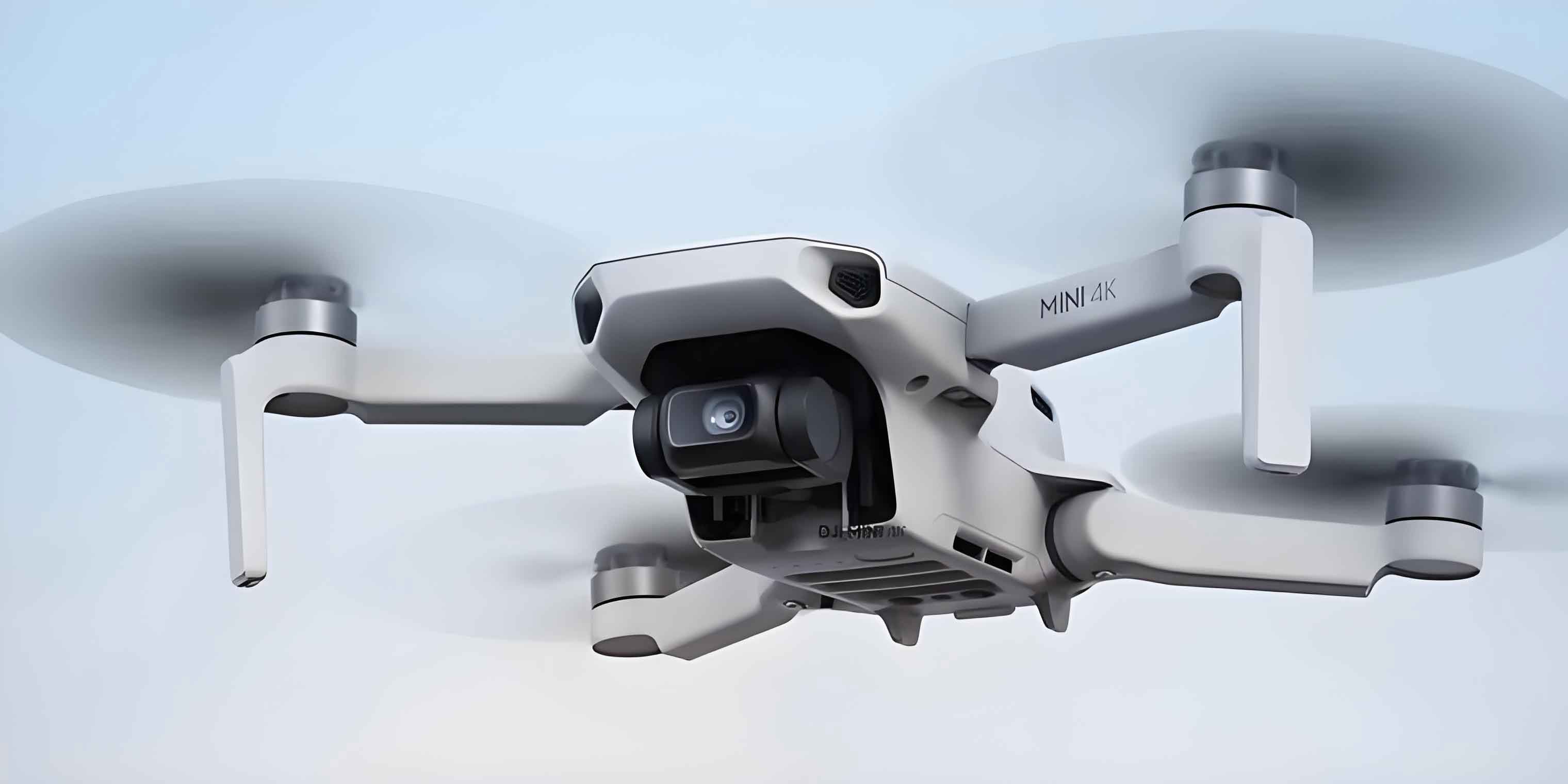
Following acquisition, raw data undergoes a rigorous processing pipeline to create a coherent model. For visual data, Structure from Motion (SfM) and Multi-View Stereo (MVS) techniques are employed. The core photogrammetric equation for projecting a 3D point \(\mathbf{X}\) to a 2D image point \(\mathbf{x}\) is:
$$
\mathbf{x} = \mathbf{K} [\mathbf{R} | \mathbf{t}] \mathbf{X}
$$
where \(\mathbf{K}\) is the intrinsic camera matrix, and \([\mathbf{R} | \mathbf{t}]\) represents the extrinsic rotation and translation. For LiDAR point clouds and visual data fusion, registration is critical. The Iterative Closest Point (ICP) algorithm minimizes the error metric \(E\) between two point sets \(P\) and \(Q\):
$$
E(\mathbf{R}, \mathbf{t}) = \sum_{i=1}^{n} || (\mathbf{R}p_i + \mathbf{t}) – q_i ||^2
$$
where \(p_i \in P\), \(q_i\) is the corresponding point in \(Q\), and \(\mathbf{R}, \mathbf{t}\) are the optimal rotation and translation. To handle the scale and noise in disaster data, a robust variant incorporating point-to-plane metrics and outlier rejection is used.
The modeling workflow is systematic, transitioning from raw data to a semantically enriched 3D model, as detailed in the following table:
| Stage | Processing Steps | Core Algorithms/Technologies | Intermediate Output |
|---|---|---|---|
| 1. Data Preprocessing | Sensor calibration, noise filtering (e.g., Statistical Outlier Removal for LiDAR), radiometric correction for images. | Kalman filtering, Gaussian/median filters. | Cleaned, standardized sensor data. |
| 2. Pose Estimation & Sparse Reconstruction | Feature matching (SIFT, ORB), bundle adjustment to solve for camera poses and a sparse 3D point cloud. | Structure from Motion (SfM), Visual SLAM. | Sparse, geo-referenced point cloud. |
| 3. Dense Reconstruction | Generating a dense surface model from the sparse points and images. | Multi-View Stereo (MVS), Poisson Surface Reconstruction, Delaunay triangulation. | Dense mesh or 3D surface model. |
| 4. Texturing & Semantic Labeling | Projecting imagery onto the mesh for realism. Classifying regions (e.g., building, road, rubble, vegetation). | Texture mapping, Convolutional Neural Networks (CNN) like U-Net for semantic segmentation. | Textured, semantically labeled 3D model. |
| 5. Dynamic Updating | Incrementally integrating new data from the UAV drone swarm to reflect changes (collapses, cleared paths). | Change detection algorithms, incremental bundle adjustment. | Live, updated Digital Twin of the disaster area. |
The swarm intelligence facilitates this pipeline; drones can share extracted features or localized map segments to accelerate global consistency optimization, making the modeling process truly real-time.
Path Planning and Obstacle Avoidance Algorithm Design
The path planning module utilizes the generated real-time 3D model as its environment map. The primary objective is to compute collision-free, kinematically feasible trajectories for one or multiple UAV drones from a start point \(S\) to a goal point \(G\), while optimizing for factors like path length, energy consumption, and mission time.
The algorithm design follows a hierarchical and synergistic approach:
1. Environmental Perception & World Representation:
The semantically labeled 3D model is converted into a planning-suited representation. A common approach is to use a 3D voxel grid or an Octree, where each cell is marked as free, occupied, or unknown. The state of a cell \(c\) at time \(t\) is determined by the fused sensor data \(Z_{1:t}\):
$$
P(c = \text{occupied} | Z_{1:t}) = \frac{1}{1 + e^{-l(c,t)}}
$$
where \(l(c,t)\) is the log-odds occupancy value, updated recursively with new sensor measurements. Dynamic obstacles (e.g., other UAV drones, moving vehicles) are tracked separately and their predicted trajectories are incorporated as time-varying occupancy regions.
2. Global Path Search:
A search-based planner finds an initial coarse path. We employ an enhanced A* algorithm that operates on a 3D grid. The cost function \(f(n)\) for a node \(n\) is crucial:
$$
f(n) = g(n) + \eta \cdot h(n) + \lambda \cdot \phi(n)
$$
Here, \(g(n)\) is the actual cost from start to \(n\), \(h(n)\) is the heuristic (e.g., Euclidean distance to goal), \(\eta\) is a heuristic weighting factor for tuning aggressiveness, and \(\phi(n)\) is a risk penalty based on proximity to occupied cells or semantically hazardous zones (e.g., unstable structures). This encourages safer paths slightly longer than the theoretical shortest route.
3. Local Trajectory Optimization & Obstacle Avoidance:
The global waypoints are refined into a smooth, dynamically feasible trajectory. We formulate this as an optimization problem minimizing a cost function \(J\) over a trajectory \(\xi\):
$$
J(\xi) = w_{len} \cdot J_{length}(\xi) + w_{smooth} \cdot J_{smoothness}(\xi) + w_{obs} \cdot J_{obstacle}(\xi) + w_{dyn} \cdot J_{dynamics}(\xi)
$$
The obstacle cost term \(J_{obstacle}\) is often modeled using an artificial potential field. For a UAV drone at position \(\mathbf{p}\), the repulsive force from an obstacle at \(\mathbf{p}_{obs}\) is:
$$
\mathbf{F}_{rep}(\mathbf{p}) = \begin{cases}
\eta_{rep} \left( \frac{1}{d(\mathbf{p}, \mathbf{p}_{obs})} – \frac{1}{d_0} \right) \frac{1}{d(\mathbf{p}, \mathbf{p}_{obs})^2} \nabla d(\mathbf{p}, \mathbf{p}_{obs}), & \text{if } d \leq d_0 \\
0, & \text{if } d > d_0
\end{cases}
$$
where \(d\) is the distance, \(d_0\) is the influence distance, and \(\eta_{rep}\) is a scaling factor. The total repulsive potential is integrated along the trajectory to compute \(J_{obstacle}\). To avoid local minima (a common pitfall of potential fields), this optimization is performed within a Receding Horizon Control (RHC) framework. The planner solves for an optimal trajectory over a short horizon, executes the first segment, and then re-plans with updated state and map information.
4. Multi-UAV Drone Coordination:
For swarm operations, collision avoidance must consider inter-drone conflicts. A decentralized approach based on Velocity Obstacles (VO) or Optimal Reciprocal Collision Avoidance (ORCA) is effective. Each UAV drone considers other drones as dynamic obstacles. The ORCA formulation defines for each pair of drones \(i\) and \(j\) a set of permissible relative velocities (ORCA_{i|j}) that will avoid collision within a time window \(\tau\). The new velocity \(\mathbf{v}_i^{new}\) is chosen as close as possible to its preferred velocity \(\mathbf{v}_i^{pref}\) while lying in the intersection of all ORCA_{i|j} sets:
$$
\mathbf{v}_i^{new} = \operatorname*{argmin}_{\mathbf{v} \in \bigcap_{j \neq i} \text{ORCA}_{i|j}} || \mathbf{v} – \mathbf{v}_i^{pref} ||
$$
This allows for smooth, distributed deconfliction within the UAV drone swarm. The performance of different search and optimization strategies under varying disaster environment complexities is summarized below:
| Algorithm Strategy | Typical Computation Time (Simulated) | Path Length Efficiency vs. Shortest Path | Success Rate in Cluttered Environments (>40% obs.) | Key Strength |
|---|---|---|---|---|
| Classic A* (3D Grid) | ~1.2 s | 105% (5% longer) | 82% | Guaranteed optimal on grid, simple. |
| Enhanced A* (w/ Risk Penalty φ) | ~0.85 s | 115% | >98% | High safety, robust in complex clutter. |
| RRT* (Sampling-based) | ~2.5 s (asymptotic optimal) | ~110% (after convergence) | 95% | Good for high-dimensional spaces. |
| RHC + Local Optimization | ~50 ms per cycle | Dynamic adjustment | >99% | Real-time reactivity to dynamic obstacles. |
Operational Challenges and Mitigation Strategies
Deploying a UAV drone swarm for collaborative mapping and planning in actual disaster scenarios faces significant hurdles. The system design must proactively address these to ensure robustness and reliability.
Challenge 1: Communication Latency and Dropouts.
Reliable, low-latency communication is the backbone of swarm coordination. Disaster areas often have compromised cellular networks, and UAV drone ad-hoc networks can suffer from intermittent links due to distance, obstacles, or interference. This can desynchronize the shared world model and disrupt coordinated path planning.
Mitigation: Employ hybrid communication protocols. Use decentralized data fusion algorithms (e.g., Consensus Kalman Filter) that are tolerant to packet loss. Implement store-and-forward protocols and opportunistic communication when UAV drones are in range. Dynamic role assignment can designate drones with the best connectivity as communication relays for the swarm. The effective data sync rate \(R_{sync}\) in a swarm of \(N\) drones with link probability \(p\) can be modeled as:
$$
R_{sync} \propto \sum_{k=1}^{N} \binom{N-1}{k-1} p^{k-1} (1-p)^{N-k} \cdot \Psi(k)
$$
where \(\Psi(k)\) represents the data utility function for a cluster of \(k\) synchronized drones.
Challenge 2: Onboard Computational and Energy Constraints.
UAV drones have limited battery life and processing power. Running dense reconstruction algorithms or complex optimization solvers in real-time on each drone is often infeasible.
Mitigation: Adopt an edge-cloud collaborative computing architecture. The UAV drone swarm performs lightweight preprocessing (feature extraction, compression) and transmits data to a ground control station or mobile edge server with greater computational resources. This server handles the heavy processing (global map fusion, intensive path planning) and sends back high-level commands or refined trajectory segments. Energy-aware task allocation is also critical; the path cost function \(g(n)\) in the planner can be extended to explicitly model energy expenditure \(E(n)\):
$$
g(n) = \alpha \cdot d(n) + \beta \cdot E(n), \quad \text{where } E(n) \propto \int_{path} (c_1 ||\mathbf{v}||^2 + c_2 ||\mathbf{a}||^2) \, dt
$$
This encourages paths that minimize drag and acceleration, conserving battery.
Challenge 3: Adaptation to Extreme and Dynamic Environments.
Disaster scenes are highly dynamic (aftershocks, fires, moving survivors/rescuers) and exhibit extreme visual conditions (smoke, dust, water, debris). This can severely degrade sensor performance and invalidate the map rapidly.
Mitigation: Enhance sensor fusion robustness. For example, use LiDAR as the primary geometry source in visually degraded conditions, aided by inertial navigation. Implement fast change detection algorithms (e.g., comparing successive point cloud frames) to trigger local map updates. The planning algorithm’s risk penalty \(\phi(n)\) must be adaptive, increasing sharply in areas identified as volatile or where sensor confidence is low. The obstacle cost can be modulated by a confidence factor \(\gamma \in [0,1]\) derived from sensor agreement:
$$
J_{obstacle}'(\xi) = \int_{\xi} \frac{\gamma(\mathbf{p})}{d(\mathbf{p}, \mathcal{O})^2} \, d\mathbf{p}
$$
The system must also maintain multiple contingency plans and default to conservative, sensor-agnostic behaviors (like hovering or returning to a last known safe point) when environmental perception becomes critically unreliable.
| Primary Challenge | Potential Impact on Swarm Operation | Proposed Mitigation Strategy | Key Enabling Technology |
|---|---|---|---|
| Communication Failure | Loss of swarm coherence, duplicated/ missed coverage, collision risk. | Decentralized fusion, dynamic relay roles, resilient mesh networking. | Consensus algorithms, software-defined radio. |
| Limited Energy & Computation | Short mission duration, inability to process data for real-time modeling/planning. | Edge-cloud offloading, energy-aware path planning, efficient onboard SLAM. | 5G/B5G edge computing, lightweight neural networks (TensorRT Lite). |
| Harsh & Dynamic Environment | Corrupted sensor data, inaccurate/map, high risk of UAV drone loss. | Multi-modal sensor fusion, adaptive risk mapping, robust state estimation. | LiDAR-inertial odometry (LIO), change detection, material-penetrating radar. |
In conclusion, the integration of UAV drone swarm technology with advanced real-time mapping and intelligent path planning algorithms presents a transformative solution for disaster response. By enabling the rapid generation of a dynamic, high-fidelity digital twin and facilitating safe, coordinated autonomous navigation within it, this system shifts the paradigm from risky, slow manual reconnaissance to fast, data-driven, and remotely orchestrated operations. The core innovation lies in the synergistic loop: the swarm creates the model, and the model guides the swarm. While challenges in communication, endurance, and environmental robustness persist, the outlined mitigation strategies leveraging edge computing, resilient algorithms, and adaptive planning provide a clear pathway toward practical deployment. Future work will focus on field validation in simulated disaster exercises, refining human-swarm interaction interfaces, and integrating the system with ground robot teams for a comprehensive multi-domain response capability, ultimately enhancing the efficiency and safety of life-saving missions.